Hot Isostatic Pressing (HIP) is a critical post-sintering treatment used to achieve maximum density in Li6.16Al0.28Zr2La3O12 (LLZA) solid-state electrolytes. By subjecting the material to 127 MPa of isotropic argon gas pressure at 1158°C, the process mechanically forces the elimination of internal pores and promotes the tight fusion of crystal grains, achieving densification levels that conventional sintering cannot reach alone.
The Core Mechanism While standard thermal sintering initiates grain growth, it often leaves behind residual porosity. HIP overcomes this by applying uniform, high-pressure gas at elevated temperatures to crush these remaining voids. This results in a mechanically superior electrolyte with reduced grain boundary resistance and enhanced protection against lithium dendrite penetration.
The Mechanics of Densification
Applying Isotropic Pressure
Unlike uniaxial pressing, which applies force from a single direction, HIP utilizes isostatic pressure. High-pressure argon gas surrounds the LLZA material within a containment vessel, applying uniform force from every direction simultaneously.
This uniformity is essential for ceramic electrolytes. It ensures the material densifies evenly without developing the internal stress fractures or warping that can occur with uneven pressure application.
The Role of High Temperature and Pressure
The specific efficacy of HIP on LLZA relies on the combination of heat and force. The primary parameters involve heating the material to 1158°C while maintaining a pressure of 127 MPa.
At this temperature, the ceramic material becomes slightly more compliant. The massive pressure then drives plastic deformation and diffusion bonding, effectively collapsing internal micropores and forcing the grain boundaries to fuse tightly together.
Eliminating Residual Porosity
Conventional sintering relies on diffusion driven by heat to remove pores, which often leaves isolated voids deep within the material. HIP treats these "stubborn" pores.
Because the argon gas pressure is applied externally to the sealed or pre-sintered material, the pressure differential forces the material inward, filling voids that thermal energy alone could not close.
Impact on Battery Performance
Reducing Grain Boundary Resistance
The connectivity between crystal grains defines how easily lithium ions can move through the electrolyte.
By forcing tighter fusion between grains, HIP significantly reduces grain boundary resistance. The elimination of voids creates a more continuous pathway for ionic transport, directly improving the overall conductivity of the electrolyte.
Enhancing Physical Durability
A critical failure mode in solid-state batteries is the penetration of lithium dendrites—metallic filaments that grow through the electrolyte and cause short circuits.
The high density achieved through HIP creates a physically harder and less porous barrier. This structural integrity makes it significantly more difficult for dendrites to penetrate the LLZA layer, thereby improving the safety and longevity of the battery.
Operational Considerations and Trade-offs
Equipment Complexity
The HIP process requires specialized machinery capable of managing extreme conditions safely. The system must integrate a heating furnace inside a pressure vessel, along with compressors to manage the argon gas. This adds a layer of complexity and cost compared to standard atmospheric sintering.
Material Compatibility
The choice of pressurizing medium is critical. Argon is the standard choice for LLZA because it is an inert gas. Using a reactive gas could alter the chemical composition of the electrolyte surface at high temperatures (1158°C), potentially degrading performance rather than enhancing it.
Strategic Application for Electrolyte Development
When integrating Hot Isostatic Pressing into your manufacturing workflow, consider your specific performance targets:
- If your primary focus is maximizing ionic conductivity: HIP is essential for minimizing the grain boundary resistance that bottlenecks ion flow in polycrystalline ceramics.
- If your primary focus is safety and cycle life: The deep densification provided by HIP is the most effective method for physically blocking lithium dendrite propagation.
By effectively erasing the internal porosity that limits standard ceramics, HIP transforms LLZA from a porous solid into a true barrier-grade electrolyte.
Summary Table:
| Feature | Specification/Detail | Impact on LLZA Performance |
|---|---|---|
| Pressure Level | 127 MPa (Isotropic) | Eliminates internal micropores and voids |
| Temperature | 1158°C | Promotes plastic deformation and diffusion |
| Medium | Inert Argon Gas | Prevents chemical degradation of the electrolyte |
| Microstructure | Dense Fusion | Reduces grain boundary resistance |
| Durability | High Physical Integrity | Blocks lithium dendrite penetration |
Maximize Your Electrolyte Performance with KINTEK
Achieve ultimate material density and superior ionic conductivity with KINTEK’s advanced Hot Isostatic Press (HIP) systems. Specializing in high-performance laboratory equipment, KINTEK provides the precision isostatic presses, high-temperature furnaces, and crushing/milling systems required to transform LLZA ceramics into barrier-grade electrolytes.
Whether you are focused on preventing dendrite growth or optimizing battery cycle life, our comprehensive portfolio—including high-pressure reactors, vacuum furnaces, and specialized consumables like crucibles and ceramics—is designed to meet the rigorous demands of battery research and material science.
Ready to elevate your solid-state battery research? Contact KINTEK today to find the perfect densification solution!
Related Products
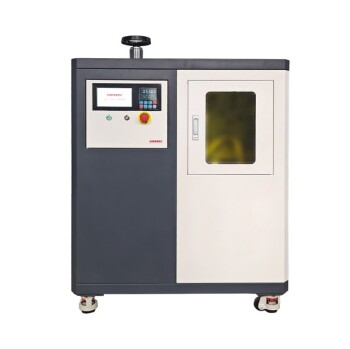
- Warm Isostatic Press for Solid State Battery Research
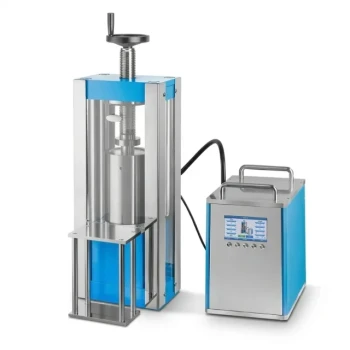
- Electric Split Lab Cold Isostatic Press CIP Machine for Cold Isostatic Pressing
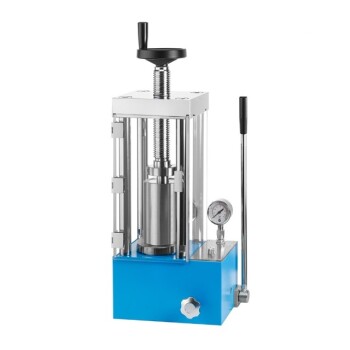
- Manual Cold Isostatic Pressing Machine CIP Pellet Press
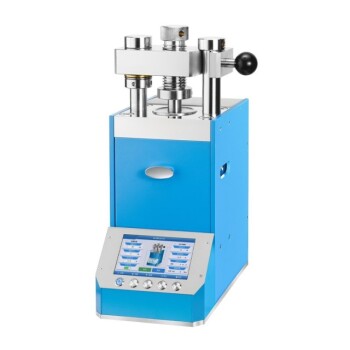
- Automatic Lab Cold Isostatic Press CIP Machine Cold Isostatic Pressing
- Automatic High Temperature Heated Hydraulic Press Machine with Heated Plates for Lab
People Also Ask
- What is the temperature of a warm isostatic press? Achieve Optimal Densification for Your Materials
- What is the function of a Warm Isostatic Press (WIP) in all-solid-state pouch cells? Optimize Battery Density
- Why are Warm Isostatic Presses (WIP) necessary for solid-state batteries? Achieve Atomic-Level Contact
- What advantages does a warm isostatic press offer over a traditional uniaxial press for Li6PS5Cl electrolyte sheets?
- How do warm isostatic presses improve dry electrode performance? Enhance ASSB Conductivity with Heat & Pressure