Hot Isostatic Pressing (HIP) significantly enhances CuNiCoZnAlTi alloys by subjecting the material to simultaneous high temperatures and uniform isostatic gas pressure. This combination forces microscopic internal pores within the sintered material to close completely, driving the alloy closer to its theoretical density and substantially increasing its hardness and compressive strength.
The Core Insight Sintering alone often leaves microscopic voids that weaken high-entropy alloys. HIP equipment overcomes this by using inert gas as a multi-directional force multiplier, eliminating internal defects to create a uniform, fully dense structure capable of withstanding extreme mechanical stress.
The Mechanics of Densification
Applying Isostatic Pressure
Unlike traditional pressing that applies force from one or two directions, HIP equipment utilizes high-pressure inert gas (typically argon).
This gas applies pressure uniformly to the surface of the part from all directions simultaneously. This isostatic approach ensures that the material is compressed evenly, preventing the distortion that can occur with uniaxial pressing.
Closing Microscopic Pores
The primary function of the HIP process is the elimination of internal microporosity.
Under pressures ranging from 50 to 200 MPa, the gas acts as a driving force that pushes the material into existing voids. This effectively heals the microscopic defects left behind during the initial sintering or casting stages.
The Role of Creep and Diffusion
Densification is not achieved by pressure alone; it requires heat.
Operating at temperatures between 400°C and 2000°C, the process activates mechanisms such as plastic deformation, sintering, and creep. Creep, in particular, is responsible for a significant portion of the densification, allowing the material to flow into and fill void spaces at the atomic level.
Enhancing Alloy Properties
Maximizing Hardness and Strength
By achieving densities greater than 98% of full density, the alloy's mechanical properties are drastically improved.
For high-entropy alloys like CuNiCoZnAlTi, this reduction in porosity directly translates to higher hardness and compressive strength. The material becomes dense enough for use in demanding structural components or high-performance coatings.
Improving Fatigue Life
The elimination of internal stress risers (pores) has a profound effect on durability.
HIPing can increase fatigue life by 1.5 to 8 times compared to non-HIPed materials. By removing the internal flaws where cracks typically initiate, the component can withstand cyclic loading for significantly longer periods.
Homogenization of Structure
The combination of heat and pressure does more than just densify; it organizes the material.
The process helps eliminate segregation within the alloy, resulting in a more uniform internal organization. This homogeneity ensures consistent mechanical properties throughout the entire part, rather than just at the surface.
Understanding the Trade-offs
Surface-Connected Porosity
It is critical to note that HIP is effective only on internal, encapsulated pores.
If porosity is connected to the surface, the high-pressure gas will simply enter the pores rather than crushing them. Therefore, parts must be carefully sealed or have a non-porous surface skin before undergoing the HIP process to ensure full densification.
Parameter Interdependence
Success relies on a strict balance of temperature, pressure, and hold time.
These parameters are interdependent; a lower temperature may be offset by a longer hold time to achieve the same density. Incorrect settings can lead to incomplete densification or microstructural coarsening, so the cycle must be tailored specifically to the alloy's solidus temperature.
Making the Right Choice for Your Goal
When integrating HIP into your manufacturing workflow for high-entropy alloys, align the process with your specific engineering requirements:
- If your primary focus is Structural Integrity: Prioritize the elimination of internal microporosity to maximize compressive strength and reach near-theoretical density.
- If your primary focus is Component Longevity: Leverage HIP to remove internal crack initiation sites, thereby extending the fatigue life of parts subject to cyclic stress.
- If your primary focus is Surface Finish: Ensure the casting is free of surface-connected porosity before processing to achieve a smooth, pore-free wear surface.
HIP transforms a sintered alloy from a promising material into a reliable, high-performance structural component.
Summary Table:
| Feature | Impact of HIP on CuNiCoZnAlTi Alloys |
|---|---|
| Densification | Reaches >98% theoretical density by closing internal micropores |
| Mechanical Strength | Significant increase in hardness and compressive strength |
| Fatigue Life | Increases durability by 1.5 to 8 times by removing crack initiation sites |
| Microstructure | Ensures structural homogenization and eliminates material segregation |
| Process Range | Operates at 400°C–2000°C with pressures of 50–200 MPa |
Elevate Your Material Performance with KINTEK Precision
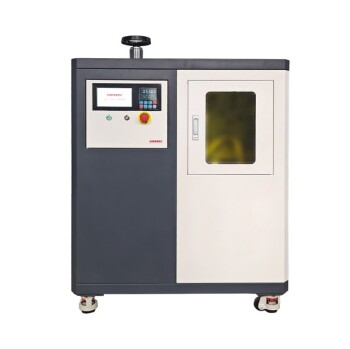
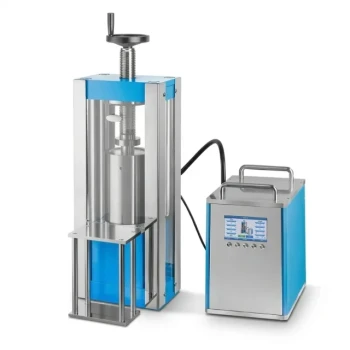
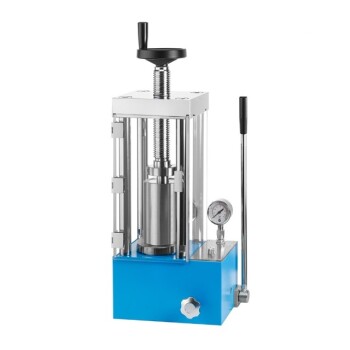
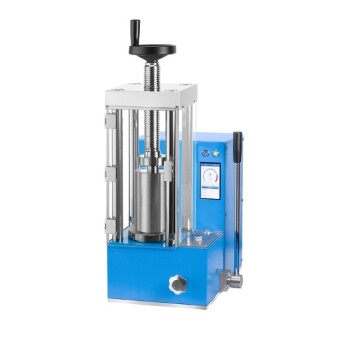
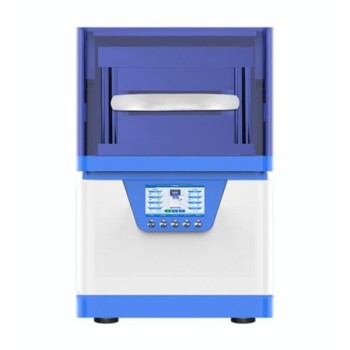
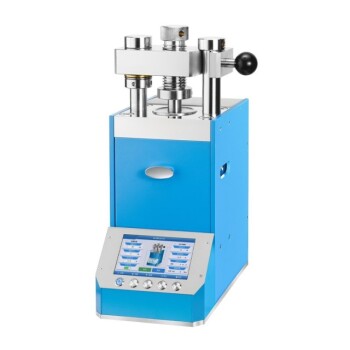
Ready to eliminate internal defects and achieve near-theoretical density for your high-entropy alloys? KINTEK specializes in advanced laboratory equipment, offering high-performance Hot Isostatic Pressing (HIP) systems and a comprehensive range of isostatic and hydraulic presses tailored for demanding research and industrial applications.
Our expertise extends from high-temperature furnaces and vacuum systems to specialized crushing, milling, and sintering tools, ensuring your materials meet the highest standards of structural integrity. Partner with KINTEK for reliable solutions that drive innovation in battery research, dental technology, and advanced metallurgy.
Transform your manufacturing results today. Contact our specialists to find the perfect HIP solution for your lab!
Related Products
- Warm Isostatic Press for Solid State Battery Research
- Electric Split Lab Cold Isostatic Press CIP Machine for Cold Isostatic Pressing
- Isostatic Molding Pressing Molds for Lab
- Automatic High Temperature Heated Hydraulic Press Machine with Heated Plates for Lab
- Manual High Temperature Heated Hydraulic Press Machine with Heated Plates for Lab
People Also Ask
- What is the temperature of a warm isostatic press? Achieve Optimal Densification for Your Materials
- What is the function of a Warm Isostatic Press (WIP) in all-solid-state pouch cells? Optimize Battery Density
- Why are Warm Isostatic Presses (WIP) necessary for solid-state batteries? Achieve Atomic-Level Contact
- What advantages does a warm isostatic press offer over a traditional uniaxial press for Li6PS5Cl electrolyte sheets?
- How do warm isostatic presses improve dry electrode performance? Enhance ASSB Conductivity with Heat & Pressure