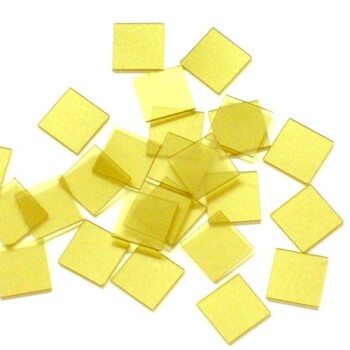
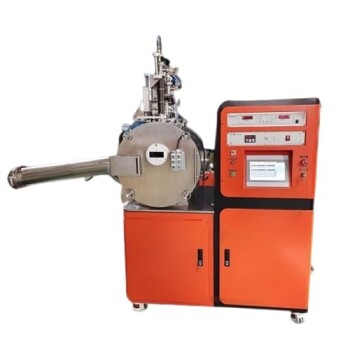
Hot Filament Chemical Vapour Deposition (HFCVD) is a thermal coating process used primarily to synthesize high-quality materials like diamond films. It functions by passing precursor gases over an extremely hot metal filament to thermally decompose them, creating reactive chemical vapors that deposit onto a nearby substrate.
Core Takeaway HFCVD relies on a massive temperature differential. By using a "scorched" filament to activate stable gases at very high temperatures, the system can deposit crystalline layers onto a substrate that is maintained at a significantly lower, safer temperature.
The Core Mechanism
The Thermal Engine
The heart of the system is a refractory metal filament, typically made of tungsten, rhenium, or tantalum.
This filament acts as the activation source. It is electrically heated to extreme temperatures ranging from 2173 K to 2773 K.
Gas Dissociation
Feed gases, usually a mixture of hydrogen (H2) and methane (CH4), are introduced into the reactor.
When these gases pass over the superheated filament, they undergo thermal dissociation. The intense heat breaks the molecular bonds, converting stable gases into highly reactive radical species.
Substrate Placement
The target substrate (often silicon) is positioned just millimeters away from the filament, typically at a distance of 2-8 mm.
Crucially, the substrate is independently heated but kept much cooler than the filament, usually between 673 K and 1373 K. This temperature gradient is essential for the deposition process.
The Reaction Sequence
Transport and Adsorption
The process begins with the transport of the reactant gases into the chamber via convection or diffusion.
Once the reactive species are generated by the filament, they move through the boundary layer and undergo adsorption onto the substrate surface. This is where the gas molecules physically or chemically attach themselves to the solid surface.
Surface Reaction and Nucleation
Heterogeneous surface-catalyzed reactions occur next. The adsorbed species react to form solid deposits.
These deposits undergo surface diffusion to find energetic "growth sites," leading to nucleation. This is the phase where the solid film—such as a diamond crystal lattice—actually begins to grow.
Desorption and Evacuation
Not all material remains on the substrate. Volatile by-products generated during the reaction must be removed to prevent contamination.
These by-products undergo desorption, releasing back into the gas stream where the pumping system evacuates them from the reactor.
System Architecture
The Reactor Assembly
The process takes place inside a stainless steel, double-walled reactor designed to withstand vacuum pressures and high heat.
Inside, a horizontal filament holder with a tensioning system keeps the filament stable, powered by a precision DC supply.
Control and Safety
A gas panel manages the precise ratio of hydrogen, methane, and nitrogen.
Because of the extreme heat involved, the system requires a cooling circuit with a separate heat exchanger to protect the outer vessel and external components.
Understanding the Operational Factors
Filament Material Selection
The choice of filament is critical. It must be a refractory metal capable of withstanding temperatures above 2000 K without melting or deforming immediately.
Tungsten is the standard, but it interacts with the carbon source, eventually becoming "scorched" or carburized, which is part of the normal activation cycle.
Process Control Precision
Success depends on tight control of the filament-to-substrate distance.
A variance of just a few millimeters affects the thermal gradient and the concentration of reactive species reaching the substrate, directly impacting film quality.
Making the Right Choice for Your Goal
How to Apply This to Your Project
- If your primary focus is Diamond Production: Ensure your setup prioritizes precise temperature control (2173+ K at the filament) and strict management of the Hydrogen/Methane ratio to facilitate proper crystalline growth.
- If your primary focus is System Longevity: Pay close attention to the filament tensioning system and cooling circuits, as the extreme thermal cycling puts immense stress on these components.
HFCVD remains one of the most effective methods for converting simple hydrocarbon gases into high-performance solid coatings through controlled thermal decomposition.
Summary Table:
| Component/Stage | Key Parameter/Material | Function in HFCVD |
|---|---|---|
| Filament | Tungsten, Rhenium, Tantalum | Heats to 2173–2773 K to dissociate precursor gases. |
| Precursor Gas | Hydrogen (H2) & Methane (CH4) | Provides the carbon source and reactive species. |
| Substrate | Silicon or similar (673–1373 K) | The target surface where the solid film nucleates and grows. |
| Distance | 2–8 mm (Filament-to-Substrate) | Controls the thermal gradient and deposition uniformity. |
| Reaction | Adsorption & Surface Reaction | Converts reactive gas species into solid crystalline layers. |
Elevate Your Thin-Film Research with KINTEK
Unlock the full potential of diamond synthesis and advanced material coating with KINTEK’s precision-engineered HFCVD solutions. From high-durability refractory filaments and advanced high-temperature furnaces to specialized crushing, milling, and pelletizing systems, we provide the comprehensive toolset required for cutting-edge laboratory research.
Our expertise spans across high-pressure reactors, dental solutions, and essential consumables like PTFE and ceramics, ensuring your lab operates with unmatched accuracy and reliability. Whether you are scaling battery research or refining CVD processes, our team is ready to support your technical requirements.
Ready to optimize your deposition process? Contact our specialists today to discover how KINTEK can empower your next breakthrough.
Related Products
- HFCVD Machine System Equipment for Drawing Die Nano-Diamond Coating
- Customer Made Versatile CVD Tube Furnace Chemical Vapor Deposition Chamber System Equipment
- Multi Heating Zones CVD Tube Furnace Machine Chemical Vapor Deposition Chamber System Equipment
- Chemical Vapor Deposition CVD Equipment System Chamber Slide PECVD Tube Furnace with Liquid Gasifier PECVD Machine
- Split Chamber CVD Tube Furnace with Vacuum Station Chemical Vapor Deposition System Equipment Machine
People Also Ask
- What is the full form of HFCVD? A Guide to Hot Filament Chemical Vapor Deposition
- What are the disadvantages and challenges of the HFCVD method? Overcome Growth Limits and Filament Issues
- What is the function of tungsten filaments in HFCVD? Powering Diamond Film Synthesis with Thermal Excitation
- Why is Chemical Vapor Deposition (CVD) equipment uniquely suited for constructing hierarchical superhydrophobic structures?
- What is the chemical vapor deposition growth process? Build Superior Thin Films from the Atom Up