Hot pressing enhances the stability of Li7P2S8I0.5Cl0.5 by physically altering the microstructure of the electrolyte to eliminate defects. By applying heat and pressure simultaneously, this process creates a highly dense pellet with a smooth surface and effectively removes internal through-pores. This densification is the critical factor that prevents lithium dendrites from penetrating the electrolyte, thereby avoiding short circuits and significantly extending cycle life.
The core mechanism at play is the elimination of physical pathways for failure. While chemical stability is important, hot pressing addresses the physical vulnerability of solid-state batteries by closing the voids and grain boundaries where lithium dendrites typically nucleate and grow.
The Physical Mechanics of Stability
Eliminating Internal Porosity
The primary threat to a solid-state electrolyte is the presence of microscopic voids or "through-pores." These empty spaces act as highways for lithium dendrite growth.
Hot pressing compresses the Li7P2S8I0.5Cl0.5 material beyond what is possible with standard methods. This results in a pellet with no internal through-pores, effectively cutting off the route dendrites would otherwise take to cross from the anode to the cathode.
Creating a Smooth Surface Interface
Surface quality is just as critical as internal density. A rough surface creates uneven contact with the lithium anode, leading to localized "hot spots" of high current density where dendrites tend to form.
The hot pressing process yields a smooth surface texture. This uniformity ensures even contact with the anode, distributing current more homogenously and reducing the likelihood of initial dendrite nucleation.
Performance Outcomes
Blocking Dendrite Propagation
Lithium dendrites prefer to grow along the path of least resistance, which usually means expanding through grain boundaries or existing pores.
Because the hot-pressed electrolyte is highly dense, it presents a solid physical barrier. It effectively blocks dendrites from growing along grain boundaries, forcing the lithium to plate evenly rather than piercing the electrolyte structure.
Superior Cycle Life
The structural integrity provided by hot pressing translates directly to operational longevity.
In testing with lithium symmetric cells, hot-pressed Li7P2S8I0.5Cl0.5 pellets achieved stable cycling for 280 hours. This represents a marked improvement over cold-pressed counterparts, which are prone to earlier failure due to their lower density and porous structure.
Understanding the Trade-offs: Hot vs. Cold Pressing
While hot pressing offers superior performance, it is important to understand why it is distinct from simpler methods like cold pressing.
The Density Gap
Cold pressing compacts the material but often fails to fuse particles completely. This leaves behind residual voids and weaker grain boundaries.
The Risk of Short Circuits
If you rely on cold pressing for Li7P2S8I0.5Cl0.5, you accept a higher risk of battery failure. The internal porosity inherent in cold-pressed pellets makes them susceptible to rapid dendrite penetration, leading to short circuits long before the battery's theoretical lifespan is reached.
Making the Right Choice for Your Goal
To maximize the performance of your solid-state battery project, consider the following regarding the processing of Li7P2S8I0.5Cl0.5:
- If your primary focus is extended cycle life: You must utilize hot pressing to achieve the high density required to sustain operations beyond 200+ hours.
- If your primary focus is preventing safety hazards: Prioritize hot pressing to eliminate through-pores, which is the most reliable physical method to prevent dendrite-induced short circuits.
Ultimately, the stability of a solid-state battery is defined not just by the chemistry of the material, but by the density of its processing.
Summary Table:
| Feature | Cold Pressing | Hot Pressing |
|---|---|---|
| Microstructure | High internal porosity; residual voids | Highly dense; no internal through-pores |
| Surface Texture | Rough and irregular | Smooth and uniform |
| Dendrite Resistance | Low; vulnerable at grain boundaries | High; blocks physical propagation |
| Cycle Stability | Early failure/short circuits | Stable cycling (e.g., 280+ hours) |
| Primary Benefit | Simple processing | Maximum safety and longevity |
Maximize Your Battery Research with KINTEK Precision
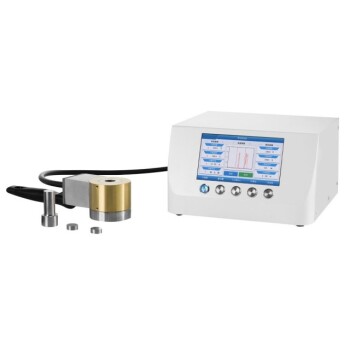
Achieving the perfect density in solid-state electrolytes requires more than just chemistry—it requires the right pressure and temperature control. KINTEK specializes in advanced hydraulic presses (pellet, hot, isostatic) and high-temperature furnaces designed to eliminate defects and block dendrite growth in your battery components.
Whether you are developing next-generation Li7P2S8I0.5Cl0.5 electrolytes or researching lithium metal anodes, our comprehensive portfolio—including battery research tools, PTFE products, and crucibles—provides the reliability your lab needs for groundbreaking results.
Ready to enhance your electrolyte stability? Contact KINTEK today for a customized equipment solution!
Related Products
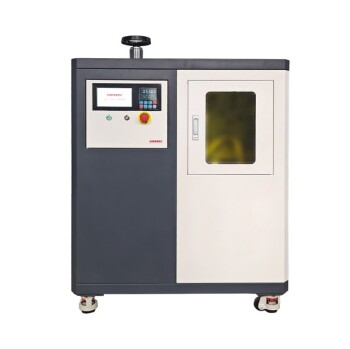
- Warm Isostatic Press for Solid State Battery Research
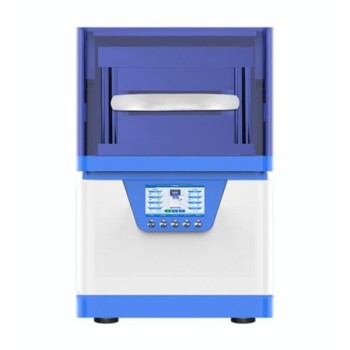
- Automatic Laboratory Heat Press Machine
- Automatic High Temperature Heated Hydraulic Press Machine with Heated Plates for Lab
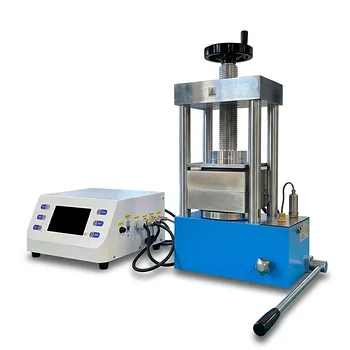
- Automatic Heated Hydraulic Press Machine with Heated Plates for Laboratory Hot Press
- 30T 40T Split Automatic Heated Hydraulic Press Machine with Heated Plates for Laboratory Hot Press
People Also Ask
- What is the temperature of a warm isostatic press? Achieve Optimal Densification for Your Materials
- What is the function of a Warm Isostatic Press (WIP) in all-solid-state pouch cells? Optimize Battery Density
- Why are Warm Isostatic Presses (WIP) necessary for solid-state batteries? Achieve Atomic-Level Contact
- What advantages does a warm isostatic press offer over a traditional uniaxial press for Li6PS5Cl electrolyte sheets?
- How do warm isostatic presses improve dry electrode performance? Enhance ASSB Conductivity with Heat & Pressure