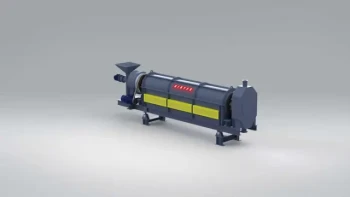
Knowledge Electric Rotary Kiln What are the factors affecting calcination? Master Temperature, Time, Atmosphere & Material Properties
Author avatar

Tech Team · Kintek Solution

Updated 3 months ago

What are the factors affecting calcination? Master Temperature, Time, Atmosphere & Material Properties


The success of any calcination process depends on the precise control of four primary factors: temperature, time, the surrounding atmosphere, and the physical properties of the material itself. Calcination is a thermal treatment designed to induce a chemical or physical change in a solid, such as thermal decomposition or the removal of volatile components, by heating it to a high temperature but below its melting point.

Calcination is not simply about heating a material. It is a controlled balancing act between temperature, time, and atmosphere to achieve a specific transformation in a material's chemical composition or physical structure without destroying it.
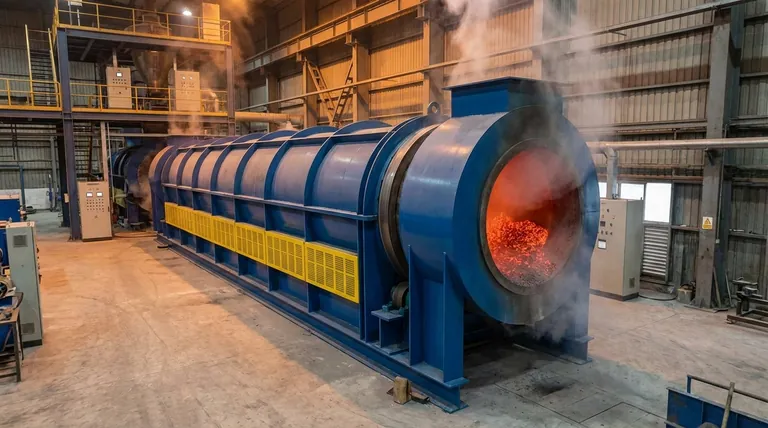
What are the factors affecting calcination? Master Temperature, Time, Atmosphere & Material Properties

The Core Levers: Temperature and Time

The most fundamental parameters you can control in calcination are how hot you make the material and how long you keep it there. These two factors are inextricably linked.

Achieving the Threshold Temperature

Every calcination reaction, whether it's driving off water or breaking down a carbonate, has a specific decomposition temperature. Below this temperature, the reaction will not proceed at a meaningful rate.

The goal is to operate significantly above this minimum threshold to ensure a practical reaction rate, but always stay safely below the material's melting or sintering point to maintain its solid structure.

The Importance of Residence Time

Residence time is the duration the material is held at the target calcination temperature. A short residence time may result in an incomplete reaction, leaving an uncalcined core within the particles.

Sufficient time must be allowed for heat to penetrate the entire volume of the material and for any gaseous byproducts (like CO₂ or H₂O) to escape.

The Impact of Heating Rate

The speed at which the material is brought up to the target temperature can also influence the final product. A rapid heating rate can cause thermal shock and fracture in some materials or lead to undesirable phase transitions.

The Chemical Environment: Atmosphere Control

The definition of calcination specifies "in the absence or a limited supply of air" for a critical reason. The gas surrounding the material dictates the chemical possibilities.

Defining the Reaction Pathway

The composition of the furnace atmosphere directly impacts the chemical equilibrium. For example, the calcination of limestone (CaCO₃ → CaO + CO₂) is driven forward by continuously removing the CO₂ gas produced.

If the atmosphere has a high concentration of CO₂, it can slow or even reverse the reaction. Conversely, using an inert atmosphere like nitrogen can help sweep away byproducts and accelerate the process.

Preventing Unwanted Oxidation

The "limited supply of air" is crucial when working with materials that can oxidize. By controlling the amount of oxygen, you can prevent unwanted side reactions that would change the chemical nature of the final product.

The Physical Constraints: Material Properties

The inherent characteristics of the solid being processed place fundamental limits on the operation and determine how it will respond to heat.

Particle Size and Surface Area

Smaller particles have a much higher surface-area-to-volume ratio. This allows for faster and more uniform heat transfer into the particle and easier escape for volatile gases.

Large particles heat unevenly, often resulting in a fully calcined outer shell but an unreacted core. This is one of the most common causes of process failure.

Intrinsic Thermal Properties

A material's thermal conductivity dictates how quickly heat can travel from the surface to the core. Materials with low thermal conductivity are much harder to calcine completely, especially in larger particle sizes.

Understanding the Trade-offs

Optimizing a calcination process always involves balancing competing priorities. Understanding these trade-offs is key to efficient and effective operation.

Speed vs. Quality

Increasing the temperature will speed up the reaction, but it also increases the risk of sintering (particles fusing together) or localized melting. This can degrade the quality of the final product and damage equipment.

Energy Cost vs. Completeness

Holding a material at a high temperature for a very long residence time can guarantee a complete reaction. However, this comes at a significant energy cost, directly impacting the economic viability of the process.

Throughput vs. Preparation

Using very fine particles makes calcination much easier and faster. However, the process of grinding the material to that size adds a significant cost and an extra step (and potential bottleneck) to the overall operation.

Optimizing Calcination for Your Goal

The ideal settings depend entirely on your desired outcome. Use your end goal to determine which factors to prioritize.

  • If your primary focus is complete thermal decomposition (e.g., limestone to lime): Prioritize achieving a temperature well above the decomposition point while ensuring the process effectively removes gaseous byproducts.
  • If your primary focus is removing a volatile fraction (e.g., water from clay): Emphasize a sufficient residence time at a moderate temperature to drive off the volatile without causing thermal shock or unwanted phase changes.
  • If your primary focus is inducing a phase transition (e.g., creating a specific crystal structure): Concentrate on precise temperature control and a well-defined heating and cooling rate, as this will dictate the final crystalline form.

Mastering calcination means understanding it as a system where each of these factors influences the others to deliver a specific material transformation.

Summary Table:

Factor Key Consideration Impact on Process
Temperature Must exceed decomposition temperature but stay below melting point. Controls reaction rate and completeness.
Time Residence time must allow for heat penetration and gas escape. Determines reaction uniformity and thoroughness.
Atmosphere Limited air supply or inert gas to control chemical pathways. Prevents unwanted oxidation and removes byproducts.
Material Properties Particle size, surface area, and thermal conductivity. Affects heat transfer efficiency and reaction speed.

Ready to optimize your calcination process? KINTEK's precision laboratory furnaces provide the exact control over temperature, atmosphere, and heating rates you need to achieve consistent, high-quality results. Whether you're decomposing carbonates, removing volatiles, or inducing phase transitions, our equipment is designed for reliability and efficiency. Contact our experts today to discuss your specific application and find the perfect solution for your lab!

Visual Guide
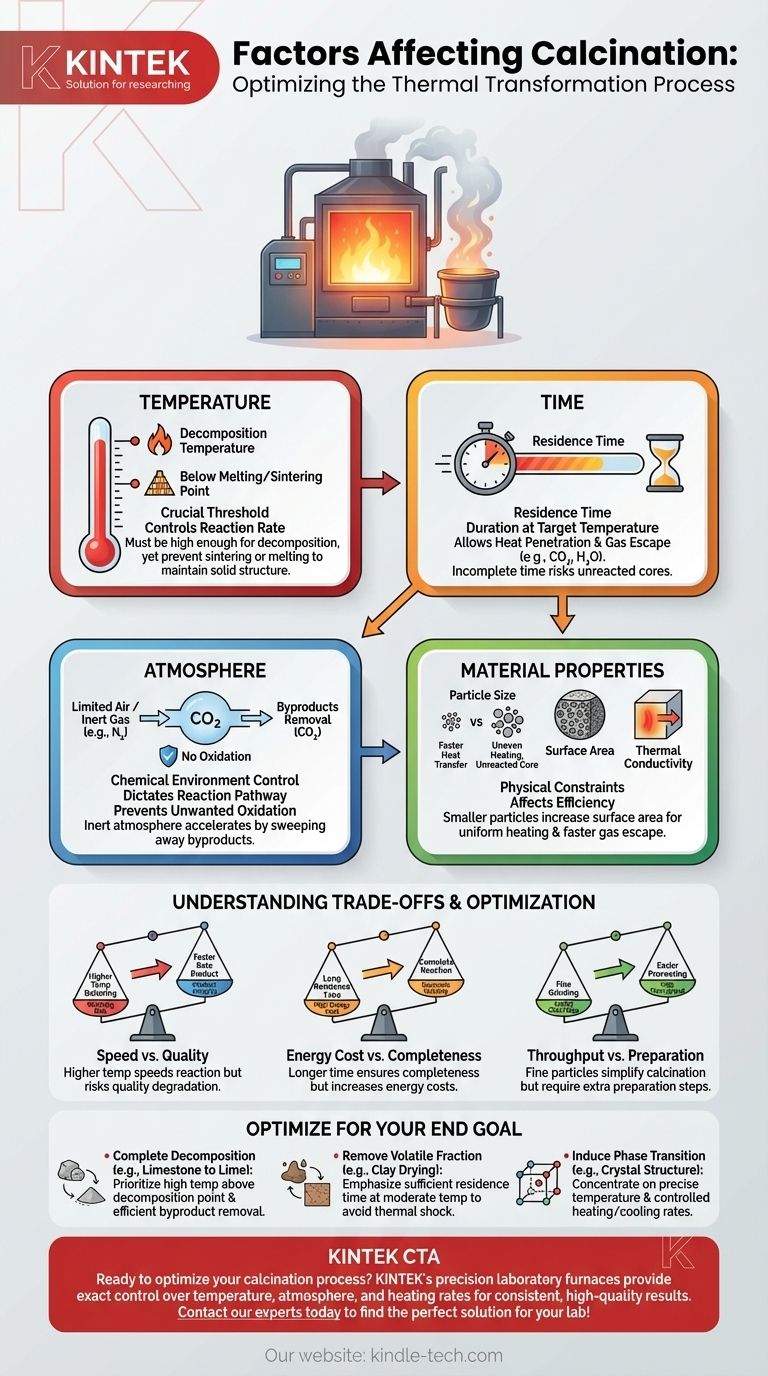
What are the factors affecting calcination? Master Temperature, Time, Atmosphere & Material Properties Visual Guide

Related Products

People Also Ask

Related Products

Electric Rotary Kiln Pyrolysis Furnace Plant Machine Calciner Small Rotary Kiln Rotating Furnace

Electric Rotary Kiln Pyrolysis Furnace Plant Machine Calciner Small Rotary Kiln Rotating Furnace

Electric rotary kiln - precisely controlled, it's ideal for calcination and drying of materials like lithium cobalate, rare earths, and non-ferrous metals.

Electric Rotary Kiln Continuous Working Small Rotary Furnace Heating Pyrolysis Plant

Electric Rotary Kiln Continuous Working Small Rotary Furnace Heating Pyrolysis Plant

Efficiently calcine and dry bulk powder and lump fluid materials with an electric heating rotary furnace. Ideal for processing lithium ion battery materials and more.

Non Consumable Vacuum Arc Induction Melting Furnace

Non Consumable Vacuum Arc Induction Melting Furnace

Explore the benefits of Non-Consumable Vacuum Arc Furnace with high melting point electrodes. Small, easy to operate & eco-friendly. Ideal for laboratory research on refractory metals & carbides.

Vertical High Temperature Graphite Vacuum Graphitization Furnace

Vertical High Temperature Graphite Vacuum Graphitization Furnace

Vertical high temperature graphitization furnace for carbonization and graphitization of carbon materials up to 3100℃.Suitable for shaped graphitization of carbon fiber filaments and other materials sintered in a carbon environment.Applications in metallurgy, electronics, and aerospace for producing high-quality graphite products like electrodes and crucibles.

Ultra-High Temperature Graphite Vacuum Graphitization Furnace

Ultra-High Temperature Graphite Vacuum Graphitization Furnace

The ultra-high temperature graphitization furnace utilizes medium frequency induction heating in a vacuum or inert gas environment. The induction coil generates an alternating magnetic field, inducing eddy currents in the graphite crucible, which heats up and radiates heat to the workpiece, bringing it to the desired temperature. This furnace is primarily used for graphitization and sintering of carbon materials, carbon fiber materials, and other composite materials.

High Temperature Muffle Oven Furnace for Laboratory Debinding and Pre Sintering

High Temperature Muffle Oven Furnace for Laboratory Debinding and Pre Sintering

KT-MD High temperature debinding and pre-sintering furnace for ceramic materials with various molding processes. Ideal for electronic components such as MLCC and NFC.

Large Vertical Graphite Vacuum Graphitization Furnace

Large Vertical Graphite Vacuum Graphitization Furnace

A large vertical high-temperature graphitization furnace is a type of industrial furnace used for the graphitization of carbon materials, such as carbon fiber and carbon black. It is a high-temperature furnace that can reach temperatures of up to 3100°C.

Graphite Vacuum Continuous Graphitization Furnace

Graphite Vacuum Continuous Graphitization Furnace

High-temperature graphitization furnace is a professional equipment for graphitization treatment of carbon materials. It is a key equipment for the production of high-quality graphite products. It has high temperature, high efficiency and uniform heating. It is suitable for various high-temperature treatments and graphitization treatments. It is widely used in metallurgy, electronics, aerospace, etc. industry.

Graphite Vacuum Furnace Bottom Discharge Graphitization Furnace for Carbon Materials

Graphite Vacuum Furnace Bottom Discharge Graphitization Furnace for Carbon Materials

Bottom-out graphitization furnace for carbon materials, ultra-high temperature furnace up to 3100°C, suitable for graphitization and sintering of carbon rods and carbon blocks. Vertical design, bottom discharging, convenient feeding and discharging, high temperature uniformity, low energy consumption, good stability, hydraulic lifting system, convenient loading and unloading.

Graphite Vacuum Furnace High Thermal Conductivity Film Graphitization Furnace

Graphite Vacuum Furnace High Thermal Conductivity Film Graphitization Furnace

The high thermal conductivity film graphitization furnace has uniform temperature, low energy consumption and can operate continuously.

Electric Rotary Kiln Small Rotary Furnace for Activated Carbon Regeneration

Electric Rotary Kiln Small Rotary Furnace for Activated Carbon Regeneration

Revitalize your activated carbon with KinTek's Electric Regeneration Furnace. Achieve efficient and cost-effective regeneration with our highly automated rotary kiln and intelligent thermal controller.

2200 ℃ Tungsten Vacuum Heat Treat and Sintering Furnace

2200 ℃ Tungsten Vacuum Heat Treat and Sintering Furnace

Experience the ultimate refractory metal furnace with our Tungsten vacuum furnace. Capable of reaching 2200℃, perfect for sintering advanced ceramics and refractory metals. Order now for high-quality results.

1200℃ Split Tube Furnace with Quartz Tube Laboratory Tubular Furnace

1200℃ Split Tube Furnace with Quartz Tube Laboratory Tubular Furnace

KT-TF12 split tube furnace: high-purity insulation, embedded heating wire coils, and max. 1200C. Widely used for new materials and chemical vapour deposition.

Dental Porcelain Zirconia Sintering Ceramic Furnace Chairside with Transformer

Dental Porcelain Zirconia Sintering Ceramic Furnace Chairside with Transformer

Experience top-notch sintering with Chairside Sintering Furnace with Transformer. Easy to operate, noise-free pallet, and automatic temperature calibration. Order now!

Horizontal High Temperature Graphite Vacuum Graphitization Furnace

Horizontal High Temperature Graphite Vacuum Graphitization Furnace

Horizontal Graphitization Furnace: This type of furnace is designed with the heating elements placed horizontally, allowing for uniform heating of the sample. It's well-suited for graphitizing large or bulky samples that require precise temperature control and uniformity.

High Temperature Alumina (Al2O3) Furnace Tube for Engineering Advanced Fine Ceramics

High Temperature Alumina (Al2O3) Furnace Tube for Engineering Advanced Fine Ceramics

High temperature alumina furnace tube combines the advantages of high hardness of alumina, good chemical inertness and steel, and has excellent wear resistance, thermal shock resistance and mechanical shock resistance.

1200℃ Controlled Atmosphere Furnace Nitrogen Inert Atmosphere Furnace

1200℃ Controlled Atmosphere Furnace Nitrogen Inert Atmosphere Furnace

Discover our KT-12A Pro Controlled atmosphere furnace - high precision, heavy duty vacuum chamber, versatile smart touch screen controller, and excellent temperature uniformity up to 1200C. Ideal for both laboratory and industrial application.

600T Vacuum Induction Hot Press Furnace for Heat Treat and Sintering

600T Vacuum Induction Hot Press Furnace for Heat Treat and Sintering

Discover the 600T Vacuum Induction Hot Press Furnace, designed for high-temperature sintering experiments in vacuum or protected atmospheres. Its precise temperature and pressure control, adjustable working pressure, and advanced safety features make it ideal for nonmetal materials, carbon composites, ceramics, and metal powders.

Vacuum Heat Treat and Pressure Sintering Furnace for High Temperature Applications

Vacuum Heat Treat and Pressure Sintering Furnace for High Temperature Applications

Vacuum pressure sintering furnaces are designed for high temperature hot pressing applications in metal and ceramic sintering. Its advanced features ensure precise temperature control, reliable pressure maintenance, and a robust design for seamless operation.

2200 ℃ Graphite Vacuum Heat Treat Furnace

2200 ℃ Graphite Vacuum Heat Treat Furnace

Discover the power of the KT-VG Graphite Vacuum Furnace - with a maximum working temperature of 2200℃, it's perfect for vacuum sintering of various materials. Learn more now.


Leave Your Message