The Copper Underpotential Deposition (Cu-UPD) method is a precise electrochemical technique designed to measure the Electrochemical Active Surface Area (ECSA), specifically for platinum-based electrodes. It operates by forming a single-atom layer of copper onto the electrode surface and measuring the electrical charge generated when this layer is subsequently stripped (desorbed).
By quantifying the specific number of active sites available for reaction, Cu-UPD provides a rigorous scientific evaluation of catalytic efficiency that simple geometric measurements fail to capture.
The Operational Principle
forming the Monolayer
The process begins by inducing the deposition of copper onto a platinum surface.
Critically, this is done at a specific potential that limits the deposition to a single atomic layer. This ensures that the copper atoms cover exactly one active platinum site each, creating a 1:1 map of the surface.
Measuring Desorption Charge
Once the monolayer is formed, the potential is reversed to remove the copper.
During this desorption phase, the system measures the total charge required to strip the copper atoms off the platinum. This charge is directly proportional to the number of copper atoms that were present.
Calculating Effective Area
To translate this electrical charge into a physical area, analysts use known charge constants.
By applying these constants to the measured desorption charge, one can calculate the actual effective contact area of the platinum. This provides a precise value for the ECSA.
Significance in Catalytic Evaluation
Beyond Geometric Dimensions
Standard measurements of length and width yield the geometric area, which assumes the electrode is perfectly flat.
However, most effective electrodes utilize three-dimensional structured designs to maximize surface area. Geometric measurements completely ignore the internal roughness, pores, and complex architecture of these structures.
Identifying Real Active Sites
The Cu-UPD method measures the area where the electrolyte actually contacts the electrode.
This distinction is vital because catalytic reactions only occur at these specific interface points. Therefore, Cu-UPD reflects the number of active sites available for chemical reaction, not just the physical footprint of the material.
Assessing True Efficiency
By determining the ECSA, researchers can scientifically evaluate the catalytic efficiency of an electrode.
It allows for the normalization of current/activity against the real surface area. This ensures that performance data reflects the intrinsic quality of the catalyst, rather than just the quantity of material loaded onto the substrate.
Common Pitfalls in Measurement
The Illusion of Geometric Area
A common error in electrode characterization is relying solely on geometric surface area.
Doing so can lead to a gross underestimation of a material's potential, particularly for porous or rough materials. It fails to account for the internal complexity that drives high performance.
Specificity to Platinum
The method described relies on specific interactions between copper and the substrate.
The reference specifically highlights its application on platinum surfaces. Applying this specific methodology to incompatible substrates without adjusting for different charge constants or adsorption behaviors will yield inaccurate results.
Making the Right Choice for Your Goal
To ensure your data accurately reflects the capabilities of your electrode, apply the following guidelines:
- If your primary focus is evaluating 3D structures: You must use Cu-UPD to account for porosity and roughness, as geometric measurements will provide meaningless data regarding performance.
- If your primary focus is normalizing catalytic activity: Use the ECSA derived from Cu-UPD to determine the specific activity (current per real unit area), allowing for true comparisons between different catalyst designs.
True understanding of electrode performance begins when you measure the chemical reality of the surface, not just its physical dimensions.
Summary Table:
| Feature | Geometric Area | Cu-UPD (ECSA) |
|---|---|---|
| Measurement Basis | Physical dimensions (L x W) | Charge of single-atom copper monolayer |
| Surface Texture | Assumes perfectly flat surface | Accounts for roughness, pores, and 3D structures |
| Application | Basic footprint estimation | Precise catalytic activity normalization |
| Site Accuracy | Ignores internal active sites | Measures real electrolyte-electrode interface |
| Best For | Initial material loading | High-performance platinum catalyst evaluation |
Elevate Your Electrochemical Research with KINTEK
Precision in ECSA measurement requires high-quality instrumentation and reliable materials. KINTEK specializes in advanced laboratory solutions, offering a comprehensive range of electrolytic cells and electrodes, alongside precision-engineered high-temperature furnaces, crushing systems, and hydraulic presses to support every stage of your material synthesis.
Whether you are characterizing 3D platinum structures or optimizing battery research, our expert-grade tools ensure your data reflects the true chemical reality of your surface.
Ready to achieve superior catalytic efficiency? Contact us today to discover how KINTEK can empower your laboratory's success.
References
- Abdulsattar H. Ghanim, Syed Mubeen. Low-Loading of Pt Nanoparticles on 3D Carbon Foam Support for Highly Active and Stable Hydrogen Production. DOI: 10.3389/fchem.2018.00523
This article is also based on technical information from Kintek Solution Knowledge Base .
Related Products
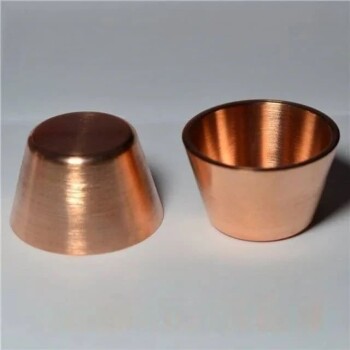
- Electron Beam Evaporation Coating Oxygen-Free Copper Crucible and Evaporation Boat
- Chemical Vapor Deposition CVD Equipment System Chamber Slide PECVD Tube Furnace with Liquid Gasifier PECVD Machine
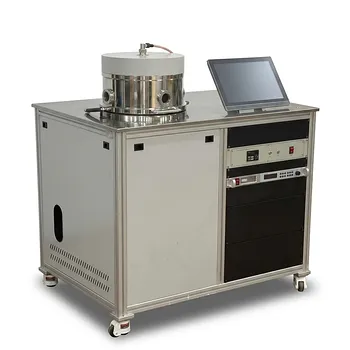
- RF PECVD System Radio Frequency Plasma-Enhanced Chemical Vapor Deposition RF PECVD
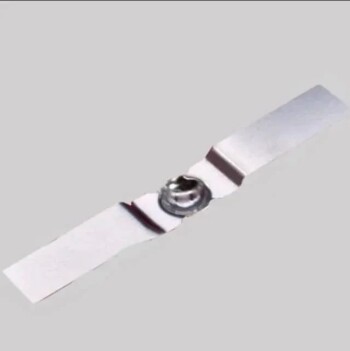
- Hemispherical Bottom Tungsten Molybdenum Evaporation Boat
- Inclined Rotary Plasma Enhanced Chemical Vapor Deposition PECVD Equipment Tube Furnace Machine
People Also Ask
- What is the container that holds the metal source material called in e-beam evaporation? Ensure Purity and Quality in Your Thin-Film Deposition
- What is e-beam evaporation? Achieve High-Purity Thin Film Deposition for Your Lab
- What is the voltage of e-beam evaporation? Achieve Precise Thin-Film Deposition
- What is the current of e-beam evaporation? A Guide to High-Purity Thin Film Deposition
- What are the applications of e-beam evaporation? Achieve High-Purity Coatings for Optics & Electronics