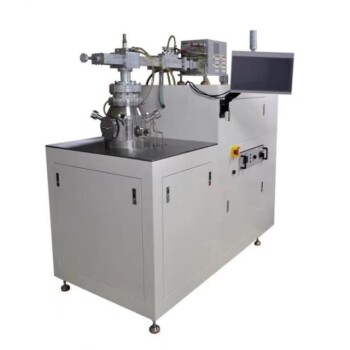
Utilizing Plasma Enhanced Chemical Vapor Deposition (PECVD) creates a distinct pathway for synthesizing graphene nanowalls from natural essential oils by eliminating the need for metal catalysts. This process converts complex precursors, such as tea tree oil, directly into self-organized nanosolids at significantly lower temperatures than traditional methods, effectively preserving vital intrinsic minerals.
The core value of PECVD lies in its ability to decouple high-quality nanostructure growth from high-thermal requirements, enabling the transformation of volatile natural oils into functional, vertical nanostructures without thermal degradation or chemical contamination.
Preserving Precursor Integrity
Low-Temperature Processing
The most significant process advantage is the ability to operate at lower overall treatment temperatures. Traditional Chemical Vapor Deposition (CVD) often requires high heat that can degrade complex organic precursors.
PECVD allows the system to function at medium-low temperatures (often between 350°C and 600°C, or even lower). This reduction is critical when working with natural oils, as it prevents the total destruction of the precursor's chemical identity.
Retention of Intrinsic Minerals
Because the process is thermally gentle, the original minerals found within the essential oils are preserved within the final nanomaterial.
Instead of burning off these beneficial elements, PECVD incorporates them into the structure. This results in a composite material that retains the biological or chemical properties of the source oil, rather than just pure carbon.
Simplifying the Synthesis Workflow
Catalyst-Free Fabrication
PECVD provides a simple, one-step method for converting natural oils into solid nanostructures.
Unlike conventional methods that often require a metal catalyst (like nickel or copper) to initiate growth, PECVD drives the reaction through plasma energy. This eliminates the need for expensive substrates and removes the post-process step of purifying the material to remove toxic metal residues.
Direct Conversion to Nanosolids
The technology facilitates the direct transformation of liquid precursors into self-organized nanosolids.
The plasma environment breaks down the essential oil molecules and reassembles them immediately on the substrate. This efficiency leads to high deposition rates (typically 1–10 nm/s), making the process faster and more scalable than standard thermal CVD.
Optimizing Structural Quality
Vertical Alignment and Edge Sharpness
PECVD is particularly adept at growing vertical structures with extremely thin, sharp edges.
The interaction of ions with the growing material directs the growth upward, perpendicular to the substrate. These sharp, vertical edges are mechanically robust and biologically active, facilitating applications like sterilization through physical membrane damage.
Enhanced Film Density and Adhesion
The bombardment of ions during the deposition process significantly increases the packing density (up to 98%) of the resulting layers.
This ion activity helps remove impurities and species that are not sufficiently bonded, resulting in hard, environmentally stable films. Furthermore, the process allows for graded compositions, which enhances adhesion and prevents cracking—a common issue in standard CVD layers.
Understanding the Trade-offs
While PECVD offers superior control and lower temperatures, it introduces complexity in parameter optimization.
Because the process relies on a broad range of plasma-chemical reactions, achieving the perfect film composition requires precise tuning of multiple variables, such as gas flow, pressure, and power density. Additionally, while the equipment is versatile, maintaining the vacuum environment and managing the specific plasma physics can be more technically demanding than simpler thermal evaporation methods.
Making the Right Choice for Your Goal
To maximize the benefits of PECVD for graphene nanowalls, you must align the process parameters with your specific application requirements.
- If your primary focus is Biomedical Applications (Sterilization): Prioritize the low-temperature regime to ensure the retention of original minerals and the formation of sharp, vertical edges for maximum oxidative stress on pathogens.
- If your primary focus is Scalable Manufacturing: Leverage the high deposition rates and the ability to coat large-area or three-dimensional substrates to reduce unit costs and energy consumption.
PECVD transforms the volatility of essential oils from a liability into an asset, allowing you to engineer high-performance, bioactive surfaces with a level of structural control that thermal methods simply cannot match.
Summary Table:
| Feature | PECVD Advantage for Graphene Nanowalls |
|---|---|
| Temperature | Low (350°C - 600°C), preventing precursor degradation |
| Catalyst Req. | Catalyst-free; eliminates metal contamination and purification |
| Mineral Content | Preserves intrinsic minerals from source oils within the structure |
| Growth Rate | High deposition (1–10 nm/s) for faster, scalable production |
| Structure | Vertical alignment with sharp edges for high bioactivity |
| Film Quality | Up to 98% packing density with superior substrate adhesion |
Revolutionize Your Nanomaterial Synthesis with KINTEK
Unlock the full potential of Plasma Enhanced Chemical Vapor Deposition (PECVD) for your research and production. KINTEK specializes in advanced laboratory equipment, offering high-precision PECVD and CVD systems designed to handle complex precursors like natural essential oils with ease.
Whether you are developing bioactive surfaces for sterilization or high-performance carbon nanosolids, our expert solutions ensure superior structural control and mineral retention. Beyond PECVD, explore our comprehensive range of high-temperature furnaces, high-pressure reactors, and battery research tools tailored for the most demanding lab environments.
Ready to elevate your material science? Contact KINTEK today to find the perfect equipment solution for your laboratory!
References
- Kateryna Bazaka, Kostya Ostrikov. Anti-bacterial surfaces: natural agents, mechanisms of action, and plasma surface modification. DOI: 10.1039/c4ra17244b
This article is also based on technical information from Kintek Solution Knowledge Base .
Related Products
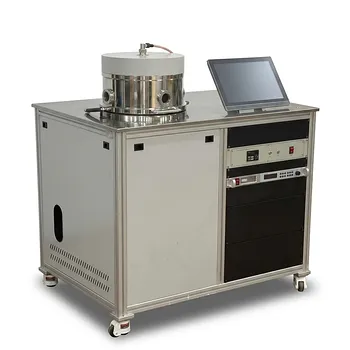
- RF PECVD System Radio Frequency Plasma-Enhanced Chemical Vapor Deposition RF PECVD
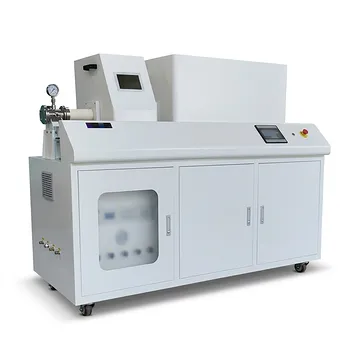
- Chemical Vapor Deposition CVD Equipment System Chamber Slide PECVD Tube Furnace with Liquid Gasifier PECVD Machine
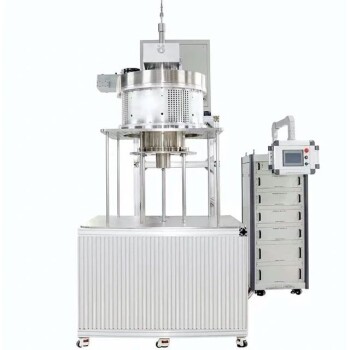
- Inclined Rotary Plasma Enhanced Chemical Vapor Deposition PECVD Equipment Tube Furnace Machine
- Inclined Rotary Plasma Enhanced Chemical Vapor Deposition PECVD Equipment Tube Furnace Machine
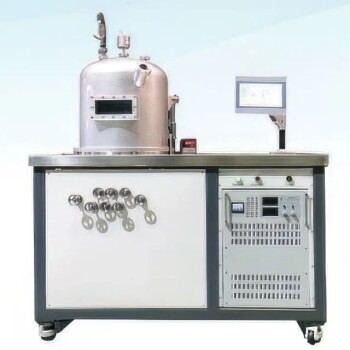
- HFCVD Machine System Equipment for Drawing Die Nano-Diamond Coating
People Also Ask
- What is plasma enhanced chemical vapour deposition PECVD used for? Enable Low-Temp Thin Films for Electronics & Solar
- What is the role of RF-PECVD in VFG preparation? Mastering Vertical Growth and Surface Functionality
- What is an example of PECVD? RF-PECVD for High-Quality Thin Film Deposition
- What is plasma enhanced chemical Vapour deposition process used for fabrication of? A Guide to Low-Temperature Thin Films
- What is plasma CVD? Unlock Low-Temperature Thin Film Deposition for Sensitive Materials