Knowledge thermal elements What is the best heating element for a furnace? A Guide to Selecting the Right Material for Your Temperature Needs
Author avatar

Tech Team · Kintek Solution

Updated 3 months ago

What is the best heating element for a furnace? A Guide to Selecting the Right Material for Your Temperature Needs


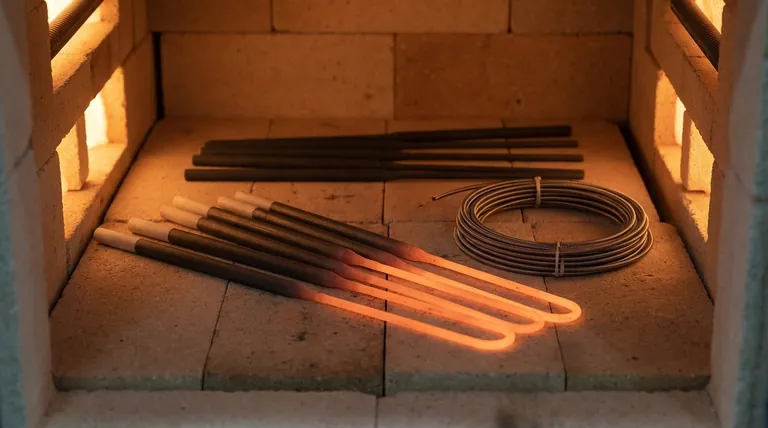
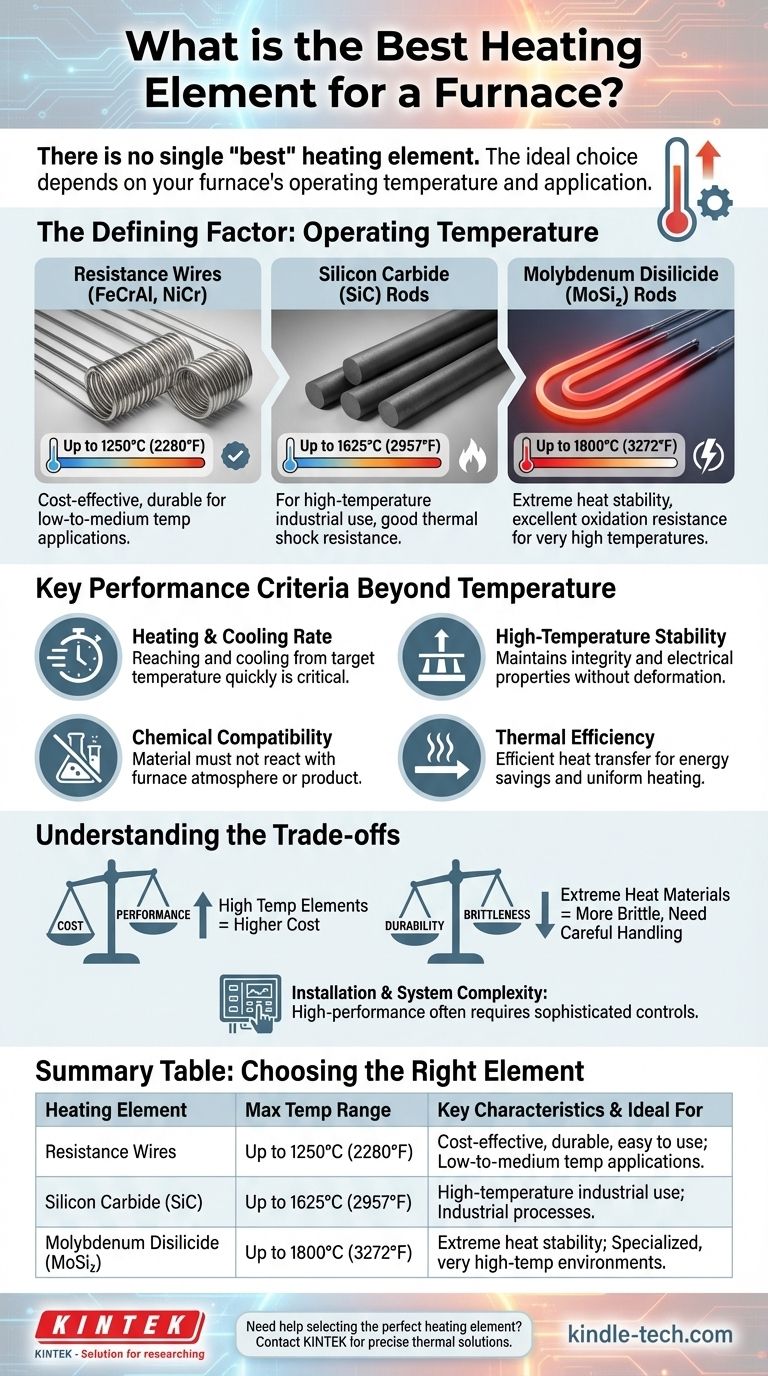
There is no single "best" heating element for every furnace. The ideal choice is determined entirely by the furnace's required operating temperature and specific application. The most common types are resistance wires, silicon carbide rods, and molybdenum disilicide rods, each optimized for a different temperature range.

The selection of a furnace heating element is a direct trade-off between the maximum temperature you need to achieve and the cost and complexity you are willing to accept. Matching the element material to the required heat range is the most critical decision.
What is the best heating element for a furnace? A Guide to Selecting the Right Material for Your Temperature Needs

The Defining Factor: Operating Temperature

The material composition of a heating element dictates its maximum service temperature, its lifespan, and its resistance to thermal shock. Using an element outside its designed temperature range leads to rapid failure and inconsistent performance.

Resistance Wires (e.g., FeCrAl, NiCr)

These are the workhorses for low-to-medium temperature applications, typically up to around 1250°C (2280°F). They offer an excellent balance of cost, durability, and ease of use.

Silicon Carbide (SiC) Rods

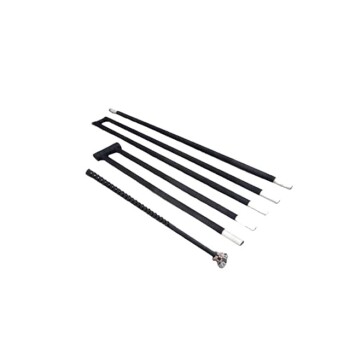
When temperatures need to exceed the limits of metallic wires, silicon carbide is the next step. These elements are common in industrial processes requiring temperatures up to 1625°C (2957°F).

Molybdenum Disilicide (MoSi₂) Rods

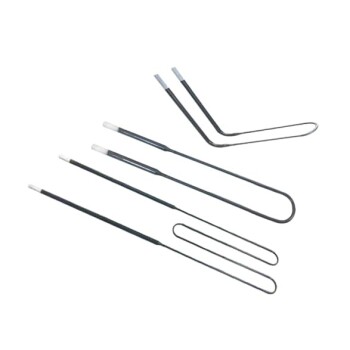
For the most demanding, very high-temperature applications, molybdenum disilicide (often referred to as silicon-molybdenum) is the standard. These elements can operate consistently in air at temperatures up to 1800°C (3272°F).

Key Performance Criteria Beyond Temperature

While temperature is the primary driver, several other factors define a high-quality heating element system. A well-designed furnace must account for all of them.

Heating and Cooling Rate

The ability to reach and cool down from a target temperature quickly is a critical performance specification. For example, some processes require heating an empty furnace to 2000°F (1093°C) in as little as five minutes.

High-Temperature Stability

A superior heating element must maintain its structural integrity and electrical properties without deforming at peak temperatures. This ensures a long service life and predictable, repeatable heating cycles.

Chemical Compatibility

The element material must not react with the atmosphere inside the furnace or the product being processed. Such reactions can contaminate the workpiece and degrade the element itself, compromising the quality of the final product.

Thermal Efficiency

An effective element exhibits good thermal conductivity to transfer heat efficiently to the furnace chamber while minimizing heat loss. This translates directly to energy efficiency and uniform heating.

Understanding the Trade-offs

Selecting a heating element involves balancing competing priorities. Understanding these compromises is key to choosing the right system.

Cost vs. Performance

There is a direct and steep correlation between an element's maximum operating temperature and its cost. High-temperature materials like molybdenum disilicide are significantly more expensive than standard resistance wires.

Durability and Brittleness

Materials designed for extreme heat, like silicon carbide and molybdenum disilicide, are often more brittle than metallic wires. They require more careful handling and can be more susceptible to failure from mechanical or thermal shock.

Installation and System Complexity

High-performance elements often require more sophisticated power controllers and mounting hardware. As the references note, poor design or improper installation are common sources of problems, negating the benefits of a superior element.

Making the Right Choice for Your Goal

To select the appropriate element, start by defining the absolute maximum temperature your process requires.

  • If your primary focus is on applications below 1250°C (2280°F): Resistance wire elements provide the most reliable and cost-effective solution.
  • If your primary focus is on industrial processes between 1250°C and 1625°C (2957°F): Silicon carbide (SiC) rods offer the necessary performance for this demanding range.
  • If your primary focus is on specialized, extreme-heat environments above 1625°C (2957°F): Molybdenum disilicide (MoSi₂) is the essential choice for stability and longevity.

Ultimately, the best heating element is the one that reliably and efficiently meets the specific temperature demands of your task.

Summary Table:

Heating Element Type Maximum Temperature Range Key Characteristics Ideal For
Resistance Wires (FeCrAl, NiCr) Up to 1250°C (2280°F) Cost-effective, durable, easy to use Low-to-medium temperature applications
Silicon Carbide (SiC) Rods Up to 1625°C (2957°F) High-temperature industrial use, good thermal shock resistance Industrial processes requiring high heat
Molybdenum Disilicide (MoSi₂) Rods Up to 1800°C (3272°F) Extreme heat stability, excellent oxidation resistance Specialized, very high-temperature environments

Need help selecting the perfect heating element for your furnace? KINTEK specializes in high-performance lab equipment and consumables, serving laboratories with precise thermal solutions. Our experts can help you choose the right heating element to ensure optimal temperature control, efficiency, and longevity for your specific application. Contact us today to discuss your requirements and get a tailored solution!

Visual Guide
What is the best heating element for a furnace? A Guide to Selecting the Right Material for Your Temperature Needs Visual Guide

Related Products

People Also Ask

Related Products

Silicon Carbide SiC Thermal Heating Elements for Electric Furnace

Silicon Carbide SiC Thermal Heating Elements for Electric Furnace

Experience the advantages of Silicon Carbide (SiC) Heating Element: Long service life, high corrosion and oxidation resistance, fast heating speed, and easy maintenance. Learn more now!

Molybdenum Disilicide (MoSi2) Thermal Elements Electric Furnace Heating Element

Molybdenum Disilicide (MoSi2) Thermal Elements Electric Furnace Heating Element

Discover the power of Molybdenum Disilicide (MoSi2) Heating Element for high-temperature resistance. Unique oxidation resistance with stable resistance value. Learn more about its benefits now!

Vacuum Heat Treat Furnace with Ceramic Fiber Liner

Vacuum Heat Treat Furnace with Ceramic Fiber Liner

Vacuum furnace with polycrystalline ceramic fiber insulation liner for excellent heat insulation and uniform temperature field. Choose from 1200℃ or 1700℃ max. working temperature with high vacuum performance and precise temperature control.

2200 ℃ Tungsten Vacuum Heat Treat and Sintering Furnace

2200 ℃ Tungsten Vacuum Heat Treat and Sintering Furnace

Experience the ultimate refractory metal furnace with our Tungsten vacuum furnace. Capable of reaching 2200℃, perfect for sintering advanced ceramics and refractory metals. Order now for high-quality results.

Molybdenum Vacuum Heat Treat Furnace

Molybdenum Vacuum Heat Treat Furnace

Discover the benefits of a high-configuration molybdenum vacuum furnace with heat shield insulation. Ideal for high-purity, vacuum environments like sapphire crystal growth and heat treatment.

Vacuum Heat Treat and Molybdenum Wire Sintering Furnace for Vacuum Sintering

Vacuum Heat Treat and Molybdenum Wire Sintering Furnace for Vacuum Sintering

A vacuum molybdenum wire sintering furnace is a vertical or bedroom structure, which is suitable for withdrawal, brazing, sintering and degassing of metal materials under high vacuum and high temperature conditions. It is also suitable for dehydroxylation treatment of quartz materials.

Electric Rotary Kiln Continuous Working Small Rotary Furnace Heating Pyrolysis Plant

Electric Rotary Kiln Continuous Working Small Rotary Furnace Heating Pyrolysis Plant

Efficiently calcine and dry bulk powder and lump fluid materials with an electric heating rotary furnace. Ideal for processing lithium ion battery materials and more.

Vacuum Heat Treat and Pressure Sintering Furnace for High Temperature Applications

Vacuum Heat Treat and Pressure Sintering Furnace for High Temperature Applications

Vacuum pressure sintering furnaces are designed for high temperature hot pressing applications in metal and ceramic sintering. Its advanced features ensure precise temperature control, reliable pressure maintenance, and a robust design for seamless operation.

Rotary Tube Furnace Split Multi Heating Zone Rotating Tube Furnace

Rotary Tube Furnace Split Multi Heating Zone Rotating Tube Furnace

Multi zone rotary furnace for high-precision temperature control with 2-8 independent heating zones. Ideal for lithium ion battery electrode materials and high-temperature reactions. Can work under vacuum and controlled atmosphere.

Laboratory Rapid Thermal Processing (RTP) Quartz Tube Furnace

Laboratory Rapid Thermal Processing (RTP) Quartz Tube Furnace

Get lightning-fast heating with our RTP Rapid Heating Tube Furnace. Designed for precise, high-speed heating and cooling with convenient sliding rail and TFT touch screen controller. Order now for ideal thermal processing!

Controlled Nitrogen Inert Hydrogen Atmosphere Furnace

Controlled Nitrogen Inert Hydrogen Atmosphere Furnace

KT-AH Hydrogen atmosphere furnace - induction gas furnace for sintering/annealing with built-in safety features, dual housing design, and energy-saving efficiency. Ideal for lab and industrial use.

600T Vacuum Induction Hot Press Furnace for Heat Treat and Sintering

600T Vacuum Induction Hot Press Furnace for Heat Treat and Sintering

Discover the 600T Vacuum Induction Hot Press Furnace, designed for high-temperature sintering experiments in vacuum or protected atmospheres. Its precise temperature and pressure control, adjustable working pressure, and advanced safety features make it ideal for nonmetal materials, carbon composites, ceramics, and metal powders.

Multi-zone Laboratory Tube Furnace

Multi-zone Laboratory Tube Furnace

Experience precise, efficient thermal testing with our Multi Zone Tube Furnace. Independent heating zones and temperature sensors allow for controlled high-temperature gradient heating fields. Order now for advanced thermal analysis!

Graphite Vacuum Furnace Bottom Discharge Graphitization Furnace for Carbon Materials

Graphite Vacuum Furnace Bottom Discharge Graphitization Furnace for Carbon Materials

Bottom-out graphitization furnace for carbon materials, ultra-high temperature furnace up to 3100°C, suitable for graphitization and sintering of carbon rods and carbon blocks. Vertical design, bottom discharging, convenient feeding and discharging, high temperature uniformity, low energy consumption, good stability, hydraulic lifting system, convenient loading and unloading.

Ultra-High Temperature Graphite Vacuum Graphitization Furnace

Ultra-High Temperature Graphite Vacuum Graphitization Furnace

The ultra-high temperature graphitization furnace utilizes medium frequency induction heating in a vacuum or inert gas environment. The induction coil generates an alternating magnetic field, inducing eddy currents in the graphite crucible, which heats up and radiates heat to the workpiece, bringing it to the desired temperature. This furnace is primarily used for graphitization and sintering of carbon materials, carbon fiber materials, and other composite materials.

Electric Rotary Kiln Pyrolysis Furnace Plant Machine Calciner Small Rotary Kiln Rotating Furnace

Electric Rotary Kiln Pyrolysis Furnace Plant Machine Calciner Small Rotary Kiln Rotating Furnace

Electric rotary kiln - precisely controlled, it's ideal for calcination and drying of materials like lithium cobalate, rare earths, and non-ferrous metals.

Horizontal High Temperature Graphite Vacuum Graphitization Furnace

Horizontal High Temperature Graphite Vacuum Graphitization Furnace

Horizontal Graphitization Furnace: This type of furnace is designed with the heating elements placed horizontally, allowing for uniform heating of the sample. It's well-suited for graphitizing large or bulky samples that require precise temperature control and uniformity.

1200℃ Muffle Furnace Oven for Laboratory

1200℃ Muffle Furnace Oven for Laboratory

Upgrade your lab with our 1200℃ Muffle Furnace. Achieve fast, precise heating with Japan alumina fibers and Molybdenum coils. Features TFT touch screen controller for easy programming and data analysis. Order now!

Electric Rotary Kiln Small Rotary Furnace for Activated Carbon Regeneration

Electric Rotary Kiln Small Rotary Furnace for Activated Carbon Regeneration

Revitalize your activated carbon with KinTek's Electric Regeneration Furnace. Achieve efficient and cost-effective regeneration with our highly automated rotary kiln and intelligent thermal controller.

Electric Rotary Kiln Small Rotary Furnace Biomass Pyrolysis Plant

Electric Rotary Kiln Small Rotary Furnace Biomass Pyrolysis Plant

Learn about Rotary Biomass Pyrolysis Furnaces & how they decompose organic material at high temps without oxygen. Use for biofuels, waste processing, chemicals & more.


Leave Your Message