Knowledge Vacuum Furnace What is the common operating temperature in a furnace? A Guide to Industrial Heat Treatment Ranges
Author avatar

Tech Team · Kintek Solution

Updated 2 months ago

What is the common operating temperature in a furnace? A Guide to Industrial Heat Treatment Ranges


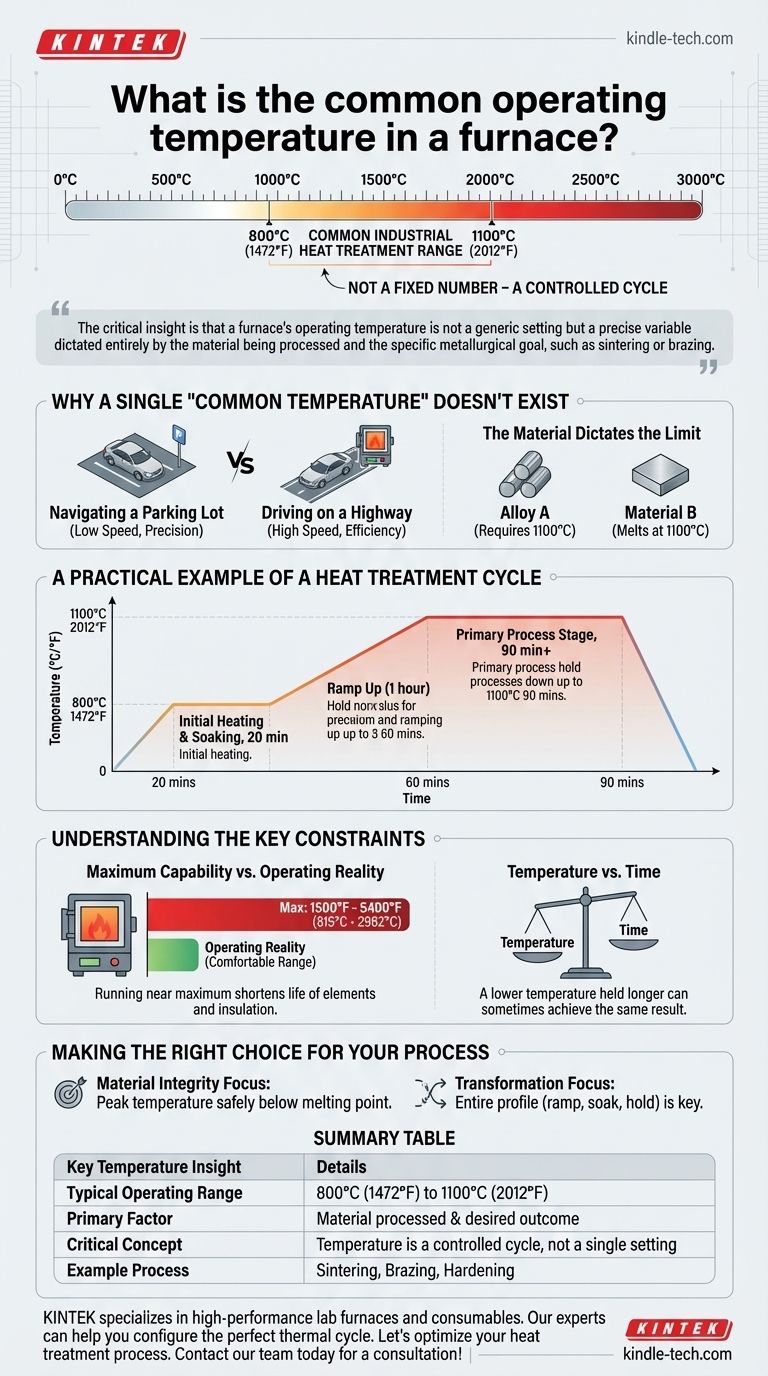
While there is no single universal temperature, a common operating range for industrial heat treatment processes is between 800°C (1472°F) and 1100°C (2012°F). This temperature is not a fixed number but is part of a carefully controlled cycle of heating and holding designed for a specific material and a desired outcome.

The critical insight is that a furnace's operating temperature is not a generic setting but a precise variable dictated entirely by the material being processed and the specific metallurgical goal, such as sintering or brazing.
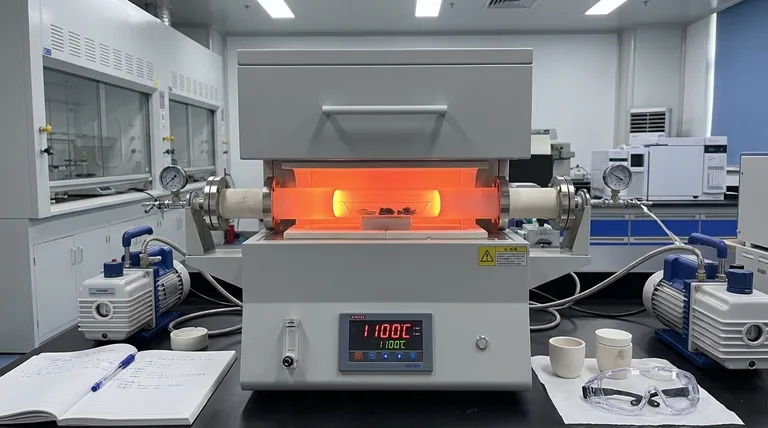
What is the common operating temperature in a furnace? A Guide to Industrial Heat Treatment Ranges

Why a Single "Common Temperature" Doesn't Exist

Asking for a common furnace temperature is like asking for the common speed of a car; the correct answer depends entirely on the objective, whether you are navigating a parking lot or driving on a highway. The same principle applies to industrial furnaces.

The Goal Dictates the Heat

Different thermal processes are designed to achieve fundamentally different results, each requiring a unique temperature profile.

For example, sintering is a process that fuses particles together to create a solid object. The goal is to shape the material without liquefying it, meaning the temperature must be carefully controlled to remain below the material's melting point.

The Material Dictates the Limit

The properties of the material being processed set the absolute upper and lower bounds for any heat treatment.

A specific alloy may require a temperature of 1100°C to achieve the desired crystalline structure, while another material might be damaged or melt at that same temperature.

A Practical Example of a Heat Treatment Cycle

Instead of a single temperature, furnaces operate on a programmed cycle with multiple stages. A typical program for a vacuum furnace illustrates this well.

The Initial Heating and Soaking Stage

The furnace might first be raised to 800°C (1472°F) and held there for a set period, such as 20 minutes. This initial "soak" allows the temperature to equalize throughout the part and can help burn off any contaminants.

The Primary Process Stage

Next, the temperature is ramped up slowly over an hour to the primary operating temperature, perhaps 1100°C (2012°F).

The furnace then holds this peak temperature for an extended period, often 90 minutes or more. This is the stage where the intended metallurgical transformation, like bonding or hardening, actually occurs.

Understanding the Key Constraints

Simply setting a furnace to a high temperature is ineffective and often damaging. The process is a balance of multiple factors.

Maximum Capability vs. Operating Reality

While many industrial furnace systems have a maximum capability between 1,500°F and 5,400°F (815°C to 2982°C), they rarely operate at these limits.

Running a furnace near its maximum temperature shortens the life of its heating elements and insulation. Most processes are designed to run well within the furnace's comfortable operating range for consistency and longevity.

Temperature vs. Time

The duration of the temperature hold is just as critical as the temperature itself. A lower temperature held for a longer time can sometimes achieve the same result as a higher temperature held for a shorter period. This trade-off is a key part of process engineering.

Making the Right Choice for Your Process

Selecting the correct temperature profile requires a clear understanding of your final objective and your starting material.

  • If your primary focus is material integrity: The most critical factor is ensuring your peak temperature remains safely below the material's melting point.
  • If your primary focus is achieving a specific transformation: The entire temperature profile—including ramp rates, soaking stages, and hold times—is more important than any single peak number.

Ultimately, the correct furnace temperature is a precise engineering decision, not a generic setting.

Summary Table:

Key Temperature Insight Details
Typical Operating Range 800°C (1472°F) to 1100°C (2012°F)
Primary Factor Material being processed & desired metallurgical outcome
Critical Concept Temperature is part of a controlled cycle, not a single setting
Example Process Sintering, Brazing, Hardening

Selecting the right furnace and temperature profile is critical for your lab's success. KINTEK specializes in high-performance lab furnaces and consumables, providing the precise temperature control and durability needed for sintering, brazing, and other heat treatment processes. Our experts can help you configure the perfect thermal cycle for your specific materials and goals.

Let's optimize your heat treatment process. Contact our team today for a consultation!

Visual Guide
What is the common operating temperature in a furnace? A Guide to Industrial Heat Treatment Ranges Visual Guide

Related Products

People Also Ask

Related Products

Graphite Vacuum Furnace High Thermal Conductivity Film Graphitization Furnace

Graphite Vacuum Furnace High Thermal Conductivity Film Graphitization Furnace

The high thermal conductivity film graphitization furnace has uniform temperature, low energy consumption and can operate continuously.

High Temperature Muffle Oven Furnace for Laboratory Debinding and Pre Sintering

High Temperature Muffle Oven Furnace for Laboratory Debinding and Pre Sintering

KT-MD High temperature debinding and pre-sintering furnace for ceramic materials with various molding processes. Ideal for electronic components such as MLCC and NFC.

1700℃ Controlled Atmosphere Furnace Nitrogen Inert Atmosphere Furnace

1700℃ Controlled Atmosphere Furnace Nitrogen Inert Atmosphere Furnace

KT-17A Controlled atmosphere furnace: 1700℃ heating, vacuum sealing technology, PID temperature control, and versatile TFT smart touch screen controller for laboratory and industrial use.

Vertical High Temperature Graphite Vacuum Graphitization Furnace

Vertical High Temperature Graphite Vacuum Graphitization Furnace

Vertical high temperature graphitization furnace for carbonization and graphitization of carbon materials up to 3100℃.Suitable for shaped graphitization of carbon fiber filaments and other materials sintered in a carbon environment.Applications in metallurgy, electronics, and aerospace for producing high-quality graphite products like electrodes and crucibles.

1700℃ Muffle Oven Furnace for Laboratory

1700℃ Muffle Oven Furnace for Laboratory

Get superior heat control with our 1700℃ Muffle Furnace. Equipped with intelligent temperature microprocessor, TFT touch screen controller & advanced insulation materials for precise heating up to 1700C. Order now!

1200℃ Split Tube Furnace with Quartz Tube Laboratory Tubular Furnace

1200℃ Split Tube Furnace with Quartz Tube Laboratory Tubular Furnace

KT-TF12 split tube furnace: high-purity insulation, embedded heating wire coils, and max. 1200C. Widely used for new materials and chemical vapour deposition.

Ultra-High Temperature Graphite Vacuum Graphitization Furnace

Ultra-High Temperature Graphite Vacuum Graphitization Furnace

The ultra-high temperature graphitization furnace utilizes medium frequency induction heating in a vacuum or inert gas environment. The induction coil generates an alternating magnetic field, inducing eddy currents in the graphite crucible, which heats up and radiates heat to the workpiece, bringing it to the desired temperature. This furnace is primarily used for graphitization and sintering of carbon materials, carbon fiber materials, and other composite materials.

Graphite Vacuum Furnace Bottom Discharge Graphitization Furnace for Carbon Materials

Graphite Vacuum Furnace Bottom Discharge Graphitization Furnace for Carbon Materials

Bottom-out graphitization furnace for carbon materials, ultra-high temperature furnace up to 3100°C, suitable for graphitization and sintering of carbon rods and carbon blocks. Vertical design, bottom discharging, convenient feeding and discharging, high temperature uniformity, low energy consumption, good stability, hydraulic lifting system, convenient loading and unloading.

Controlled Nitrogen Inert Hydrogen Atmosphere Furnace

Controlled Nitrogen Inert Hydrogen Atmosphere Furnace

KT-AH Hydrogen atmosphere furnace - induction gas furnace for sintering/annealing with built-in safety features, dual housing design, and energy-saving efficiency. Ideal for lab and industrial use.

Large Vertical Graphite Vacuum Graphitization Furnace

Large Vertical Graphite Vacuum Graphitization Furnace

A large vertical high-temperature graphitization furnace is a type of industrial furnace used for the graphitization of carbon materials, such as carbon fiber and carbon black. It is a high-temperature furnace that can reach temperatures of up to 3100°C.

600T Vacuum Induction Hot Press Furnace for Heat Treat and Sintering

600T Vacuum Induction Hot Press Furnace for Heat Treat and Sintering

Discover the 600T Vacuum Induction Hot Press Furnace, designed for high-temperature sintering experiments in vacuum or protected atmospheres. Its precise temperature and pressure control, adjustable working pressure, and advanced safety features make it ideal for nonmetal materials, carbon composites, ceramics, and metal powders.

Laboratory Muffle Oven Furnace Bottom Lifting Muffle Furnace

Laboratory Muffle Oven Furnace Bottom Lifting Muffle Furnace

Efficiently produce batches with excellent temperature uniformity using our Bottom Lifting Furnace. Features two electric lifting stages and advanced temperature control up to 1600℃.

Vacuum Hot Press Furnace Machine Heated Vacuum Press

Vacuum Hot Press Furnace Machine Heated Vacuum Press

Discover the advantages of Vacuum Hot Press Furnace! Manufacture dense refractory metals & compounds, ceramics, and composites under high temp and pressure.

Vacuum Sealed Continuous Working Rotary Tube Furnace Rotating Tube Furnace

Vacuum Sealed Continuous Working Rotary Tube Furnace Rotating Tube Furnace

Experience efficient material processing with our vacuum-sealed rotary tube furnace. Perfect for experiments or industrial production, equipped with optional features for controlled feeding and optimized results. Order now.

2200 ℃ Graphite Vacuum Heat Treat Furnace

2200 ℃ Graphite Vacuum Heat Treat Furnace

Discover the power of the KT-VG Graphite Vacuum Furnace - with a maximum working temperature of 2200℃, it's perfect for vacuum sintering of various materials. Learn more now.

Electric Rotary Kiln Pyrolysis Furnace Plant Machine Calciner Small Rotary Kiln Rotating Furnace

Electric Rotary Kiln Pyrolysis Furnace Plant Machine Calciner Small Rotary Kiln Rotating Furnace

Electric rotary kiln - precisely controlled, it's ideal for calcination and drying of materials like lithium cobalate, rare earths, and non-ferrous metals.

Vacuum Heat Treat and Molybdenum Wire Sintering Furnace for Vacuum Sintering

Vacuum Heat Treat and Molybdenum Wire Sintering Furnace for Vacuum Sintering

A vacuum molybdenum wire sintering furnace is a vertical or bedroom structure, which is suitable for withdrawal, brazing, sintering and degassing of metal materials under high vacuum and high temperature conditions. It is also suitable for dehydroxylation treatment of quartz materials.

Dental Porcelain Zirconia Sintering Ceramic Furnace Chairside with Transformer

Dental Porcelain Zirconia Sintering Ceramic Furnace Chairside with Transformer

Experience top-notch sintering with Chairside Sintering Furnace with Transformer. Easy to operate, noise-free pallet, and automatic temperature calibration. Order now!

Horizontal High Temperature Graphite Vacuum Graphitization Furnace

Horizontal High Temperature Graphite Vacuum Graphitization Furnace

Horizontal Graphitization Furnace: This type of furnace is designed with the heating elements placed horizontally, allowing for uniform heating of the sample. It's well-suited for graphitizing large or bulky samples that require precise temperature control and uniformity.

Vacuum Heat Treat and Pressure Sintering Furnace for High Temperature Applications

Vacuum Heat Treat and Pressure Sintering Furnace for High Temperature Applications

Vacuum pressure sintering furnaces are designed for high temperature hot pressing applications in metal and ceramic sintering. Its advanced features ensure precise temperature control, reliable pressure maintenance, and a robust design for seamless operation.


Leave Your Message