Knowledge What are the differences between low-pressure and high-pressure heaters? Optimize Your Thermal Power Plant Efficiency
Author avatar

Tech Team · Kintek Solution

Updated 1 week ago

What are the differences between low-pressure and high-pressure heaters? Optimize Your Thermal Power Plant Efficiency


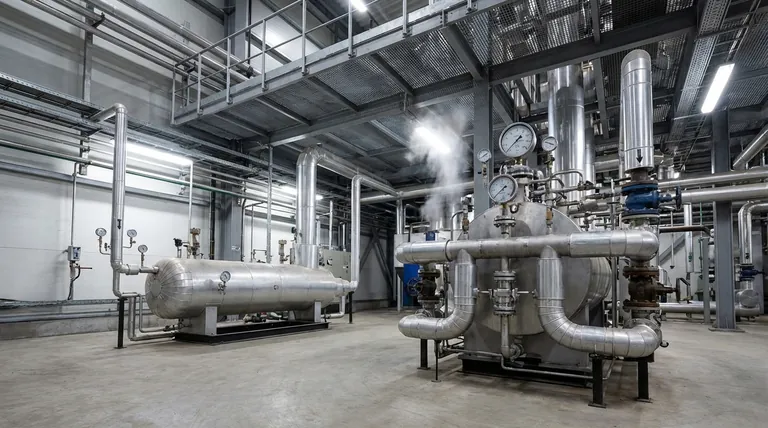
Low-pressure and high-pressure heaters are essential components in thermal power plants, primarily used to heat feedwater before it enters the boiler. The primary difference lies in their operating pressure, temperature, and energy requirements. Low-pressure heaters operate at lower pressures and temperatures, making them more energy-efficient for specific applications, while high-pressure heaters operate at higher pressures and temperatures, enabling them to handle greater thermal loads. Understanding these differences is crucial for selecting the right equipment based on system requirements, energy efficiency, and operational goals.

What are the differences between low-pressure and high-pressure heaters? Optimize Your Thermal Power Plant Efficiency

Key Points Explained:

  1. Operating Pressure and Temperature:

    • Low-Pressure Heaters: Operate at lower pressures (typically below 100 psi) and temperatures (below 250°F). These conditions make them suitable for applications where moderate heating is required, such as preheating feedwater in the early stages of a thermal cycle.
    • High-Pressure Heaters: Operate at significantly higher pressures (often above 600 psi) and temperatures (above 400°F). They are designed to handle the intense thermal demands of advanced stages in the power generation process, such as reheating feedwater before it enters the boiler.
  2. Energy Requirements:

    • Low-Pressure Heaters: Require less energy to operate due to their lower pressure and temperature settings. This makes them more energy-efficient for applications where excessive heat is unnecessary.
    • High-Pressure Heaters: Demand more energy to achieve and maintain higher pressures and temperatures. This increased energy input is necessary to ensure efficient heat transfer in high-demand scenarios.
  3. Applications in Power Plants:

    • Low-Pressure Heaters: Commonly used in the initial stages of the feedwater heating process. They help raise the temperature of the feedwater gradually, improving overall system efficiency without excessive energy consumption.
    • High-Pressure Heaters: Positioned closer to the boiler, these heaters ensure the feedwater reaches the optimal temperature and pressure required for efficient steam generation. They are critical for maximizing thermal efficiency in high-pressure systems.
  4. Design and Material Considerations:

    • Low-Pressure Heaters: Typically constructed with materials that can withstand lower stress levels, reducing manufacturing costs. Their design focuses on efficiency and reliability under moderate operating conditions.
    • High-Pressure Heaters: Built with robust materials capable of withstanding high stress and temperature fluctuations. Their design emphasizes durability and performance under extreme conditions.
  5. Efficiency and Cost Implications:

    • Low-Pressure Heaters: Offer cost savings in terms of energy consumption and maintenance. Their simpler design and lower operating conditions contribute to reduced operational costs.
    • High-Pressure Heaters: While more expensive to operate and maintain, they provide significant efficiency gains in high-demand systems, justifying their higher initial and operational costs.
  6. System Integration:

    • Low-Pressure Heaters: Often integrated into systems where energy efficiency and cost-effectiveness are prioritized over high thermal output. They work well in conjunction with other low-pressure components.
    • High-Pressure Heaters: Integrated into systems requiring high thermal efficiency and performance. They are essential in modern power plants aiming to maximize energy output and minimize waste.

By understanding these key differences, equipment purchasers can make informed decisions based on the specific needs of their thermal systems, balancing energy efficiency, operational requirements, and cost considerations.

Summary Table:

Aspect Low-Pressure Heaters High-Pressure Heaters
Operating Pressure Below 100 psi Above 600 psi
Operating Temperature Below 250°F Above 400°F
Energy Requirements Lower energy consumption, more energy-efficient Higher energy consumption, designed for high-demand scenarios
Applications Initial stages of feedwater heating, moderate heating needs Advanced stages, reheating feedwater for boiler entry
Design & Materials Materials for lower stress levels, cost-effective Robust materials for high stress and temperature fluctuations
Efficiency & Cost Cost-effective, lower operational costs Higher initial and operational costs, but greater efficiency in high-demand systems
System Integration Prioritizes energy efficiency and cost-effectiveness Essential for maximizing thermal efficiency and performance

Need help selecting the right heater for your thermal power plant? Contact our experts today for tailored solutions!

Visual Guide
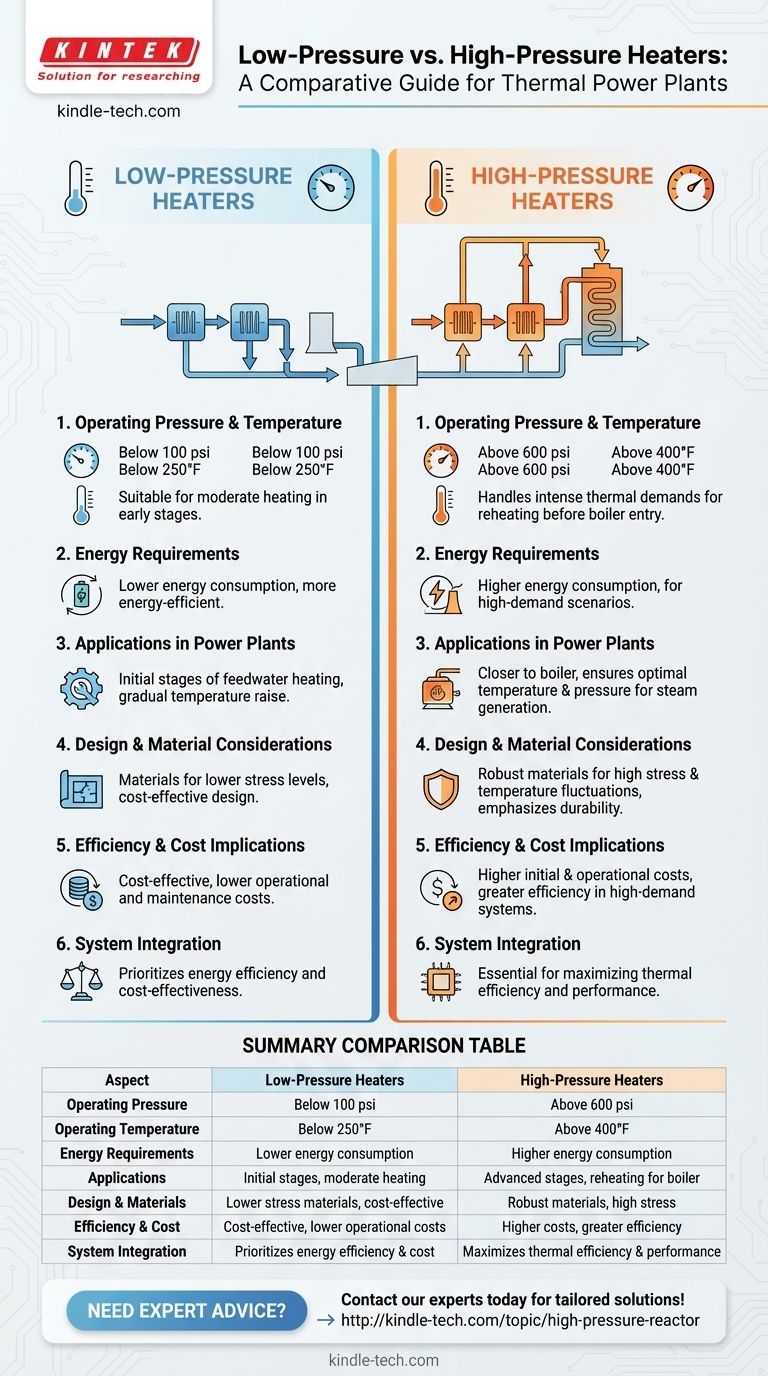
What are the differences between low-pressure and high-pressure heaters? Optimize Your Thermal Power Plant Efficiency Visual Guide

Related Products

People Also Ask

Related Products

Customizable High Pressure Reactors for Advanced Scientific and Industrial Applications

Customizable High Pressure Reactors for Advanced Scientific and Industrial Applications

This laboratory-scale high-pressure reactor is a high-performance autoclave engineered for precision and safety in demanding research and development environments.

Stainless High Pressure Autoclave Reactor Laboratory Pressure Reactor

Stainless High Pressure Autoclave Reactor Laboratory Pressure Reactor

Discover the versatility of Stainless High Pressure Reactor - a safe and reliable solution for direct and indirect heating. Built with stainless steel, it can withstand high temperatures and pressures. Learn more now.

Double Plate Heating Press Mold for Lab

Double Plate Heating Press Mold for Lab

Discover precision in heating with our Double Plate Heating Mold, featuring high-quality steel and uniform temperature control for efficient lab processes. Ideal for various thermal applications.

Heated Hydraulic Press Machine with Integrated Manual Heated Plates for Lab Use

Heated Hydraulic Press Machine with Integrated Manual Heated Plates for Lab Use

Efficiently process heat-pressing samples with our Integrated Manual Heated Lab Press. With a heating range up to 500°C, it's perfect for various industries.

High Pressure Laboratory Autoclave Reactor for Hydrothermal Synthesis

High Pressure Laboratory Autoclave Reactor for Hydrothermal Synthesis

Discover the applications of Hydrothermal Synthesis Reactor - a small, corrosion-resistant reactor for chemical labs. Achieve rapid digestion of insoluble substances in a safe and reliable way. Learn more now.

Manual Heated Hydraulic Press Machine with Heated Plates for Laboratory Hot Press

Manual Heated Hydraulic Press Machine with Heated Plates for Laboratory Hot Press

The Manual Heat Press is a versatile piece of equipment suitable for a variety of applications, operated by a manual hydraulic system that applies controlled pressure and heat to the material placed on the piston.

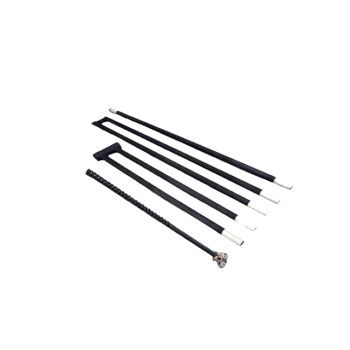
Silicon Carbide SiC Thermal Heating Elements for Electric Furnace

Silicon Carbide SiC Thermal Heating Elements for Electric Furnace

Experience the advantages of Silicon Carbide (SiC) Heating Element: Long service life, high corrosion and oxidation resistance, fast heating speed, and easy maintenance. Learn more now!

Heated Hydraulic Press Machine with Heated Plates Split Manual Laboratory Hot Press

Heated Hydraulic Press Machine with Heated Plates Split Manual Laboratory Hot Press

Efficiently prepare your samples with our Split Manual Heated Lab Press. With a pressure range up to 40T and heating plates up to 300°C, it's perfect for various industries.

Automatic Heated Hydraulic Press Machine with Heated Plates for Laboratory Hot Press

Automatic Heated Hydraulic Press Machine with Heated Plates for Laboratory Hot Press

The Automatic High Temperature Heat Press is a sophisticated hydraulic hot press designed for efficient temperature control and product quality processing.

High Pressure Laboratory Vacuum Tube Furnace Quartz Tubular Furnace

High Pressure Laboratory Vacuum Tube Furnace Quartz Tubular Furnace

KT-PTF High Pressure Tube Furnace: Compact split tube furnace with strong positive pressure resistance. Working temp up to 1100°C and pressure up to 15Mpa. Also works under controller atmosphere or high vacuum.

Laboratory Hydraulic Press Lab Pellet Press for Button Battery

Laboratory Hydraulic Press Lab Pellet Press for Button Battery

Efficiently prepare samples with our 2T Button Battery Press. Ideal for material research labs and small-scale production. Small footprint, lightweight, and vacuum-compatible.

Vacuum Hot Press Furnace Machine for Lamination and Heating

Vacuum Hot Press Furnace Machine for Lamination and Heating

Experience clean and precise lamination with Vacuum Lamination Press. Perfect for wafer bonding, thin-film transformations, and LCP lamination. Order now!

Electric Split Lab Cold Isostatic Press CIP Machine for Cold Isostatic Pressing

Electric Split Lab Cold Isostatic Press CIP Machine for Cold Isostatic Pressing

Split cold isostatic presses are capable of providing higher pressures, making them suitable for testing applications that require high pressure levels.

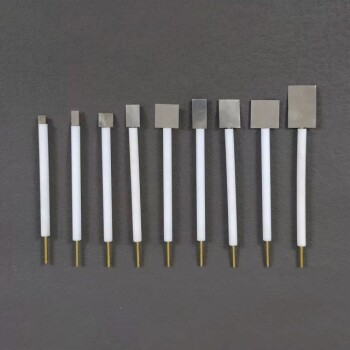
Platinum Sheet Electrode for Laboratory and Industrial Applications

Platinum Sheet Electrode for Laboratory and Industrial Applications

Elevate your experiments with our Platinum Sheet Electrode. Crafted with quality materials, our safe and durable models can be tailored to fit your needs.

Laboratory Single Horizontal Jar Mill

Laboratory Single Horizontal Jar Mill

KT-JM3000 is a mixing and grinding instrument for placing a ball milling tank with a volume of 3000ml or less. It adopts frequency conversion control to realize timing, constant speed, direction change, overload protection and other functions.

Small Vacuum Heat Treat and Tungsten Wire Sintering Furnace

Small Vacuum Heat Treat and Tungsten Wire Sintering Furnace

The small vacuum tungsten wire sintering furnace is a compact experimental vacuum furnace specially designed for universities and scientific research institutes. The furnace features a CNC welded shell and vacuum piping to ensure leak-free operation. Quick-connect electrical connections facilitate relocation and debugging, and the standard electrical control cabinet is safe and convenient to operate.

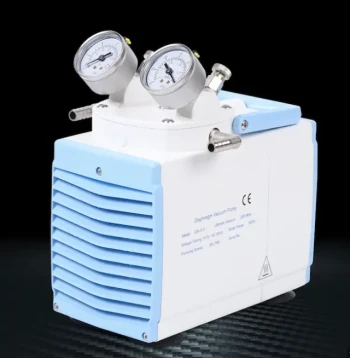
Oil Free Diaphragm Vacuum Pump for Laboratory and Industrial Use

Oil Free Diaphragm Vacuum Pump for Laboratory and Industrial Use

Oil-free diaphragm vacuum pump for labs: clean, reliable, chemical-resistant. Ideal for filtration, SPE, and rotary evaporation. Maintenance-free operation.

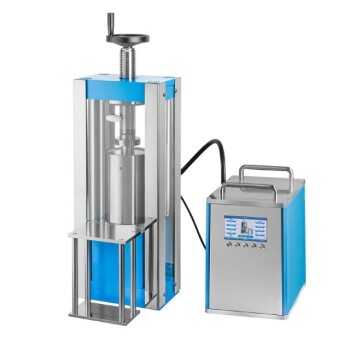
Laboratory Manual Hydraulic Pellet Press for Lab Use

Laboratory Manual Hydraulic Pellet Press for Lab Use

Efficient Manure Lab Hydraulic Press with Safety Cover for sample preparation in material research, pharmacy, and electronic industries. Available in 15T to 60T.

Circulating Water Vacuum Pump for Laboratory and Industrial Use

Circulating Water Vacuum Pump for Laboratory and Industrial Use

Efficient circulating water vacuum pump for labs - oil-free, corrosion-resistant, quiet operation. Multiple models available. Get yours now!

Special Shape Press Mold for Lab

Special Shape Press Mold for Lab

Discover high-pressure special shape press molds for diverse applications, from ceramics to automotive parts. Ideal for precise, efficient molding of various shapes and sizes.


Leave Your Message