Knowledge thermal elements What is the function of the heating element in a furnace? The Engine of Your Thermal Process
Author avatar

Tech Team · Kintek Solution

Updated 2 months ago

What is the function of the heating element in a furnace? The Engine of Your Thermal Process


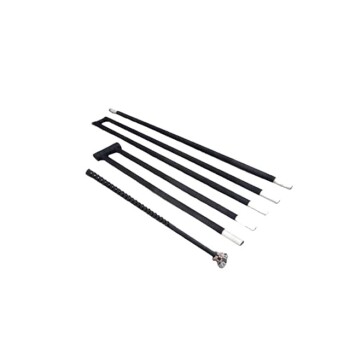
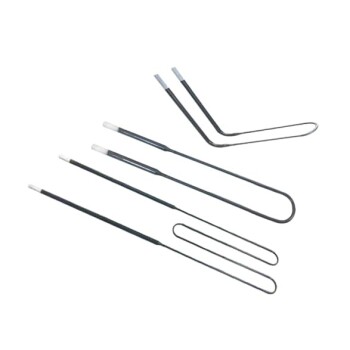
At its core, a furnace's heating element is a transducer. Its sole function is to convert electrical energy into thermal energy through the principle of electrical resistance. Made from specialized high-temperature alloys, the element generates intense heat when current passes through it, which is then transferred to the target material to achieve a specific process temperature.

The heating element generates the raw heat, but the furnace's internal atmosphere dictates how that heat interacts with the material—determining whether it simply heats the object, protects its surface, or actively changes its chemistry.
What is the function of the heating element in a furnace? The Engine of Your Thermal Process

How the Heating Element Works

The Principle of Resistive Heating

A heating element functions much like the filament in an incandescent light bulb, but it is optimized for heat instead of light. When an electric current is forced through the element, the material's inherent electrical resistance impedes the flow of electrons.

This opposition converts electrical energy directly into thermal energy, causing the element to become extremely hot.

Material Composition is Key

Heating elements must be constructed from specialized alloys. These materials are chosen for their ability to withstand incredibly high temperatures without melting or degrading, all while maintaining stable electrical resistance.

This ensures consistent, reliable heat generation over many cycles.

Heat Transfer Mechanisms

Once heat is generated, it must reach the material inside the furnace. This occurs through two primary methods.

Thermal conduction transfers heat through direct physical contact with furnace structures, while thermal radiation transfers heat via electromagnetic waves, warming the material from a distance.

Why the Furnace Atmosphere is Critical

The environment surrounding the material is just as important as the temperature. The furnace atmosphere is a controlled gas mixture that determines the outcome of the process.

Protecting the Material: Inert Atmospheres

For many applications, the goal is to heat a material without altering its surface. An inert atmosphere, such as nitrogen or argon, is used to prevent unwanted chemical reactions like oxidation (rusting).

The atmosphere acts as a protective shield, ensuring the heat is applied without causing damage.

Modifying the Material: Reactive Atmospheres

In other advanced processes, the goal is to intentionally change the material's surface properties. A chemically reactive atmosphere is used to enable surface changes.

Processes like carburizing, for example, use a carbon-rich atmosphere to harden the surface of steel parts at high temperatures. Here, the heat facilitates a desired chemical reaction.

Understanding the Interplay

Failing to see the heating element and the atmosphere as a single system is a common pitfall. The effectiveness of one is directly tied to the other.

Heat Generation vs. Heat Application

The heating element's job is straightforward: generate BTUs. The furnace control system's job is far more complex: apply that heat precisely within a tightly controlled chemical environment.

The final result depends entirely on how these two functions are synchronized.

An Inseparable System

An incorrect atmosphere can completely ruin a part, no matter how accurately the heating element maintains the target temperature.

Conversely, an unstable heating element that causes temperature fluctuations can disrupt the delicate chemical reactions occurring in a reactive atmosphere.

Making the Right Choice for Your Goal

To achieve a successful outcome, you must align the heating process and the furnace atmosphere with your specific objective.

  • If your primary focus is simple thermal treatment (e.g., annealing, tempering): Your priority is the heating element's ability to provide stable, uniform temperature, while the atmosphere's main role is to prevent surface oxidation.
  • If your primary focus is active surface modification (e.g., carburizing, nitriding): The heating element is the engine that enables the process, but the precise control and composition of the reactive atmosphere is what actually performs the work.

Ultimately, viewing the heating element and the furnace atmosphere as two halves of a single, purposeful system is the key to mastering any thermal process.

Summary Table:

Function Key Detail Why It Matters
Core Function Converts electrical energy into thermal energy (heat). It is the primary source of heat for the entire furnace process.
How It Works Uses electrical resistance in specialized alloys to generate intense heat. Provides stable, reliable, and controllable temperatures.
Critical Partner The furnace atmosphere (inert or reactive). The atmosphere determines if the heat simply warms, protects, or chemically modifies the material.
Key Takeaway The heating element and atmosphere are an inseparable system. Successful outcomes depend on synchronizing heat generation with the chemical environment.

Master Your Thermal Processes with KINTEK

Understanding the delicate interplay between heat and atmosphere is the key to achieving perfect results in your lab—whether you're annealing, sintering, or performing complex surface modifications.

KINTEK specializes in providing the precise lab equipment and consumables your laboratory needs. We don't just sell furnaces; we provide integrated solutions where the heating system and atmosphere control work in perfect harmony to ensure repeatable success and protect your valuable samples.

Let our experts help you select the right equipment for your specific application.

Contact KINTEK today to discuss your thermal processing goals and discover how our reliable, high-performance furnaces can enhance your research and development.

Visual Guide

What is the function of the heating element in a furnace? The Engine of Your Thermal Process Visual Guide

Related Products

People Also Ask

Related Products

Silicon Carbide SiC Thermal Heating Elements for Electric Furnace

Silicon Carbide SiC Thermal Heating Elements for Electric Furnace

Experience the advantages of Silicon Carbide (SiC) Heating Element: Long service life, high corrosion and oxidation resistance, fast heating speed, and easy maintenance. Learn more now!

Molybdenum Disilicide (MoSi2) Thermal Elements Electric Furnace Heating Element

Molybdenum Disilicide (MoSi2) Thermal Elements Electric Furnace Heating Element

Discover the power of Molybdenum Disilicide (MoSi2) Heating Element for high-temperature resistance. Unique oxidation resistance with stable resistance value. Learn more about its benefits now!

Vacuum Heat Treat Furnace with Ceramic Fiber Liner

Vacuum Heat Treat Furnace with Ceramic Fiber Liner

Vacuum furnace with polycrystalline ceramic fiber insulation liner for excellent heat insulation and uniform temperature field. Choose from 1200℃ or 1700℃ max. working temperature with high vacuum performance and precise temperature control.

2200 ℃ Tungsten Vacuum Heat Treat and Sintering Furnace

2200 ℃ Tungsten Vacuum Heat Treat and Sintering Furnace

Experience the ultimate refractory metal furnace with our Tungsten vacuum furnace. Capable of reaching 2200℃, perfect for sintering advanced ceramics and refractory metals. Order now for high-quality results.

Molybdenum Vacuum Heat Treat Furnace

Molybdenum Vacuum Heat Treat Furnace

Discover the benefits of a high-configuration molybdenum vacuum furnace with heat shield insulation. Ideal for high-purity, vacuum environments like sapphire crystal growth and heat treatment.

Vacuum Heat Treat and Molybdenum Wire Sintering Furnace for Vacuum Sintering

Vacuum Heat Treat and Molybdenum Wire Sintering Furnace for Vacuum Sintering

A vacuum molybdenum wire sintering furnace is a vertical or bedroom structure, which is suitable for withdrawal, brazing, sintering and degassing of metal materials under high vacuum and high temperature conditions. It is also suitable for dehydroxylation treatment of quartz materials.

Vacuum Heat Treat and Pressure Sintering Furnace for High Temperature Applications

Vacuum Heat Treat and Pressure Sintering Furnace for High Temperature Applications

Vacuum pressure sintering furnaces are designed for high temperature hot pressing applications in metal and ceramic sintering. Its advanced features ensure precise temperature control, reliable pressure maintenance, and a robust design for seamless operation.

Controlled Nitrogen Inert Hydrogen Atmosphere Furnace

Controlled Nitrogen Inert Hydrogen Atmosphere Furnace

KT-AH Hydrogen atmosphere furnace - induction gas furnace for sintering/annealing with built-in safety features, dual housing design, and energy-saving efficiency. Ideal for lab and industrial use.

Laboratory Rapid Thermal Processing (RTP) Quartz Tube Furnace

Laboratory Rapid Thermal Processing (RTP) Quartz Tube Furnace

Get lightning-fast heating with our RTP Rapid Heating Tube Furnace. Designed for precise, high-speed heating and cooling with convenient sliding rail and TFT touch screen controller. Order now for ideal thermal processing!

Electric Rotary Kiln Continuous Working Small Rotary Furnace Heating Pyrolysis Plant

Electric Rotary Kiln Continuous Working Small Rotary Furnace Heating Pyrolysis Plant

Efficiently calcine and dry bulk powder and lump fluid materials with an electric heating rotary furnace. Ideal for processing lithium ion battery materials and more.

Multi Heating Zones CVD Tube Furnace Machine Chemical Vapor Deposition Chamber System Equipment

Multi Heating Zones CVD Tube Furnace Machine Chemical Vapor Deposition Chamber System Equipment

KT-CTF14 Multi Heating Zones CVD Furnace - Precise Temperature Control and Gas Flow for Advanced Applications. Max temp up to 1200℃, 4 channels MFC mass flow meter, and 7" TFT touch screen controller.

600T Vacuum Induction Hot Press Furnace for Heat Treat and Sintering

600T Vacuum Induction Hot Press Furnace for Heat Treat and Sintering

Discover the 600T Vacuum Induction Hot Press Furnace, designed for high-temperature sintering experiments in vacuum or protected atmospheres. Its precise temperature and pressure control, adjustable working pressure, and advanced safety features make it ideal for nonmetal materials, carbon composites, ceramics, and metal powders.

Rotary Tube Furnace Split Multi Heating Zone Rotating Tube Furnace

Rotary Tube Furnace Split Multi Heating Zone Rotating Tube Furnace

Multi zone rotary furnace for high-precision temperature control with 2-8 independent heating zones. Ideal for lithium ion battery electrode materials and high-temperature reactions. Can work under vacuum and controlled atmosphere.

Graphite Vacuum Furnace Bottom Discharge Graphitization Furnace for Carbon Materials

Graphite Vacuum Furnace Bottom Discharge Graphitization Furnace for Carbon Materials

Bottom-out graphitization furnace for carbon materials, ultra-high temperature furnace up to 3100°C, suitable for graphitization and sintering of carbon rods and carbon blocks. Vertical design, bottom discharging, convenient feeding and discharging, high temperature uniformity, low energy consumption, good stability, hydraulic lifting system, convenient loading and unloading.

Ultra-High Temperature Graphite Vacuum Graphitization Furnace

Ultra-High Temperature Graphite Vacuum Graphitization Furnace

The ultra-high temperature graphitization furnace utilizes medium frequency induction heating in a vacuum or inert gas environment. The induction coil generates an alternating magnetic field, inducing eddy currents in the graphite crucible, which heats up and radiates heat to the workpiece, bringing it to the desired temperature. This furnace is primarily used for graphitization and sintering of carbon materials, carbon fiber materials, and other composite materials.

Electric Rotary Kiln Pyrolysis Furnace Plant Machine Calciner Small Rotary Kiln Rotating Furnace

Electric Rotary Kiln Pyrolysis Furnace Plant Machine Calciner Small Rotary Kiln Rotating Furnace

Electric rotary kiln - precisely controlled, it's ideal for calcination and drying of materials like lithium cobalate, rare earths, and non-ferrous metals.

Horizontal High Temperature Graphite Vacuum Graphitization Furnace

Horizontal High Temperature Graphite Vacuum Graphitization Furnace

Horizontal Graphitization Furnace: This type of furnace is designed with the heating elements placed horizontally, allowing for uniform heating of the sample. It's well-suited for graphitizing large or bulky samples that require precise temperature control and uniformity.

1200℃ Muffle Furnace Oven for Laboratory

1200℃ Muffle Furnace Oven for Laboratory

Upgrade your lab with our 1200℃ Muffle Furnace. Achieve fast, precise heating with Japan alumina fibers and Molybdenum coils. Features TFT touch screen controller for easy programming and data analysis. Order now!

Multi-zone Laboratory Tube Furnace

Multi-zone Laboratory Tube Furnace

Experience precise, efficient thermal testing with our Multi Zone Tube Furnace. Independent heating zones and temperature sensors allow for controlled high-temperature gradient heating fields. Order now for advanced thermal analysis!

1200℃ Split Tube Furnace with Quartz Tube Laboratory Tubular Furnace

1200℃ Split Tube Furnace with Quartz Tube Laboratory Tubular Furnace

KT-TF12 split tube furnace: high-purity insulation, embedded heating wire coils, and max. 1200C. Widely used for new materials and chemical vapour deposition.


Leave Your Message