The primary role of Hot Isostatic Pressing (HIP) equipment in fabricating Tungsten-Titanium Carbide (W-TiC) composites is to achieve near-full densification by eliminating internal voids. By simultaneously subjecting the material to ultra-high temperatures and high-pressure gas media, HIP effectively closes micro-pores and completes sintering without melting the composite.
Core Takeaway While standard sintering often leaves residual porosity, HIP drives the material to maximum density through plastic deformation and diffusion bonding. Crucially, it achieves this in a short timeframe, preserving a fine grain structure that is essential for superior mechanical strength and radiation resistance.
The Mechanics of Densification
Simultaneous Pressure and Heat
HIP equipment creates an environment that combines ultra-high temperatures with high-pressure inert gas, typically argon.
Unlike conventional methods that might apply force uniaxially, the gas applies isostatic pressure (equal from all directions).
Closing Internal Defects
This process operates at temperatures below the melting point of the W-TiC composite.
Under these conditions (e.g., pressures reaching 130 MPa), the material undergoes plastic deformation and diffusion bonding. This forces internal micro-pores to close, resulting in a significantly higher relative density compared to pressureless sintering.
Controlling Microstructure for Performance
Preserving Fine Grain Size
A critical advantage of HIP is the speed at which it completes the sintering process.
Because the process is rapid, it prevents the material from spending excessive time at peak temperatures. This allows for precise control over the grain size, maintaining it within the 1-2 micrometer range.
Avoiding Grain Coarsening
Alternative methods, such as prolonged high-temperature hot pressing, often suffer from grain coarsening.
When grains grow too large (coarsen), the material's mechanical properties degrade. HIP avoids this, ensuring the final composite retains the superior mechanical strength and ductility required for high-stress environments.
Understanding the Trade-offs
Equipment Complexity
HIP utilizes extreme parameters, such as 130 MPa of pressure and temperatures exceeding 1000°C.
This requires highly specialized, robust equipment capable of safely managing high-energy gas compression, distinguishing it from simpler, lower-cost sintering furnaces.
Process Efficiency vs. Setup
While the sintering phase itself is short, the operational requirements are demanding.
The process relies on gas as a transmission medium to deliver uniform force, which is more complex to control than the mechanical rams used in uniaxial hot pressing.
Making the Right Choice for Your Goal
To determine if HIP is the correct consolidation method for your W-TiC composites, consider your specific performance requirements:
- If your primary focus is Maximum Density: HIP is essential for closing residual pores and achieving near-full density through diffusion bonding.
- If your primary focus is Radiation Resistance: The fine grain structure (1-2 µm) preserved by HIP provides the necessary microstructural integrity for extreme environments.
- If your primary focus is Mechanical Strength: Choose HIP to avoid the grain coarsening associated with prolonged hot pressing, thereby enhancing fatigue strength and ductility.
By leveraging HIP, you transform a porous sintered part into a fully dense, high-performance composite capable of withstanding extreme operational demands.
Summary Table:
| Feature | Hot Isostatic Pressing (HIP) | Conventional Sintering |
|---|---|---|
| Pressure Application | Isostatic (Equal from all directions) | None or Uniaxial |
| Densification Level | Near-full density (closes micro-pores) | Residual porosity common |
| Grain Structure | Preserved fine grain (1-2 µm) | Risk of grain coarsening |
| Mechanism | Plastic deformation & diffusion bonding | Surface/Volume diffusion only |
| Key Outcome | Superior strength & radiation resistance | Lower mechanical integrity |
Elevate Your Material Performance with KINTEK Precision
Maximize the density and durability of your advanced composites with KINTEK's industry-leading thermal processing solutions. Whether you are developing W-TiC composites or high-performance alloys, our comprehensive range of Hot Isostatic Presses (HIP) and Isostatic Pressing systems delivers the uniform pressure and temperature control required for zero-defect fabrication.
Beyond HIP, KINTEK specializes in a full suite of laboratory equipment, including high-temperature furnaces, hydraulic pellet presses, crushing and milling systems, and specialized high-pressure reactors. Our mission is to provide researchers and industrial manufacturers with the tools needed to achieve superior mechanical strength and fine grain control.
Ready to eliminate internal voids and optimize your microstructure? Contact our technical experts today to find the perfect equipment for your material science challenges!
References
- Eiichi Wakai. Titanium/Titanium Oxide Particle Dispersed W-TiC Composites for High Irradiation Applications. DOI: 10.31031/rdms.2022.16.000897
This article is also based on technical information from Kintek Solution Knowledge Base .
Related Products
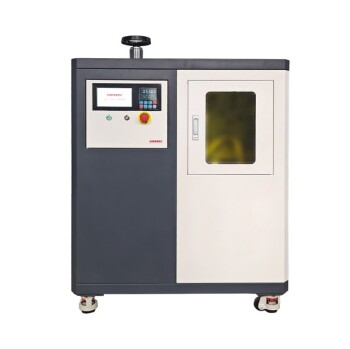
- Warm Isostatic Press for Solid State Battery Research
- Isostatic Molding Pressing Molds for Lab
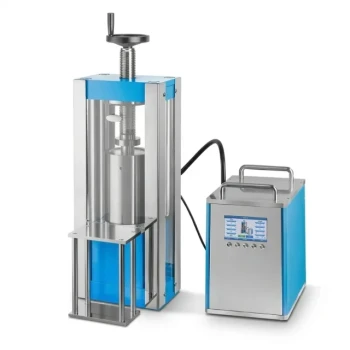
- Electric Split Lab Cold Isostatic Press CIP Machine for Cold Isostatic Pressing
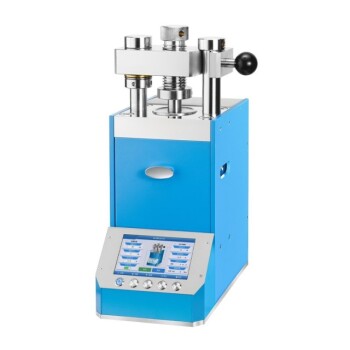
- Automatic Lab Cold Isostatic Press CIP Machine Cold Isostatic Pressing
- Manual Cold Isostatic Pressing Machine CIP Pellet Press
People Also Ask
- What is the temperature of a warm isostatic press? Achieve Optimal Densification for Your Materials
- What is the function of a Warm Isostatic Press (WIP) in all-solid-state pouch cells? Optimize Battery Density
- Why are Warm Isostatic Presses (WIP) necessary for solid-state batteries? Achieve Atomic-Level Contact
- What advantages does a warm isostatic press offer over a traditional uniaxial press for Li6PS5Cl electrolyte sheets?
- How do warm isostatic presses improve dry electrode performance? Enhance ASSB Conductivity with Heat & Pressure