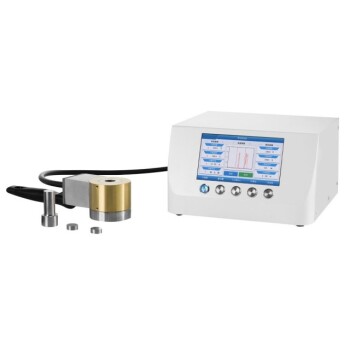
The primary function of a laboratory hot press in this context is to consolidate and shape zone-refined Thallium Bromide (TlBr) using a precise thermo-mechanical process. By maintaining a strict temperature range of 455–465°C while applying approximately 30 kN of mechanical pressure, the equipment transforms purified raw material into dense, geometrically specific semiconductor blocks.
Core Takeaway: The hot press does not merely shape the material; it fundamentally alters its internal structure. The synergistic application of heat and pressure eliminates micropores and guides crystal orientation, which is the deciding factor in creating detectors with high electrical energy resolution and photon-counting efficiency.
The Mechanism of Thermo-Mechanical Coupling
The hot press creates a specific environment where thermal energy and mechanical force work in tandem. This "coupling" effect is necessary to achieve material properties that neither heat nor pressure could achieve in isolation.
Eliminating Internal Defects
The most immediate physical change driven by the hot press is densification.
Raw Thallium Bromide, even when zone-refined, may contain internal micropores.
The application of 30 kN of pressure at elevated temperatures forces the material to consolidate. This eliminates these internal voids, resulting in a high-density material essential for effective radiation interaction.
Guiding Crystal Orientation
Beyond simple density, the performance of a TlBr detector relies on how the crystal lattice is aligned.
The hot press utilizes a controlled stress field to guide the preferred crystal orientation.
By regulating this orientation, the process ensures consistency across the crystal block. This structural alignment is critical for facilitating the efficient movement of charge carriers, which directly translates to better electrical energy resolution.
Enhancing Detection Properties
The ultimate goal of this processing step is to optimize the material for gamma-ray interactions.
A dense, well-oriented crystal exhibits a superior gamma-ray attenuation coefficient.
This ensures the final device operates with high detection efficiency, making it suitable for demanding applications like photon-counting detectors.
Critical Operational Parameters
Success in this process depends on adhering to a very narrow operational window. Deviations outside these specific parameters can compromise the integrity of the semiconductor.
Precise Temperature Regulation
The process requires a constant high-temperature environment, specifically between 455°C and 465°C.
This range is hot enough to facilitate sintering and bonding but controlled enough to prevent material degradation.
Sustained Mechanical Pressure
Simultaneous to heating, the system applies a massive axial load of approximately 30 kN.
This pressure must be continuous to ensure tight inter-granular bonding.
Supplementary data suggests this coupled environment is typically maintained for a duration of roughly 2 hours to ensure complete consolidation.
The Role of High-Pressure Molds
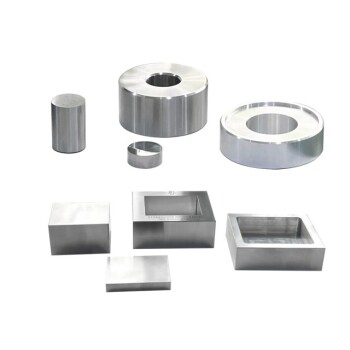
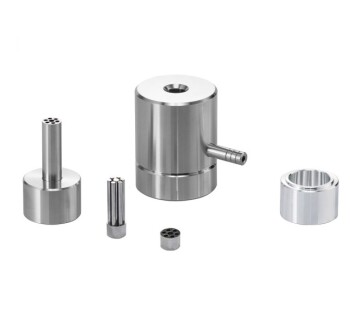
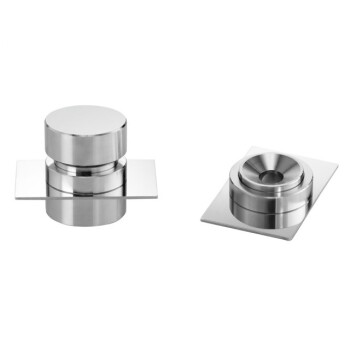
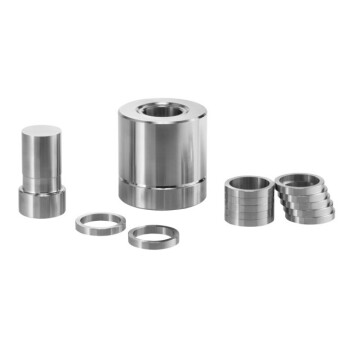
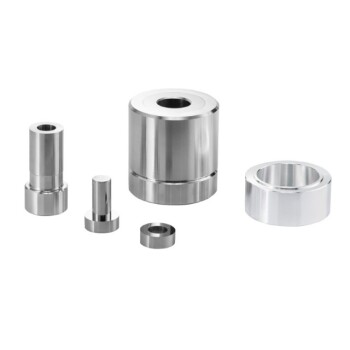
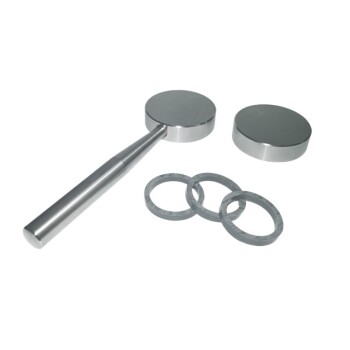
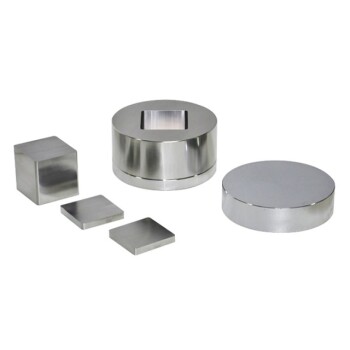
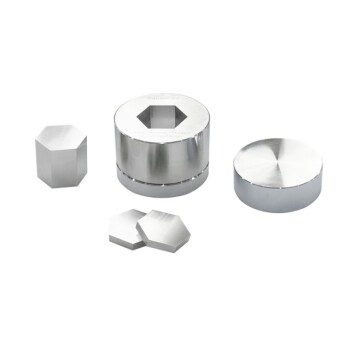
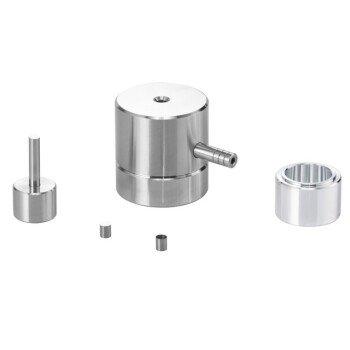
The molds serve a dual purpose: defining geometry and transmitting force.
They must withstand the 30 kN load while maintaining the material's specific geometric dimensions.
These molds act as the vessel for the "sintering" process, translating the mechanical force into the densification of the powder or raw material.
Understanding the Trade-offs
While hot pressing is the definitive method for producing high-quality TlBr detectors, it is a sensitive process with inherent constraints.
Sensitivity to Parameter Deviation
The process has a low tolerance for error. The temperature window (10 degrees Celsius) is extremely narrow.
Fluctuations outside the 455–465°C range or drops in pressure can lead to incomplete densification or irregular crystal orientation.
Dependency on Material Purity
The hot press optimizes structure, but it cannot fix chemical impurity.
The process explicitly relies on "zone-refined" or high-purity raw materials.
If the input material is not already purified, the hot press will simply create a dense, well-shaped, but chemically defective crystal that will fail in detector applications.
Making the Right Choice for Your Goal
The specific configuration of your hot press parameters should depend on the specific defects you are trying to mitigate in your TlBr material.
- If your primary focus is Physical Durability: Prioritize the continuity of the 30 kN pressure to maximize density and eliminate all internal micropores for structural integrity.
- If your primary focus is Energy Resolution: Focus on the precise stability of the thermal field (455-465°C) to ensure the stress field guides the crystal orientation perfectly.
By strictly controlling the thermo-mechanical environment, you transform raw Thallium Bromide into a precision instrument capable of high-efficiency photon counting.
Summary Table:
| Parameter | Specification | Function |
|---|---|---|
| Temperature Range | 455–465°C | Facilitates sintering & prevents degradation |
| Mechanical Pressure | ~30 kN | Eliminates micropores & ensures densification |
| Process Duration | Approx. 2 Hours | Ensures complete structural consolidation |
| Mold Role | High-Pressure Stability | Translates force & defines geometric dimensions |
| Target Outcome | High-Resolution Detector | Optimizes crystal orientation & energy resolution |
Elevate Your Semiconductor Research with KINTEK
Precision is non-negotiable when processing sensitive materials like Thallium Bromide. KINTEK provides state-of-the-art laboratory hot presses, high-pressure molds, and crushing systems specifically designed to maintain the narrow thermal and mechanical windows required for high-performance crystal growth.
Whether you are focusing on photon-counting detectors or advanced material densification, our expertise in high-temperature furnaces and hydraulic presses ensures your lab achieves superior energy resolution and structural integrity.
Ready to optimize your TlBr crystal processing?
Contact KINTEK Experts Today to find the perfect equipment and consumables for your specialized research.
References
- Richárd Katona, Tibor Kovács. Electrochemical examination of chemical decontamination technologies in the aspects of radioactive wastes management. DOI: 10.21175/rad.abstr.book.2023.12.4
This article is also based on technical information from Kintek Solution Knowledge Base .
Related Products
- Special Heat Press Mold for Lab Use
- Double Plate Heating Press Mold for Lab
- Anti-Cracking Press Mold for Lab Use
- Ball Press Mold for Lab
- Lab Infrared Press Mold
People Also Ask
- How to use a press mold? Master the Art of Creating Consistent Ceramic Forms
- What is the press mould method? A Guide to Consistent, Detailed Ceramic Forms
- What is a press mold used for? Achieve Repeatable Precision and Efficiency
- What is the function of press molds during the preparation of SiCf/Ti-43Al-9V composites? Achieve Structural Precision
- What is the purpose of specialized pressure devices in sulfide solid-state batteries? Ensure Chemo-Mechanical Stability