Knowledge What is the sintering process in kilns? Transform Powder into Dense, High-Strength Components
Author avatar

Tech Team · Kintek Solution

Updated 6 days ago

What is the sintering process in kilns? Transform Powder into Dense, High-Strength Components


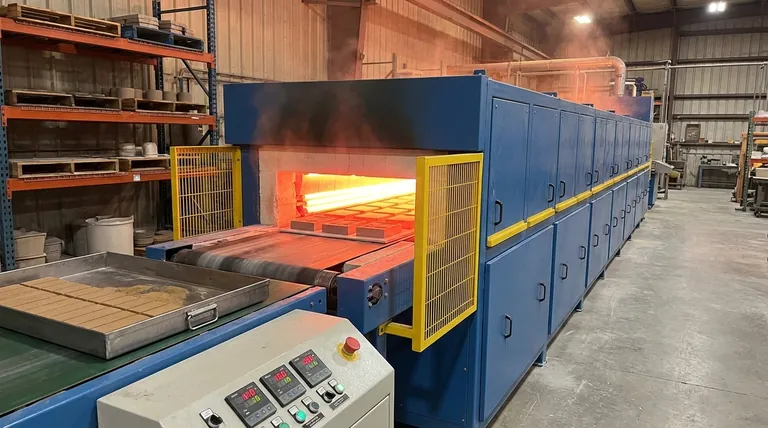
In essence, sintering is a high-temperature process used in a kiln to transform a compacted powder into a solid, dense mass. It achieves this by heating the material to a point just below its melting temperature, causing the individual particles to fuse together at an atomic level. This results in a significantly stronger and more durable final product.

The critical concept to understand is that sintering is not melting. It is a solid-state process where heat encourages atoms to migrate across particle boundaries, effectively welding them into a single, densified piece without ever becoming a liquid.
What is the sintering process in kilns? Transform Powder into Dense, High-Strength Components

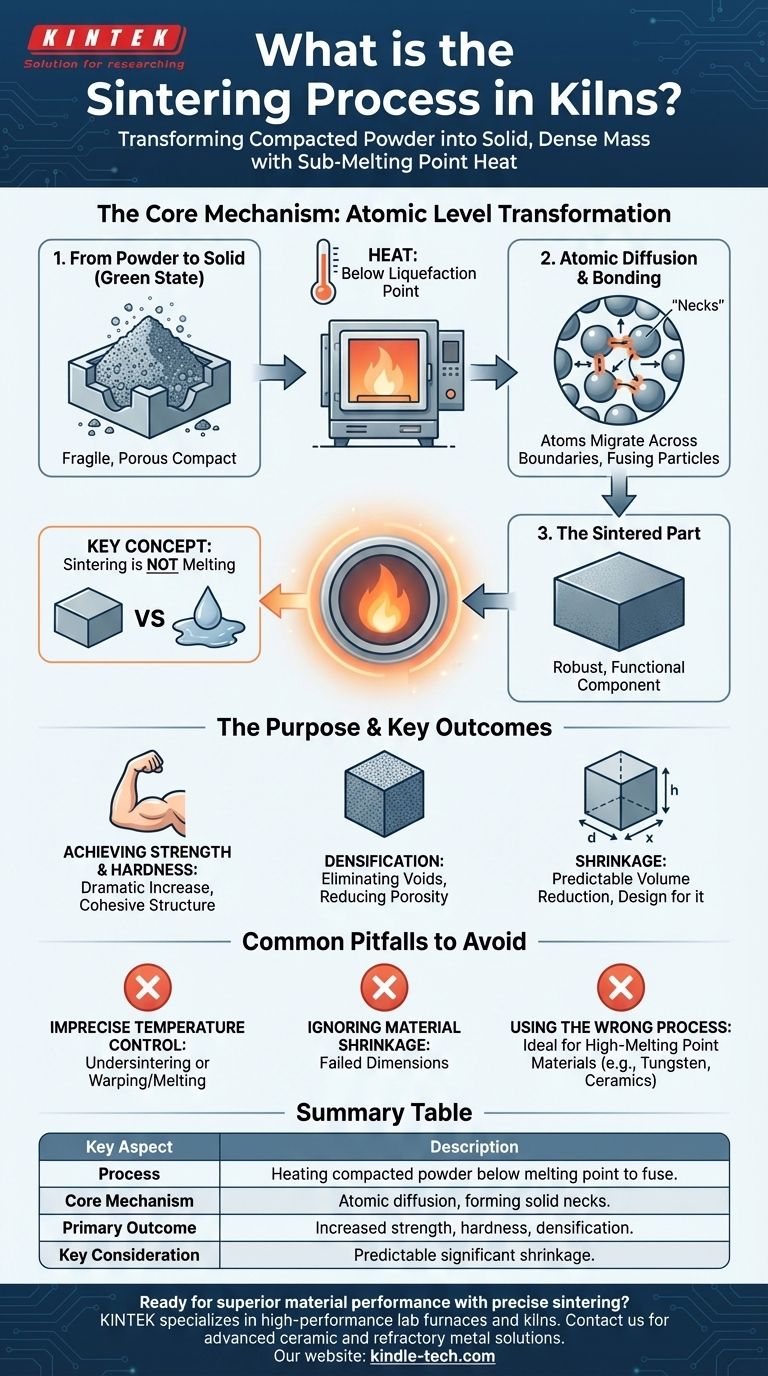
The Core Mechanism: How Sintering Works at an Atomic Level

Sintering is a fascinating process that fundamentally alters a material's structure. It transforms a fragile, porous object into a robust, functional component.

From Powder to Solid

The process begins with a material in a powdered form, which is first compacted into a desired shape, often called a "green state" compact. This initial form is weak and chalky. The goal of sintering is to convert this fragile compact into a fully solid object.

The Role of Sub-Melting Point Heat

A kiln or furnace applies extreme heat, but crucially, it keeps the temperature below the material's liquefaction point. This high thermal energy gives the atoms within the material the mobility they need to move.

Atomic Diffusion and Particle Bonding

With this increased energy, atoms from adjacent particles begin to diffuse across the boundaries that separate them. This migration of atoms effectively builds "necks" or bridges between the particles, fusing them together and gradually eliminating the voids or pores between them.

The Purpose and Key Outcomes of Sintering

Engineers and manufacturers use sintering to achieve specific material properties that would be difficult or impossible to obtain through other methods like melting and casting.

Achieving Strength and Hardness

The primary outcome of atomic bonding is a dramatic increase in strength and hardness. The once-separate particles are now part of a unified, cohesive structure, making the final piece incredibly robust.

The Process of Densification

As particles fuse and the pores between them are eliminated, the material becomes much denser. This densification is critical for the performance of many technical materials, as it reduces porosity and improves mechanical properties.

The Inevitable Consequence: Shrinkage

A direct and predictable result of densification is shrinkage. As the empty space between particles is removed, the entire component shrinks in volume. Materials like zirconia, for example, can undergo a significant amount of shrinkage that must be accounted for in the initial design.

Common Pitfalls to Avoid

While powerful, the sintering process requires precise control. Misunderstanding its principles can lead to failed parts and wasted resources.

Imprecise Temperature Control

The entire process hinges on maintaining a temperature high enough for atomic diffusion but low enough to prevent melting. If the temperature is too low, the part won't be fully densified. If it's too high, the part will warp or melt, losing its shape and integrity.

Ignoring Material Shrinkage

Failing to accurately calculate and compensate for shrinkage is one of the most common mistakes. Parts must be designed in an oversized "green state" so that they shrink to the exact final dimensions required after sintering.

Using the Wrong Process for the Material

Sintering is particularly effective for materials with extremely high melting points, such as tungsten, molybdenum, and technical ceramics. Trying to melt and cast these materials is often impractical, making sintering the ideal manufacturing path.

Making the Right Choice for Your Goal

Understanding the core principles of sintering allows you to leverage it effectively for different objectives.

  • If your primary focus is achieving maximum strength: Sintering is the essential step that transforms a fragile powder compact into a durable, load-bearing component.
  • If your primary focus is creating a non-porous part: The process is fundamentally about densification, systematically eliminating voids to create a solid mass.
  • If your primary focus is manufacturing complex shapes: You must master the art of predicting and accounting for material shrinkage to ensure your final parts meet dimensional specifications.

Mastering this thermal process is fundamental to producing high-performance materials and components.

Summary Table:

Key Aspect Description
Process Heating compacted powder below its melting point to fuse particles.
Core Mechanism Atomic diffusion across particle boundaries, forming solid necks.
Primary Outcome Increased strength, hardness, and density (densification).
Key Consideration Predictable and significant material shrinkage occurs.

Ready to achieve superior material performance with precise sintering?

KINTEK specializes in high-performance lab furnaces and kilns designed for exacting sintering processes. Whether you're working with advanced ceramics, refractory metals, or other powdered materials, our equipment delivers the precise temperature control and uniform heating essential for successful densification and strength development.

Contact us today to discuss your specific sintering requirements and discover how KINTEK's solutions can enhance your research and manufacturing outcomes.

Visual Guide
What is the sintering process in kilns? Transform Powder into Dense, High-Strength Components Visual Guide

Related Products

People Also Ask

Related Products

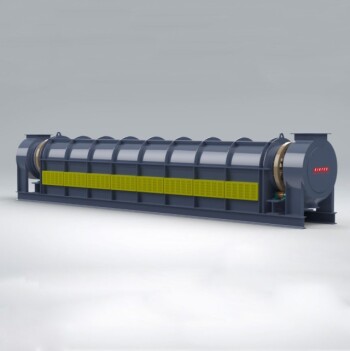
Electric Rotary Kiln Pyrolysis Furnace Plant Machine Calciner Small Rotary Kiln Rotating Furnace

Electric Rotary Kiln Pyrolysis Furnace Plant Machine Calciner Small Rotary Kiln Rotating Furnace

Electric rotary kiln - precisely controlled, it's ideal for calcination and drying of materials like lithium cobalate, rare earths, and non-ferrous metals.

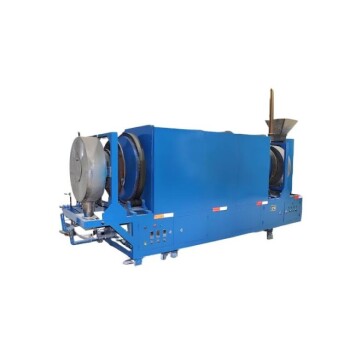
Electric Rotary Kiln Continuous Working Small Rotary Furnace Heating Pyrolysis Plant

Electric Rotary Kiln Continuous Working Small Rotary Furnace Heating Pyrolysis Plant

Efficiently calcine and dry bulk powder and lump fluid materials with an electric heating rotary furnace. Ideal for processing lithium ion battery materials and more.

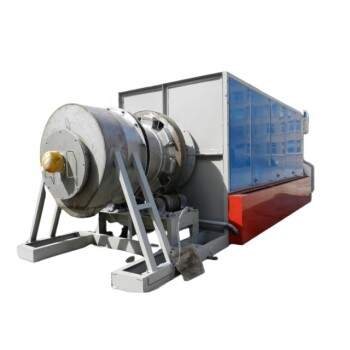
Electric Rotary Kiln Small Rotary Furnace for Activated Carbon Regeneration

Electric Rotary Kiln Small Rotary Furnace for Activated Carbon Regeneration

Revitalize your activated carbon with KinTek's Electric Regeneration Furnace. Achieve efficient and cost-effective regeneration with our highly automated rotary kiln and intelligent thermal controller.

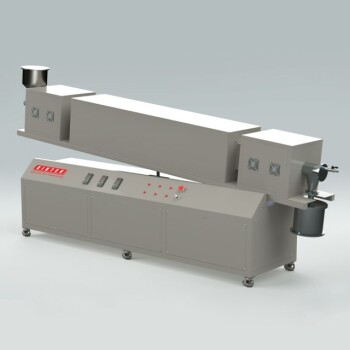
Vacuum Sealed Continuous Working Rotary Tube Furnace Rotating Tube Furnace

Vacuum Sealed Continuous Working Rotary Tube Furnace Rotating Tube Furnace

Experience efficient material processing with our vacuum-sealed rotary tube furnace. Perfect for experiments or industrial production, equipped with optional features for controlled feeding and optimized results. Order now.

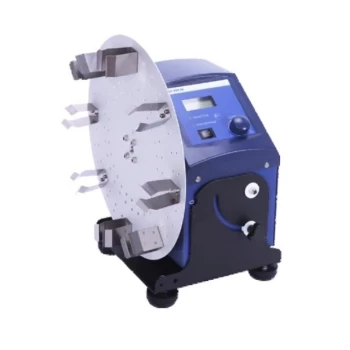
Laboratory Disc Rotary Mixer for Efficient Sample Mixing and Homogenization

Laboratory Disc Rotary Mixer for Efficient Sample Mixing and Homogenization

Efficient Laboratory Disc Rotary Mixer for Precise Sample Mixing, Versatile for Various Applications, DC Motor and Microcomputer Control, Adjustable Speed and Angle.

Mesh belt controlled atmosphere furnace

Mesh belt controlled atmosphere furnace

Discover our KT-MB mesh belt sintering furnace - perfect for high-temperature sintering of electronic components & glass insulators. Available for open air or controlled atmosphere environments.

Vacuum Dental Porcelain Sintering Furnace

Vacuum Dental Porcelain Sintering Furnace

Get precise and reliable results with KinTek's Vacuum Porcelain Furnace. Suitable for all porcelain powders, it features hyperbolic ceramic furnace function, voice prompt, and automatic temperature calibration.

Laboratory Muffle Oven Furnace Bottom Lifting Muffle Furnace

Laboratory Muffle Oven Furnace Bottom Lifting Muffle Furnace

Efficiently produce batches with excellent temperature uniformity using our Bottom Lifting Furnace. Features two electric lifting stages and advanced temperature control up to 1600℃.

Small Vacuum Heat Treat and Tungsten Wire Sintering Furnace

Small Vacuum Heat Treat and Tungsten Wire Sintering Furnace

The small vacuum tungsten wire sintering furnace is a compact experimental vacuum furnace specially designed for universities and scientific research institutes. The furnace features a CNC welded shell and vacuum piping to ensure leak-free operation. Quick-connect electrical connections facilitate relocation and debugging, and the standard electrical control cabinet is safe and convenient to operate.

1200℃ Split Tube Furnace with Quartz Tube Laboratory Tubular Furnace

1200℃ Split Tube Furnace with Quartz Tube Laboratory Tubular Furnace

KT-TF12 split tube furnace: high-purity insulation, embedded heating wire coils, and max. 1200C. Widely used for new materials and chemical vapour deposition.

Engineering Advanced Fine Ceramics Head Tweezers with Pointed Elbow Zirconia Ceramic Tip

Engineering Advanced Fine Ceramics Head Tweezers with Pointed Elbow Zirconia Ceramic Tip

Zirconia ceramic tweezers are a high-precision tool made of advanced ceramic materials, especially suitable for operating environments that require high precision and corrosion resistance. This type of tweezers not only has excellent physical properties, but is also popular in the medical and laboratory fields because of its biocompatibility.

Small Jaw Crusher for Laboratory and Small Mines Efficient Flexible Affordable Laboratory Ore Crusher Coal Crusher

Small Jaw Crusher for Laboratory and Small Mines Efficient Flexible Affordable Laboratory Ore Crusher Coal Crusher

Discover the small jaw crusher for efficient, flexible, and affordable crushing in labs and small mines. Ideal for coal, ores, and rocks. Learn more now!

Graphite Vacuum Continuous Graphitization Furnace

Graphite Vacuum Continuous Graphitization Furnace

High-temperature graphitization furnace is a professional equipment for graphitization treatment of carbon materials. It is a key equipment for the production of high-quality graphite products. It has high temperature, high efficiency and uniform heating. It is suitable for various high-temperature treatments and graphitization treatments. It is widely used in metallurgy, electronics, aerospace, etc. industry.

Automatic Laboratory Heat Press Machine

Automatic Laboratory Heat Press Machine

Precision automatic heat press machines for labs—ideal for material testing, composites, and R&D. Customizable, safe, and efficient. Contact KINTEK today!

Graphite Vacuum Furnace IGBT Experimental Graphitization Furnace

Graphite Vacuum Furnace IGBT Experimental Graphitization Furnace

IGBT experimental graphitization furnace, a tailored solution for universities and research institutions, with high heating efficiency, user-friendliness, and precise temperature control.

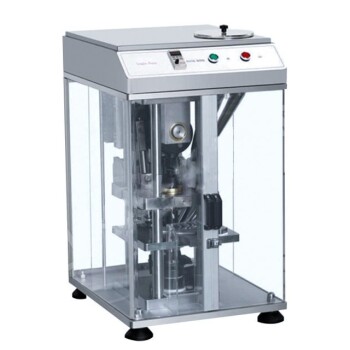
Single Punch Electric Tablet Press Machine Laboratory Powder Tablet Punching TDP Tablet Press

Single Punch Electric Tablet Press Machine Laboratory Powder Tablet Punching TDP Tablet Press

The single-punch electric tablet press is a laboratory-scale tablet press suitable for corporate laboratories in pharmaceutical, chemical, food, metallurgical and other industries.

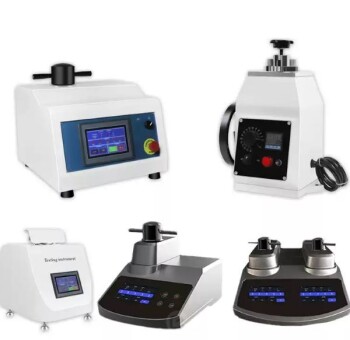
Metallographic Specimen Mounting Machine for Laboratory Materials and Analysis

Metallographic Specimen Mounting Machine for Laboratory Materials and Analysis

Precision metallographic mounting machines for labs—automated, versatile, and efficient. Ideal for sample prep in research and quality control. Contact KINTEK today!

Engineering Advanced Fine Alumina Al2O3 Ceramic Rod Insulated for Industrial Applications

Engineering Advanced Fine Alumina Al2O3 Ceramic Rod Insulated for Industrial Applications

Insulated alumina rod is a fine ceramic material. Alumina rods have excellent electrical insulating properties, high chemical resistance and low thermal expansion.

Precision Machined Zirconia Ceramic Ball for Engineering Advanced Fine Ceramics

Precision Machined Zirconia Ceramic Ball for Engineering Advanced Fine Ceramics

zirconia ceramic ball have the characteristics of high strength, high hardness, PPM wear level, high fracture toughness, good wear resistance, and high specific gravity.

Laboratory Vibratory Sieve Shaker Machine Slap Vibrating Sieve

Laboratory Vibratory Sieve Shaker Machine Slap Vibrating Sieve

KT-T200TAP is a slapping and oscillating sieving instrument for laboratory desktop use, with 300 rpm horizontal circular motion and 300 vertical slapping motions to simulate manual sieving to help sample particles pass through better.


Leave Your Message