Hot pressing specifically resolves the problem of interfacial delamination between the anode and separator layers. By applying heat and pressure before the battery is cycled, the process creates a unified mechanical bond that prevents contact loss. This ensures the battery retains its capacity during early cycling without requiring heavy external hardware to hold the layers together.
The process transforms a loose interface into a fused boundary, eliminating the need for active external pressure systems to maintain connectivity during operation.
Creating a Stable Mechanical Bond
Utilizing Thermomechanical Treatment
The core mechanism involves heating the assembly to specific temperatures, such as 80°C, while under pressure. This thermal energy targets the polymer binder embedded within the anode layer.
Softening the Polymer Binder
At this temperature, the binder transitions to a softer, more malleable state. This physical change allows the binder to flow slightly and conform to the surface of the adjacent separator.
Promoting Interface Fusion
This softening promotes interface fusion, effectively gluing the anode and separator together. The result is a robust mechanical connection that is far more stable than simple physical stacking.
Overcoming Operational Limitations
Preventing Capacity Decay
Without this bond, the layers often separate during the initial stages of cycling (early cycling). Hot pressing mitigates this risk, significantly reducing the capacity decay caused by intermittent contact.
Removing Active External Pressure
Standard solid-state batteries often require "active" external pressure systems (clamps or hydraulic presses) during operation to force layers together. Hot pressing establishes an intrinsic bond, rendering these bulky external systems unnecessary for maintaining contact.
Understanding the Prerequisites
The Dependency on Binders
It is critical to note that this solution is dependent on the material composition of your anode. The process relies specifically on the presence of a polymer binder to act as the fusing agent.
Temperature Sensitivity
The process requires precise thermal control (e.g., 80°C) to soften the binder without degrading the active materials or the separator itself.
Making the Right Choice for Your Goal
To determine if this process aligns with your manufacturing objectives, consider the following:
- If your primary focus is increasing energy density at the pack level: Hot pressing is essential because it eliminates the volume and weight of external pressure rigs.
- If your primary focus is extending cycle life: This process is critical for preventing the immediate capacity drop-off associated with early-stage delamination.
By fusing the layers before the first cycle, you trade a one-time manufacturing step for long-term operational stability.
Summary Table:
| Feature | Hot Pressing Impact | Benefit to Battery Performance |
|---|---|---|
| Interfacial Bond | Fuses anode & separator layers | Prevents contact loss and delamination |
| Polymer Binder | Softens at targeted temps (e.g., 80°C) | Creates a stable, intrinsic mechanical bond |
| External Pressure | Eliminates need for active rigs | Increases energy density by reducing bulk/weight |
| Cycle Stability | Prevents early capacity decay | Extends long-term operational life |
Maximize Your Battery Research with KINTEK Precision
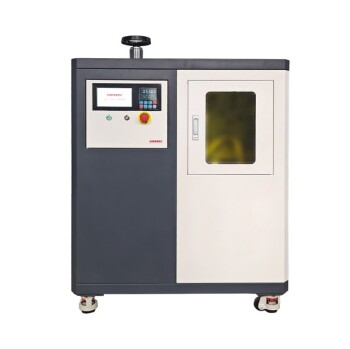
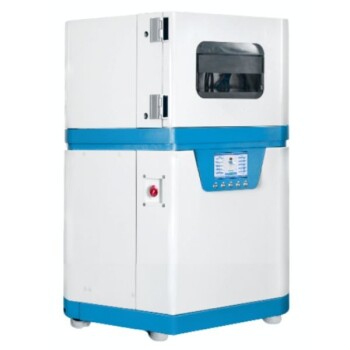
Don't let interfacial resistance compromise your solid-state battery performance. KINTEK specializes in advanced laboratory equipment designed to perfect your thermomechanical treatments. From precision hot presses and isostatic presses for interface fusion to high-temperature muffle and vacuum furnaces for material processing, we provide the tools necessary to eliminate bulky external pressure systems and boost energy density.
Whether you are focusing on anode-separator bonding or preparing advanced ceramics and crucibles for electrolyte synthesis, our comprehensive range of crushing and milling systems, hydraulic presses, and battery research consumables ensures your lab achieves industrial-grade results.
Ready to upgrade your battery manufacturing workflow? Contact KINTEK today for expert guidance and high-performance equipment!
Related Products
- Warm Isostatic Press for Solid State Battery Research
- Laboratory Hydraulic Press Lab Pellet Press for Button Battery
- Automatic High Temperature Heated Hydraulic Press Machine with Heated Plates for Lab
- Automatic Heated Hydraulic Press Machine with Heated Plates for Laboratory Hot Press
- Manual High Temperature Heated Hydraulic Press Machine with Heated Plates for Lab
People Also Ask
- What is the temperature of a warm isostatic press? Achieve Optimal Densification for Your Materials
- What is the function of a Warm Isostatic Press (WIP) in all-solid-state pouch cells? Optimize Battery Density
- Why are Warm Isostatic Presses (WIP) necessary for solid-state batteries? Achieve Atomic-Level Contact
- What advantages does a warm isostatic press offer over a traditional uniaxial press for Li6PS5Cl electrolyte sheets?
- How do warm isostatic presses improve dry electrode performance? Enhance ASSB Conductivity with Heat & Pressure