Specialized graphite dies function as the critical structural interface in the vacuum hot pressing of Al2O3/Cu-Cr composites. They serve a dual purpose: acting as the precise shaping container for the powder metallurgy and serving as the mechanical vessel that transmits significant uniaxial pressure at elevated temperatures. Their role is to ensure the composite achieves necessary density and dimensional accuracy without deforming the tool itself.
Core Takeaway: The success of the sintering process relies entirely on the die's ability to balance mechanical rigidity with thermal transfer. The graphite die must withstand high pressure (e.g., 22 MPa) without "creep" while simultaneously conducting heat to ensure the composite's core properties are identical to its edges.
The Mechanics of Pressure Transmission
Acting as the Load-Bearing Vessel
In vacuum hot pressing, the graphite die is not merely a mold; it is an active load-bearing component. It acts as the primary containment vessel for the Al2O3/Cu-Cr powder mixture.
Transmitting Uniaxial Force
The die facilitates the transfer of force from the hydraulic system directly to the composite material. It must effectively transmit pressures, specifically around 22 MPa for this composite type, to facilitate the plastic deformation of the matrix.
Resisting High-Temperature Creep
For the composite to maintain precise dimensions, the die itself must remain dimensionally stable. High-quality graphite prevents "creep"—the tendency of a solid material to move slowly or deform permanently under the influence of mechanical stresses—ensuring the final product matches the intended geometry.
Thermal Management and Homogeneity
Ensuring Uniform Heating
Graphite is selected for its high thermal conductivity. As the system heats up, the die acts as a thermal conduit, transferring heat efficiently from the furnace elements to the powder specimen inside.
Eliminating Structural Gradients
A common failure mode in sintering is uneven heating, where the outside of a sample sinters faster than the inside. The specialized graphite die mitigates this by ensuring temperature uniformity. This results in structural consistency, ensuring that the material properties at the center of the Al2O3/Cu-Cr composite match those at the edges.
Critical Considerations and Limitations
The Consumable Nature of the Die
It is important to recognize that graphite dies are consumables. While they possess high-temperature strength, repeated exposure to extreme heat and pressure cycles will eventually degrade their structural integrity, necessitating replacement to maintain precision.
Demolding and Surface Interaction
While graphite is excellent for pressure and heat, there is a risk of interaction between the mold and the composite. In similar composite processes, an isolation layer (such as alumina) is often required to facilitate demolding and prevent the graphite from bonding to the sintered part.
Making the Right Choice for Your Goal
When selecting graphite tooling for Al2O3/Cu-Cr composites, prioritize the specific mechanical property that aligns with your defect tolerance.
- If your primary focus is Dimensional Precision: Prioritize graphite grades with high compressive strength to resist creep under the 22 MPa load.
- If your primary focus is Microstructural Homogeneity: Prioritize graphite with superior thermal conductivity to prevent density gradients between the core and surface.
The graphite die is not a passive container; it is a decisive variable that dictates the final density and uniformity of your composite material.
Summary Table:
| Function | Role in Composite Synthesis | Technical Benefit |
|---|---|---|
| Pressure Transmission | Transmits ~22 MPa uniaxial force | Ensures high density & plastic deformation |
| Thermal Management | Rapid heat transfer to core | Eliminates structural gradients |
| Structural Integrity | Resists high-temperature creep | Maintains precise dimensional accuracy |
| Material Containment | Precision shaping vessel | Prevents geometry deformation |
Elevate Your Materials Synthesis with KINTEK Precision
Unlock the full potential of your Al2O3/Cu-Cr composites with KINTEK’s industry-leading laboratory solutions. Whether you are performing vacuum hot pressing, CVD/PECVD, or advanced powder metallurgy, our high-performance hydraulic presses, high-temperature furnaces, and specialized graphite and ceramic consumables are engineered to deliver unparalleled thermal stability and pressure control.
Why choose KINTEK?
- Unmatched Durability: Our crushing, milling, and sintering tools are built to withstand extreme R&D environments.
- Precision Engineering: Ensure microstructural homogeneity with our advanced thermal management systems.
- Comprehensive Support: From battery research tools to high-pressure reactors, we provide the complete ecosystem for your lab.
Ready to optimize your sintering process? Contact KINTEK today to consult with our experts on the ideal equipment for your specific application.
Related Products
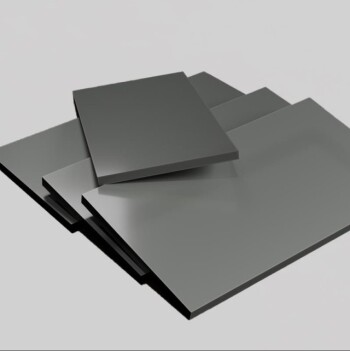
- Carbon Graphite Plate Manufactured by Isostatic Pressing Method
- Graphite Vacuum Furnace Bottom Discharge Graphitization Furnace for Carbon Materials
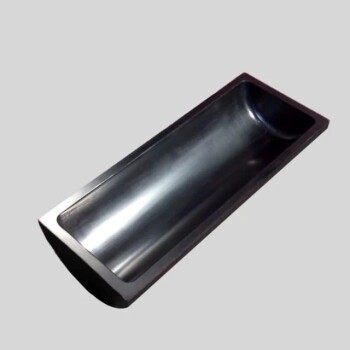
- Carbon Graphite Boat -Laboratory Tube Furnace with Cover
- High Purity Pure Graphite Crucible for Electron Beam Evaporation
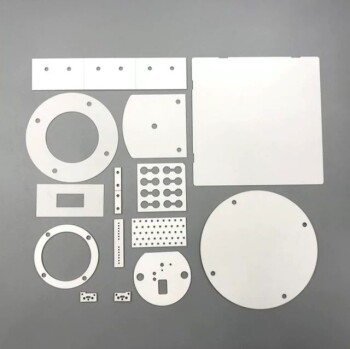
- Custom-Made Alumina Zirconia Special-Shaped Ceramic Plates for Engineering Advanced Fine Ceramics Processing
People Also Ask
- What is the process of isostatic graphite manufacturing? Achieve Unmatched Material Uniformity and Performance
- What is isostatic graphite? The Ultimate Material for High-Tech and High-Temperature Applications
- What is the density of isostatic graphite? Unlock Superior Performance for Demanding Applications
- How big is the isostatic pressing market? A Deep Dive into the $1.2B+ Advanced Manufacturing Enabler
- Why Use an Isostatic or High-Precision Hydraulic Press for Li/LLZO/Li Batteries? Master Solid-State Interfaces