High-temperature graphite gaskets are essential in adsorption experiments primarily because standard rubber seals degrade and fail under the elevated temperatures required for adsorbent regeneration. Unlike conventional materials, graphite possesses the necessary thermal stability and flexibility to maintain a hermetic seal, preventing the leakage of target gases like carbon dioxide and the ingress of atmospheric oxygen.
Core Takeaway: Standard sealing materials cannot withstand the thermal cycling inherent in high-temperature adsorption testing. Graphite gaskets solve this by offering self-lubricating properties and extreme thermal resistance, ensuring a reliable airtight seal that protects both experimental safety and the integrity of your gas analysis data.
The Challenge of Thermal Environments
Limitations of Standard Materials
In adsorption experiments, the reactor must often reach high temperatures to regenerate the adsorbent material. Under these conditions, standard rubber seals or O-rings frequently fail. They can melt, become brittle, or lose their elasticity, leading to immediate seal failure.
The Stress of Thermal Cycling
Experiments often involve intense thermal cycling, moving repeatedly between heating and cooling phases. This process causes reactor components to expand and contract. A rigid or degraded seal will eventually breach under this mechanical stress, compromising the isolation of the reaction chamber.
Critical Properties of Graphite Gaskets
Thermal Stability and Flexibility
Graphite gaskets are uniquely suited for this application because they retain their physical properties at high temperatures. They provide excellent thermal stability, ensuring the gasket does not degrade when exposed to the heat required for testing. Furthermore, their inherent flexibility allows them to maintain contact with sealing surfaces even as the reactor components expand.
Self-Lubricating Characteristics
The primary reference highlights that graphite gaskets possess self-lubricating properties. This feature reduces friction during the assembly and tightening of reactor interfaces. It ensures a tighter, more uniform seal without damaging the gasket or the mating surfaces of the reactor.
Ensuring Experimental Validity
Preventing Gas Leakage and Ingress
The most critical function of these gaskets is maintaining strict airtightness. In adsorption experiments, it is vital to prevent the target gas (such as carbon dioxide) from leaking out. Simultaneously, the seal must prevent oxygen from entering the system, which could alter the chemical environment or oxidize the sample.
Protecting Data Integrity
Reliable sealing is directly linked to the quality of your results. If the seal is compromised, online gas analysis data becomes unreliable due to changes in gas composition and flow rates. By preventing leaks, graphite gaskets ensure that the data collected accurately reflects the performance of the adsorbent, not an equipment failure.
Understanding the Trade-offs
Mechanical Fragility
While graphite excels thermally, it lacks the elasticity and tear resistance of rubber at room temperature. Graphite gaskets can be brittle and susceptible to damage if mishandled during installation. They require careful alignment and protection from physical impact to avoid cracking.
Compression Sensitivity
Achieving a perfect seal with graphite often requires precise compression. Unlike rubber, which "bounces back," graphite compresses and sets. If the initial torque on the reactor bolts is uneven, the gasket may not seal correctly, and re-using a compressed graphite gasket is often less effective than re-using a rubber O-ring.
Making the Right Choice for Your Goal
When designing or assembling a high-temperature adsorption reactor, consider your specific experimental needs:
- If your primary focus is Data Accuracy: Prioritize graphite gaskets to eliminate the risk of oxygen ingress, which will skew gas analysis and contaminate sensitive adsorbents.
- If your primary focus is Safety: Use graphite to prevent the leakage of potentially hazardous or pressurized gases like carbon dioxide during high-heat phases.
- If your primary focus is Longevity: Implement graphite gaskets to withstand repeated thermal cycling without the degradation common in polymer-based seals.
By selecting the correct sealing material, you transform the reactor interface from a point of failure into a guarantee of experimental reliability.
Summary Table:
| Feature | Graphite Gaskets | Standard Rubber/O-Rings |
|---|---|---|
| Thermal Stability | Excellent (maintains properties at high heat) | Poor (melts or becomes brittle) |
| Thermal Cycling | Resilient to expansion and contraction | High risk of failure and cracking |
| Sealing Quality | Self-lubricating; airtight hermetic seal | Prone to degradation and leaks |
| Gas Integrity | Prevents $O_2$ ingress & $CO_2$ leakage | Unreliable gas analysis data |
| Handling | Brittle; requires careful compression | Elastic; easy to install |
Secure Your Experimental Precision with KINTEK
Don't let seal failure compromise your research data or safety. KINTEK specializes in high-performance laboratory solutions, providing a comprehensive range of high-temperature high-pressure reactors and autoclaves designed for rigorous adsorption testing.
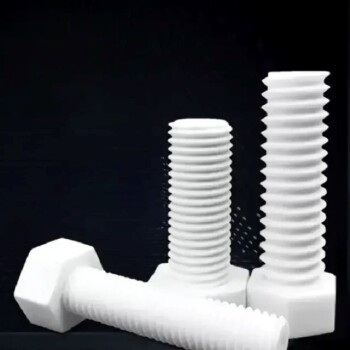
Our expertise extends to essential consumables, including precision-engineered PTFE products, ceramics, and crucibles, ensuring your system maintains total integrity under extreme thermal cycling. Whether you are conducting carbon capture research or advanced material synthesis, our technical team is ready to equip your lab with the most durable sealing technology and reactor systems.
Enhance your lab's reliability today—Contact KINTEK for a specialized consultation!
References
- I. Sreedhar, Shivani Malik. Carbon capture using amine modified porous carbons derived from starch (Starbons®). DOI: 10.1007/s42452-019-0482-8
This article is also based on technical information from Kintek Solution Knowledge Base .
Related Products
- High Purity Pure Graphite Crucible for Evaporation
- Ultra-High Temperature Graphite Vacuum Graphitization Furnace
- Horizontal High Temperature Graphite Vacuum Graphitization Furnace
- Vertical High Temperature Graphite Vacuum Graphitization Furnace
- 2200 ℃ Graphite Vacuum Heat Treat Furnace
People Also Ask
- Why is a high-purity graphite crucible required for Chromel-TaC composites? Ensure Peak Purity at 1400°C
- Why are high-purity graphite crucibles preferred for sulfide solid electrolytes? Achieve Superior Material Purity
- What role do high-purity graphite crucibles play in molten salt corrosion research? Ensure Reactor-Grade Precision
- Why are high-purity graphite crucibles used for magnesium distillation? Ensure 3N8 Purity & Thermal Stability
- What role does a high-purity graphite crucible play in CaO-MgO-Al2O3-SiO2 system equilibrium experiments? Maximize Accuracy