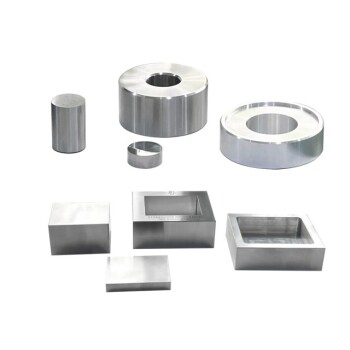
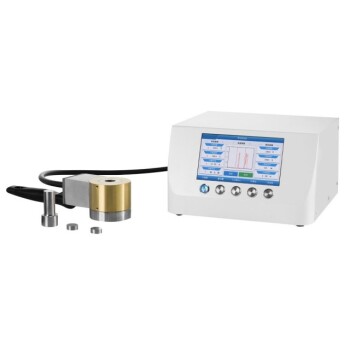
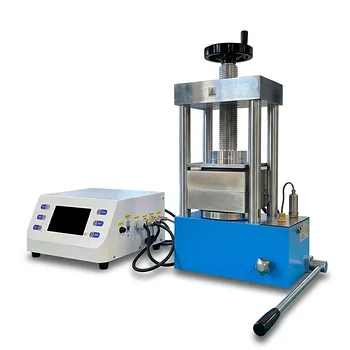
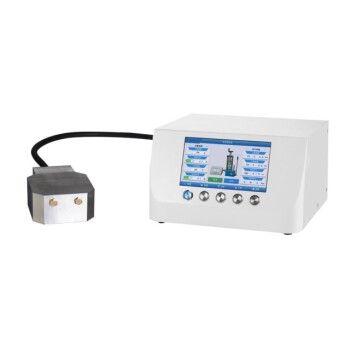
The primary function of a laboratory precision hot press is to densify porous coatings into high-quality electrolyte films. By applying simultaneous heat (typically around 70°C) and pressure (often 20 MPa), the device transforms loose, coated materials into a continuous, dense membrane with a controllable thickness of approximately 25 µm. This process is critical for embedding ceramic particles uniformly within the polymer matrix and eliminating the structural defects inherent in non-pressed membranes.
Core Takeaway The physical densification achieved through hot pressing is not merely cosmetic; it is a fundamental requirement for battery performance. By eliminating internal voids and improving particle contact, this process can increase the ionic conductivity of a composite solid-state electrolyte membrane by nearly an order of magnitude.
The Critical Role of Densification
Enhancing Ionic Conductivity
The primary goal of solid-state electrolytes is efficient ion transport. Porous, unpressed membranes contain air voids that act as insulating barriers to lithium ions.
Eliminating Micro-Pores
Hot pressing applies force to the polymer matrix, causing it to flow and fill these microscopic voids. This creates a continuous pathway for ions to travel, drastically reducing the resistance they encounter.
Optimizing Particle Interfaces
For composite membranes, the interaction between the ceramic filler (such as LATP) and the polymer is vital. Heat allows the polymer to soften and tightly encapsulate the ceramic particles.
Reducing Interfacial Impedance
This tight encapsulation minimizes the interfacial impedance between the ceramic and the polymer. A seamless interface ensures that ions can move freely between the two phases without improved resistance.
Precision Control and Mechanical Stability
Achieving Uniform Thickness
Using limiting molds or spacers during the pressing process allows for strict control over the final membrane thickness. This is often targeted at very thin profiles, such as 25 µm or 76 µm, depending on the specific composite.
Ensuring Consistent Ion Paths
Uniform thickness guarantees that the lithium-ion transmission path is consistent across the entire surface area. This consistency is required for the accurate calculation of ionic conductivity data during research and testing.
Improving Mechanical Strength
A loose coating is fragile and prone to cracking. The hot press consolidates the material into a self-supporting film with high mechanical strength, which is necessary to withstand the physical stresses of battery assembly and operation.
Promoting Uniform Current Distribution
Flatness and uniformity prevent localized "hot spots" of current density. A uniform membrane ensures current is distributed evenly within the assembled battery, preventing premature failure or degradation.
Understanding the Trade-offs
The Risk of Over-Compression
While density is desired, excessive pressure can damage the delicate ceramic particles within the composite. The process requires finding a "Goldilocks" zone where the polymer flows but the ceramic structure remains intact.
Thermal Management
The temperature must be precisely controlled to soften the polymer without degrading it or causing it to become too fluid, which could distort the film's dimensions.
Equipment Precision vs. Cost
Achieving the necessary flatness requires high-precision hydraulic systems and accurately machined molds. Standard laboratory presses without these precision controls may produce membranes with uneven thickness, rendering conductivity measurements unreliable.
Making the Right Choice for Your Goal
When configuring your processing parameters, align your approach with your specific performance targets:
- If your primary focus is Maximizing Conductivity: Prioritize temperature control to ensure the polymer flows sufficiently to fully encapsulate ceramic particles and reduce interfacial resistance.
- If your primary focus is Reliability and Safety: Focus on using precision spacers and molds to guarantee absolute thickness uniformity, ensuring even current distribution and preventing short circuits.
Precision hot pressing is the bridge between a theoretical material mixture and a functional, high-performance battery component.
Summary Table:
| Feature | Impact on Electrolyte Membrane |
|---|---|
| Densification | Eliminates micro-pores and creates continuous ion pathways |
| Heat & Pressure | Softens polymer to encapsulate ceramic fillers (e.g., LATP) |
| Thickness Control | Ensures uniform ion paths (e.g., 25 µm) for accurate data |
| Interface Optimization | Minimizes interfacial impedance between ceramic and polymer |
| Mechanical Strength | Consolidates fragile coatings into durable, self-supporting films |
Elevate Your Battery Research with KINTEK Precision
Unlock the full potential of your solid-state electrolytes with KINTEK’s advanced laboratory solutions. Whether you are developing high-performance composite membranes or testing new material interfaces, our precision hydraulic presses (pellet, hot, isostatic) and custom molds provide the exact pressure and thermal control needed to maximize ionic conductivity and ensure mechanical stability.
From high-temperature furnaces and crushing systems to specialized battery research tools, KINTEK provides the high-quality equipment required to bridge the gap between material theory and functional energy storage.
Ready to achieve superior membrane density? Contact KINTEK today to find the perfect hot press for your lab!
Related Products
- Automatic Laboratory Heat Press Machine
- 30T 40T Split Automatic Heated Hydraulic Press Machine with Heated Plates for Laboratory Hot Press
- 24T 30T 60T Heated Hydraulic Press Machine with Heated Plates for Laboratory Hot Press
- Automatic Heated Hydraulic Press Machine with Heated Plates for Laboratory Hot Press 25T 30T 50T
- Heated Hydraulic Press Machine with Heated Plates Split Manual Laboratory Hot Press
People Also Ask
- What are the core advantages of using a laboratory hot press to produce Bi2Se3? Achieve 93% Density & High Conductivity
- Why is a laboratory hot press necessary for all-solid-state battery assembly? Reduce Impedance and Enhance Performance
- How does a three-stage pressure program affect rice husk particleboards? Optimize Bond Strength & Stability
- What is the primary function of a laboratory hot press in MEA assembly? Optimize Fuel Cell Bonding & Performance
- How does a laboratory hot press improve alloy performance? Optimize Liquid Phase Sintering for High-Strength Materials