Hastelloy is selected primarily for its exceptional resistance to corrosion in aggressive experimental environments. In fission product interaction studies, specifically those involving high-temperature water and reactive chemicals, the reaction cell acts as the critical barrier. A nickel-based alloy like Hastelloy is necessary to maintain structural integrity where less robust materials would degrade.
The selection of Hastelloy is driven by the need to isolate experimental variables; its resistance to high-temperature steam ensures the reaction cell does not degrade or contaminate the sample with metallic impurities.
The Necessity of Corrosion Resistance
Resisting High-Temperature Steam
Fission product studies often require subjecting materials to high-temperature water environments.
Under these thermal conditions, water and steam become highly corrosive agents.
Hastelloy, a nickel-based alloy, is specifically engineered to withstand this oxidative stress without breaking down.
Handling Reactive Chemical Byproducts
These experiments frequently model interactions between specific substances, such as Cesium Iodide (CsI) and sodium molybdate (Na2MoO4).
The reaction cell acts as the containment vessel for these chemicals and their reaction byproducts.
Using a chemically inert material ensures that the vessel itself does not react with the test substances.
Preserving Data Accuracy
Preventing Sample Contamination
A critical requirement in fission product studies is the purity of the chemical data.
If a reaction cell corrodes, it can introduce metallic impurities into the sample mixture.
Hastelloy prevents this leaching effect, ensuring that the results reflect only the interaction of the fission products, not the degradation of the container.
Structural Integrity Under Thermal Stress
Reaction cells must endure rigorous high-temperature cycles throughout the duration of the experiment.
Material failure during a cycle could lead to a breach of containment or a loss of pressure.
Hastelloy provides the necessary mechanical stability to ensure the cell remains intact under these harsh operating conditions.
Common Pitfalls to Avoid
The Risk of Material Incompatibility
In high-temperature studies, a common mistake is assuming standard stainless steels are sufficient for all aqueous environments.
However, in the presence of specific fission product chemistries and high-temperature steam, standard alloys may suffer from accelerated corrosion.
Failure to select a specialized alloy like Hastelloy can lead to compromised structural integrity and invalid data due to impurity introduction.
Making the Right Choice for Your Goal
When designing reaction cells for fission product studies, your material choice dictates the validity of your results.
- If your primary focus is Data Purity: Select Hastelloy to prevent metallic impurities from leaching into your sample and skewing chemical interaction results.
- If your primary focus is Safety and Longevity: Rely on Hastelloy to maintain structural integrity during repeated high-temperature cycles and exposure to corrosive steam.
By prioritizing corrosion resistance, you ensure that your experimental apparatus remains a neutral observer rather than an active participant in the reaction.
Summary Table:
| Feature | Hastelloy Benefit | Impact on Fission Studies |
|---|---|---|
| Corrosion Resistance | Withstands high-temp steam and oxidative stress | Prevents structural degradation of the cell |
| Chemical Inertness | Resists reaction with CsI and Na2MoO4 | Ensures the vessel doesn't react with test substances |
| Material Purity | Zero leaching of metallic impurities | Maintains sample integrity for accurate data |
| Thermal Stability | Maintains integrity during high-temp cycles | Prevents containment breach or pressure loss |
Optimize Your Research with KINTEK’s High-Performance Solutions
Don't let material degradation compromise your critical data. KINTEK specializes in precision-engineered laboratory equipment, offering high-temperature reaction cells, high-temperature high-pressure reactors, and autoclaves crafted from advanced alloys like Hastelloy to ensure your experiments remain uncontaminated and safe.
Whether you are conducting fission product interaction studies or battery research, our comprehensive range—from muffle and vacuum furnaces to corrosion-resistant electrolytic cells and ceramics—is designed to meet the most rigorous scientific standards.
Ready to elevate your lab's performance? Contact us today to consult with our experts on the perfect material selection for your application.
References
- Kotchaphan Kanjana, J Channuie. Fission product behavior in high-temperature water: CsI vs MoO<sub>4</sub>. DOI: 10.1088/1742-6596/901/1/012147
This article is also based on technical information from Kintek Solution Knowledge Base .
Related Products
- Customizable Laboratory High Temperature High Pressure Reactors for Diverse Scientific Applications
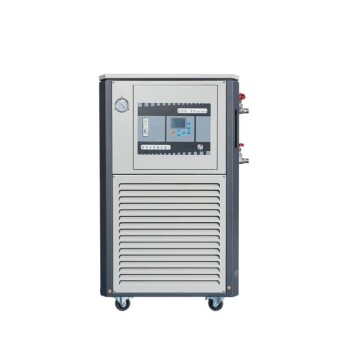
- High Temperature Constant Temperature Heating Circulator Water Bath Chiller Circulator for Reaction Bath
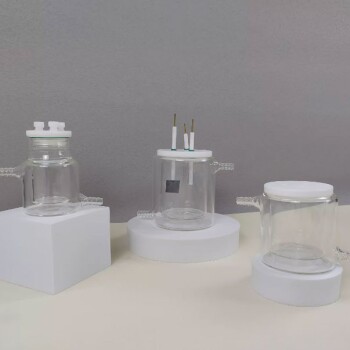
- Double-Layer Water Bath Electrolytic Electrochemical Cell
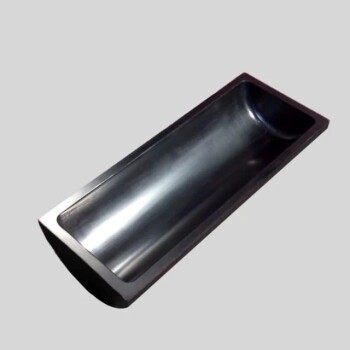
- Carbon Graphite Boat -Laboratory Tube Furnace with Cover
- Visual High-Pressure Reactor for In-Situ Observation
People Also Ask
- How do high-pressure and high-temperature reactors ensure the effective treatment of lignocellulosic wastewater in WAO?
- What equipment is required for high-pressure high-temperature reactions? Master Extreme Chemistry Safely
- How do you control high pressure in a reactor? A Guide to Safe & Stable Operation
- Why is argon better than nitrogen for inert atmosphere? Ensure Absolute Reactivity & Stability
- How does initial oxygen pressure affect the wet oxidation of pharmaceutical sludge? Master Your Oxidation Depth