Products Sample Preparation Manual Lab Press kbr pellet press 2t
kbr pellet press 2t

Manual Lab Press

kbr pellet press 2t

Item Number : PCKBR

Price varies based on specs and customizations


Working pressure
0-2 T
Piston diameter
28 mm
Piston stroke
5 mm
Weight
4.8 kg
ISO & CE icon

Shipping:

Contact us to get shipping details Enjoy On-time Dispatch Guarantee.

View Specs

Why Choose Us

Easy ordering process, quality products, and dedicated support for your business success.

Easy Process Quality Assured Dedicated Support

Introducing

Introducing the KINTEK KBR Press - a handheld laboratory hydraulic press designed for entry-level users. Its primary function is to prepare high-quality KBr pellets essential for transmission FTIR analysis, utilizing pressure of up to 2 tons. The press is available for purchase either on its own or as part of a complete kit. Engineered with durability in mind, this compact hydraulic press is built to withstand regular use in the laboratory, offering maintenance-free operation. Additionally, its portability enhances its versatility, making it an ideal choice for those on the move.

Advantages

  • The upper plate adopts electroplated countersunk head hexagonal screws, beautiful and space-saving
  • Chrome-plated cylinder, smooth surface, no rust, good sealing rubber ring, no oil leakage
  • One-piece main board structure, oil pool, main board, oil cylinder in a body, no seal connection
  • All aluminum alloy hand wheel, beautiful, practical, not easy to break
  • Small size, light weight, no oil leakage, can be used in the glove box
  • Mold using Japanese high-speed steel, good material, high hardness, no deformation, long service life
  • Digital display pressure gauge, more accurate pressure control, pressure display accuracy of 0.01MPa
  • Oil pool outside the host, easy to replace the oil, and the oil circuit increased the hydraulic oil filtration device
  • Special plunger, using special custom sealing structure, excellent sealing effect

Technical specifications

Model PCKBR-2T
Working pressure(T) 0-2(20Mpa)
Piston diameter ≤1MPa/10min
Workbench diameter Φ45mm(D)
Number of columns Two
Working space 54×55 (M×N)
Dimensions 100×220×220(W×L×H)
Weight(kg) 4.8kg
Diagram of hydraulic powder press size
  • Volume: The tablet press is small in size, light in weight, does not leak oil, and is easy to carry and can be used in the glove box.
  • Structure: Simple structure, no one-way valve, more stable upper pressure, suitable for use with infrared spectrometers.
  • Operation: The operation is simple. Tighten it by hand to apply pressure, and loosen it to release pressure.

Operation

Please click the link for detailed steps

Before we dive into the step-by-step instructions, it's essential to note that safety is of utmost importance when operating the Manual lab press machine. Always wear protective gloves and eye goggles when handling the machine, and make sure to read the user manual carefully before use.

Preparation and Assembly

Preparation and Assembly: Begin by assembling the KBR mold according to the guidelines. Ensure that the samples to be pressed are properly positioned within the mold.

Insertion and Fixation

Insertion and Fixation: Gently place the assembled KBR mold into the designated area within the KBR press. With care, tighten the screws provided to secure the mold in place.

Adjustment and Pressurization

Adjustment and Pressurization: Turn the handle in a clockwise direction to apply pressure to the mold. Gradually increase the pressure to the desired level for your specific requirements. It's recommended to do this in a controlled and steady manner.

Maintain Pressure

Maintain Pressure: Once the desired pressure is achieved, maintain this pressure consistently for the designated duration. The duration may vary depending on the nature of your samples and the desired outcome.

Release and Extraction

Release and Extraction: When the pressing duration is completed, carefully release the pressure by turning the handle counterclockwise. Ensure that the release is gradual to prevent any sudden shifts that might damage the samples or the press.

Disassembly and Sample Retrieval

Disassembly and Sample Retrieval: Gently disassemble the KBR mold, taking care not to disturb the pressed samples. Retrieve the pressed samples with meticulous attention to detail, preserving their integrity for subsequent analyses or studies.

Full range of lab press types
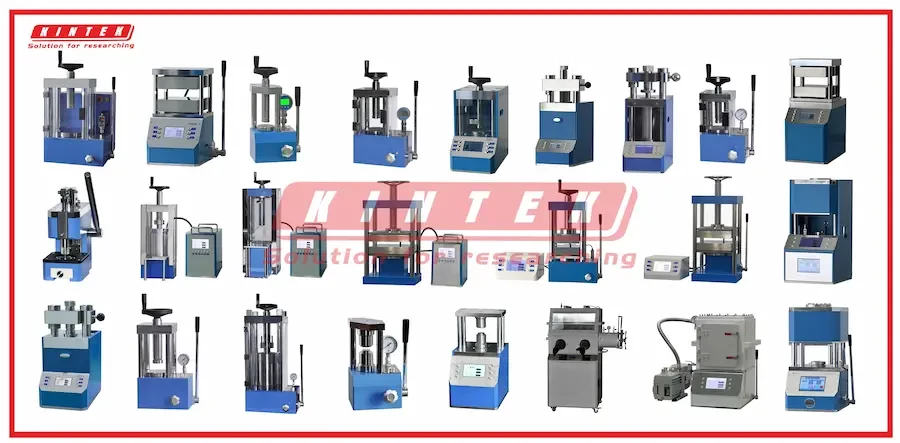
Full range of lab press types

Click to view our full range of lab press products.

Any question? Our experts have helped many laboratories choose their lab press, contact us now!

Full range of types of laboratory press molds

We have a full range of molds for you to choose from, and the molds fit the body perfectly.

If you need molds with special shapes, we can also customize them for you.
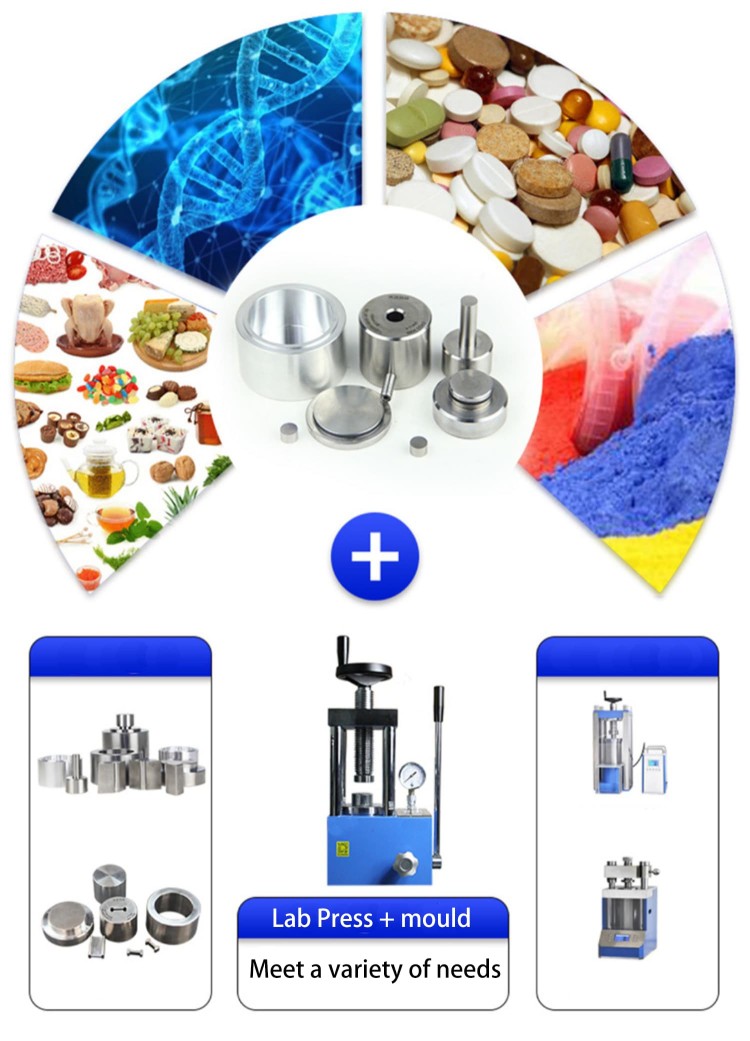
laboratory press mold

Click to see all press molds.

Warnings

Operator safety is the top important issue! Please operate the equipment with cautions. Working with inflammable& explosive or toxic gases is very dangerous, operators must take all necessary precautions before starting the equipment. Working with positive pressure inside the reactors or chambers is dangerous, operator must fellow the safety procedures strictly. Extra caution must also be taken when operating with air-reactive materials, especially under vacuum. A leak can draw air into the apparatus and cause a violent reaction to occur.

Designed for You

KinTek provide deep custom made service and equipment to worldwide customers, our specialized teamwork and rich experienced engineers are capable to undertake the custom tailoring hardware and software equipment requirements, and help our customer to build up the exclusive and personalized equipment and solution!

Would you please drop your ideas to us, our engineers are ready for you now!

Trusted by Industry Leaders

Our Cooperated Clients

FAQ

What Are Laboratory Hydraulic Machines?

Laboratory hydraulic machines are precision instruments used in scientific and industrial settings for applying controlled force and pressure to samples or materials. These machines utilize hydraulic systems to generate the force required for various applications, such as compression testing, material characterization, and sample preparation.

What Is A Lab Press?

A lab press, also known as a laboratory press, is a machine used to create compressed pellets from powdered material for various applications such as pharmaceutical development, spectroscopy, and bomb calorimetry. The powders are placed into a die and are pressed into shape by hydraulic action. Lab presses can have a wide range of pressures, from 15 to 200 metric tons, and can accommodate a wide range of different-sized or customized dies. They are commonly used in industries such as pharmaceutical, laminating, rubber and plastic molding, and for R&D work, testing, short runs, limited production, cell manufacturing, and lean manufacturing.

What Is An FTIR Press Used For?

An FTIR press is primarily used for preparing samples for Fourier Transform Infrared Spectroscopy (FTIR). It compresses powdered materials into pellets, which are then analyzed to determine their chemical composition and structure.

What Are The Applications Of Pellet Presses?

Pellet presses have a wide range of applications across various industries. They are commonly used in the pharmaceutical industry to produce uniform and compacted pellets for drug formulations. In the food industry, pellet presses are used to create animal feed pellets, as well as pellets for snacks and breakfast cereals. Pellet presses are also used in the chemical industry for catalysts, fertilizers, and chemical additives. Additionally, they find application in the biomass industry for the production of wood pellets for fuel, as well as in the metallurgical industry for the production of metal pellets for further processing.

What Are The Advantages Of Using Laboratory Hydraulic Machines?

Laboratory hydraulic machines offer several advantages in terms of their force capacity, precision, and versatility. They can generate high forces, making them suitable for testing or processing materials that require significant pressure. Hydraulic machines provide precise control over the applied force, allowing for accurate and repeatable results. They are often equipped with load cells or sensors to measure and monitor the force or displacement during testing. Hydraulic machines can accommodate a wide range of sample sizes and shapes, making them versatile for various applications. Additionally, they can operate at different speeds, providing flexibility for different testing or processing requirements.

What Is The Purpose Of A Hydraulic Press In Lab?

A hydraulic press in the laboratory is used to test the strength and durability of materials, investigate the effects of high pressure on different substances, and create pellets for sample analysis. It is a machine that uses fluid pressure to generate a force, which can be used to compress or mold materials. Laboratory hydraulic presses are smaller versions of industrial machines that offer more precision and control. They are commonly used to create KBr pellets for FTIR and general sample pellets for XRF in order to study the elemental composition of materials.

What Types Of FTIR Presses Are Available?

There are several types of FTIR presses available, including handheld hydraulic presses for entry-level users, automatic lab pellet presses with varying tonnage capacities (e.g., 30T, 40T, 60T), and specialized molds for creating pellets with steel or plastic rings.

How Do Electric Laboratory Presses Work?

Electric laboratory presses typically consist of a motor-driven ram or piston that applies force to a sample through a platen or die. The electric motor is controlled by a control panel, allowing the user to set and adjust the desired force and speed. The sample is placed between the platens, and as the motor drives the ram, the force is applied, exerting pressure on the sample. This controlled pressure enables various processes such as compression testing, powder compaction, sample preparation, and material synthesis.

What Is KBr Used For?

KBr, or potassium bromide, is commonly used in laboratories as a matrix for infrared spectroscopy. It is mixed with an organic sample and compressed into a pellet using a press like the benchtop KBr Pellet Press. The resulting pellets are used for analysis of the sample's molecular structure and composition. KBr is also used for briquetting inorganic samples for x-ray fluorescence spectroscopy and for pressing thin polymer films using heated platens for transmission sampling by IR spectroscopy. It is an important tool for researchers in the fields of pharmaceuticals, biology, nutrition and spectroscopy.

How Does A Pellet Press Work?

A pellet press works by feeding the material into a chamber where it is compressed by a rotating roller or extrusion plate. The pressure applied forces the material through a die with holes of a specific size and shape, which determines the size and shape of the pellets. The pellets are then cut to the desired length and collected for further processing or packaging. Some pellet presses may also include additional steps, such as drying or cooling the pellets, depending on the specific application.

What Are The Applications Of Laboratory Hydraulic Machines?

Laboratory hydraulic machines find applications in diverse fields, including materials science, engineering, geotechnical testing, and quality control. They are commonly used for compression testing of materials, including metals, polymers, ceramics, and composites. Hydraulic machines are employed in tensile testing, bending tests, and fatigue testing, allowing for the characterization of material properties. These machines are also used in geotechnical testing to assess the strength and stability of soils or rock samples. Additionally, hydraulic machines can be utilized for sample preparation, such as pelletizing or briquetting powdered materials.

What Are Different Type Of Lab Presses?

Different types of laboratory presses include manual hydraulic presses, automated hydraulic presses. Manual hydraulic presses use hand-operated levers to apply pressure, while automated presses are equipped with programmable controls to press products more accurately and consistently. When selecting a hydraulic press, it is important to consider the amount of force needed for a specific sample, how much space is provided in the lab, and how much energy and strength is required to pump the press.

How Does An FTIR Press Work?

An FTIR press works by applying high pressure to powdered materials, compressing them into dense, uniform pellets. This process ensures that the pellets are suitable for FTIR analysis, providing accurate and consistent results.

How Do You Prepare Pressed Pellets For XRF?

Pressed pellets for XRF analysis are prepared by grinding the sample to a fine particle size and mixing it with a binder or grinding aid. The mixture is then poured into a pressing die and compressed at a pressure of between 15 and 35T. The resulting pellet is ready for analysis. It is important to consider the particle size of the sample, choice of binder, sample dilution ratio, pressure used for pressing, and the thickness of the pellet when designing a sample preparation recipe. Consistency in the preparation procedure is key to ensuring accurate and repeatable results.

What Are The Advantages Of Using Electric Laboratory Presses?

Electric laboratory presses offer several advantages over manual or hydraulic presses. The electric motor provides precise control over the applied force, allowing for accurate and repeatable results. They offer adjustable speed and force settings, making them versatile for different applications and materials. Electric presses are generally quieter, cleaner, and more energy-efficient compared to hydraulic systems. Additionally, they eliminate the need for hydraulic fluid and associated maintenance. Electric presses also have a smaller footprint, making them suitable for laboratory environments with limited space.

What Is The KBr Pellet Method?

The KBr pellet method is a technique used in spectroscopy to analyze solids. It involves compressing powdered materials into pellet form using a compact, hand-operated press called the KBr Pellet Press. The resulting pellets are cylindrical in shape and can be of any desired thickness. This method is particularly useful in pharmaceutical, biological, nutrition, and spectrographic operations, and provides advantages such as using less sample than ATR, higher signal-to-noise, and control over signal intensity by changing sample concentration or increasing pathlength. It also offers clear advantages in detecting trace contaminants.

What Are The Benefits Of Using A Pellet Press?

A pellet press works by feeding the material into a chamber where it is compressed by a rotating roller or extrusion plate. The pressure applied forces the material through a die with holes of a specific size and shape, which determines the size and shape of the pellets. The pellets are then cut to the desired length and collected for further processing or packaging. Some pellet presses may also include additional steps, such as drying or cooling the pellets, depending on the specific application.

What Are The Main Components Of A Laboratory Hydraulic Machine?

The main components of a laboratory hydraulic machine include a hydraulic pump, a hydraulic cylinder, a piston, valves, gauges, and a control panel. The hydraulic pump generates pressure by forcing hydraulic fluid into the cylinder. The hydraulic cylinder houses the piston, which applies force to the sample or material. Valves control the flow of hydraulic fluid, allowing for precise control over the applied force. Gauges measure and display the force or pressure being applied. The control panel or software enables users to set and adjust parameters such as force, displacement, or strain.

What Are The Advantages Of Using An FTIR Press?

The advantages of using an FTIR press include the ability to produce uniform and high-quality pellets, fast tableting speed, customizable sizes for precise molding, and versatility in preparing samples for various analytical techniques like X-ray fluorescence (XRF) and FTIR spectroscopy.

What Pressure Should XRF Pellets Be?

XRF pellets should be pressed at pressures between 15 and 40 tons for 1-2 minutes to ensure that the binder recrystallizes and that there are no void spaces present in the pellet. The pressure applied by the hydraulic press should be enough for the sample to be completely compressed. The thickness of the pellet is also crucial, as it must be infinitely thick to the X-rays. Working with small particle sizes (<50µm or <75µm) is also important for effective analysis. These factors impact how well the sample binds together under pressure, which affects the analytical results.

What Are The Applications Of Electric Laboratory Presses?

Electric laboratory presses find applications in a wide range of scientific and industrial settings. They are commonly used for compression testing of materials, including polymers, metals, ceramics, and composites. These presses are also employed in powder compaction processes, such as tabletting in pharmaceutical manufacturing or the preparation of powdered samples for analysis. Electric presses are used for material synthesis, such as the formation of thin films or the fabrication of electrodes. Additionally, they are utilized in research and development for sample preparation, sample extrusion, and various other processes that require precise application of force and pressure.

Why KBr Is Used For Pellet?

KBr (potassium bromide) is used for pellet preparation because it is a stable, transparent, and inexpensive salt that is easy to obtain in high purity. When a sample is mixed with KBr powder and compressed into a pellet using a press, it forms a flat, uniform disc with a consistent thickness. KBr pellets are commonly used in spectroscopy applications to analyze solid samples because they provide a clear and reproducible path for infrared light to pass through, which allows for accurate measurements of the sample's chemical composition.

What Factors Should Be Considered When Selecting A Pellet Press?

Several factors should be considered when selecting a pellet press. These include the desired pellet size and shape, the material properties, the required production capacity, and the available space and resources. The type and condition of the material being processed, such as its moisture content, particle size, and flowability, can also influence the selection of the pellet press. Additionally, factors such as the power requirements, ease of operation and maintenance, and the availability of spare parts and technical support should be considered. It is important to choose a pellet press that aligns with the specific requirements and objectives of the application to ensure optimal performance and cost-effectiveness.

What Considerations Should Be Taken When Selecting A Laboratory Hydraulic Machine?

When selecting a laboratory hydraulic machine, several factors should be considered. The force capacity should match the specific application and the maximum force expected. The size and configuration of the hydraulic cylinder should accommodate the sample size and shape. The machine should have precise control over the applied force, displacement, or strain, with user-friendly software or control panels. Safety features, such as emergency stop buttons and protective shields, should be evaluated. It is important to ensure that the machine is constructed from durable materials and designed for long-term use. Additionally, it is crucial to consider the availability of accessories or fixtures to hold the samples securely during testing.

What Materials Can Be Used With An FTIR Press?

An FTIR press can be used with a variety of powdered materials, including chemicals, pharmaceuticals, and other substances that need to be analyzed using FTIR or XRF techniques. The press can accommodate different types of molds, such as those with steel or plastic rings, to suit specific sample requirements.

What Is The Advantage Of XRF Pressed Pellet Technique?

The advantage of XRF pressed pellet technique is that it produces high-quality results with a higher signal-to-noise ratio, allowing for the detection of even the lightest elements. Quantifying the elemental composition without pressed pellets can lead to significant discrepancies between expected and actual values. The grinding of the sample into fine particles and compressing it into a smooth and flat XRF pellet reduces background scattering and improves the detection of emissions. Pressed pellets are also relatively quick, low-cost, and lend themselves to simple and cost-effective automation for higher throughput laboratories.

What Considerations Should Be Taken When Selecting An Electric Laboratory Press?

Several factors should be considered when selecting an electric laboratory press. The required force capacity should match the specific application and the maximum force expected. The platen size should accommodate the sample size and shape. The speed range and control options should align with the desired testing or processing requirements. It is important to ensure the press is constructed from durable materials and designed for long-term use. Safety features, such as emergency stop buttons and protective shields, should be evaluated. Additionally, the availability of accessories, such as different platens or heating options, can be crucial for specific applications.

How To Make KBr Pellets For FTIR?

To make KBr pellets for FTIR, a pellet press die set, pestle and mortar, and IR-transparent medium, such as KBr, are required. The KBr and sample are mixed in a mortar, and the resulting mixture is pressed into a disc using a die set and a hydraulic press. The pellet should be thin, transparent, and contain only a small amount of the sample. The typical ratio of KBr to sample is 100:1. KBr is hygroscopic, so it should be stored in a dry environment and prepared in a glovebox or with a vacuum die to avoid moisture absorption.
View more faqs for this product

Product Datasheet

kbr pellet press 2t

Category Catalog

Manual Lab Press


REQUEST A QUOTE

Our professional team will reply to you within one business day. Please feel free to contact us!

Related Products

Laboratory Hydraulic Pellet Press for XRF KBR FTIR Lab Applications

Laboratory Hydraulic Pellet Press for XRF KBR FTIR Lab Applications

Efficiently prepare samples with the Electric Hydraulic Press. Compact and portable, it's perfect for labs and can work in a vacuum environment.

View Details
Automatic Laboratory Hydraulic Press for XRF & KBR Pellet Press

Automatic Laboratory Hydraulic Press for XRF & KBR Pellet Press

Fast and easy xrf sample pellet preparation with KinTek Automatic Lab Pellet Press. Versatile and accurate results for X-ray fluorescence analysis.

View Details
Heated Hydraulic Press Machine with Heated Plates for Vacuum Box Laboratory Hot Press

Heated Hydraulic Press Machine with Heated Plates for Vacuum Box Laboratory Hot Press

The lab press for vacuum box is a specialized piece of equipment designed for laboratory use. Its main purpose is to press pills and powders according to specific requirements.

View Details
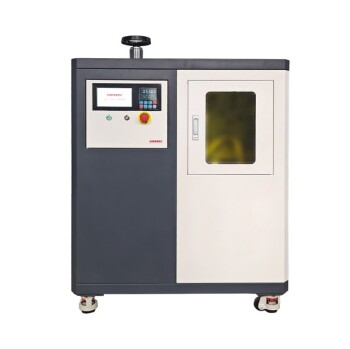
Touchscreen Automatic Vacuum Heat Press

Touchscreen Automatic Vacuum Heat Press

Precision vacuum heat press for labs: 800°C, 5-ton pressure, 0.1MPa vacuum. Ideal for composites, solar cells, aerospace.
View Details
Warm Isostatic Press for Solid State Battery Research

Warm Isostatic Press for Solid State Battery Research

Discover the advanced Warm Isostatic Press (WIP) for semiconductor lamination. Ideal for MLCC, hybrid chips, and medical electronics. Enhance strength and stability with precision.

View Details
Heated Hydraulic Press Machine with Heated Plates for Vacuum Box Laboratory Hot Press

Heated Hydraulic Press Machine with Heated Plates for Vacuum Box Laboratory Hot Press

Enhance your lab's precision with our lab press for vacuum box. Press pills and powders with ease and precision in a vacuum environment, reducing oxidation and improving consistency. Compact and easy to use with a digital pressure gauge.

View Details
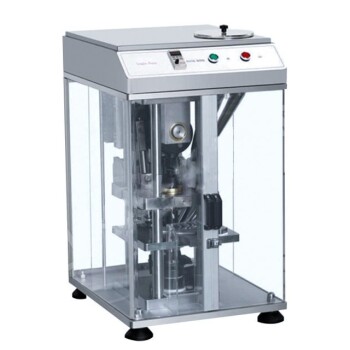
Laboratory Hydraulic Press Lab Pellet Press for Button Battery

Laboratory Hydraulic Press Lab Pellet Press for Button Battery

Efficiently prepare samples with our 2T Button Battery Press. Ideal for material research labs and small-scale production. Small footprint, lightweight, and vacuum-compatible.
View Details
Single Punch Electric Tablet Press Machine Laboratory Powder Tablet Punching TDP Tablet Press

Single Punch Electric Tablet Press Machine Laboratory Powder Tablet Punching TDP Tablet Press

The single-punch electric tablet press is a laboratory-scale tablet press suitable for corporate laboratories in pharmaceutical, chemical, food, metallurgical and other industries.

View Details
Manual Lab Heat Press

Manual Lab Heat Press

Manual hydraulic presses are mainly used in laboratories for various applications such as forging, molding, stamping, riveting and other operations. It allows the creation of complex shapes while saving material.

View Details
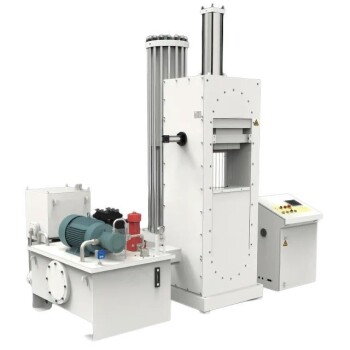
30T 40T Split Automatic Heated Hydraulic Press Machine with Heated Plates for Laboratory Hot Press

30T 40T Split Automatic Heated Hydraulic Press Machine with Heated Plates for Laboratory Hot Press

Discover our split automatic heated lab press 30T/40T for precise sample preparation in material research, pharmacy, ceramics, and electronics industries. With a small footprint and heating up to 300°C, it's perfect for processing under vacuum environment.
View Details
Cold Isostatic Pressing Machine CIP for Small Workpiece Production 400Mpa

Cold Isostatic Pressing Machine CIP for Small Workpiece Production 400Mpa

Produce uniformly high-density materials with our Cold Isostatic Press. Ideal for compacting small workpieces in production settings. Widely used in powder metallurgy, ceramics, and biopharmaceutical fields for high-pressure sterilization and protein activation.

View Details
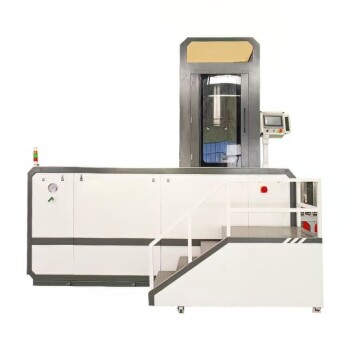
Double Plate Heating Press Mold for Lab

Double Plate Heating Press Mold for Lab

Discover precision in heating with our Double Plate Heating Mold, featuring high-quality steel and uniform temperature control for efficient lab processes. Ideal for various thermal applications.
View Details
Warm Isostatic Press WIP Workstation 300Mpa for High Pressure Applications

Warm Isostatic Press WIP Workstation 300Mpa for High Pressure Applications

Discover Warm Isostatic Pressing (WIP) - A cutting-edge technology that enables uniform pressure to shape and press powdered products at a precise temperature. Ideal for complex parts and components in manufacturing.

View Details
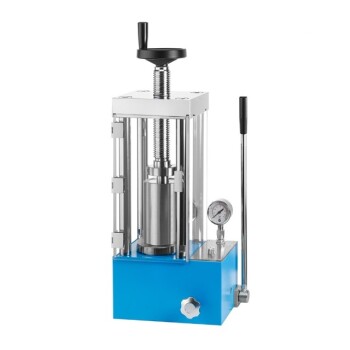
Laboratory Hydraulic Press Lab Pellet Press Machine for Glove Box

Laboratory Hydraulic Press Lab Pellet Press Machine for Glove Box

Controlled environment lab press machine for glove box. Specialized equipment for material pressing and shaping with high precision digital pressure gauge.
View Details
Manual Cold Isostatic Pressing Machine CIP Pellet Press

Manual Cold Isostatic Pressing Machine CIP Pellet Press

Lab Manual Isostatic Press is a high-efficient equipment for sample preparation widely used in material research, pharmacy, ceramics, and electronic industries. It allows for precision control of the pressing process and can work in a vacuum environment.
View Details
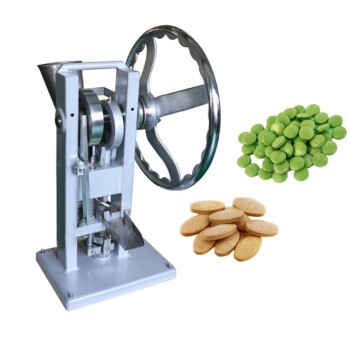
Single Punch Manual Tablet Press Machine TDP Tablet Punching Machine

Single Punch Manual Tablet Press Machine TDP Tablet Punching Machine

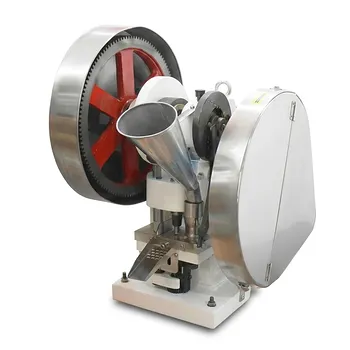
Single punch manual tablet punching machine can press various granular, crystal or powdery raw materials with good fluidity into disc-shaped, cylindrical, spherical, convex, concave and other various geometric shapes (such as square, triangle, ellipse, capsule shape, etc.), and can also press products with text and patterns.
View Details
Single Punch Electric Tablet Press Machine TDP Tablet Punching Machine

Single Punch Electric Tablet Press Machine TDP Tablet Punching Machine

The electric tablet punching machine is a laboratory equipment designed for pressing various granular and powdery raw materials into discs and other geometric shapes. It is commonly used in pharmaceutical, healthcare products, food, and other industries for small batch production and processing. The machine is compact, lightweight, and easy to operate, making it suitable for use in clinics, schools, laboratories, and research units.

View Details
Round Bidirectional Press Mold for Lab

Round Bidirectional Press Mold for Lab

The round bidirectional press mold is a specialized tool used in high-pressure molding processes, particularly for creating intricate shapes from metal powders.

View Details
Lab Infrared Press Mold

Lab Infrared Press Mold

Easily release samples from our lab infrared press mold for accurate testing. Ideal for battery, cement, ceramics, and other sample preparation research. Customizable sizes available.

View Details
Cylindrical Press Mold with Scale for Lab

Cylindrical Press Mold with Scale for Lab

Discover precision with our Cylindrical Press Mold. Ideal for high-pressure applications, it molds various shapes and sizes, ensuring stability and uniformity. Perfect for lab use.

View Details

Related Articles

FTIR Pellet Press The Game-Changer in Spectroscopy Analysis

FTIR Pellet Press The Game-Changer in Spectroscopy Analysis

Fourier Transform Infrared Spectroscopy (FTIR) is a widely used analytical technique in the field of chemistry and materials science. It is a non-destructive method that allows the identification and quantification of chemical compounds in a sample.

Find out more
Understanding Hydraulic Pellet Press: Working Mechanism and Applications

Understanding Hydraulic Pellet Press: Working Mechanism and Applications

A hydraulic press, also known as a Bramah press, is a machine that uses fluid pressure to generate a force. This force can be used to compress or mold materials. Hydraulic presses are commonly used in manufacturing and industrial applications due to their ability to exert a large amount of force while still being easy to operate.

Find out more
Understanding the Functioning and Applications of a Hydraulic Pellet Press

Understanding the Functioning and Applications of a Hydraulic Pellet Press

A hydraulic press is a compression device that makes use of an exerted force placed upon a fluid, to create a resulting force according to Pascal’s Law. It was actually invented by Joseph Bramah, so is also known as the Bramah Press.

Find out more
The Importance of Particle Size in Pressed Pellet Technique

The Importance of Particle Size in Pressed Pellet Technique

The pressed pellet technique is a popular method used in sample preparation for X-ray fluorescence (XRF) analysis. It involves compressing a finely ground sample into a pellet under high pressure.

Find out more
Benchtop KBr Pellet Press: A Comprehensive Overview

Benchtop KBr Pellet Press: A Comprehensive Overview

If you're looking for a way to compress powdered materials into uniform pellets without contamination, then the KBr Pellet Press might just be the perfect solution for you. Whether you're working in a pharmaceutical, biological, nutrition, or spectrographic lab, this hand-operated press offers convenience and efficiency in a small package.

Find out more
Exploring the Benchtop KBr Pellet Press: Features, Mechanism, and Applications

Exploring the Benchtop KBr Pellet Press: Features, Mechanism, and Applications

The benchtop KBr pellet press is a versatile and essential tool in a variety of laboratory settings. Whether you work in pharmaceuticals, biology, nutrition, or spectroscopy, this compact and user-friendly press will simplify your sample preparation process.

Find out more
Effective Preparation of Samples for XRF Analysis via Pressed Pellets Method

Effective Preparation of Samples for XRF Analysis via Pressed Pellets Method

The process of making pressed pellets for XRF analysis is a popular and widely used method. It offers several advantages over other sample preparation techniques. Pressed pellets have a higher signal-to-noise ratio compared to loose powder samples, allowing for the detection of even the lightest elements.

Find out more
Manual Pellet Press: A Comprehensive Guide to Efficient Lab Pelletizing

Manual Pellet Press: A Comprehensive Guide to Efficient Lab Pelletizing

Explore the intricacies of manual pellet presses, including operation, safety, and maintenance tips. Learn how to choose the right press, understand force gauges, and optimize pellet quality for your lab experiments.

Find out more
Comprehensive Guide to Manual Hydraulic Pellet Press

Comprehensive Guide to Manual Hydraulic Pellet Press

A manual hydraulic pellet press is a valuable tool in the laboratory for preparing pellets with a smooth and homogeneous surface for spectral analyses. It is commonly used in applications such as X-ray fluorescence analysis or infrared spectroscopy for elemental analysis.

Find out more
Manual Hydraulic Pellet Press: An Efficient Tool for Spectral Analyses Preparation

Manual Hydraulic Pellet Press: An Efficient Tool for Spectral Analyses Preparation

The manual hydraulic pellet press offers several key features that make it a valuable tool for laboratory applications. Some of the main features include:Availability of pressing tools in different diameters: 40mm, 32mm, and 15mm;Availability of pressing tools in different diameters: 40mm, 32mm, and 15mm;Designed pressure force display in 10 kN steps;Ease of operation via hand lever;Convenience in cleaning;Single-stage piston stroke of maximum 25mm ect.

Find out more
Hydraulic Heated Lab Pellet Press: Comprehensive Guide to Selection and Usage

Hydraulic Heated Lab Pellet Press: Comprehensive Guide to Selection and Usage

Explore the features and applications of hydraulic heated lab pellet presses. Learn how to choose the right model for your research needs and maximize efficiency in material science labs.

Find out more
Manual Lab Hydraulic Pellet Press: Comprehensive Guide to High-Quality Pellet Preparation

Manual Lab Hydraulic Pellet Press: Comprehensive Guide to High-Quality Pellet Preparation

Explore the detailed guide on using a Manual Lab Hydraulic Pellet Press for high-quality pellet preparation in spectral analyses. Learn about features, operation, and maintenance for optimal performance.

Find out more