The Engineer's Dilemma: From Randomness to Order
Every advanced material begins as a paradox: a collection of disordered particles, full of empty space, that we aspire to transform into a dense, predictable, and perfectly unified solid.
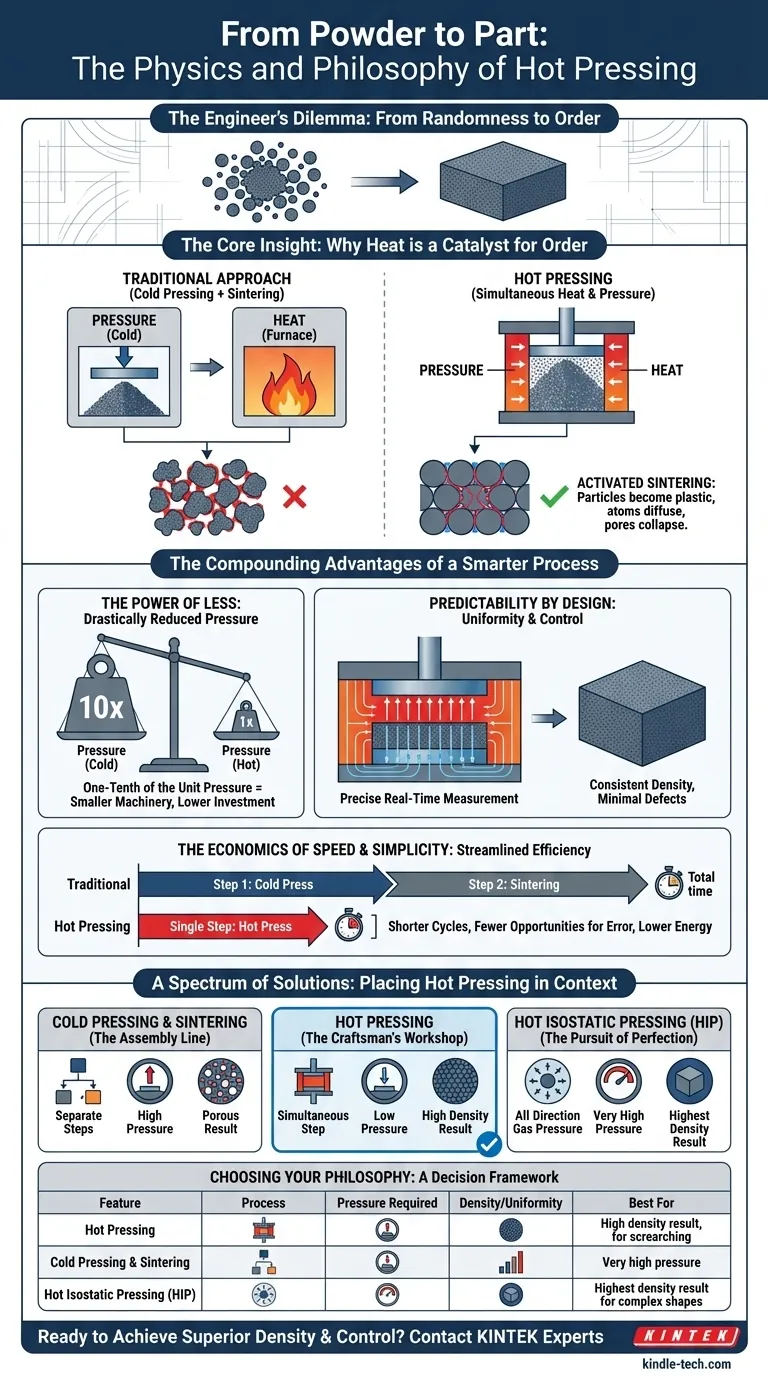
The traditional approach is one of brute force. We take this powder, press it into shape at room temperature, and then bake it in a furnace. This two-step process—cold pressing and sintering—is logical, but it fights against the material's nature. It’s like trying to build a flawless wall by first stacking cold, rigid bricks and then trying to fuse them together afterward. The gaps and imperfections are almost inevitable.
This is the fundamental problem of material science: how do you convince countless individual particles to behave as one? The answer, it turns out, is not more force, but more intelligence.
The Core Insight: Why Heat is a Catalyst for Order
Hot pressing is a fundamentally different philosophy. Instead of separating pressure and heat, it applies them simultaneously. This simple change has profound consequences.
The process is a form of activated sintering. By heating the material while it's being compressed, each particle becomes more plastic, more willing to deform and cooperate. The heat doesn't melt the material; it just makes it pliable enough to listen to the pressure being applied.
Under this combined influence, the empty spaces between particles—the pores that are the enemy of strength and density—collapse. Atoms diffuse more readily across particle boundaries, healing the seams until they vanish. It’s the difference between trying to sculpt cold metal and forging it while it glows red-hot.
The Compounding Advantages of a Smarter Process
This elegant combination of physics yields a cascade of practical benefits that resonate with the engineering mindset of efficiency and control.
The Power of Less: Drastically Reduced Pressure
Perhaps the most startling advantage is the reduction in force required. Hot pressing often needs only one-tenth of the unit pressure demanded by cold pressing to achieve a superior result.
This isn't just a technical footnote; it changes the entire economic and physical landscape of the process. It means the machinery required can be smaller, less complex, and represent a significantly lower capital investment. It makes the creation of high-performance materials more accessible.
Predictability by Design: Uniformity and Control
Engineers crave predictability. We need to know that a component will perform exactly as designed, every single time. Hot pressing provides this through exceptional control.
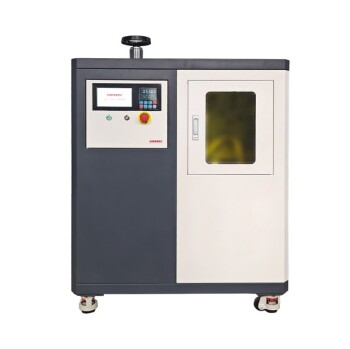
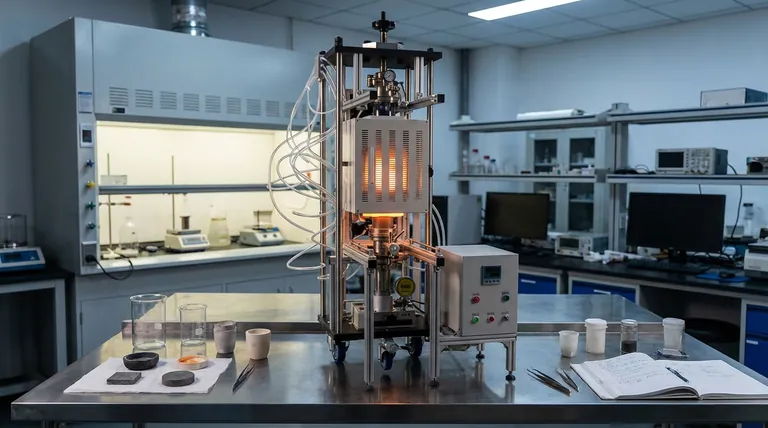
Modern hot press systems, like those developed for laboratory environments, allow for precise, real-time measurement and adjustment of temperature and pressure. This ensures a uniform thermal field across the material, eliminating hot spots and inconsistencies. The result is a final product with consistent density and minimal internal defects—a material you can trust.
The Economics of Speed and Simplicity
By collapsing two manufacturing steps into one, hot pressing dramatically shortens production cycles. But the efficiency is deeper than just time.
A simpler process is a more robust one. With fewer stages, there are fewer opportunities for error, contamination, or deviation. This streamlined approach, combined with the lower energy demands of a more efficient thermal process, makes it a model of both operational and energetic elegance.
A Spectrum of Solutions: Placing Hot Pressing in Context
No single tool is right for every job. The genius of an engineer lies in selecting the right process for the specific goal. Understanding where hot pressing sits relative to its alternatives is key.
The Craftsman's Approach: Hot Pressing vs. Cold Pressing & Sintering
If traditional cold pressing and sintering is the industrial assembly line—optimized for mass production where some porosity is acceptable—then hot pressing is the master craftsman's workshop. It’s a more deliberate, controlled process designed to achieve a higher quality of consolidation in a single, masterful operation.
The Pursuit of Perfection: Hot Pressing vs. Hot Isostatic Pressing (HIP)
Hot Isostatic Pressing (HIP) represents the far end of the spectrum: the pursuit of absolute perfection. While a standard hot press applies pressure from one direction (uniaxially), HIP uses a high-pressure gas to apply force equally from all directions.
Think of it as the difference between squeezing something in a vise versus submerging it in the deep ocean. The isostatic pressure of HIP is perfectly uniform, making it unparalleled for creating complex shapes with the highest possible density and uniformity. It's a more complex and expensive process, reserved for the most demanding applications.
Choosing Your Philosophy: A Decision Framework
The choice between these methods is a classic engineering trade-off between cost, performance, and complexity.
| Feature | Hot Pressing | Cold Pressing & Sintering | Hot Isostatic Pressing (HIP) |
|---|---|---|---|
| Process | Simultaneous heat & uniaxial pressure | Two-step: press cold, then sinter | Simultaneous heat & isostatic pressure |
| Pressure Required | Low (~1/10 of cold pressing) | High | Very High |
| Density/Uniformity | High density, good uniformity | Lower density, potential for defects | Highest density and uniformity |
| Best For | Cost-effective production of simple shapes | Mass production where porosity is acceptable | Complex shapes requiring max density |
Understanding these principles is the first step. The second is having the right instrument to apply them with precision. KINTEK specializes in providing the advanced laboratory equipment, including state-of-the-art hot press systems, that empowers researchers and engineers to turn foundational principles into breakthrough materials.
If you're ready to move beyond the limitations of traditional methods and achieve superior density and control in your work, we have the tools to help you succeed. Contact Our Experts
Visual Guide
Related Products
- Automatic Heated Hydraulic Press Machine with Heated Plates for Laboratory Hot Press 25T 30T 50T
- Manual High Temperature Heated Hydraulic Press Machine with Heated Plates for Lab
- Touchscreen Automatic Vacuum Heat Press
- 30T 40T Split Automatic Heated Hydraulic Press Machine with Heated Plates for Laboratory Hot Press
- Vacuum Hot Press Furnace Machine Heated Vacuum Press
Related Articles
- Why Your Composite and Polymer Parts Keep Failing: The Secret Is Simultaneous Heat and Pressure
- The Physics of Flawless Materials: Deconstructing the Hydraulic Hot Press
- Precision Under Pressure: The Physics and Psychology of the Hydraulic Hot Press
- Hydraulic Hot Press: Principles, Components, Features, Advantages, and Applications
- Comprehensive Guide to Hydraulic Hot Press: Function, Features and Applications