Knowledge What is a silicon carbide heating element? Unlock Extreme Heat for Industrial Processes
Author avatar

Tech Team · Kintek Solution

Updated 1 week ago

What is a silicon carbide heating element? Unlock Extreme Heat for Industrial Processes


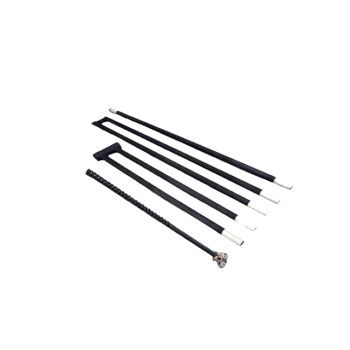
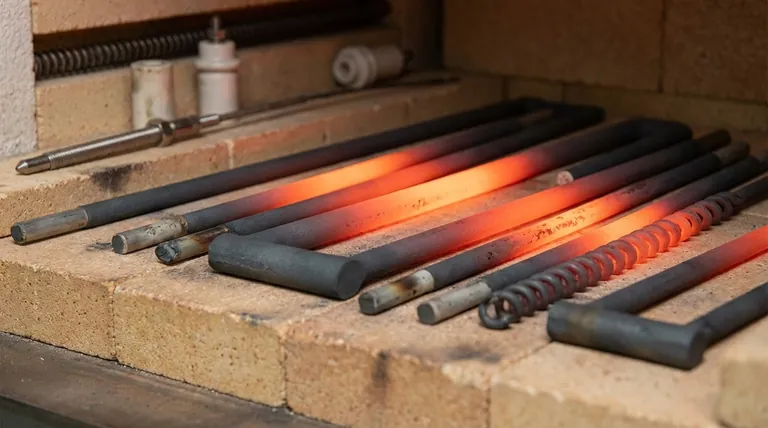
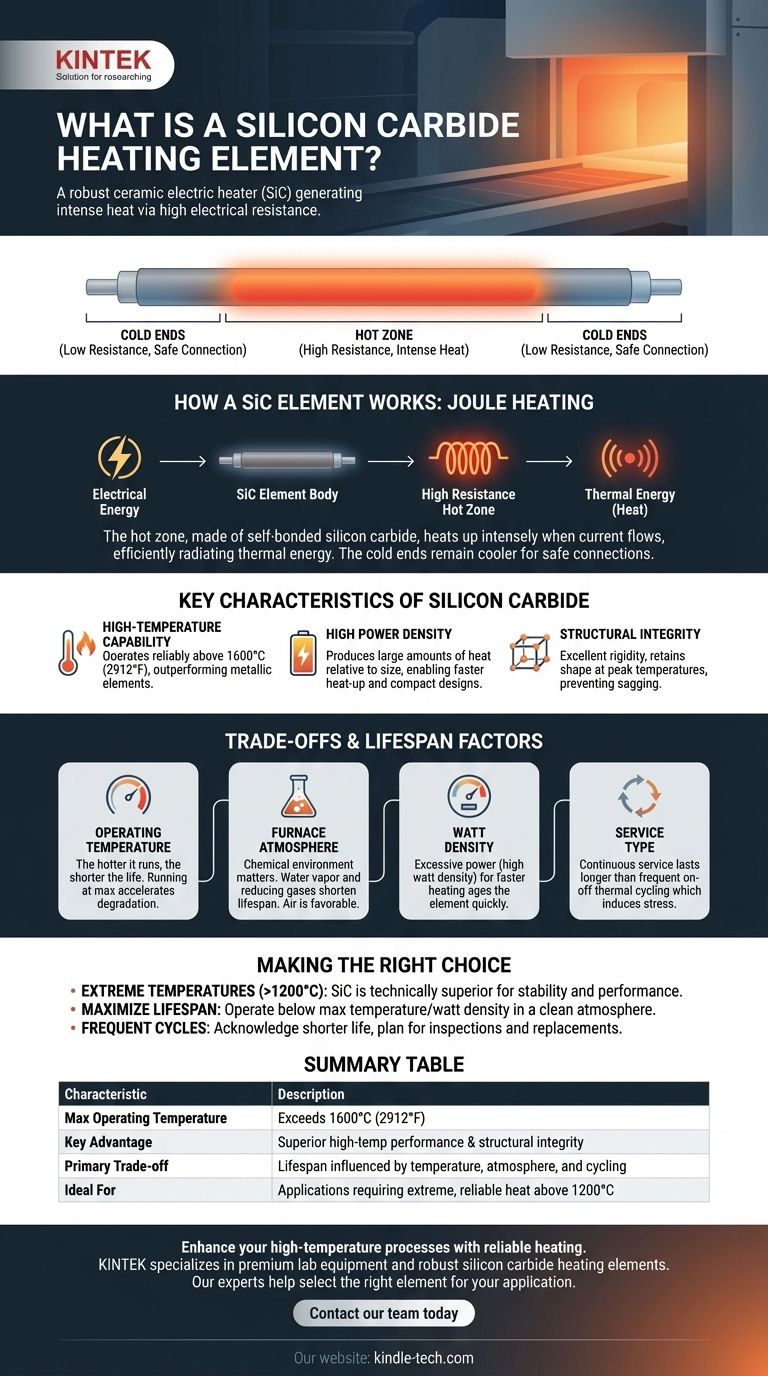
At its core, a silicon carbide (SiC) heating element is a high-performance electric heater made from a robust ceramic compound. It functions by passing an electric current through its body, which has high electrical resistance, thereby generating intense heat. Its unique construction features a central high-resistance "hot zone" for heat generation and two lower-resistance "cold ends" that allow for safe connection to a power supply outside the heated chamber.

While renowned for their ability to reach extremely high temperatures, the true value of a silicon carbide heating element lies in its durability and predictable performance, which are directly tied to how well its operating environment is managed.
What is a silicon carbide heating element? Unlock Extreme Heat for Industrial Processes

How a SiC Element Works: The Principle of Resistance

A SiC element operates on the simple principle of Joule heating, where electrical energy is converted into thermal energy. However, its sophisticated design optimizes this process for industrial high-temperature applications.

The Hot Zone: The Engine of Heat

The central section of the element, the hot zone, is made of self-bonded silicon carbide. This material is engineered to have high electrical resistance.

When current flows through this section, the resistance causes it to heat up intensely, efficiently radiating thermal energy into the furnace or kiln.

The Cold Ends: The Critical Connection

The terminal sections, or cold ends, are infused with silicon metal or other materials to dramatically lower their electrical resistance compared to the hot zone.

This design ensures that the ends remain significantly cooler, allowing for safe and reliable electrical connections without overheating the terminals or the furnace walls they pass through.

Key Characteristics of Silicon Carbide

SiC elements are chosen over other types, like standard metallic elements, for a specific set of demanding characteristics.

High-Temperature Capability

The primary advantage of SiC is its ability to operate reliably at very high temperatures, often exceeding 1600°C (2912°F), where most metallic elements would fail.

High Power Density

SiC elements can be "watt loaded" to a high degree, meaning they can produce a large amount of heat relative to their size. This enables faster furnace heat-up times and more compact designs.

Structural Integrity

As a ceramic material, silicon carbide possesses excellent rigidity and retains its shape even at peak temperatures, preventing the sagging that can occur with metallic elements over time.

Understanding the Trade-offs and Lifespan Factors

The longevity of a SiC heating element is not infinite. It is a consumable component whose life is determined by a clear set of trade-offs and operating conditions.

The Impact of Operating Temperature

The relationship is simple: the hotter you run the element, the shorter its life will be. Operating an element consistently at its maximum rated temperature will accelerate its degradation.

The Influence of Furnace Atmosphere

The chemical environment inside the furnace is critical. Certain atmospheres, particularly those with water vapor or specific reducing gases, can react with the silicon carbide and shorten its lifespan. Air is generally a favorable atmosphere.

The Effect of Watt Density

Pushing excessive power through an element (high watt density) to achieve faster heating will cause it to age and fail more quickly. Proper engineering involves balancing heat-up requirements with element longevity.

Continuous vs. Intermittent Service

Thermal cycling—the process of repeatedly heating up and cooling down—induces stress on the element. An element in continuous service at a stable temperature will typically last much longer than one used intermittently.

Making the Right Choice for Your Application

Selecting and operating a SiC element requires balancing performance goals with operational realities.

  • If your primary focus is reaching extreme temperatures (above 1200°C): A SiC element is the technically superior choice over conventional metallic elements for its stability and performance.
  • If your primary focus is maximizing element lifespan: Operate the elements below their maximum rated temperature and watt density while ensuring a clean, compatible furnace atmosphere.
  • If your application involves frequent on-off cycles: Acknowledge that this constitutes intermittent service and plan for a shorter element life and more frequent inspections or replacements.

Ultimately, understanding these core principles is the key to harnessing the power of silicon carbide elements effectively and economically.

Summary Table:

Characteristic Description
Max Operating Temperature Exceeds 1600°C (2912°F)
Key Advantage Superior high-temperature performance & structural integrity
Primary Trade-off Lifespan is influenced by temperature, atmosphere, and cycling
Ideal For Applications requiring extreme, reliable heat above 1200°C

Ready to enhance your high-temperature processes with reliable, durable heating?

KINTEK specializes in premium lab equipment and consumables, including robust silicon carbide heating elements designed for demanding laboratory and industrial environments. Our experts can help you select the right element to maximize performance and longevity for your specific application, whether it's continuous high-temperature operation or complex thermal cycling.

Contact our team today to discuss your heating needs and discover how KINTEK's solutions can bring efficiency and reliability to your lab.

Visual Guide
What is a silicon carbide heating element? Unlock Extreme Heat for Industrial Processes Visual Guide

Related Products

People Also Ask

Related Products

Silicon Carbide SiC Thermal Heating Elements for Electric Furnace

Silicon Carbide SiC Thermal Heating Elements for Electric Furnace

Experience the advantages of Silicon Carbide (SiC) Heating Element: Long service life, high corrosion and oxidation resistance, fast heating speed, and easy maintenance. Learn more now!

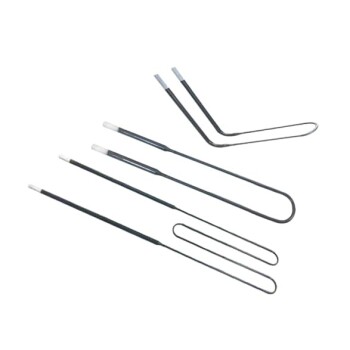
Molybdenum Disilicide (MoSi2) Thermal Elements Electric Furnace Heating Element

Molybdenum Disilicide (MoSi2) Thermal Elements Electric Furnace Heating Element

Discover the power of Molybdenum Disilicide (MoSi2) Heating Element for high-temperature resistance. Unique oxidation resistance with stable resistance value. Learn more about its benefits now!

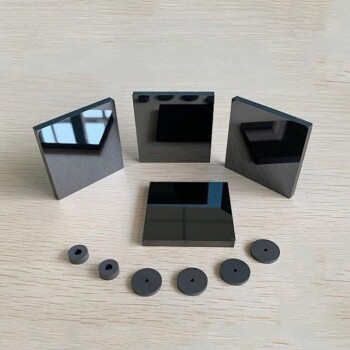
Silicon Carbide (SIC) Ceramic Sheet Wear-Resistant Engineering Advanced Fine Ceramics

Silicon Carbide (SIC) Ceramic Sheet Wear-Resistant Engineering Advanced Fine Ceramics

Silicon carbide (sic) ceramic sheet is composed of high-purity silicon carbide and ultra-fine powder, which is formed by vibration molding and high-temperature sintering.

Zirconia Ceramic Gasket Insulating Engineering Advanced Fine Ceramics

Zirconia Ceramic Gasket Insulating Engineering Advanced Fine Ceramics

Zirconia insulating ceramic gasket has high melting point, high resistivity, low thermal expansion coefficient and other properties, making it an important high temperature resistant material, ceramic insulating material and ceramic sunscreen material.

Double Plate Heating Press Mold for Lab

Double Plate Heating Press Mold for Lab

Discover precision in heating with our Double Plate Heating Mold, featuring high-quality steel and uniform temperature control for efficient lab processes. Ideal for various thermal applications.

Vacuum Dental Porcelain Sintering Furnace

Vacuum Dental Porcelain Sintering Furnace

Get precise and reliable results with KinTek's Vacuum Porcelain Furnace. Suitable for all porcelain powders, it features hyperbolic ceramic furnace function, voice prompt, and automatic temperature calibration.

Hexagonal Boron Nitride HBN Ceramic Ring

Hexagonal Boron Nitride HBN Ceramic Ring

Boron nitride ceramic (BN) rings are commonly used in high temperature applications such as furnace fixtures, heat exchangers and semiconductor processing.

Custom-Made Alumina Zirconia Special-Shaped Ceramic Plates for Engineering Advanced Fine Ceramics Processing

Custom-Made Alumina Zirconia Special-Shaped Ceramic Plates for Engineering Advanced Fine Ceramics Processing

Alumina ceramics have good electrical conductivity, mechanical strength and high temperature resistance, while zirconia ceramics are known for their high strength and high toughness and are widely used.

High Pressure Laboratory Vacuum Tube Furnace Quartz Tubular Furnace

High Pressure Laboratory Vacuum Tube Furnace Quartz Tubular Furnace

KT-PTF High Pressure Tube Furnace: Compact split tube furnace with strong positive pressure resistance. Working temp up to 1100°C and pressure up to 15Mpa. Also works under controller atmosphere or high vacuum.

Boron Nitride (BN) Crucible for Phosphorous Powder Sintered

Boron Nitride (BN) Crucible for Phosphorous Powder Sintered

Phosphorus powder sintered boron nitride (BN) crucible has a smooth surface, dense, pollution-free and long service life.

Graphite Vacuum Continuous Graphitization Furnace

Graphite Vacuum Continuous Graphitization Furnace

High-temperature graphitization furnace is a professional equipment for graphitization treatment of carbon materials. It is a key equipment for the production of high-quality graphite products. It has high temperature, high efficiency and uniform heating. It is suitable for various high-temperature treatments and graphitization treatments. It is widely used in metallurgy, electronics, aerospace, etc. industry.

Special Shape Press Mold for Lab

Special Shape Press Mold for Lab

Discover high-pressure special shape press molds for diverse applications, from ceramics to automotive parts. Ideal for precise, efficient molding of various shapes and sizes.

1200℃ Split Tube Furnace with Quartz Tube Laboratory Tubular Furnace

1200℃ Split Tube Furnace with Quartz Tube Laboratory Tubular Furnace

KT-TF12 split tube furnace: high-purity insulation, embedded heating wire coils, and max. 1200C. Widely used for new materials and chemical vapour deposition.

High-Purity Titanium Foil and Sheet for Industrial Applications

High-Purity Titanium Foil and Sheet for Industrial Applications

Titanium is chemically stable, with a density of 4.51g/cm3, which is higher than aluminum and lower than steel, copper, and nickel, but its specific strength ranks first among metals.

Custom PTFE Teflon Parts Manufacturer for PTFE Mesh F4 Sieve

Custom PTFE Teflon Parts Manufacturer for PTFE Mesh F4 Sieve

PTFE mesh sieve is a specialized test sieve designed for particle analysis in various industries, featuring a non-metallic mesh woven from PTFE filament. This synthetic mesh is ideal for applications where metal contamination is a concern . PTFE sieves are crucial for maintaining the integrity of samples in sensitive environments, ensuring accurate and reliable results in particle size distribution analysis.

High Purity Zinc Foil for Battery Lab Applications

High Purity Zinc Foil for Battery Lab Applications

There are very few harmful impurities in the chemical composition of zinc foil, and the surface of the product is straight and smooth; it has good comprehensive properties, processability, electroplating colorability, oxidation resistance and corrosion resistance, etc.

Automatic Laboratory Hydraulic Pellet Press Machine for Lab Use

Automatic Laboratory Hydraulic Pellet Press Machine for Lab Use

Experience efficient sample preparation with our Automatic Lab Press Machine. Ideal for material research, pharmacy, ceramics, and more. Features a compact size and hydraulic press functionality with heating plates. Available in various sizes.

RRDE rotating disk (ring disk) electrode / compatible with PINE, Japanese ALS, Swiss Metrohm glassy carbon platinum

RRDE rotating disk (ring disk) electrode / compatible with PINE, Japanese ALS, Swiss Metrohm glassy carbon platinum

Elevate your electrochemical research with our Rotating Disk and Ring Electrodes. Corrosion resistant and customizable to your specific needs, with complete specifications.

Platinum Sheet Electrode for Laboratory and Industrial Applications

Platinum Sheet Electrode for Laboratory and Industrial Applications

Elevate your experiments with our Platinum Sheet Electrode. Crafted with quality materials, our safe and durable models can be tailored to fit your needs.

Small Vacuum Heat Treat and Tungsten Wire Sintering Furnace

Small Vacuum Heat Treat and Tungsten Wire Sintering Furnace

The small vacuum tungsten wire sintering furnace is a compact experimental vacuum furnace specially designed for universities and scientific research institutes. The furnace features a CNC welded shell and vacuum piping to ensure leak-free operation. Quick-connect electrical connections facilitate relocation and debugging, and the standard electrical control cabinet is safe and convenient to operate.


Leave Your Message