Knowledge vacuum hot press furnace What is the effect of increasing the pressure during sintering hot press sintering? Optimize Density, Time, and Temperature
Author avatar

Tech Team · Kintek Solution

Updated 3 months ago

What is the effect of increasing the pressure during sintering hot press sintering? Optimize Density, Time, and Temperature


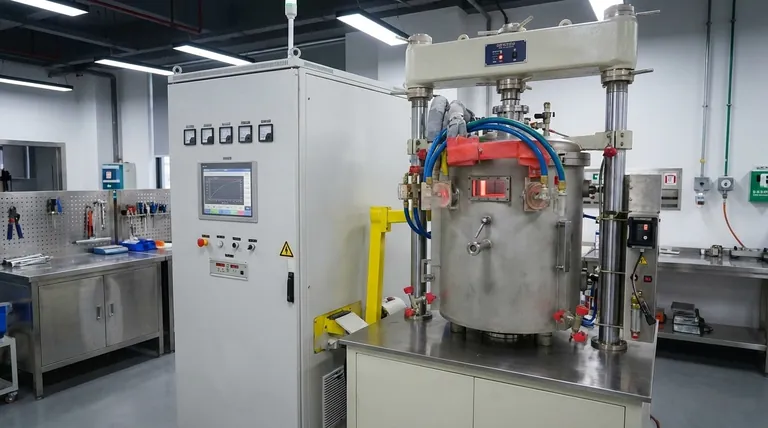
In short, increasing pressure during hot press sintering primarily accelerates densification by promoting plastic deformation and breaking down surface oxide films on powder particles. This allows you to achieve a higher final density, often at a lower temperature or in a shorter amount of time compared to lower-pressure methods.

While higher pressure is a powerful tool for achieving density, it is not a simple solution. The core challenge lies in balancing the benefit of accelerated densification against the significant risk of creating non-uniform microstructures and anisotropic mechanical properties within the final part.
What is the effect of increasing the pressure during sintering hot press sintering? Optimize Density, Time, and Temperature

The Primary Benefits of Increased Pressure

Applying higher pressure directly influences the fundamental mechanisms that govern the sintering process. Understanding these effects is key to optimizing your parameters.

Accelerating Densification Mechanisms

At the beginning of the hot press cycle, densification is dominated by particle rearrangement and plastic deformation. Increased external pressure provides the driving force needed to make powder particles slide past one another and deform to fill void spaces, rapidly increasing the part's density.

Breaking Surface Oxide Films

Most metal or ceramic powders have a thin, passivating oxide film on their surface that inhibits direct bonding. The high contact stresses generated by increased pressure physically fracture these brittle layers, exposing fresh, highly reactive material that can then form strong metallurgical or ceramic bonds.

Lowering Sintering Temperature and Time

Pressure and temperature are coupled variables. By increasing the pressure, you can often achieve the target density at a significantly lower sintering temperature or reduce the required hold time. This can be crucial for preventing undesirable grain growth and preserving a fine-grained microstructure, which often leads to superior mechanical properties.

Understanding the Trade-offs and Limitations

Simply maximizing pressure is a common mistake that can introduce severe, often hidden, defects into your component. True process control requires acknowledging the inherent downsides.

The Problem of Anisotropy

Hot pressing typically applies force in a single direction (uniaxially). This can cause non-spherical or non-equiaxed powder grains to align themselves perpendicularly to the pressing direction. The result is anisotropy: the material will exhibit different mechanical and physical properties when measured parallel versus perpendicular to the direction of pressure.

Non-Uniform Density Distribution

Pressure is not transmitted perfectly through a powder compact. Friction between the powder and the die walls means the pressure is highest near the moving ram and decreases with depth into the part. This gradient can lead to significant variations in density, with the core of the component being less dense than the outer surfaces.

Equipment and Mold Constraints

There are hard physical limits to the pressure you can apply. The press itself has a maximum force rating, and more importantly, the die materials (often graphite) have limited compressive strength. Exceeding this limit will cause catastrophic failure of the mold, resulting in lost time and material.

Making the Right Choice for Your Goal

The optimal pressure is not a single value but depends entirely on the desired outcome for your specific component. Use these principles as your guide.

  • If your primary focus is achieving maximum theoretical density: Use the highest pressure your mold and equipment can safely handle, but be prepared to characterize and potentially mitigate the resulting property anisotropy.
  • If your primary focus is isotropic (uniform) properties: Favor a lower pressure combined with a carefully controlled temperature and time, or investigate advanced techniques like Hot Isostatic Pressing (HIP) if uniformity is non-negotiable.
  • If your primary focus is process efficiency and throughput: Increasing pressure is an effective lever for shortening cycle times or lowering energy costs by reducing the peak sintering temperature.

Ultimately, pressure should be treated as a precise tool to manipulate material consolidation, not just a brute-force method for densification.

Summary Table:

Effect of Increased Pressure Primary Benefit Key Consideration
Accelerates Densification Faster particle rearrangement & plastic deformation Risk of non-uniform density distribution
Breaks Surface Oxide Films Enables stronger particle bonding Requires sufficient pressure to fracture brittle layers
Lowers Sintering Temperature/Time Energy efficiency & reduced grain growth Potential for anisotropic mechanical properties

Ready to optimize your hot press sintering process? The experts at KINTEK can help you balance pressure, temperature, and time to achieve your specific material goals—whether it's maximum density, isotropic properties, or faster cycle times. Contact us today to discuss how our specialized lab equipment and consumables can enhance your sintering results!

Visual Guide
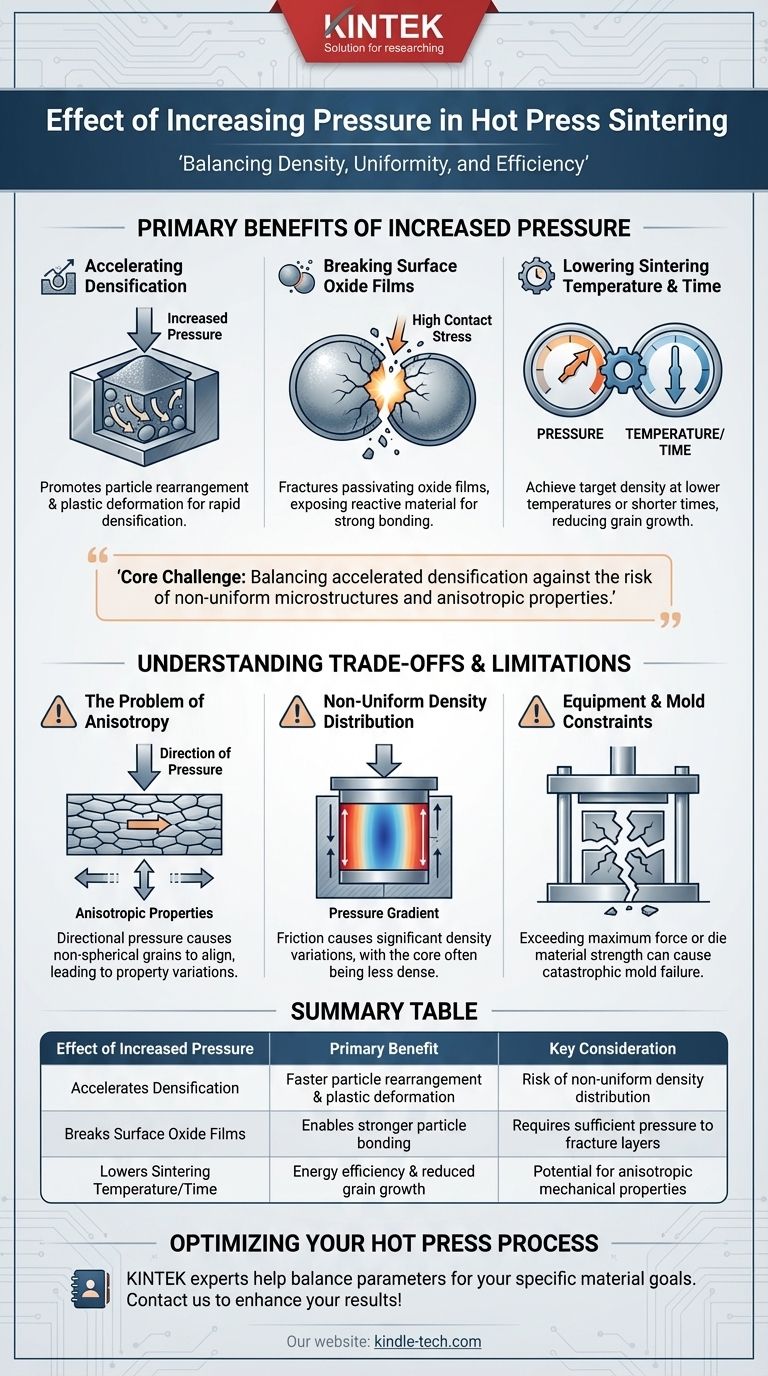
What is the effect of increasing the pressure during sintering hot press sintering? Optimize Density, Time, and Temperature Visual Guide

Related Products

People Also Ask

Related Products

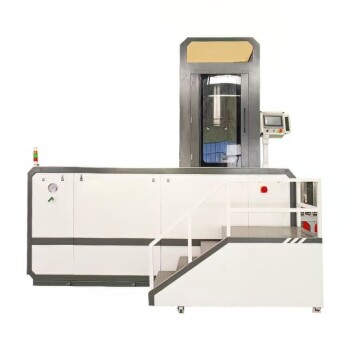
600T Vacuum Induction Hot Press Furnace for Heat Treat and Sintering

600T Vacuum Induction Hot Press Furnace for Heat Treat and Sintering

Discover the 600T Vacuum Induction Hot Press Furnace, designed for high-temperature sintering experiments in vacuum or protected atmospheres. Its precise temperature and pressure control, adjustable working pressure, and advanced safety features make it ideal for nonmetal materials, carbon composites, ceramics, and metal powders.

Vacuum Heat Treat and Pressure Sintering Furnace for High Temperature Applications

Vacuum Heat Treat and Pressure Sintering Furnace for High Temperature Applications

Vacuum pressure sintering furnaces are designed for high temperature hot pressing applications in metal and ceramic sintering. Its advanced features ensure precise temperature control, reliable pressure maintenance, and a robust design for seamless operation.

Vacuum Heat Treat and Sintering Furnace with 9MPa Air Pressure

Vacuum Heat Treat and Sintering Furnace with 9MPa Air Pressure

The air pressure sintering furnace is a high-tech equipment commonly used for the sintering of advanced ceramic materials. It combines vacuum sintering and pressure sintering techniques to achieve high-density and high-strength ceramics.

Vacuum Hot Press Furnace Heated Vacuum Press Machine Tube Furnace

Vacuum Hot Press Furnace Heated Vacuum Press Machine Tube Furnace

Reduce forming pressure & shorten sintering time with Vacuum Tube Hot Press Furnace for high-density, fine-grain materials. Ideal for refractory metals.

Vacuum Hot Press Furnace Machine Heated Vacuum Press

Vacuum Hot Press Furnace Machine Heated Vacuum Press

Discover the advantages of Vacuum Hot Press Furnace! Manufacture dense refractory metals & compounds, ceramics, and composites under high temp and pressure.

Automatic High Temperature Heated Hydraulic Press Machine with Heated Plates for Lab

Automatic High Temperature Heated Hydraulic Press Machine with Heated Plates for Lab

The High Temperature Hot Press is a machine specifically designed for pressing, sintering and processing materials in a high temperature environment. It is capable of operating in the range of hundreds of degrees Celsius to thousands of degrees Celsius for a variety of high temperature process requirements.

Heated Hydraulic Press Machine with Heated Plates Split Manual Laboratory Hot Press

Heated Hydraulic Press Machine with Heated Plates Split Manual Laboratory Hot Press

Efficiently prepare your samples with our Split Manual Heated Lab Press. With a pressure range up to 40T and heating plates up to 300°C, it's perfect for various industries.

Automatic Heated Hydraulic Press Machine with Heated Plates for Laboratory Hot Press 25T 30T 50T

Automatic Heated Hydraulic Press Machine with Heated Plates for Laboratory Hot Press 25T 30T 50T

Efficiently prepare your samples with our Automatic Heated Lab Press. With a pressure range up to 50T and precise control, it's perfect for various industries.

Heated Hydraulic Press Machine with Heated Plates for Vacuum Box Laboratory Hot Press

Heated Hydraulic Press Machine with Heated Plates for Vacuum Box Laboratory Hot Press

The lab press for vacuum box is a specialized piece of equipment designed for laboratory use. Its main purpose is to press pills and powders according to specific requirements.

Manual High Temperature Heated Hydraulic Press Machine with Heated Plates for Lab

Manual High Temperature Heated Hydraulic Press Machine with Heated Plates for Lab

The High Temperature Hot Press is a machine specifically designed for pressing, sintering and processing materials in a high temperature environment. It is capable of operating in the range of hundreds of degrees Celsius to thousands of degrees Celsius for a variety of high temperature process requirements.

Warm Isostatic Press WIP Workstation 300Mpa for High Pressure Applications

Warm Isostatic Press WIP Workstation 300Mpa for High Pressure Applications

Discover Warm Isostatic Pressing (WIP) - A cutting-edge technology that enables uniform pressure to shape and press powdered products at a precise temperature. Ideal for complex parts and components in manufacturing.

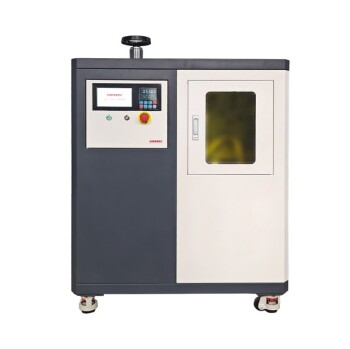
Heated Hydraulic Press Machine with Heated Plates for Vacuum Box Laboratory Hot Press

Heated Hydraulic Press Machine with Heated Plates for Vacuum Box Laboratory Hot Press

Enhance your lab's precision with our lab press for vacuum box. Press pills and powders with ease and precision in a vacuum environment, reducing oxidation and improving consistency. Compact and easy to use with a digital pressure gauge.

24T 30T 60T Heated Hydraulic Press Machine with Heated Plates for Laboratory Hot Press

24T 30T 60T Heated Hydraulic Press Machine with Heated Plates for Laboratory Hot Press

Looking for a reliable Hydraulic Heated Lab Press? Our 24T / 40T model is perfect for material research labs, pharmacy, ceramics, and more. With a small footprint and the ability to work inside a vacuum glove box, it's the efficient and versatile solution for your sample preparation needs.

Automatic Heated Hydraulic Press Machine with Heated Plates for Laboratory Hot Press

Automatic Heated Hydraulic Press Machine with Heated Plates for Laboratory Hot Press

The Automatic High Temperature Heat Press is a sophisticated hydraulic hot press designed for efficient temperature control and product quality processing.

30T 40T Split Automatic Heated Hydraulic Press Machine with Heated Plates for Laboratory Hot Press

30T 40T Split Automatic Heated Hydraulic Press Machine with Heated Plates for Laboratory Hot Press

Discover our split automatic heated lab press 30T/40T for precise sample preparation in material research, pharmacy, ceramics, and electronics industries. With a small footprint and heating up to 300°C, it's perfect for processing under vacuum environment.

Manual Heated Hydraulic Press Machine with Heated Plates for Laboratory Hot Press

Manual Heated Hydraulic Press Machine with Heated Plates for Laboratory Hot Press

The Manual Heat Press is a versatile piece of equipment suitable for a variety of applications, operated by a manual hydraulic system that applies controlled pressure and heat to the material placed on the piston.

Warm Isostatic Press for Solid State Battery Research

Warm Isostatic Press for Solid State Battery Research

Discover the advanced Warm Isostatic Press (WIP) for semiconductor lamination. Ideal for MLCC, hybrid chips, and medical electronics. Enhance strength and stability with precision.

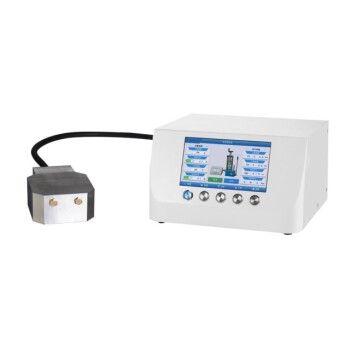
Double Plate Heating Press Mold for Lab

Double Plate Heating Press Mold for Lab

Discover precision in heating with our Double Plate Heating Mold, featuring high-quality steel and uniform temperature control for efficient lab processes. Ideal for various thermal applications.

High Temperature Muffle Oven Furnace for Laboratory Debinding and Pre Sintering

High Temperature Muffle Oven Furnace for Laboratory Debinding and Pre Sintering

KT-MD High temperature debinding and pre-sintering furnace for ceramic materials with various molding processes. Ideal for electronic components such as MLCC and NFC.

Vacuum Heat Treat and Molybdenum Wire Sintering Furnace for Vacuum Sintering

Vacuum Heat Treat and Molybdenum Wire Sintering Furnace for Vacuum Sintering

A vacuum molybdenum wire sintering furnace is a vertical or bedroom structure, which is suitable for withdrawal, brazing, sintering and degassing of metal materials under high vacuum and high temperature conditions. It is also suitable for dehydroxylation treatment of quartz materials.


Leave Your Message