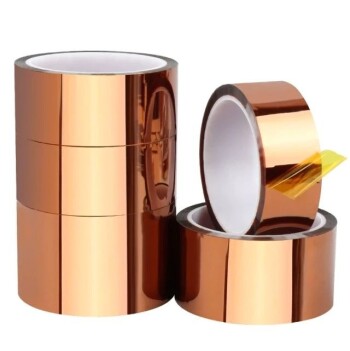
High-temperature heating tapes prevent precursor condensation within the delivery lines. In a Chemical Vapor Deposition (CVD) system, these tapes are wrapped around the piping to maintain a constant temperature, typically around 190 °C. Their specific purpose is to ensure that vaporized precursors, such as aluminum isopropoxide and titanium isopropoxide, remain in a gaseous state during transport from the source to the reaction chamber.
Core Takeaway By keeping the pipeline temperature higher than the precursor's boiling point, heating tapes eliminate "cold spots" that cause vapors to revert to liquids or solids. This thermal management is the key to preventing pipe blockages and ensuring the consistent reactant flow required for uniform high-quality coatings.
Preserving the Vapor Phase
The fundamental challenge in CVD precursor delivery is maintaining the physical state of the chemical as it moves through the system.
Maintaining Vapor Pressure
Precursors are often generated by heating a liquid or solid source.
Once vaporized, these chemicals must remain above their boiling point or the temperature corresponding to their saturation vapor pressure.
Eliminating Cold Spots
If any section of the delivery line drops below this critical temperature threshold, the vapor will lose energy and condense.
The heating tapes provide a uniform thermal envelope, ensuring the pipe walls act as an insulator rather than a heat sink.
Ensuring Process Stability and Integrity
Beyond simple physics, the heating tapes play a critical role in the operational success of the deposition process.
Preventing Physical Clogs
The most immediate risk of condensation is physical blockage.
When precursors condense, they can solidify or turn into viscous liquids that restrict or fully block the pipe.
This leads to system downtime, requiring the lines to be dismantled and cleaned.
Stabilizing Reactant Flow
A consistent coating requires a consistent supply of ingredients.
If condensation occurs, the amount of gas reaching the reaction chamber fluctuates unpredictably.
Heating tapes ensure an uninterrupted flow, stabilizing the delivery rate of reactants.
Controlling Coating Composition
Fluctuations in precursor delivery directly impact the quality of the final product.
Inconsistent flow leads to variations in the stoichiometry (chemical balance) of the deposited film.
By maintaining thermal stability, the heating tapes ensure the coating composition remains uniform across the substrate.
Common Pitfalls and Considerations
While heating is essential, proper management of the thermal application is equally important.
The Risk of Uneven Heating
Applying heating tapes loosely or with gaps creates thermal inconsistencies.
Even a small exposed section of pipe can act as a cold spot, causing localized condensation that eventually compromises the entire line.
Balancing Temperature Limits
The system must be hot enough to prevent condensation, but controlled enough to avoid other issues.
The target is generally a stable temperature (e.g., 190 °C) that safely exceeds the precursor's condensation point without pushing the limits of the hardware insulation or seals.
Making the Right Choice for Your System
The application of heating tapes is a balance between hardware protection and process quality.
- If your primary focus is System Uptime: Ensure the heating tapes are wrapped with adequate overlap to eliminate all cold spots, preventing clogs that force maintenance shutdowns.
- If your primary focus is Coating Uniformity: Use precise controllers to maintain a constant temperature profile, ensuring the vapor pressure—and therefore the reactant flow—remains perfectly steady.
Ultimately, the heating tape is not just a heater; it is the guarantee that the chemistry intended for the chamber actually reaches it.
Summary Table:
| Feature | Function & Impact |
|---|---|
| Primary Role | Prevents precursor condensation by eliminating cold spots |
| Temperature Target | Typically maintained around 190 °C (above boiling point) |
| Process Stability | Ensures consistent reactant flow and stoichiometry |
| Maintenance Benefit | Prevents physical clogs and reduces system downtime |
| Critical Factor | Uniform wrapping to avoid localized thermal inconsistencies |
Elevate Your Thin-Film Precision with KINTEK
Don't let precursor condensation compromise your research or production quality. KINTEK specializes in advanced laboratory solutions, providing the thermal management expertise and high-performance equipment needed for seamless Chemical Vapor Deposition (CVD and PECVD) processes.
Beyond heating solutions, our comprehensive portfolio includes high-temperature furnaces, vacuum systems, and precision reactors designed to meet the rigorous demands of material science. Whether you are optimizing battery research or developing advanced ceramics, our team ensures you have the reliable tools and consumables—from PTFE products to high-pressure autoclaves—to achieve consistent, high-purity results.
Ready to optimize your CVD system's performance? Contact KINTEK today to consult with our experts and find the perfect equipment for your laboratory needs.
References
- Sebastian Öhman, Mats Boman. Selective kinetic growth and role of local coordination in forming Al<sub>2</sub>TiO<sub>5</sub>-based coatings at lower temperatures. DOI: 10.1039/d1ma00428j
This article is also based on technical information from Kintek Solution Knowledge Base .
Related Products
- Manual High Temperature Heated Hydraulic Press Machine with Heated Plates for Lab
- Automatic High Temperature Heated Hydraulic Press Machine with Heated Plates for Lab
- Lithium Battery Tab Tape for Battery Lab Applications
- 1700℃ Laboratory High Temperature Tube Furnace with Alumina Tube
- High Temperature Constant Temperature Heating Circulator Water Bath Chiller Circulator for Reaction Bath
People Also Ask
- What is a hot hydraulic press? Harness Heat and Pressure for Advanced Manufacturing
- What is a heated hydraulic press used for? Essential Tool for Curing, Molding, and Laminating
- Why is a heated hydraulic press used for warm pressing NASICON green tapes? Optimize Your Solid Electrolyte Density
- What does a hydraulic heat press do? Achieve Industrial-Scale, Consistent Pressure for High-Volume Production
- Why is a heated laboratory hydraulic press necessary for composite laminates? Achieve Void-Free Structural Integrity