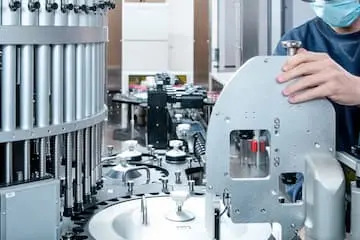
A Rotary Tube Furnace is a circular furnace that rotates during heat treatment. It is used in a wide range of industries and is designed to heat loose materials for physiochemical processing. These furnaces feature a metal drum lined with refractory and are classified depending on their method of heat exchange and energy transfer method. Rotary Tube Furnaces can be made of ceramic, quartz, or a high-temperature alloy and can be built with a wide temperature range. They are suitable for manufacturing materials such as alumina, vermiculite, iron ore pellets, and cement clinker, as well as for oxidation and calcination processes.
Toggle Categories
Get Instant Support
Choose your preferred way to connect with our team
-
Get Free Quote Fill out form for detailed pricing
-
Send Email Detailed inquiry support
-
WhatsApp Quick mobile chat
Response Time
Within 8 hours on working days, 24 hours on holidays
rotary tube furnace

Electric Rotary Kiln Continuous Working Small Rotary Furnace Heating Pyrolysis Plant
Item Number : KT-RFTF

Vacuum Hot Press Furnace Heated Vacuum Press Machine Tube Furnace
Item Number : KT-VTP
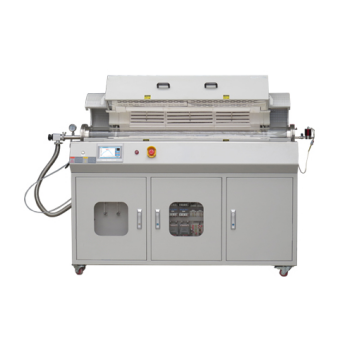
Rotary Tube Furnace Split Multi Heating Zone Rotating Tube Furnace
Item Number : KT-MRTF
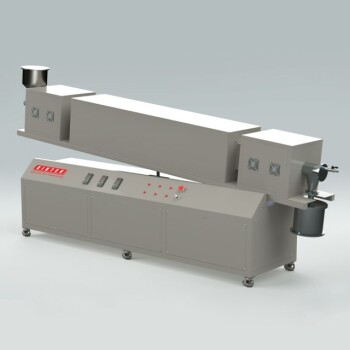
Vacuum Sealed Continuous Working Rotary Tube Furnace Rotating Tube Furnace
Item Number : KT-CRTF
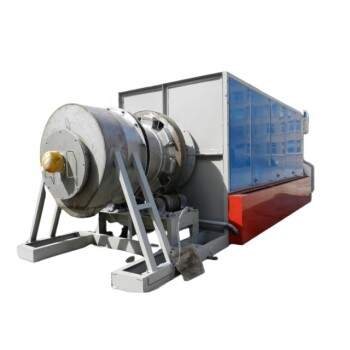
Electric Rotary Kiln Small Rotary Furnace for Activated Carbon Regeneration
Item Number : KT-CRF

Electric Rotary Kiln Small Rotary Furnace Biomass Pyrolysis Plant
Item Number : RBPF
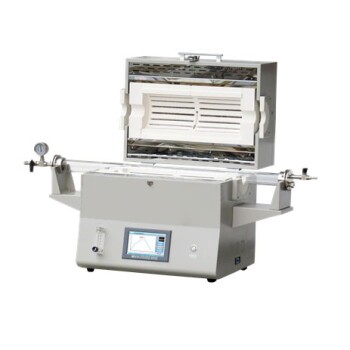
1400℃ Laboratory Quartz Tube Furnace with Alumina Tube Tubular Furnace
Item Number : KT-TF14

1700℃ Laboratory Quartz Tube Furnace with Alumina Tube Tubular Furnace
Item Number : KT-TF17

Vertical Laboratory Quartz Tube Furnace Tubular Furnace
Item Number : KT-VTF
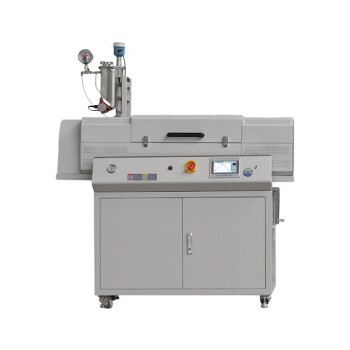
Laboratory Vacuum Tilt Rotary Tube Furnace Rotating Tube Furnace
Item Number : KT-RTF
We have the best Rotary Tube Furnace solutions for a wide range of applications. Our furnaces are designed to withstand high temperatures and offer complete process control, resulting in high-quality products. With customized rotation speeds and gradients, fully programmable operation, and options for processing in air, oxygen, and inert atmospheres, you can trust that our Rotary Tube Furnaces will exceed your expectations. At KINTEK, we offer a bespoke design service that allows us to meet almost any customer requirement.
Applications of Rotary Tube Furnace
- Manufacturing of materials such as alumina and iron ore pellets.
- Calcination of materials that require continuous throughput and loose materials.
- Oxidation of materials.
- Powder processing to minimize material handling.
- Drying of materials.
- Calcination of materials while maintaining their individual grain characteristics.
- Heat treatment of materials to improve their properties.
- Sintering of materials to form a solid mass from a powdery substance.
- Annealing of materials to reduce their hardness and increase their ductility.
- Reduction of metal oxides to produce metals.
Rotary tube furnaces offer complete process control resulting in high-quality products. They can withstand high temperatures and provide efficient heat transfer over a short time. Rotary tube furnaces can be customized to suit individual requirements, such as temperature control, work-space size, residence time, tube rotation rate, tube inclination angle, temperature profile, atmosphere flow rate, powder bed depth, and feed rate.
Advantages of Rotary Tube Furnace
- Improved gas diffusion and reduced gas consumption
- Increased heat treatment efficiency
- Consistent temperature profile for improved product homogeneity
- Efficient way to transfer heat over a short time and continuously run batches of materials
- Minimizes material handling, especially in powder processing
- Custom designed to fit specific requirements such as temperature control, workspace size, residence time, tube rotation rate, tube inclination angle, temperature profile, atmosphere flow rate, powder bed depth, and feed rate
- Versatile tool for a wide range of physicochemical processing applications in the laboratory
- Allows materials to be heated and mixed simultaneously in a controlled atmosphere
- Equipped with additional features such as feeders and inert gas packages to optimize processing conditions
- Adjustable rotation speed, tilt, and heating zones for fine-tuning furnace performance
- Suitable for applications in research and development, including material science, geology, gaseous reduction of ores, synthesis of catalysts and pigments, calcination of oil shale, and doping ceramics with rare earth metals
- Provides excellent temperature uniformity for high-quality and consistent materials processing.
Our Rotary Tube Furnace is an excellent solution for manufacturing various materials and applications such as calcining and oxidation. With sustained operating temperatures up to 1700°C, it is heated with silicon carbide or molydisilicide heating elements, providing complete process control and high-quality products. Our furnace has a fully programmable operation with a fully integrated control panel, customized rotation speeds, and gradients. It can process in air, oxygen, and inert atmospheres. Additionally, we offer custom design services for specific requirements, which makes our furnace both advantageous in terms of price and customizable.
FAQ
What Is A Rotary Tube Furnace?
A rotary tube furnace is a circular furnace that rotates during heat-treatment. It is designed to heat loose materials for physiochemical processing and is used for continuous materials processing. These furnaces feature a metal drum lined with refractory, which is mounted at an angle and can burn pulverized, solid, gaseous or liquid fuel into its working section. Rotary tube furnaces have a wide range of applications, including the manufacturing of materials such as alumina, vermiculite, iron ore pellets and cement clinker, as well as for oxidation and calcination processes.
How Does A Rotary Tube Furnace Work?
A rotary tube furnace is a circular furnace that rotates during heat-treatment. It burns fuel and the heating gases created flow towards the sample. The furnace features a metal drum lined with refractory, mounted at an angle. Loose materials are heated for physiochemical processing and the heat is transferred from a heat source to a rotating tube which holds the sample. Rotary tube furnaces are designed for continuous materials processing and have multiple thermal control zones. They have a wide range of applications, including the manufacture of alumina, vermiculite, iron ore pellets, and cement clinker.
What Are The Advantages Of A Rotary Tube Furnace?
The advantages of a rotary tube furnace include improved gas diffusion, reduced gas consumption, increased heat treatment efficiency, and improved product homogeneity. These furnaces provide an efficient way to transfer heat over a short time and continuously run batches of materials. Rotary tube furnaces can be custom designed for specific requirements, including temperature control, workspace size, residence time, tube rotation rate, and atmosphere flow rate. When choosing a tube for a rotary tube furnace, key points to consider include rotational speed, amount of material, tube diameter, suspended length, and tube thickness.
What Is The Function Of Rotary Tube Furnace?
The function of a rotary tube furnace is to heat loose materials for physiochemical processing. The furnace features a rotating tube that holds the sample and applies heat in multiple thermal control zones. Heating gases created by burning fuel flow towards the sample through the furnace. Rotary tube furnaces are used for manufacturing materials such as alumina, vermiculite, iron ore pellets, and cement clinker, as well as for oxidation and calcination processes. These furnaces can be made of ceramic, quartz, or high-temperature alloy and can be built with a wide temperature range for various applications.
What Are The Advantages Of Rotary Tube Furnace?
Rotary tube furnaces offer efficient heat transfer over a short period, continuously processing batches of material while minimizing material handling. The furnace's continuous movement exposes the entire sample surface to the atmosphere, improving gas diffusion and reducing gas consumption to increase heat treatment efficiency.
REQUEST A QUOTE
Our professional team will reply to you within one business day. Please feel free to contact us!
Related Articles

Why Your Ashing Tests Fail: The Hidden Difference Between Muffle and Ashing Furnaces
Frustrated by inconsistent ashing results? Discover the critical difference (it's not temperature) and how the right furnace ensures accuracy.
Read more
The Geometry of Heat: A Choice Between Control and Capacity
Discover the critical engineering differences between tube and muffle furnaces. Learn why atmosphere control and geometry dictate your laboratory success.
Read more
Why Your Heat-Treated Parts Are Failing: The Hidden Enemy in Your Furnace
Seeing inconsistent results from your furnace? Learn why air is the real culprit in heat treatment and how to get perfect, oxide-free parts every time.
Read more
The Architecture of Isolation: Why Control Beats Volume in Material Science
Discover why the tube furnace is the engineer's choice for precision. We explore the critical role of atmospheric isolation and thermal uniformity in advanced material synthesis.
Read more
Beyond the Scale: Why Your Furnace Is Ruining Your Parts—And the Simple Fix
Tired of oxidized, inconsistent heat-treated parts? Discover why the air in your furnace is the real problem and how a vacuum furnace provides the definitive solution.
Read more
The Silent Boundary: Engineering the Heart of the Tube Furnace
The furnace tube is not just a component; it is the limit of your experiment. A deep dive into Quartz, Alumina, and Metal selection strategies.
Read more
Why Your Brazed Joints Fail: The Truth About Furnace Temperature and How to Master It
Discover the root cause of inconsistent brazing results. It's not the furnace, but a misunderstanding of how temperature relates to filler metals.
Read more
The Architecture of Heat: Inside the Precision of Laboratory Tube Furnaces
Explore the engineering behind tube furnaces, from the feedback loops of thermocouples to thermal uniformity, and why precision is an active process.
Read more
The Hidden Enemy in Your Furnace: Why Your Heat-Treated Parts Have Scale and Discoloration—And How to Fix It for Good
Frustrated with oxidized, inconsistent results from your furnace? Discover why air, not heat, is the real culprit and how to solve it permanently.
Read more
The Architecture of Nothingness: Mastering Heat in a Vacuum
Heat transforms materials, but air corrupts them. Discover how vacuum furnaces utilize low-pressure environments to ensure purity in brazing and sintering.
Read more
Why Your High-Temperature Experiments Fail: The Furnace Flaw Most Labs Overlook
Struggling with cracked parts or inconsistent material properties? Discover the hidden furnace flaws, like poor thermal uniformity, that cause failures and how to solve them for good.
Read more
The Geometry of Heat: Deciding Between Capacity and Control in Lab Furnaces
Choosing between a muffle furnace and a tube furnace isn't just about temperature—it is a choice between sample volume and atmospheric precision.
Read more
Why Your Brazed Joints Keep Failing: The Invisible Saboteur in Your Furnace
Struggling with inconsistent brazed joints? Discover the invisible culprit in your furnace—the atmosphere—and learn how to fix it for good.
Read more
The Architecture of Heat: Aligning Engineering Precision with Laboratory Reality
Choosing a tube furnace is not about finding the "best" model, but matching specifications—temperature, zones, and atmosphere—to your scientific reality.
Read more
The Silent Saboteur in Your Furnace: Why Your Heat Treatment Fails and How to Fix It
Tired of inconsistent heat treatment results? Discover the real reason your parts fail and learn how to gain control by mastering your furnace atmosphere.
Read more
The Symphony of Silence: Molybdenum and the Architecture of the Vacuum Hot Zone
Why do we trust Molybdenum in the most extreme environments? Explore the engineering logic behind all-metal hot zones and the pursuit of absolute purity.
Read more
Why Your High-Temperature Processes Fail: The Hidden Enemy in Your Vacuum Furnace
Frustrated by inconsistent vacuum furnace results? Discover the real cause of failures and how to fix it by ensuring true vacuum integrity.
Read more
The Geometry of Heat: Why the Split Tube Furnace is an Engineer’s Best Ally
When standard tunnels fail complex geometries, the split tube furnace offers a solution. Discover how hinged designs enable advanced R&D and safer thermal processing.
Read more
Inconsistent Melts? The Problem Isn't Your Furnace, It's the Physics.
Struggling with inconsistent alloy quality and high costs? Discover the hidden reason and learn how to choose the right furnace for perfect results.
Read more
The Art of Nothingness: Vacuum, Inert Gas, and the Pursuit of Purity
Vacuum vs. inert gas furnaces: Understand the trade-offs between absolute purity and cost-effective protection in laboratory heat treatment.
Read more