Knowledge What equipment is used for calcination? Choosing the Right System for Your Process
Author avatar

Tech Team · Kintek Solution

Updated 6 days ago

What equipment is used for calcination? Choosing the Right System for Your Process


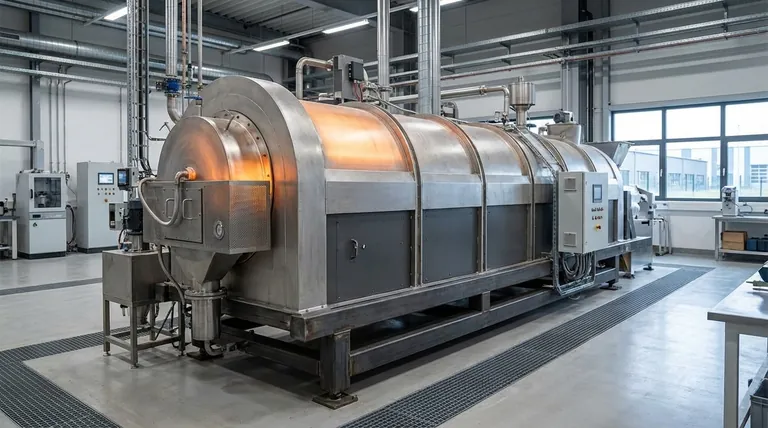
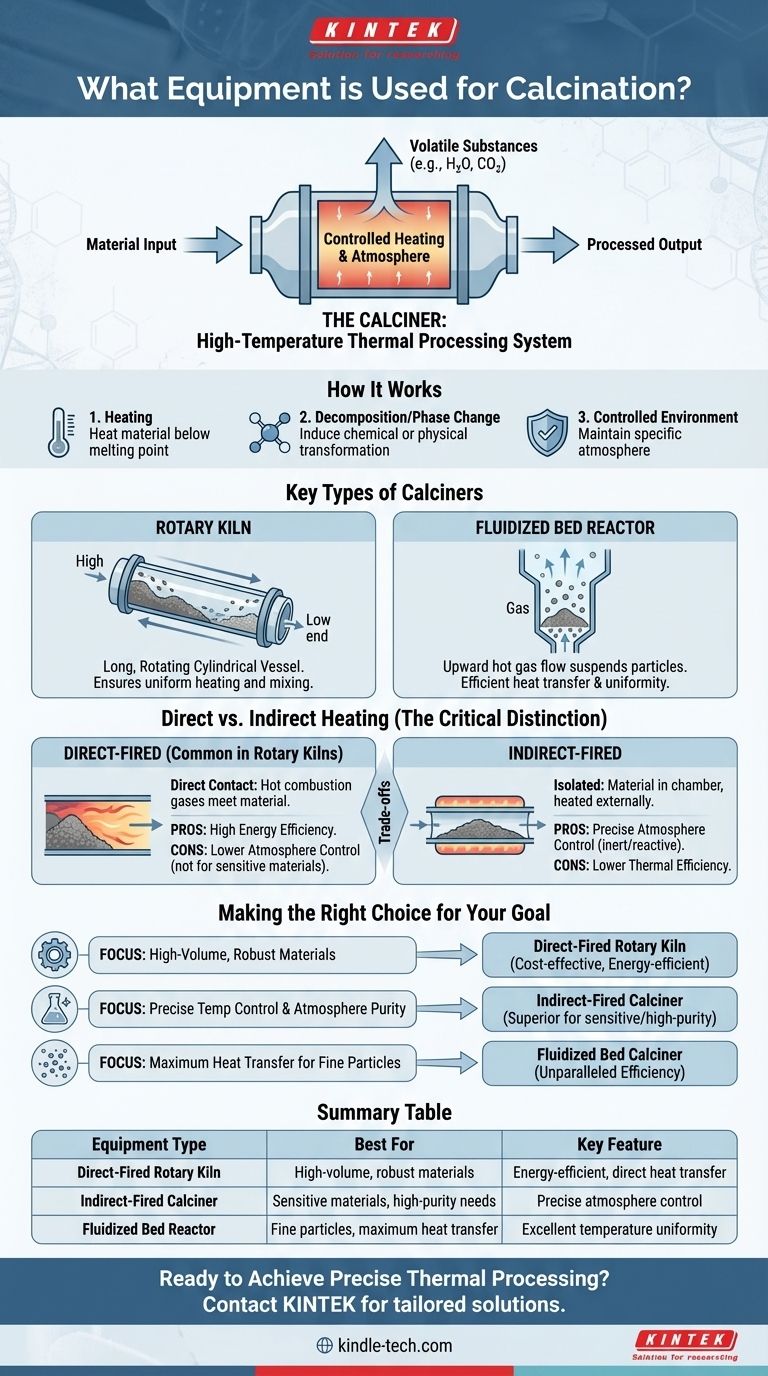
The primary equipment used for calcination is a high-temperature reactor known as a calciner. This is a specialized, cylindrical apparatus designed to heat materials to a specific temperature in a controlled atmosphere to cause thermal decomposition or phase transition. In simpler applications or on a smaller scale, a high-temperature furnace may also be used.

While various types of furnaces and kilns can perform calcination, the core decision is not just about reaching a high temperature. It's about selecting a system that provides the precise control over heat transfer, atmosphere, and material handling required for the final product's specific chemical and physical properties.
What equipment is used for calcination? Choosing the Right System for Your Process

How Calcination Equipment Works

Calcination equipment is fundamentally a high-temperature thermal processing system. Its goal is to heat a material to a point below its melting point to drive off volatile substances (like water or carbon dioxide) and induce a chemical or physical change.

The Central Role of the Calciner

A calciner is purpose-built for this process. It is designed to handle continuous or batch processing of materials ranging from fine powders to larger granules and pellets.

The operation revolves around heating the material in a controlled environment. The specific design of the calciner determines exactly how this is achieved.

Key Types of Calciners

The two dominant designs for industrial calciners are rotary kilns and fluidized bed reactors. Each offers a different mechanism for material handling and heat transfer.

A rotary kiln is a long, rotating cylindrical vessel, often slightly inclined. Material is fed into the upper end and slowly moves to the lower end as the kiln rotates, ensuring uniform heating and mixing.

A fluidized bed calciner uses an upward flow of hot gas to suspend the material particles, creating a fluid-like behavior. This "fluidization" results in extremely efficient heat transfer and excellent temperature uniformity throughout the material.

Understanding the Trade-offs: Direct vs. Indirect Heating

The most critical distinction in calciner technology is the method of heating, as it directly impacts process control and final product quality.

Direct-Fired Calciners

In a direct-fired system, the hot combustion gases come into direct contact with the material being processed. This is common in many rotary kilns.

This method is highly energy-efficient because heat is transferred directly to the material. However, the contact with combustion gases means the process atmosphere cannot be tightly controlled, which can be a significant drawback for sensitive materials.

Indirect-Fired Calciners

In an indirect-fired system, the material is contained within a chamber (like a tube or vessel) that is heated from the outside. The combustion gases never touch the process material.

This approach allows for precise control over the atmosphere inside the chamber, making it ideal for processes that require an inert or reactive gas environment. The trade-off is typically lower thermal efficiency compared to direct-fired systems.

Making the Right Choice for Your Goal

Selecting the correct equipment depends entirely on the material being processed and the desired characteristics of the final product.

  • If your primary focus is high-volume processing of robust materials: A direct-fired rotary kiln is often the most cost-effective and energy-efficient solution.
  • If your primary focus is precise temperature control and atmosphere purity: An indirect-fired calciner, whether rotary or fluidized bed, is the superior choice for sensitive or high-purity applications.
  • If your primary focus is maximum heat transfer for fine particles: A fluidized bed calciner offers unparalleled efficiency and temperature uniformity for suitable materials.

Ultimately, the right calcination equipment is the one that provides the necessary control to achieve your specific material transformation reliably and efficiently.

Summary Table:

Equipment Type Best For Key Feature
Direct-Fired Rotary Kiln High-volume, robust materials Energy-efficient, direct heat transfer
Indirect-Fired Calciner Sensitive materials, high-purity needs Precise atmosphere control
Fluidized Bed Reactor Fine particles, maximum heat transfer Excellent temperature uniformity

Ready to Achieve Precise Thermal Processing?

Choosing the right calcination equipment is critical for achieving your desired material properties, whether you need high-volume processing or precise atmosphere control. KINTEK specializes in providing high-quality lab equipment and consumables, including thermal processing systems tailored to your specific laboratory needs.

Our experts can help you select the ideal system to ensure reliable and efficient material transformation. Contact us today to discuss your application and discover how KINTEK can enhance your lab's capabilities.

Contact our experts now for a personalized consultation!

Visual Guide
What equipment is used for calcination? Choosing the Right System for Your Process Visual Guide

Related Products

People Also Ask

Related Products

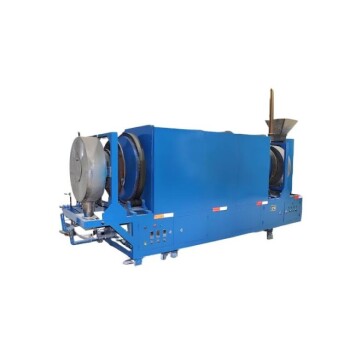
Electric Rotary Kiln Continuous Working Small Rotary Furnace Heating Pyrolysis Plant

Electric Rotary Kiln Continuous Working Small Rotary Furnace Heating Pyrolysis Plant

Efficiently calcine and dry bulk powder and lump fluid materials with an electric heating rotary furnace. Ideal for processing lithium ion battery materials and more.

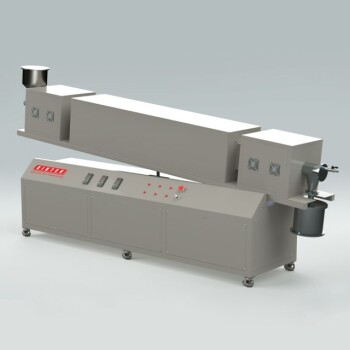
Vacuum Sealed Continuous Working Rotary Tube Furnace Rotating Tube Furnace

Vacuum Sealed Continuous Working Rotary Tube Furnace Rotating Tube Furnace

Experience efficient material processing with our vacuum-sealed rotary tube furnace. Perfect for experiments or industrial production, equipped with optional features for controlled feeding and optimized results. Order now.

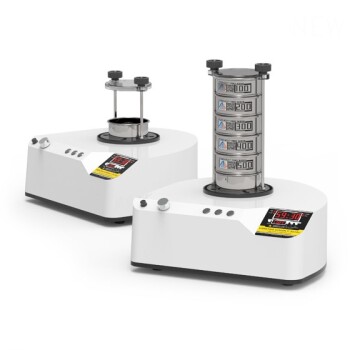
Three-dimensional electromagnetic sieving instrument

Three-dimensional electromagnetic sieving instrument

KT-VT150 is a desktop sample processing instrument for both sieving and grinding. Grinding and sieving can be used both dry and wet. The vibration amplitude is 5mm and the vibration frequency is 3000-3600 times/min.

Graphite Vacuum Furnace High Thermal Conductivity Film Graphitization Furnace

Graphite Vacuum Furnace High Thermal Conductivity Film Graphitization Furnace

The high thermal conductivity film graphitization furnace has uniform temperature, low energy consumption and can operate continuously.

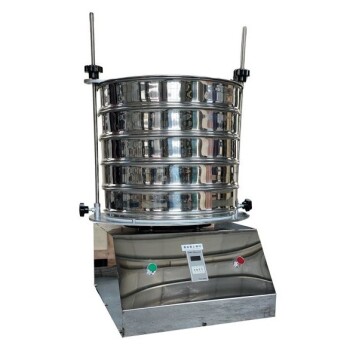
Laboratory Test Sieves and Sieving Machines

Laboratory Test Sieves and Sieving Machines

Precision lab test sieves & sieving machines for accurate particle analysis. Stainless steel, ISO-compliant, 20μm-125mm range. Request specs now!

Ultra-High Temperature Graphite Vacuum Graphitization Furnace

Ultra-High Temperature Graphite Vacuum Graphitization Furnace

The ultra-high temperature graphitization furnace utilizes medium frequency induction heating in a vacuum or inert gas environment. The induction coil generates an alternating magnetic field, inducing eddy currents in the graphite crucible, which heats up and radiates heat to the workpiece, bringing it to the desired temperature. This furnace is primarily used for graphitization and sintering of carbon materials, carbon fiber materials, and other composite materials.

Laboratory Sterilizer Lab Autoclave Pulse Vacuum Lifting Sterilizer

Laboratory Sterilizer Lab Autoclave Pulse Vacuum Lifting Sterilizer

The pulse vacuum lifting sterilizer is a state-of-the-art equipment for efficient and precise sterilization. It uses pulsating vacuum technology, customizable cycles, and a user-friendly design for easy operation and safety.

Small Vacuum Heat Treat and Tungsten Wire Sintering Furnace

Small Vacuum Heat Treat and Tungsten Wire Sintering Furnace

The small vacuum tungsten wire sintering furnace is a compact experimental vacuum furnace specially designed for universities and scientific research institutes. The furnace features a CNC welded shell and vacuum piping to ensure leak-free operation. Quick-connect electrical connections facilitate relocation and debugging, and the standard electrical control cabinet is safe and convenient to operate.

Vacuum Dental Porcelain Sintering Furnace

Vacuum Dental Porcelain Sintering Furnace

Get precise and reliable results with KinTek's Vacuum Porcelain Furnace. Suitable for all porcelain powders, it features hyperbolic ceramic furnace function, voice prompt, and automatic temperature calibration.

Vacuum Heat Treat and Molybdenum Wire Sintering Furnace for Vacuum Sintering

Vacuum Heat Treat and Molybdenum Wire Sintering Furnace for Vacuum Sintering

A vacuum molybdenum wire sintering furnace is a vertical or bedroom structure, which is suitable for withdrawal, brazing, sintering and degassing of metal materials under high vacuum and high temperature conditions. It is also suitable for dehydroxylation treatment of quartz materials.

Laboratory Sterilizer Lab Autoclave Vertical Pressure Steam Sterilizer for Liquid Crystal Display Automatic Type

Laboratory Sterilizer Lab Autoclave Vertical Pressure Steam Sterilizer for Liquid Crystal Display Automatic Type

Liquid crystal display automatic vertical sterilizer is a safe, reliable and automatic control sterilization equipment, which is composed of heating system, microcomputer control system and overheating and overvoltage protection system.

HFCVD Machine System Equipment for Drawing Die Nano-Diamond Coating

HFCVD Machine System Equipment for Drawing Die Nano-Diamond Coating

The nano-diamond composite coating drawing die uses cemented carbide (WC-Co) as the substrate, and uses the chemical vapor phase method ( CVD method for short ) to coat the conventional diamond and nano-diamond composite coating on the surface of the inner hole of the mold.

High Energy Vibratory Laboratory Ball Mill Grinding Mill Single Tank Type

High Energy Vibratory Laboratory Ball Mill Grinding Mill Single Tank Type

High-energy vibration ball mill is a small desktop laboratory grinding instrument.It can be ball-milled or mixed with different particle sizes and materials by dry and wet methods.

Benchtop Laboratory Vacuum Freeze Dryer

Benchtop Laboratory Vacuum Freeze Dryer

Benchtop laboratory freeze dryer for efficient lyophilization of biological, pharmaceutical, and food samples. Features intuitive touchscreen, high-performance refrigeration, and durable design. Preserve sample integrity—consult now!

Graphite Vacuum Furnace IGBT Experimental Graphitization Furnace

Graphite Vacuum Furnace IGBT Experimental Graphitization Furnace

IGBT experimental graphitization furnace, a tailored solution for universities and research institutions, with high heating efficiency, user-friendliness, and precise temperature control.

Engineering Advanced Fine Ceramics Aluminum Oxide Al2O3 Heat Sink for Insulation

Engineering Advanced Fine Ceramics Aluminum Oxide Al2O3 Heat Sink for Insulation

The hole structure of the ceramic heat sink increases the heat dissipation area in contact with the air, which greatly enhances the heat dissipation effect, and the heat dissipation effect is better than that of super copper and aluminum.

Anti-Cracking Press Mold for Lab Use

Anti-Cracking Press Mold for Lab Use

The anti-cracking press mold is a specialized equipment designed for molding various shapes and sizes of film using high pressure and electric heating.

Benchtop Laboratory Freeze Dryer for Lab Use

Benchtop Laboratory Freeze Dryer for Lab Use

Premium benchtop laboratory freeze dryer for lyophilization, preserving samples with ≤ -60°C cooling. Ideal for pharmaceuticals & research.

Vacuum Hot Press Furnace Machine for Lamination and Heating

Vacuum Hot Press Furnace Machine for Lamination and Heating

Experience clean and precise lamination with Vacuum Lamination Press. Perfect for wafer bonding, thin-film transformations, and LCP lamination. Order now!

915MHz MPCVD Diamond Machine Microwave Plasma Chemical Vapor Deposition System Reactor

915MHz MPCVD Diamond Machine Microwave Plasma Chemical Vapor Deposition System Reactor

915MHz MPCVD Diamond Machine and its multi-crystal effective growth, the maximum area can reach 8 inches, the maximum effective growth area of single crystal can reach 5 inches. This equipment is mainly used for the production of large-size polycrystalline diamond films, the growth of long single crystal diamonds, the low-temperature growth of high-quality graphene, and other materials that require energy provided by microwave plasma for growth.


Leave Your Message