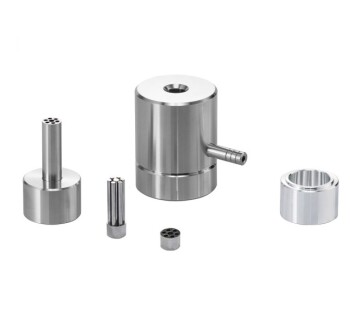
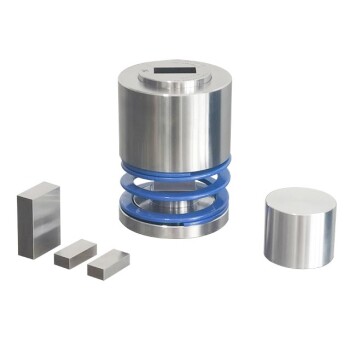
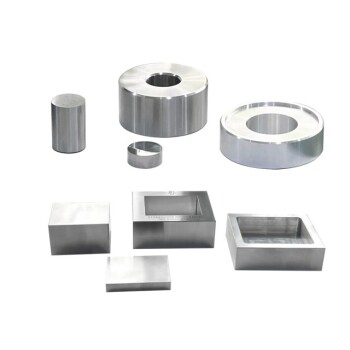
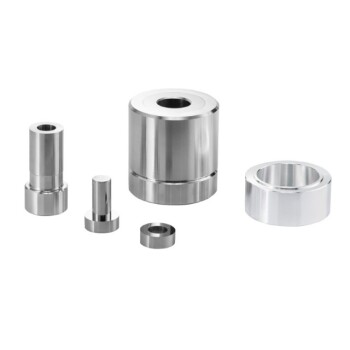
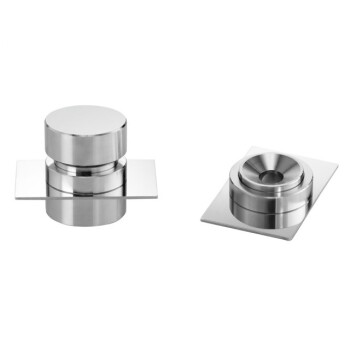
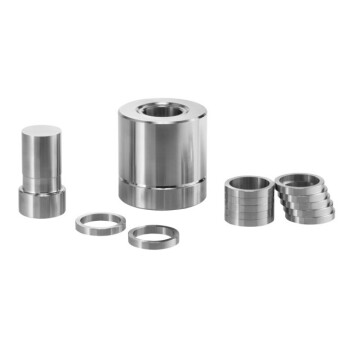
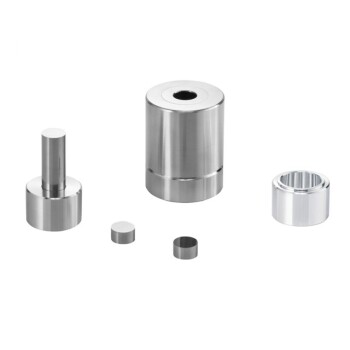
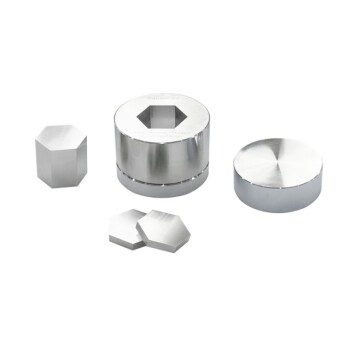
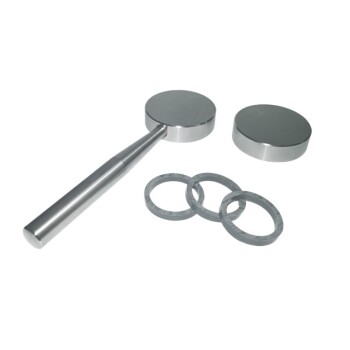
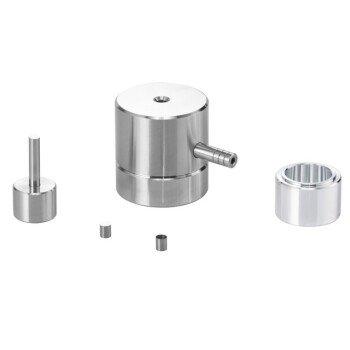
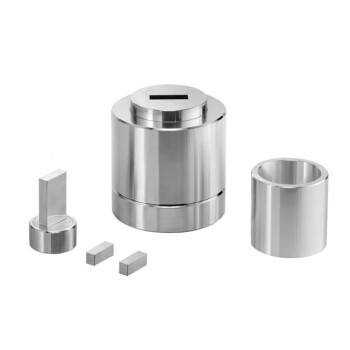
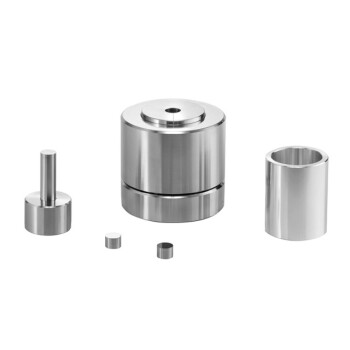
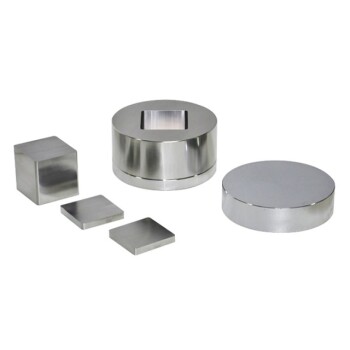
High-pressure mold components serve as the critical interface for shaping and pressure transmission during the thermal pressing of nano-crystalline tungsten. They act as the physical vessel that shapes the powder while simultaneously transmitting extreme mechanical loads—often reaching up to 1 GPa—directly to the material to force densification.
While the mold shapes the powder, its most critical function is withstanding the immense force required to densify tungsten. Ultimately, the mechanical strength limit of the mold component itself dictates the maximum pressure you can apply, directly controlling the final density and quality of the tungsten product.
The Mechanics of Pressure Transmission
Uniform Force Distribution
The mold components function as the conduit for external force. Their primary role is to transfer applied pressure uniformly across the tungsten powder bed.
Without this uniform transfer, the material would suffer from density gradients. This ensures the nano-crystalline structure remains consistent throughout the final part.
Withstanding Extreme Loads
Thermal pressing of tungsten requires immense pressure to force particles to bond. Mold components must withstand mechanical loads up to 1 GPa without deforming.
This structural rigidity is non-negotiable. If the mold yields under pressure, the energy intended for densification is lost to mold deformation.
Operating at Elevated Temperatures
These components do not operate in a vacuum of simple mechanical stress; they function at high thermal processing temperatures.
The material used for the mold must maintain its high-strength properties even when heated. It must resist thermal softening while under peak load.
The Limiting Factor in Densification
Defining Maximum Achievable Pressure
The operational ceiling of your thermal pressing process is defined by the mold, not the press.
The mechanical strength limits of the mold material are often the primary factor that caps the maximum pressure you can apply. You can only press as hard as your mold allows.
Impact on Final Density
Because pressure drives densification, the mold's strength directly correlates to the final quality of the tungsten.
Higher strength mold components allow for higher processing pressures. This results in superior density and better mechanical properties in the final nano-crystalline tungsten product.
Understanding the Trade-offs
The Strength Ceiling
The most significant limitation in this process is the material strength ceiling of the mold components.
Pushing the process to achieve higher tungsten density brings you closer to the failure point of the mold. There is a hard physical limit to how much pressure current mold materials can handle before catastrophic failure.
Balancing Pressure and Safety
Pushing for maximum theoretical density requires operating near the mold's yield strength.
This increases the risk of mold fracture or plastic deformation. Operators must balance the need for high density against the lifespan and safety margins of the mold components.
Making the Right Choice for Your Goal
To optimize your thermal pressing process, you must align your mold selection with your specific density targets.
- If your primary focus is maximizing material density: Select mold components with the highest available mechanical strength to safely sustain pressures approaching 1 GPa.
- If your primary focus is process longevity and cost: Operate slightly below the maximum pressure threshold to reduce stress on the mold components and extend their service life.
The quality of your nano-crystalline tungsten is inextricably linked to the structural capabilities of your high-pressure mold components.
Summary Table:
| Feature | Role in Tungsten Thermal Pressing |
|---|---|
| Pressure Transmission | Transfers up to 1 GPa uniformly to ensure consistent material density. |
| Structural Rigidity | Resists deformation at high temperatures to prevent energy loss during densification. |
| Density Control | The mold's mechanical strength limit dictates the maximum achievable product quality. |
| Process Safety | Balances high-pressure requirements with material yield strength to avoid failure. |
Elevate Your Advanced Material Research with KINTEK
Achieving the theoretical density of nano-crystalline tungsten requires equipment that can handle extreme thermal and mechanical stress. KINTEK provides high-performance laboratory solutions, including hot and isostatic hydraulic presses and high-temperature furnaces (vacuum, CVD, atmosphere), engineered to withstand the 1 GPa loads necessary for superior material densification.
From high-temperature high-pressure reactors to essential ceramics and crucibles, our comprehensive portfolio ensures your lab has the structural integrity needed for groundbreaking results.
Ready to push the limits of your material density? Contact KINTEK today to discover our high-pressure solutions!
Related Products
- Anti-Cracking Press Mold for Lab Use
- Special Shape Press Mold for Lab
- Ball Press Mold for Lab
- Square Bidirectional Pressure Mold for Lab Use
- Special Heat Press Mold for Lab Use
People Also Ask
- What is the press mould method? A Guide to Consistent, Detailed Ceramic Forms
- How to use a press mold? Master the Art of Creating Consistent Ceramic Forms
- What is the function of press molds during the preparation of SiCf/Ti-43Al-9V composites? Achieve Structural Precision
- What is a press mold used for? Achieve Repeatable Precision and Efficiency
- What is the purpose of specialized pressure devices in sulfide solid-state batteries? Ensure Chemo-Mechanical Stability