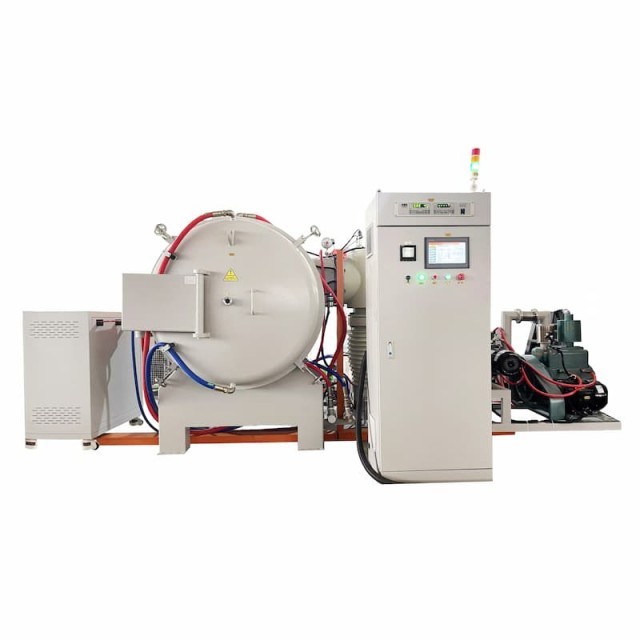
Vacuum Furnace
Molybdenum Vacuum Heat Treat Furnace
Item Number : KT-VM
Price varies based on specs and customizations
- Max. temperature
- 1400 ℃
- Constant work temperature
- 1300 ℃
- Heating rate
- 0-10 ℃/min
- Effective volume
- 4.5-253 L

Shipping:
Contact us to get shipping details Enjoy On-time Dispatch Guarantee.
Why Choose Us
Easy ordering process, quality products, and dedicated support for your business success.
Introduction
A molybdenum vacuum furnace is a type of high-temperature heat treatment equipment used in various industrial applications. It utilizes molybdenum foil as a heating element and provides a vacuum environment to prevent contamination of the heated materials. This furnace exhibits high-temperature stability, excellent vacuum performance, efficient heat transfer, and high durability. It is commonly employed in fields such as vacuum sintering and vacuum brazing, where high-purity and vacuum requirements are crucial.
Applications
The molybdenum vacuum furnace finds applications in various fields, including:
- Vacuum sintering
- Vacuum brazing
- Sapphire crystal growth
- Special brazing
- Heat treatment
- Casting aircraft components
- Refining high purity metals and alloys
- Electrodes for remelting
- Powder roasting
- Ceramic sintering
- High-temperature experiments
- Material treatment
- High-temperature atmosphere sintering
- Ceramic glue discharge
- Flue gas treatment
- Annealing and sintering
Detail & Parts
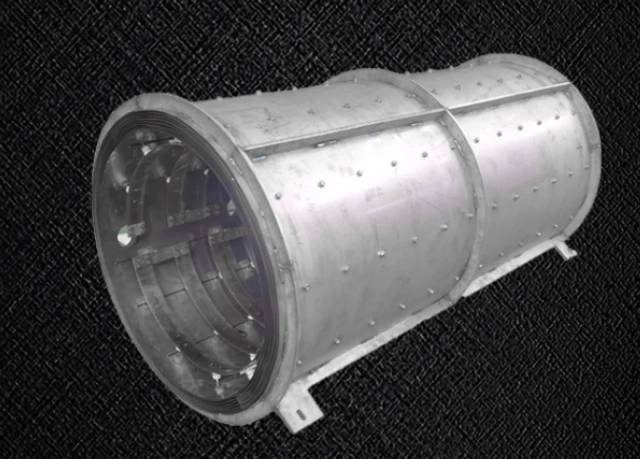
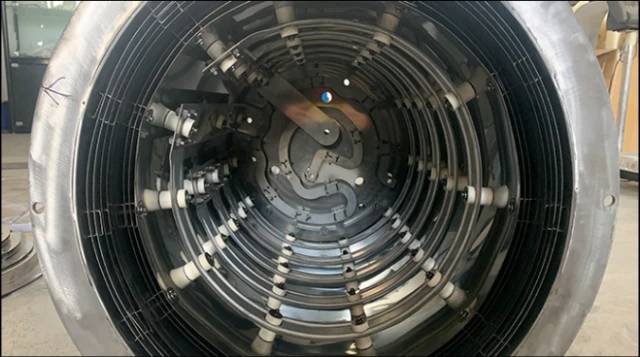
Small thermal expansion;High melting point;High thermal conductivity.
Features
The molybdenum foil vacuum furnace provides various benefits that cater to specific customer needs:
- High-temperature stability: Guarantees consistent heating temperatures for reliable heat treatment processes, even under demanding conditions.
- Excellent vacuum performance: Maintains a high vacuum level and prevents contamination, ensuring the integrity of heated materials.
- Efficient heat transfer: Facilitates faster heating rates and improved thermal uniformity, enhancing process efficiency.
- High durability: Resists high temperatures and oxidation, ensuring prolonged usage without performance degradation.
Principle
The molybdenum vacuum furnace utilizes the high-temperature resistance and excellent vacuum performance of molybdenum foil as the heating element and furnace liner. It operates by creating a high-temperature vacuum environment through resistive heating of the molybdenum foil, which effectively isolates the heated materials from external contaminants and enables precise temperature control. This unique design allows for high-temperature heat treatment processes in a clean and controlled atmosphere, making it ideal for applications such as vacuum sintering and vacuum brazing.
Advantages
- High-temperature stability: The molybdenum foil vacuum furnace exhibits remarkable temperature stability, maintaining a consistent heating temperature and ensuring a reliable heat treatment process under high-temperature conditions.
- Excellent vacuum performance: The molybdenum foil material possesses exceptional sealability and corrosion resistance, enabling the furnace to maintain a high vacuum level and prevent contamination of the heated materials.
- Efficient heat transfer: Utilizing molybdenum foil material, the vacuum furnace facilitates efficient heat transfer, resulting in faster heating rates and improved thermal uniformity.
- High durability: The molybdenum foil material exhibits excellent resistance to high temperatures and oxidation, allowing for prolonged usage at elevated temperatures without failure.
Safety Advantage
- Kindle Tech vacuum furnace owns over current protection, over temperature alarming function, furnace will turn off the power automatically
- Furnace build in thermal couple detecting function, furnace will stop heating and alarm will be on once broken or failure detected
- Power failure restarting function,furnace will resume the furnace heating program when power is incoming after failure
Technical specifications
| Furnace model | KT-VM | ||
| Max. temperature | 1400 ℃ | ||
| Constant work temperature | 1300 ℃ | ||
| Chamber insulation material | molybdenum heat shied | ||
| Heating element | Molybdenum Strip | ||
| Heating rate | 0-10℃/min | ||
| Temperature sensor | Build in S type thermal couple | ||
| Temperature controller | Touch screen PID controller with PLC | ||
| Temperature control accuracy | ±1℃ | ||
| Temperature uniformity | ±5℃ | ||
| Electric power supply | AC110-440V,50/60HZ | ||
| Standard Chamber Sizes Stocks | |||
| Chamber size (mm) | Effective volume (L) | Chamber size (mm) | Effective volume (L) |
| 150x150x200 | 4.5 | 400x400x500 | 80 |
| 200x200x300 | 12 | 500x500x600 | 125 |
| 300x300x400 | 36 | 600x600x700 | 253 |
| Customer design sizes and volume is accepted | |||
Optional Setup
- Independent furnace temperature monitoring and recording
- RS 485 communication port for PC remote control and data exporting
- Optional pneumatic vacuum valve linkage with temperature controller
- Touch screen temperature controller with versatile operator friendly functions
- Cold water circulation cooling machine for furnace shell jacket cooling system
Precautions and maintenance
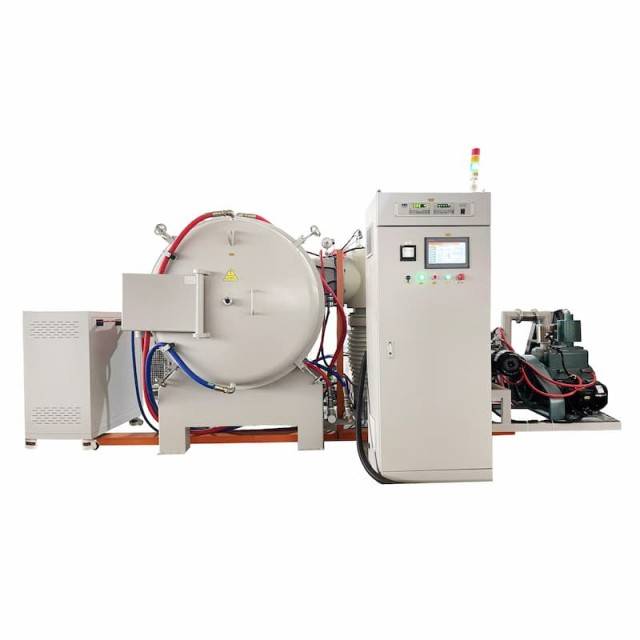
The molybdenum foil vacuum furnace consists of key components such as the furnace chamber, molybdenum strips, vacuum gauge, vacuum system, and water cooler. The following precautions and maintenance guidelines should be observed:
| Furnace Chamber |
|
|
|---|---|---|
| Molybdenum Strips Heater |
|
|
| Pirani Gauge and Ionisation Gauge |
|
|
| Mechanical Pump |
|
|
| Roots Pump |
|
|
| Diffusion Pump |
|
|
| Water Cooler |
|
|
In summary, the molybdenum foil vacuum furnace is an efficient, stable, durable, and safe device. However, it requires regular vacuum maintenance, safe operation, and diligent maintenance practices to ensure its long-term stable operation.
Warnings
Operator safety is the top important issue! Please operate the equipment with cautions. Working with inflammable& explosive or toxic gases is very dangerous, operators must take all necessary precautions before starting the equipment. Working with positive pressure inside the reactors or chambers is dangerous, operator must fellow the safety procedures strictly. Extra caution must also be taken when operating with air-reactive materials, especially under vacuum. A leak can draw air into the apparatus and cause a violent reaction to occur.
Designed for You
KinTek provide deep custom made service and equipment to worldwide customers, our specialized teamwork and rich experienced engineers are capable to undertake the custom tailoring hardware and software equipment requirements, and help our customer to build up the exclusive and personalized equipment and solution!
Would you please drop your ideas to us, our engineers are ready for you now!
Trusted by Industry Leaders

REQUEST A QUOTE
Our professional team will reply to you within one business day. Please feel free to contact us!
Related Products

Vacuum Heat Treat and Molybdenum Wire Sintering Furnace for Vacuum Sintering
A vacuum molybdenum wire sintering furnace is a vertical or bedroom structure, which is suitable for withdrawal, brazing, sintering and degassing of metal materials under high vacuum and high temperature conditions. It is also suitable for dehydroxylation treatment of quartz materials.
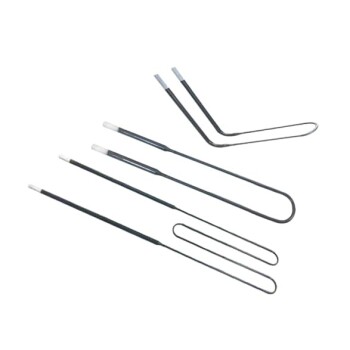
Molybdenum Disilicide (MoSi2) Thermal Elements Electric Furnace Heating Element
Discover the power of Molybdenum Disilicide (MoSi2) Heating Element for high-temperature resistance. Unique oxidation resistance with stable resistance value. Learn more about its benefits now!

Vacuum Heat Treat Furnace with Ceramic Fiber Liner
Vacuum furnace with polycrystalline ceramic fiber insulation liner for excellent heat insulation and uniform temperature field. Choose from 1200℃ or 1700℃ max. working temperature with high vacuum performance and precise temperature control.

600T Vacuum Induction Hot Press Furnace for Heat Treat and Sintering
Discover the 600T Vacuum Induction Hot Press Furnace, designed for high-temperature sintering experiments in vacuum or protected atmospheres. Its precise temperature and pressure control, adjustable working pressure, and advanced safety features make it ideal for nonmetal materials, carbon composites, ceramics, and metal powders.

Vacuum Heat Treat Sintering Brazing Furnace
A vacuum brazing furnace is a type of industrial furnace used for brazing, a metalworking process that joins two pieces of metal using a filler metal that melts at a lower temperature than the base metals. Vacuum brazing furnaces are typically used for high-quality applications where a strong, clean joint is required.

2200 ℃ Tungsten Vacuum Heat Treat and Sintering Furnace
Experience the ultimate refractory metal furnace with our Tungsten vacuum furnace. Capable of reaching 2200℃, perfect for sintering advanced ceramics and refractory metals. Order now for high-quality results.

Vacuum Heat Treat and Pressure Sintering Furnace for High Temperature Applications
Vacuum pressure sintering furnaces are designed for high temperature hot pressing applications in metal and ceramic sintering. Its advanced features ensure precise temperature control, reliable pressure maintenance, and a robust design for seamless operation.

Vacuum Heat Treat Furnace and Levitation Induction Melting Furnace
Experience precise melting with our Vacuum Levitation Melting Furnace. Ideal for high melting point metals or alloys, with advanced technology for effective smelting. Order now for high-quality results.

2200 ℃ Graphite Vacuum Heat Treat Furnace
Discover the power of the KT-VG Graphite Vacuum Furnace - with a maximum working temperature of 2200℃, it's perfect for vacuum sintering of various materials. Learn more now.

Small Vacuum Heat Treat and Tungsten Wire Sintering Furnace
The small vacuum tungsten wire sintering furnace is a compact experimental vacuum furnace specially designed for universities and scientific research institutes. The furnace features a CNC welded shell and vacuum piping to ensure leak-free operation. Quick-connect electrical connections facilitate relocation and debugging, and the standard electrical control cabinet is safe and convenient to operate.

1400℃ Controlled Atmosphere Furnace with Nitrogen and Inert Atmosphere
Achieve precise heat treatment with KT-14A controlled atmosphere furnace. Vacuum sealed with a smart controller, it's ideal for lab and industrial use up to 1400℃.

1700℃ Controlled Atmosphere Furnace Nitrogen Inert Atmosphere Furnace
KT-17A Controlled atmosphere furnace: 1700℃ heating, vacuum sealing technology, PID temperature control, and versatile TFT smart touch screen controller for laboratory and industrial use.

Vacuum Hot Press Furnace Machine Heated Vacuum Press
Discover the advantages of Vacuum Hot Press Furnace! Manufacture dense refractory metals & compounds, ceramics, and composites under high temp and pressure.
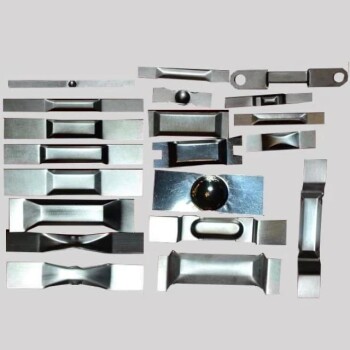
Molybdenum Tungsten Tantalum Special Shape Evaporation Boat
Tungsten Evaporation Boat is ideal for vacuum coating industry and sintering furnace or vacuum annealing. we offers tungsten evaporation boats that are designed to be durable and robust, with long operating lifetimes and to ensure consistent smooth and even spreading of the molten metals.

Ultra-High Temperature Graphite Vacuum Graphitization Furnace
The ultra-high temperature graphitization furnace utilizes medium frequency induction heating in a vacuum or inert gas environment. The induction coil generates an alternating magnetic field, inducing eddy currents in the graphite crucible, which heats up and radiates heat to the workpiece, bringing it to the desired temperature. This furnace is primarily used for graphitization and sintering of carbon materials, carbon fiber materials, and other composite materials.

Vacuum Arc Induction Melting Furnace
Discover the power of Vacuum Arc Furnace for melting active & refractory metals. High-speed, remarkable degassing effect, and free of contamination. Learn more now!

Vacuum Sealed Continuous Working Rotary Tube Furnace Rotating Tube Furnace
Experience efficient material processing with our vacuum-sealed rotary tube furnace. Perfect for experiments or industrial production, equipped with optional features for controlled feeding and optimized results. Order now.

Horizontal High Temperature Graphite Vacuum Graphitization Furnace
Horizontal Graphitization Furnace: This type of furnace is designed with the heating elements placed horizontally, allowing for uniform heating of the sample. It's well-suited for graphitizing large or bulky samples that require precise temperature control and uniformity.

Lab-Scale Vacuum Induction Melting Furnace
Get precise alloy composition with our Vacuum Induction Melting Furnace. Ideal for aerospace, nuclear energy, and electronic industries. Order now for effective smelting and casting of metals and alloys.

Multi Heating Zones CVD Tube Furnace Machine Chemical Vapor Deposition Chamber System Equipment
KT-CTF14 Multi Heating Zones CVD Furnace - Precise Temperature Control and Gas Flow for Advanced Applications. Max temp up to 1200℃, 4 channels MFC mass flow meter, and 7" TFT touch screen controller.
Related Articles

Evaluating the Pros and Cons of External Vacuum Heat Treatment Furnaces
we evaluate the pros and cons of using external vacuum heat treatment furnaces to help manufacturers determine if it is the right choice for their specific process.
Guidelines for Purchasing Vacuum Heat Treatment Furnaces
A comprehensive guide on selecting and purchasing vacuum heat treatment furnaces for various industrial applications.
Application of Vacuum Heat Treatment Technology
Exploring the evolution and benefits of vacuum heat treatment in metal processing.
Vacuum Heat Treatment Furnace: Working Principles and Features
An in-depth look at the principles and features of vacuum heat treatment furnaces, highlighting their efficiency, environmental benefits, and operational specifics.
Technical Characteristics and General Knowledge of Vacuum Heat Treatment Furnaces
An in-depth look at the technical aspects and general knowledge of vacuum heat treatment furnaces, focusing on their unique features and operational requirements.
The Architecture of Silence: Mastery Through Total Environmental Control
Vacuum heat treatment isn't just about temperature—it's about isolation. Discover how eliminating variables leads to superior material properties and precision.
Molybdenum Vacuum Furnace: High-Temperature Sintering and Advanced Applications
Explore the advanced features and applications of molybdenum vacuum furnaces in high-temperature sintering and material treatment. Learn about their construction, control systems, and maintenance tips.
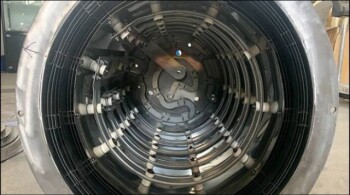
Optimizing Industrial Processes with Molybdenum Vacuum Furnaces
Discover the transformative potential of molybdenum vacuum furnaces in aerospace, automotive, and various other industries. Learn about their advanced features, applications, and insulation techniques for high-performance operations.
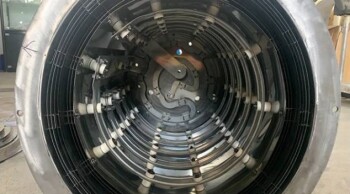
Molybdenum Vacuum Furnace: High-Temperature Sintering and Heat Treatment
Explore the advanced features and applications of molybdenum vacuum furnaces in high-temperature sintering and heat treatment. Learn about their construction, control systems, and maintenance tips.
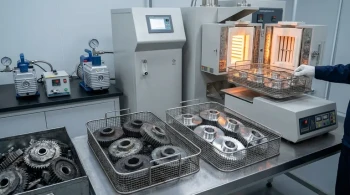
Your Perfect Parts, Ruined: The Hidden Enemy in Your Heat Treatment Furnace
Tired of heat treatment ruining your precision parts? Discover the real cause of warping and scale, and how to eliminate it for predictable results.
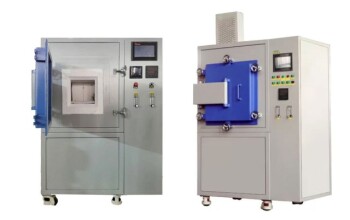
Role of Heat Treatment Furnace Atmosphere
Explores the critical role of furnace atmospheres in heat treatment processes, detailing their protective and reactive functions.
A Controlled Universe: The Physics of Forging Materials at 2200°C
Learn how vacuum furnaces achieve extreme temperatures up to 2200°C by mastering heating elements, insulation, and the physics of the perfect void.