Within 8 hours on working days, 24 hours on holidays
Milling Equipment
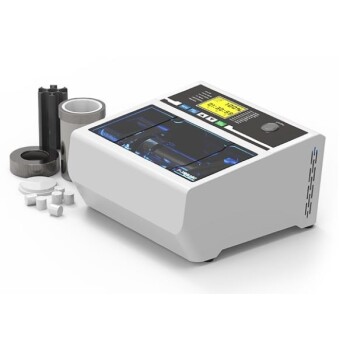
KinTek provides modern mills and crushers to prepare samples for chemical and physical analytical methods such as AAS, NIR, ICP, and XRF. Proper sample homogenization to an appropriate level of analytical fineness is essential for reliable and accurate analysis.
To ensure reproducible sample preparation, KinTek's range of instruments allows for coarse, fine, and ultrafine size reduction of almost any material. The selection of grinding tools and accessories guarantees contamination-free and dependable sample preparation before laboratory analysis.
Laboratory mills are commonly used to prepare samples for analysis. They work by reducing the particle size (comminution) of a variety of materials, including wet, dry, hard, soft, elastic, brittle, and fibrous materials. These mills are used in a wide range of scientific fields, such as chemistry, pharmaceuticals, food analysis, materials testing, and life science.
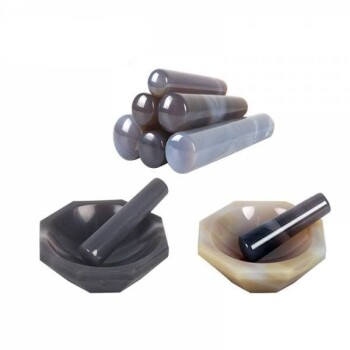
There are various types of mills and grinders that are available for achieving coarse, mid-range, and fine results, all the way down to the nano range (<0.1 µm). Disk, hammer, mortar, planetary ball, rotor, and cutting mills are some of the most common types of mills used in laboratories.
Cryogenic mills, or freezer mills, are a specialized type of mill that freezes materials prior to reducing their particle size. This technique is useful for handling materials that are difficult to grind at room temperature, such as plastics or rubber. Freezing the material makes it more brittle, and therefore easier to grind to the desired particle size.
FAQ
What Is A Laboratory Crusher Used For?
A laboratory crusher, also known as a jaw crusher, is used to reduce solid samples like rocks or crystals into powder or dust. It is widely used in industries such as mining, metallurgy, chemical, building materials, water conservancy, and transportation for coarse, medium, and fine crushing of materials like limestone, calcium carbide, and shale.
What Is A Planetary Ball Mill?
A planetary ball mill is a type of mill used for grinding and mixing materials. It is characterized by its unique multi-dimensional motion, high collision energy, and suitability for small particle samples, making it highly efficient for material processing in various fields.
What Is A Laboratory Ball Mill?
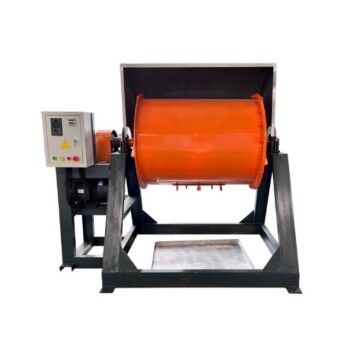
A laboratory ball mill is a type of grinder used to grind materials into fine powder. It consists of a rotating jar filled with balls, usually made of steel or ceramic, that grind the material as the jar rotates. It is ideal for grinding a wide range of materials, including chemicals, ceramics, glass, and minerals.
How Does A Laboratory Crusher Work?
A laboratory crusher works using a fixed plate and a mechanically operated gyrating plate arranged in a funnel shape. The plates move against each other in a rocking motion, crushing samples and moving them towards the discharge area. This mechanism ensures efficient size reduction of materials.
What Are The Main Applications Of Planetary Ball Mills?
Planetary ball mills are widely used in material grinding and mixing across various fields. Their high grinding efficiency, due to multi-dimensional motion and high collision energy, makes them ideal for processing small particle samples in industries such as pharmaceuticals, materials science, and chemical engineering.
What Are The Applications Of A Laboratory Ball Mill?
A laboratory ball mill is used for the rapid, reproducible pulverizing, milling, or grinding of a large variety of materials. It is ideal for grinding small quantities of materials or materials that are difficult to reduce to a fine powder using other methods. Applications include grinding chemicals, ceramics, glass, minerals, and more.
What Is Milling Equipment Used For?
Milling equipment is used for the precise shaping, sizing, and finishing of various materials. It is commonly employed in manufacturing processes to remove excess material, create complex shapes, and achieve tight tolerances. Milling machines are versatile tools capable of performing tasks such as cutting, drilling, boring, and contouring.
What Is Mpcvd?
MPCVD stands for Microwave Plasma Chemical Vapor Deposition and it is a process of depositing thin films onto a surface. It uses a vacuum chamber, microwave generator, and gas delivery system to create a plasma made up of reacting chemicals and necessary catalysts. MPCVD is heavily used in the ANFF network to deposit layers of diamond using methane and hydrogen to grow new diamond on a diamond-seeded substrate. It is a promising technology for producing low-cost, high-quality large diamonds and is extensively used in the semiconductor and diamond cutting industry.
What Are The Main Features Of A Laboratory Jaw Crusher?
The main features of a laboratory jaw crusher include a high crushing ratio (up to 15), uniform particle size, a gasket-type discharge port adjustment device, high production efficiency, low energy consumption, a deep crushing cavity with no dead zone, hyperboloid jaws for reduced wear, and a safe and reliable lubrication system.
What Are The Key Features Of Planetary Ball Mills?
Key features of planetary ball mills include high collision energy, suitability for small particle samples, and an automatic reversal mechanism. The high collision energy results from multi-dimensional motion and high-speed rotation, which generate greater impact and shear forces. The automatic reversal mechanism helps evenly wear grinding balls, maintaining efficiency.
What Are The Main Types Of Laboratory Ball Mills?
The main types of laboratory ball mills include planetary ball mills, high-energy vibratory ball mills, and hybrid high-energy vibratory ball mills. Planetary ball mills use planetary rotation to grind materials, while vibratory ball mills use high-frequency vibration for grinding or mixing samples.
What Are The Different Types Of Milling Equipment?
There are several types of milling equipment, including vertical milling machines, horizontal milling machines, and gantry milling machines. Vertical milling machines have a vertically oriented spindle that moves the cutting tool up and down. Horizontal milling machines have a horizontally oriented spindle and are typically used for larger, heavy-duty applications. Gantry milling machines have a bridge-like structure that supports the spindle and allows for precise movement in multiple directions.
What Is Mpcvd Machine?
The MPCVD (Microwave Plasma Chemical Vapor Deposition) machine is a laboratory equipment used to grow high-quality diamond films. It uses a carbon-containing gas and a microwave plasma to create a plasma ball above the diamond substrate, which heats it to a specific temperature. The plasma ball doesn't contact the cavity wall, making the diamond growth process free from impurities and enhancing the diamond's quality. The MPCVD system consists of a vacuum chamber, a microwave generator, and a gas delivery system that controls the flow of gas into the chamber.
What Is The Working Principle Of A Laboratory Jaw Crusher?
The working principle of a laboratory jaw crusher involves a curved extrusion type mechanism. When the moving jaw goes down, the angle between the toggle plate and the moving jaw decreases, causing the moving jaw plate to leave the fixed jaw plate. This action, combined with the pull rod and spring, crushes the material, which is then discharged from the lower mouth of the crushing cavity.
What Are The Advantages Of Using A Planetary Ball Mill?
The advantages of using a planetary ball mill include high grinding efficiency, faster processing of small particle samples, and reduced wear on grinding balls due to the automatic reversal mechanism. These features make planetary ball mills highly effective for grinding and mixing materials in various applications.
What Is The Working Principle Of A Laboratory Ball Mill?
The working principle of a laboratory ball mill involves the rotation of a jar filled with grinding balls. As the jar rotates, the balls collide with the material, grinding it into smaller particles. The size of the powder can be controlled by adjusting the size of the balls and the speed of the rotation.
What Materials Can Be Processed Using Milling Equipment?
Milling equipment can process a wide range of materials, including metals, plastics, composites, and wood. Common metals processed using milling machines include steel, aluminum, brass, and titanium. Plastics such as acrylic, PVC, and nylon can also be milled. Additionally, milling equipment can shape and finish composite materials like carbon fiber and fiberglass, as well as wood and other organic materials.
What Are The Advantages Of Mpcvd?
MPCVD has several advantages over other methods of diamond production, such as higher purity, less energy consumption, and the ability to produce larger diamonds.
What Are The Advantages Of Using A Laboratory Crusher?
The advantages of using a laboratory crusher include a high crushing ratio, uniform particle size, reliable operation, high production efficiency, low energy consumption, reduced wear on jaws due to hyperboloid design, and a safe and easy-to-maintain lubrication system. These features make it highly efficient and cost-effective for various applications.
What Types Of Planetary Ball Mills Are Available?
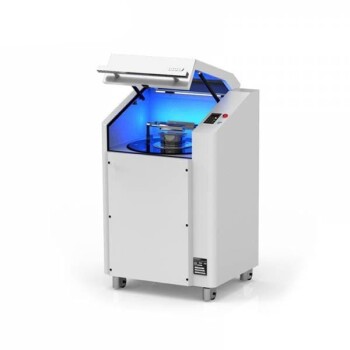
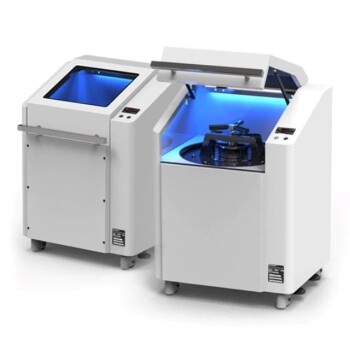
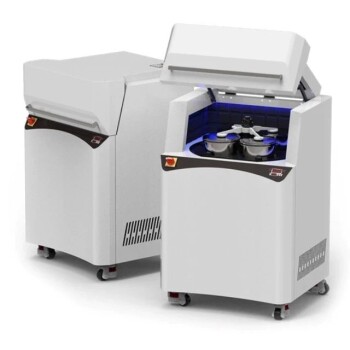
There are several types of planetary ball mills, including high-energy planetary ball mills, horizontal planetary ball mills, mini planetary ball mills, high-energy omnidirectional planetary ball mills, and cabinet planetary ball mills. Each type is designed for specific applications, offering features like multi-directional capabilities, compact designs, and high processing capacities.
What Are The Advantages Of Using A Laboratory Ball Mill?
The advantages of a laboratory ball mill include its ability to rapidly and reproducibly grind a wide variety of materials, including soft, elastic, fibrous, hard, or brittle samples. It is versatile, easy to operate, and can produce fine powders with consistent particle sizes. Additionally, many models offer features like timing, overload protection, and ergonomic designs for enhanced usability.
How Does Milling Equipment Work?
Milling equipment operates by rotating a cutting tool, typically a multi-point cutter, against the workpiece. The cutting tool removes material from the workpiece as it moves along various axes. The movement of the cutting tool and the workpiece can be controlled manually or through computer numerical control (CNC) systems. The cutting tool may have different geometries, such as end mills, ball mills, or face mills, depending on the desired outcome. The precise control of the cutting tool's movement allows for the creation of intricate shapes, precise dimensions, and smooth surface finishes.
Are CVD Diamonds Real Or Fake?
CVD diamonds are real diamonds and not fake. They are grown in a laboratory through a process called Chemical Vapor Deposition (CVD). Unlike natural diamonds that are mined from under the earth's surface, CVD diamonds are created using advanced technology in labs. These diamonds are 100% carbon and are the purest form of diamonds known as Type IIa diamonds. They have the same optical, thermal, physical, and chemical properties as natural diamonds. The only difference is that CVD diamonds are created in a lab and not mined from the earth.
How Does The Automatic Reversal Mechanism In Planetary Ball Mills Work?
The automatic reversal mechanism in planetary ball mills periodically changes the direction of rotation of the turntable. This helps evenly wear the surface of the grinding balls, reducing the impact of uneven wear on grinding efficiency and maintaining consistent performance over time.
What Materials Can Be Processed Using A Laboratory Ball Mill?
A laboratory ball mill can process a wide range of materials, including chemicals, ceramics, glass, minerals, and more. It is suitable for grinding both soft and hard materials, making it a versatile tool for various laboratory applications.
What Are The Advantages Of Using Milling Equipment?
Milling equipment offers several advantages in manufacturing processes. Firstly, it allows for the precise removal of excess material, resulting in accurate and consistent part dimensions. Secondly, milling machines can create complex shapes and features that would be challenging or impossible to achieve using other methods. Thirdly, milling equipment provides high productivity, as it can remove material quickly and efficiently. Additionally, modern CNC milling machines offer automation and programming capabilities, reducing manual labor and increasing efficiency. Lastly, milling equipment provides versatility, as it can be used for a wide range of materials and applications.
What Makes Planetary Ball Mills Suitable For Small Particle Samples?
Planetary ball mills are suitable for small particle samples due to their multi-dimensional motion, which ensures that small particles are more fully collided and ground. This results in faster achievement of the required grinding fineness, making them ideal for applications requiring fine particle sizes.
What Are The Key Features Of A High-energy Planetary Ball Mill?
High-energy planetary ball mills are known for their fast and effective grinding capabilities. They offer precise control, multiple grinding bowls for simultaneous testing, and high output. These mills are compact, ergonomic, and designed for consistent particle size reduction, making them ideal for laboratory use.
What Factors Should Be Considered When Selecting Milling Equipment?
Several factors should be considered when selecting milling equipment. These include the required machining capabilities, such as the size and complexity of the parts to be produced, as well as the desired precision and surface finish. The type of material to be processed is also crucial, as different milling machines may be better suited for specific materials. Other factors to consider include the available workspace, the required spindle speed and power, the availability of tooling and accessories, as well as the budget and maintenance requirements. It is important to choose milling equipment that aligns with the specific machining needs and production goals to ensure optimal performance and cost-effectiveness.
What Is The Difference Between A Planetary Ball Mill And A Vibratory Ball Mill?
A planetary ball mill uses planetary rotation to grind materials, with grinding jars mounted on a central shaft. In contrast, a vibratory ball mill uses high-frequency vibration to grind or mix samples. Planetary ball mills are ideal for fine grinding, while vibratory ball mills are suitable for rapid mixing and grinding of small samples.
REQUEST A QUOTE
Our professional team will reply to you within one business day. Please feel free to contact us!