Toggle Categories
Get Instant Support
Choose your preferred way to connect with our team
Response Time
Within 8 hours on working days, 24 hours on holidays
Sample Preparation
KinTek sample preparation equipment includes sample crushing,milling, as while as while sieving equipment, hydraulic press equipment includes manual press, electric press, isostatic press, hot press and press filtering machine.

Isostatic Press
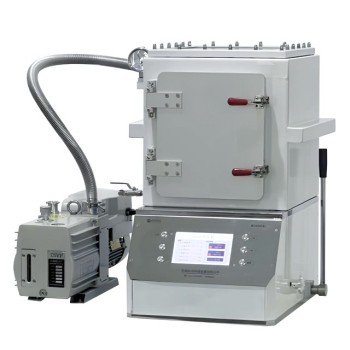
Vacuum Heated Lab Press

Automatic Heated Lab Press

Electric Lab Press

Customer-made Press

Manual Heated Lab Press

Manual Lab Press
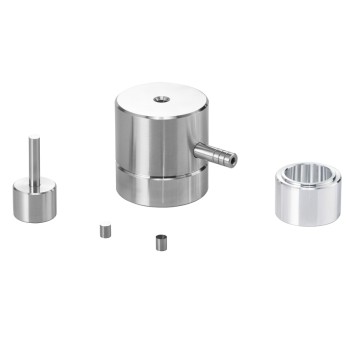
Molds & Accessories
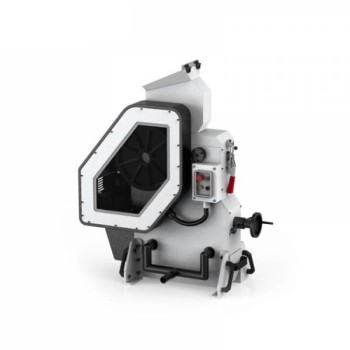
Crushing & Grinding Machine
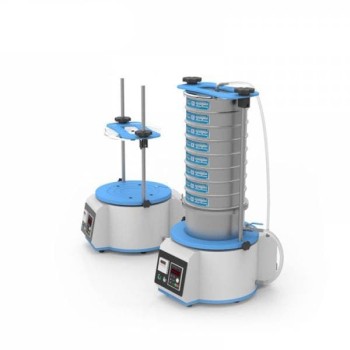
Sieving Machine

Milling Equipment
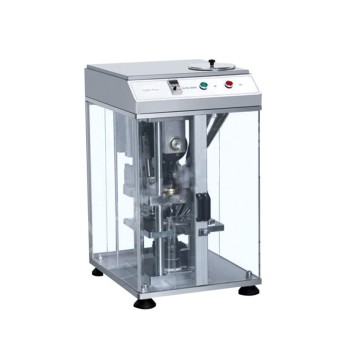
Tablet punching machine
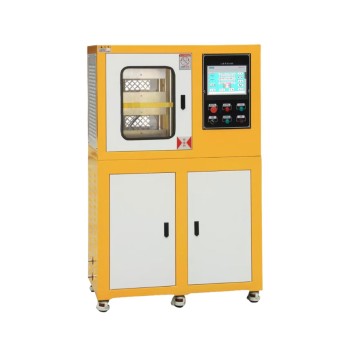
Rubber processing machine
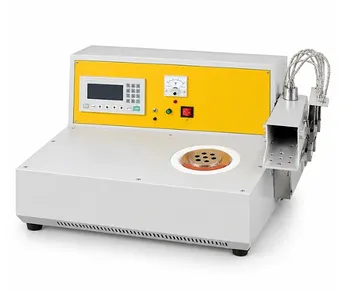
Coal Quality Analyzers
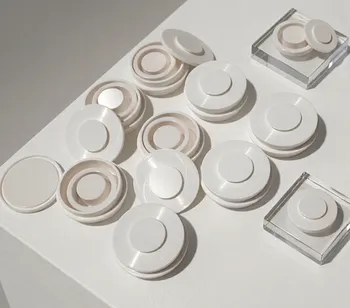
Assay Equipment Accessories & Consumables

Mounting Machine
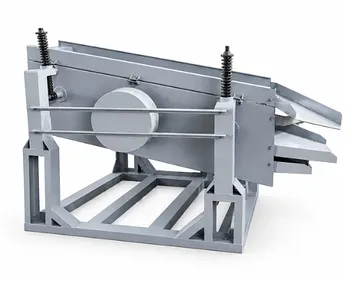
Coal, Coke & Ore Physical Testing
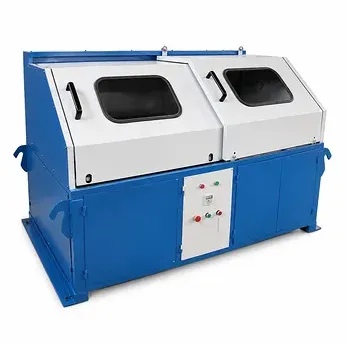
Rod Mill
Sample Preparation


Laboratory Hydraulic Press Split Electric Lab Pellet Press
Item Number: PCES
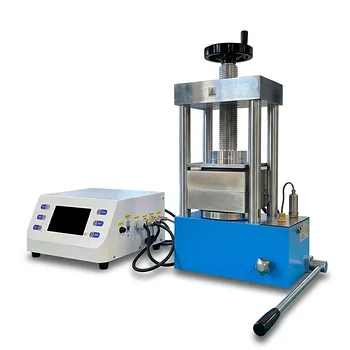
Manual Lab Heat Press
Item Number: PCHP


Laboratory Hydraulic Press Lab Pellet Press Machine for Glove Box
Item Number: PCG

Vibrating Disc Mill Small Laboratory Grinding Machine
Item Number: KT-JZ

Laboratory Test Sieves and Vibratory Sieve Shaker Machine
Item Number: KT-V400

Laboratory Manual Hydraulic Pellet Press for Lab Use
Item Number: PCF
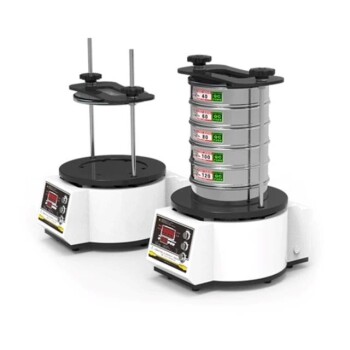
Laboratory Wet Three-Dimensional Vibratory Sieve Shaker Machine
Item Number: KT-VM200

Laboratory Vibratory Sieve Shaker Machine for Dry and Wet Three-Dimensional Sieving
Item Number: KT-VD200

Laboratory Vibratory Sieve Shaker Machine Slap Vibrating Sieve
Item Number: KT-T200TAP
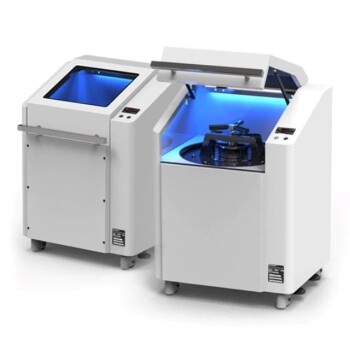
Laboratory Disc Cup Vibratory Mill for Sample Grinding
Item Number: KT-DVM

Laboratory Manual Hydraulic Pellet Press for Lab Use
Item Number: PCMP
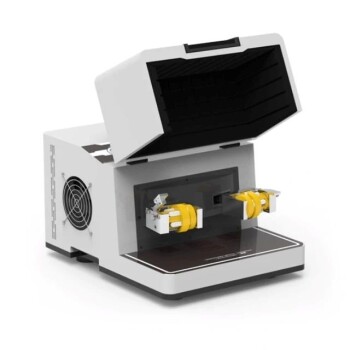
Laboratory Hybrid Tissue Grinding Mill
Item Number: KT-MT20

Laboratory High Throughput Tissue Grinding Mill Grinder
Item Number: KT-MT

High Energy Vibratory Laboratory Ball Mill Grinding Mill Single Tank Type
Item Number: KT-VB100

High Energy Vibratory Laboratory Ball Mill Double Tank Type
Item Number: KT-VB200
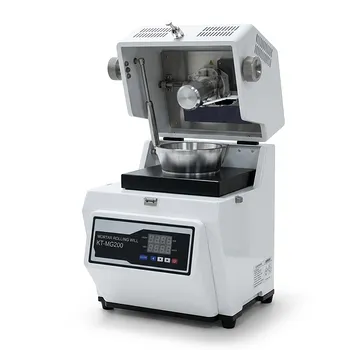
Laboratory Grinding Mill Mortar Grinder for Sample Preparation
Item Number: KT-MG200

Hybrid High Energy Vibratory Ball Mill for Lab Use
Item Number: KT-BM400

High Energy Vibratory Ball Mill for Lab Use
Item Number: KT-BM500
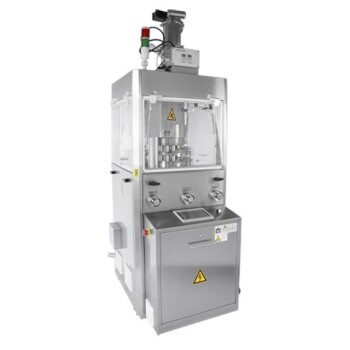

Manual button battery sealing machine
Item Number: PC2N

Manual button battery sealing machine (digital display)
Item Number: PC2NS

Electric button battery sealing machine
Item Number: PP2N
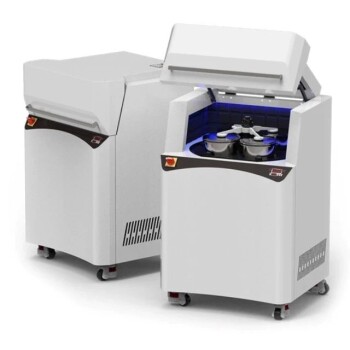
Disc Cup Vibrating Mill Multi-Platform for Lab
Item Number: KT-DVMP

Laboratory Hydraulic Pellet Press for XRF KBR FTIR Lab Applications
Item Number: PCPE

Mini Planetary Ball Mill Machine for Laboratory Milling
Item Number: KT-P400

Laboratory Planetary Ball Mill Rotating Ball Milling Machine
Item Number: KT-P400E

Laboratory Horizontal Planetary Ball Mill Milling Machine
Item Number: KT-P400H

Lab Vibration Mill
Item Number: KT-VMS
Edit This Page
REQUEST A QUOTE
Our professional team will reply to you within one business day. Please feel free to contact us!
Related Articles
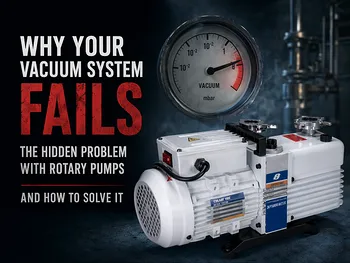
Why Your Vacuum System Fails: The Hidden Problem with Rotary Pumps and How to Solve It
Are inconsistent results and contamination plaguing your vacuum system? Learn the real reason why rotary pumps fail and how to build a reliable setup.
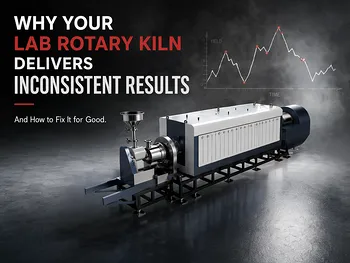
Why Your Lab Rotary Kiln Delivers Inconsistent Results—And How to Fix It for Good
Struggling with unreliable results from your lab rotary kiln? Discover the hidden systemic reason your fixes fail and how an integrated system ensures stable, repeatable results.
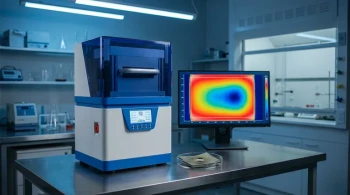
Why Your Hot Press Samples Fail: The Hidden Culprit in Material R&D
Tired of failed composite or laminate samples? Discover the hidden cause of inconsistent results and how the right lab hot press ensures repeatable success.
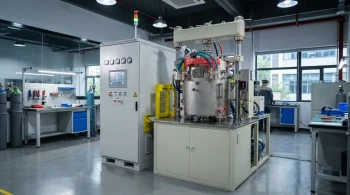
Density Is Destiny: The High-Stakes Physics of Hot Pressing
Hot pressing merges heat and pressure to forge ultra-dense materials, trading manufacturing speed for unmatched performance in complex components.
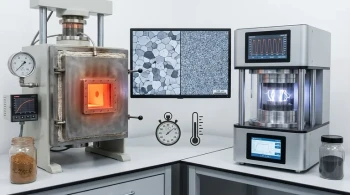
Heat, Haste, and Grains: A Strategic Choice Between Hot Pressing and SPS
Explore how heating methods—slow external vs. rapid internal—in Hot Pressing and SPS dictate material grain size, speed, and strategic use.
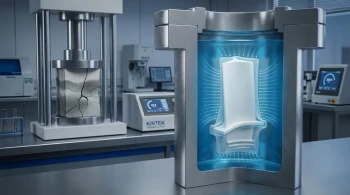
Beyond Brute Force: The Physics of Perfect Density in Cold Isostatic Pressing
Discover how Cold Isostatic Pressing leverages Pascal's Law to achieve uniform density in ceramics and metals, preventing defects in high-stress components.
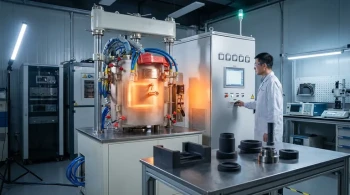
When Failure is Not an Option: The Engineering Logic of Hot Pressing
Hot pressing creates near-perfect density in components, but its true value lies in the strategic choice to prioritize material performance over cost.
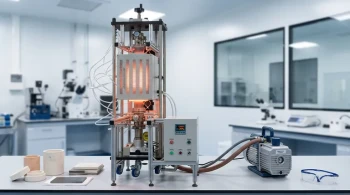
The Unforgiving Pursuit of Perfection: The Physics and Psychology of Hot Press Sintering
Hot press sintering trades speed and complexity for near-perfect density by combining heat and pressure—a critical choice for advanced materials.
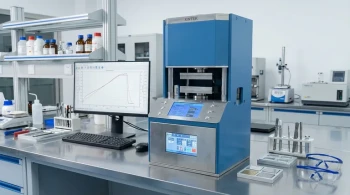
The Physics of Flawless Materials: Deconstructing the Hydraulic Hot Press
Discover how the synergy of Pascal's Law and thermal energy in a hydraulic hot press enables precise, repeatable material bonding and forming.
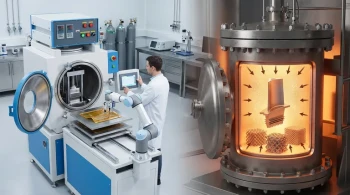
Pressure & Precision: Mastering Material Integrity with Hot Press Technology
Explore the critical difference between hot press bonding (precision) and HIP (perfection). Learn how directional vs. isostatic pressure shapes material certainty.
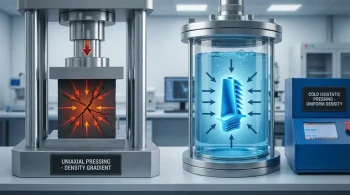
The Hidden Flaw in Every Pressed Part, and How to Eliminate It
Discover how cold isostatic pressing (CIP) eliminates hidden density gradients common in manufacturing, ensuring superior material integrity.

The Art of Pressure and Heat: A Deep Dive into Hot Pressing for Advanced Materials
Explore the hot pressing process, a technique that trades speed for superior material density and complex shapes in advanced manufacturing.

From Powder to Part: The Strategic Choice Between Wet-Bag and Dry-Bag CIP
A deep dive into wet-bag vs. dry-bag Cold Isostatic Pressing, framing the choice not as technical, but as a strategic manufacturing decision.
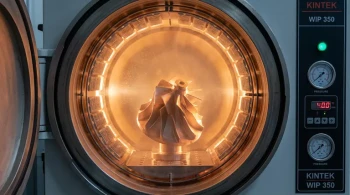
The Hidden Flaw: Why Your High-Performance Metal Parts Fail and How to Achieve True Material Integrity
Your 3D-printed or cast metal parts look perfect but fail unexpectedly? Discover the hidden cause of inconsistency and how Hot Isostatic Pressing (HIP) ensures total reliability.
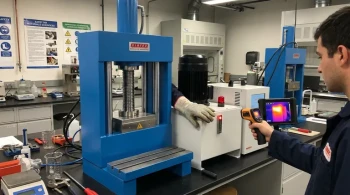
Why Your Hydraulic Press Runs Hot and How to Prevent a Meltdown
Learn why your hydraulic press overheats and how it leads to costly failure. Discover the root cause and the tools you need to fix it for good.
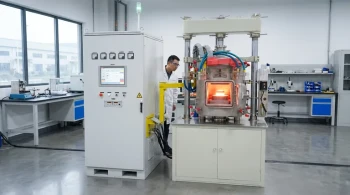
The Architecture of Atoms: Why Hot Press Forming Creates Superior Materials
Discover how hot press forming uses heat and pressure to eliminate microscopic flaws, creating stronger and more complex parts than cold forming.
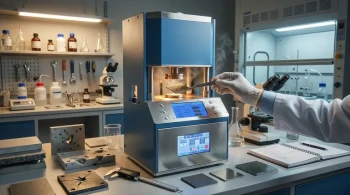
Why Your Molded Parts Fail: The Hidden Truth About Heat and Pressure
Struggling with warped or inconsistent parts? Learn why pressure isn't the problem and how precise thermal control in a hydraulic press is the key.
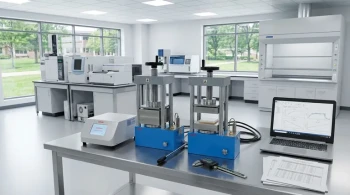
Force Without Fluid: Why Your Hydraulic Press Is a Hidden Bottleneck (And What to Do About It)
Tired of leaks, safety risks, and high energy bills from your hydraulic press? Uncover the core reason and discover modern alternatives for a safer, more efficient lab.
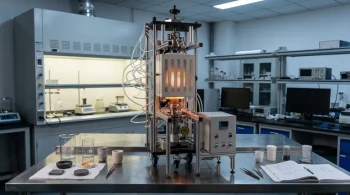
From Powder to Part: The Physics and Philosophy of Hot Pressing
Hot pressing combines heat and pressure to achieve superior material density with less force, solving the fundamental challenge of turning powder into a perfect solid.
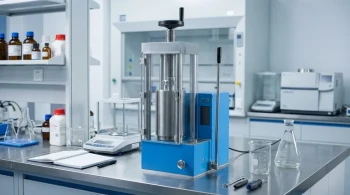
The Architecture of Pressure: How Cold Isostatic Pressing Builds Flawless Materials
Discover how Cold Isostatic Pressing (CIP) uses uniform pressure, not brute force, to create high-density material preforms with perfect consistency.