All Questions
What Is The Pressure For Isostatic Pressing? Unlock The Key To Uniform Material Densification
Discover the pressure ranges for Cold, Warm, and Hot Isostatic Pressing (CIP, WIP, HIP) and how uniform pressure transforms material properties.
What Are The Benefits Of Isostatic Pressing? Achieve Uniform Density And Complex Shapes
Discover the key benefits of isostatic pressing, including uniform density, isotropic strength, and the ability to create complex geometries for superior parts.
Why Is Cold Working Better Than Hot Working? A Guide To Choosing The Right Metal Forming Process
Discover the key differences between cold and hot working. Learn when to choose cold working for strength and precision or hot working for ductility and cost-effectiveness.
What Are The Disadvantages Of Cold Working Process? Key Limitations In Metal Forming
Explore the main drawbacks of cold working, including reduced ductility, high energy costs, and residual stresses that impact manufacturing efficiency.
What Are The Benefits Of Cold Working Metal? Achieve Superior Strength And Precision
Discover how cold working metal increases strength, improves surface finish, and provides tighter dimensional tolerances for high-performance components.
What Are The Examples Of Cold Working Metals? Key Processes For Stronger, Precision Parts
Explore cold working metal examples like rolling, drawing, and extrusion. Learn how these processes increase strength and improve surface finish without heat.
What Are The Industrial Applications Of Cold Work? Achieve Superior Strength And Precision In Metal Parts
Explore how cold working processes like rolling, drawing, and forging strengthen metals for applications in automotive, aerospace, and electronics manufacturing.
What Is An Isostatic Press Used For? Achieve Uniform Density & Eliminate Defects
Discover how isostatic presses consolidate powders and heal casting defects with uniform pressure. Essential for aerospace, medical, and energy industries.
What Is A Cold Isostatic Press? Achieve Uniform Powder Compaction For Complex Parts
Learn how a cold isostatic press (CIP) uses uniform liquid pressure to form dense, complex-shaped powder compacts at room temperature.
What Are The Applications Of Cold Isostatic Pressing? Achieve Uniform Density For Complex Parts
Explore the key applications of cold isostatic pressing (CIP) for advanced ceramics, refractory metals, and complex geometries requiring uniform density.
What Is Cold Isostatic Pressing Used For? Achieve Uniform Density In Complex Parts
Discover how Cold Isostatic Pressing (CIP) creates uniform density parts for advanced ceramics, metals, and more. Ideal for complex geometries.
What Is The Process Of Isostatic Press? Achieve Uniform Density And Complex Shapes
Learn how isostatic pressing uses uniform hydrostatic pressure to create high-density, complex parts from powders with superior material integrity.
What Is Isostatic Pressing Of Ceramics? Achieve Uniform Density And Complex Shapes
Learn how isostatic pressing creates uniform ceramic parts with superior mechanical properties, using CIP or HIP methods for optimal density.
What Is Isostatic Presses Used For? Achieve Uniform Density And Superior Material Performance
Learn how isostatic pressing (HIP & CIP) eliminates voids and defects in metals, ceramics, and composites for aerospace, energy, and advanced manufacturing.
How Much Does A Cold Isostatic Press Cost? A Detailed Price Breakdown Based On Your Needs
Cold isostatic press costs range from $50,000 to $2M+. Learn how pressure, size, and automation affect pricing for labs and production.
What Is The Isostatic Pressing Method? Achieve Uniform Density And Superior Material Performance
Learn how isostatic pressing uses uniform hydrostatic pressure to create high-density, defect-free parts for aerospace, medical, and energy applications.
How Do Isostatic Presses Work? Achieve Uniform Density With Isostatic Pressing
Learn how isostatic presses use fluid pressure to compact powders into dense, uniform parts with minimal internal stress for advanced materials.
What Is The Meaning Of Isostatic Pressing? Achieve Uniform Density In Complex Parts
Learn how isostatic pressing uses uniform, all-directional pressure to create high-density, complex-shaped metal and ceramic components with superior material properties.
What Is The Use Of Cold Isostatic Pressing? Achieve Uniform Density For Superior Parts
Discover how Cold Isostatic Pressing (CIP) creates uniform density in advanced ceramics, metals, and carbides, preventing defects for reliable performance.
What Is The Process Of Cold Isostatic Pressing? Achieve Uniform Density In Complex Parts
Learn how cold isostatic pressing (CIP) uses uniform hydrostatic pressure to create dense, defect-free components from powders, ideal for complex geometries.
What Is Isostatic Pressing In Powder Metallurgy? Unlock Superior Part Density And Complexity
Discover how isostatic pressing creates uniform, high-performance metal parts. Compare CIP and HIP methods for complex geometries and maximum density.
What Does Hot Isostatic Pressing Do? Eliminate Internal Flaws For Superior Part Performance
Hot isostatic pressing (HIP) eliminates internal defects in metals and ceramics, enhancing strength, durability, and reliability for critical applications.
What Is The Difference Between Hot Isostatic Pressing And Cold Isostatic Pressing? A Guide To Forming Vs. Densification
Learn the key differences between Cold Isostatic Pressing (CIP) for powder forming and Hot Isostatic Pressing (HIP) for achieving full density in materials.
What Are The Limitations Of Hot Isostatic Pressing? Understanding The Trade-Offs In High-Performance Manufacturing
Explore the key limitations of Hot Isostatic Pressing (HIP), including high costs, slow production cycles, and the need for secondary machining.
What Is An Example Of Cold Isostatic Pressing? Achieve Uniform Density In Complex Parts
Learn how cold isostatic pressing (CIP) uses uniform fluid pressure to create dense, complex parts like spark plug insulators from ceramic or metal powders.
What Is The Dry Bag Process Of Isostatic Pressing? Ideal For High-Volume Production Of Simple Shapes
Dry bag isostatic pressing is a fast, automated powder compaction method using a fixed mold, ideal for mass-producing simple, symmetrical components.
What Is The Difference Between Wet Bag And Dry Bag Isostatic Pressing? Flexibility Vs. High-Volume Production
Explore the key differences between wet bag and dry bag isostatic pressing. Learn when to choose flexibility for complex parts or automation for mass production.
What Are The Disadvantages Of Cold Isostatic Pressing? Key Limitations In Dimensional Accuracy & Speed
Explore the main drawbacks of cold isostatic pressing (CIP), including poor dimensional tolerance, slow cycle times, and the need for secondary operations.
What Are The Advantages Of Isostatic Pressing? Achieve Superior Material Integrity And Design Freedom
Discover how isostatic pressing delivers uniform density, complex shapes, and enhanced mechanical properties for high-performance materials.
What Is An Example Of Hot Isostatic Pressing? Creating Fully Dense Components From Powders
Learn how hot isostatic pressing (HIP) consolidates powders into solid parts, removes casting defects, and bonds materials for superior performance.
What Is Uniaxial Pressing And Isostatic Pressing? Choosing The Right Powder Compaction Method
Learn the key differences between uniaxial and isostatic pressing: speed vs. complexity, density uniformity, and cost implications for your lab.
What Is The Process Of Isostatic Pressing? Achieve Uniform Density For Complex Parts
Learn how isostatic pressing uses uniform hydrostatic pressure to create dense, complex parts from powders. Explore CIP, HIP, and key benefits.
What Is The Pressing Method In Ceramics? A Guide To Shaping Dense, High-Performance Parts
Learn about ceramic pressing methods like uniaxial, hot, and lost-wax pressing for shaping strong, dense parts from powders or ingots.
What Products Are Made By Isostatic Pressing? Achieve Flawless, High-Performance Components
Discover how isostatic pressing creates high-density ceramics and metals for aerospace, medical, and other critical applications by eliminating internal flaws.
Why Is Isostatic Pressing Better Than Regular Uniaxial Pressing When Manufacturing Ceramics? Achieve Superior Density And Complex Shapes
Discover why isostatic pressing delivers uniform density and complex shapes for ceramics, overcoming the limitations of uniaxial pressing for high-performance parts.
What Is Isostatic Pressing? Achieve Uniform Density And Complex Shapes
Isostatic pressing uses uniform hydrostatic pressure to compact powders, creating parts with superior density, strength, and complex geometries for demanding applications.
What Is Hip And Cip In Powder Metallurgy? Choose The Right Process For Your Materials
Learn the key differences between Hot Isostatic Pressing (HIP) and Cold Isostatic Pressing (CIP) for powder metallurgy, including density, cost, and applications.
What Is Cold Isostatic Pressing? Achieve Uniform Density For Complex Parts
Learn how Cold Isostatic Pressing (CIP) uses uniform pressure to compact powders into large, complex shapes with superior density and strength.
What Is The Difference Between Hip And Cip? A Guide To Shaping Vs. Densification
Learn the key differences between Cold Isostatic Pressing (CIP) and Hot Isostatic Pressing (HIP) to choose the right process for your materials.
What Is A Cold Press Machine? A Guide To Uniform Powder Compaction Without Heat
Learn how cold isostatic pressing works to create dense, uniform parts from powders at room temperature, its advantages, and when to use it vs. hot pressing.
Related Products
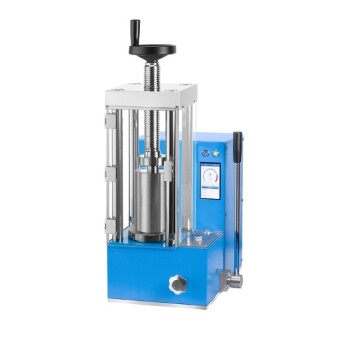
Electric Lab Cold Isostatic Press CIP Machine for Cold Isostatic Pressing
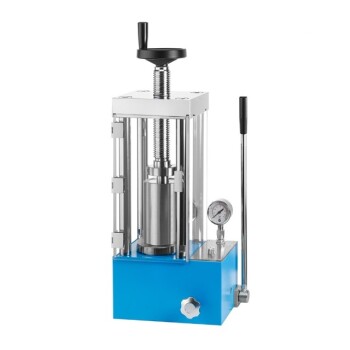
Manual Cold Isostatic Pressing Machine CIP Pellet Press
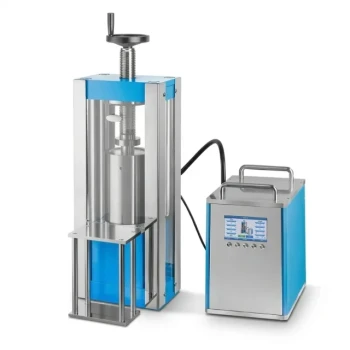
Electric Split Lab Cold Isostatic Press CIP Machine for Cold Isostatic Pressing
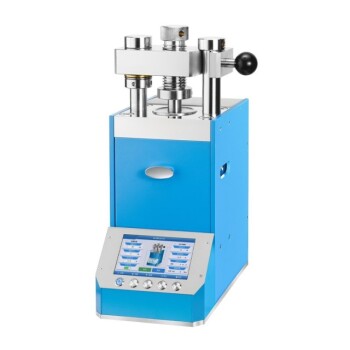
Automatic Lab Cold Isostatic Press CIP Machine Cold Isostatic Pressing
Vacuum Cold Trap Chiller Indirect Cold Trap Chiller