Blog
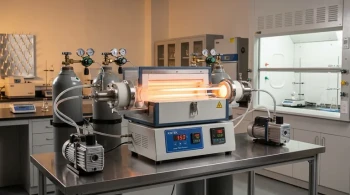
Beyond Temperature: The Art of Control in Thermal Processing
3 months agoDiscover why precise atmospheric and thermal control in a tube furnace, not just heat, is the key to repeatable material science breakthroughs.
Learn More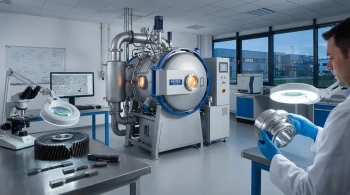
Why Your High-Strength Components Fail—And the Secret to Ultimate Reliability
3 months agoExperiencing unexpected material failures? Discover why standard alloys fail and how a process called VAR ensures ultimate reliability for critical applications.
Learn More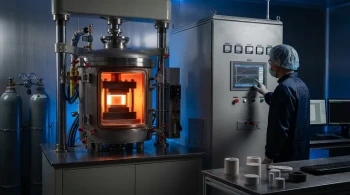
Beyond the Furnace: How Pressure Unlocks Ultimate Ceramic Performance
3 months agoHot pressing combines heat and pressure to overcome the limits of traditional sintering, creating near-perfectly dense ceramics with superior strength.
Learn More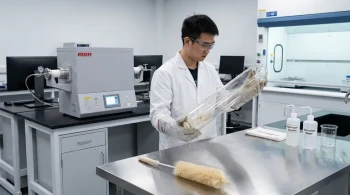
The Integrity of the Void: A Systems Approach to Cleaning Tube Furnace Tubes
3 months agoCleaning a furnace tube is a diagnostic process, not a checklist. Master thermal, chemical, & mechanical methods to ensure experimental purity.
Learn More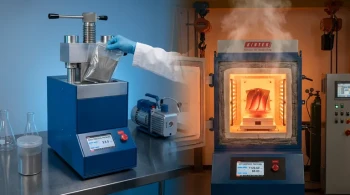
Shaping Potential vs. Forging Perfection: A Guide to Isostatic Pressing
3 months agoExplore the critical difference between Cold Isostatic Pressing (CIP) for forming parts and Hot Isostatic Pressing (HIP) for perfecting them.
Learn More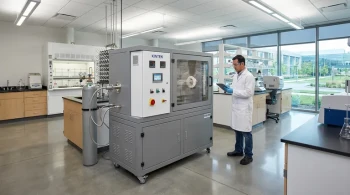
The Physics of Perfection: How Rotary Furnaces Eliminate Randomness in Material Processing
3 months agoDiscover how dynamic heating in rotary tube furnaces overcomes the flaws of static batches, ensuring uniform, repeatable results for advanced materials.
Learn More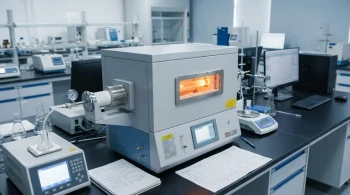
The Unseen Advantage: How a Tube Furnace Creates Order from Thermal Chaos
3 months agoDiscover how a tube furnace's superior temperature uniformity eliminates variables, ensuring the repeatable results essential for material science.
Learn More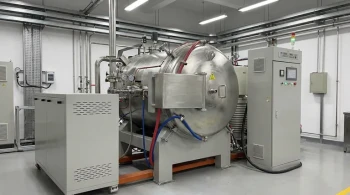
Heat, Purity, and Control: The Invisible Engineering Inside a Vacuum Furnace
3 months agoDiscover how vacuum furnaces use resistance heating in a void to achieve unparalleled material purity and temperature control for advanced engineering.
Learn More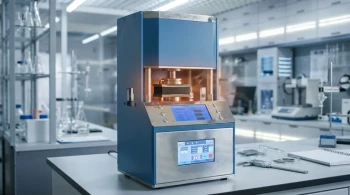
Why Your Composite and Polymer Parts Keep Failing: The Secret Is Simultaneous Heat and Pressure
3 months agoStruggling with inconsistent composite or polymer bonding? Discover why separate heating and pressing fails and how a hot hydraulic press ensures repeatable, high-quality results.
Learn More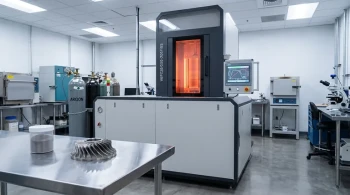
Beyond Max Pressure: Why Your Hot Isostatic Pressing (HIP) Results Are Inconsistent—And How to Fix Them
3 months agoStruggling with inconsistent HIP results? Discover why max pressure isn't the answer and how mastering pressure, temperature, and time is the key to perfect material densification.
Learn More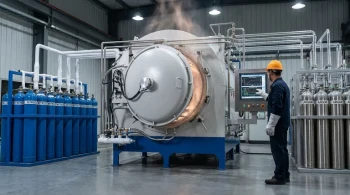
The Engineer's Dilemma: Speed vs. Certainty in Vacuum Furnace Quenching
3 months agoNitrogen offers faster, cheaper quenching, but its hidden reactivity can compromise sensitive alloys. Understand the critical trade-off with argon.
Learn More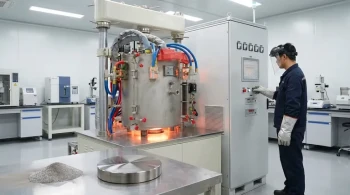
The Unseen Force: When Heat Isn't Enough to Forge a Perfect Solid
3 months agoExplore the critical difference between sintering and hot pressing. Learn how adding pressure transforms material densification for superior performance.
Learn More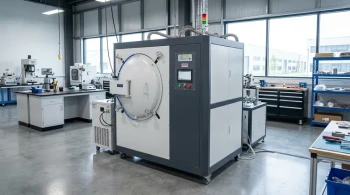
Beyond the Spec Sheet: The Physics and Psychology of a Vacuum Furnace's True Limit
3 months agoA vacuum furnace's max temperature is a system limit, not a single spec. Learn the trade-offs between heating elements, hot zones, and your process needs.
Learn More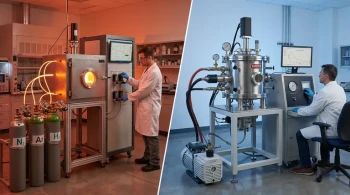
Addition vs. Subtraction: The Thermodynamic Choice That Defines Your Material's Future
3 months agoAtmosphere vs. vacuum furnace: A deep dive into choosing between adding a gas to control a surface or subtracting everything to achieve ultimate purity.
Learn More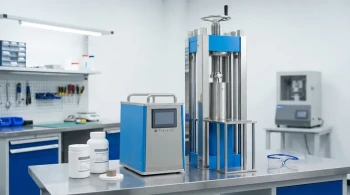
Beyond Brute Force: The Quiet Power of Cold Isostatic Pressing
3 months agoLearn how Cold Isostatic Pressing overcomes the hidden defects of traditional methods by using uniform fluid pressure to ensure material reliability.
Learn More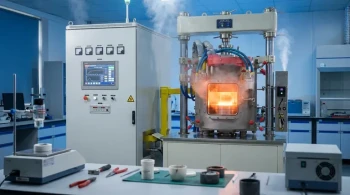
The Unseen Dance of Heat and Pressure: Mastering Material Transformation
3 months agoExplore the physics of hot pressing, where controlled heat and pressure transform materials. Learn how this technology solves key manufacturing challenges.
Learn More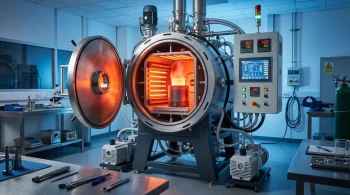
Beyond 100 Volts: The Physics and Psychology of Vacuum Furnace Heating
3 months agoChoosing a vacuum furnace heating element is a balance of physics and safety. Understand the risks of voltage, chemical reactions, and design.
Learn More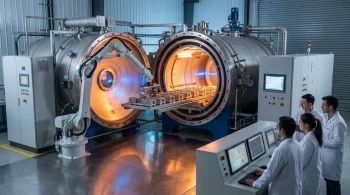
When a Perfect Environment Becomes a Trap: The Physics of Vacuum Brazing
3 months agoVacuum brazing creates ultra-pure joints but can destroy certain alloys. Understand the physics of vapor pressure to avoid catastrophic failures.
Learn More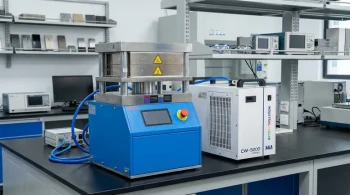
Why Your Compression Tests Are Failing (And It’s Not Your Sample’s Fault)
3 months agoDiscover the hidden reason your material compression tests fail and damage equipment. Learn why the press platen, not the sample, is often the culprit.
Learn More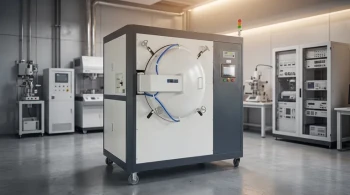
Mastering the Void: How Vacuum Furnaces Forge Perfect Materials
3 months agoVacuum furnaces aren't just for heat; they create a pure environment by removing air, preventing the oxidation that compromises high-tech materials.
Learn More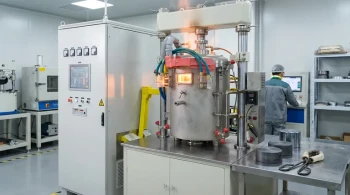
Beyond the Furnace: How Hot Pressing Unlocks Near-Perfect Material Density
3 months agoExplore how hot pressing combines heat and pressure to overcome traditional sintering, achieving superior density and strength in advanced materials.
Learn More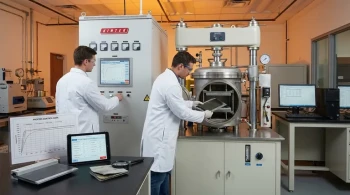
Beyond the Datasheet: Mastering the Physics and Psychology of Hot Pressing
3 months agoHot pressing success isn't about universal numbers, but mastering the interplay of material properties, process goals, and precision equipment.
Learn More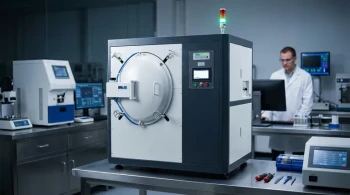
The Power of Nothing: How Vacuum Furnaces Master Material Purity
3 months agoVacuum furnaces aren't just for heating; they create a pristine environment to prevent oxidation, enabling unparalleled material purity and control.
Learn More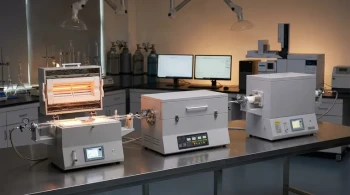
Beyond Heat: Mastering the Controlled Universe of the Tube Furnace
3 months agoDiscover how horizontal tube furnaces create a controlled universe for materials science, ensuring precision by mastering temperature and atmosphere.
Learn More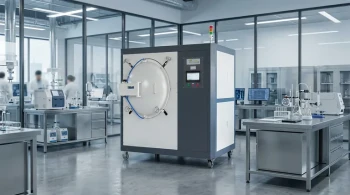
Empty Space, Full Power: The Counterintuitive Genius of Vacuum Furnaces
3 months agoVacuum furnaces leverage low-pressure physics for intrinsically safe, highly efficient heat transfer, eliminating the explosion risks of traditional boilers.
Learn More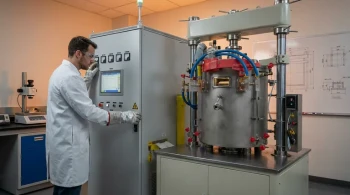
Hot Pressing Polymers: The Deliberate Pursuit of Flawless Material Integrity
3 months agoExplore the hot pressing process for polymers—a method prioritizing material integrity over speed to eliminate internal defects for critical applications.
Learn More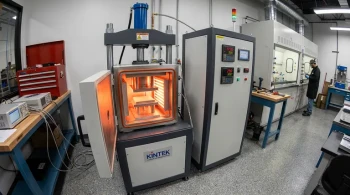
Beyond Sintering: The Brutal Elegance of Hot Pressing
3 months agoExplore how hot pressing forges ultra-dense materials by conquering porosity, creating components with superior strength and wear resistance.
Learn More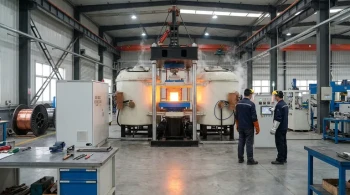
Strength vs. Complexity: The Hidden Reason Your Critical Metal Parts Are Failing
3 months agoStop guessing why your high-strength metal parts fail. Discover the root cause in your manufacturing process and how hot press forging provides the definitive solution.
Learn More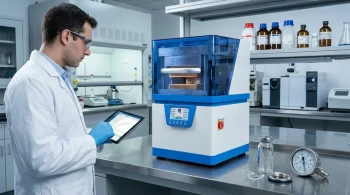
Why Your Lab Equipment Suddenly Fails: It’s Not a Quality Issue, It’s a Physics Problem
3 months agoFrustrated by lab equipment failures? Discover the hidden physics of pressure vs. strength that causes them and learn how precision-engineered solutions prevent delays.
Learn More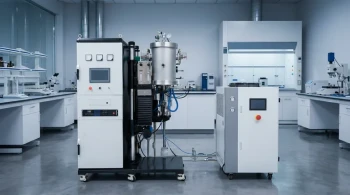
The Tyranny of the Atmosphere: Engineering Perfection in a Vacuum
3 months agoA vacuum furnace isn't just about heat; it's about control. Discover why removing the air is the key to material purity, strength, and perfection.
Learn More