Toggle Categories
Get Instant Support
Choose your preferred way to connect with our team
Response Time
Within 8 hours on working days, 24 hours on holidays
Sample Preparation
KinTek sample preparation equipment includes sample crushing,milling, as while as while sieving equipment, hydraulic press equipment includes manual press, electric press, isostatic press, hot press and press filtering machine.





Sample Preparation

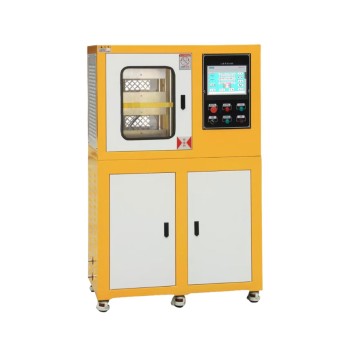
Rubber Vulcanizer Vulcanizing Machine Plate Vulcanizing Press for Lab
Item Number: RPM-01
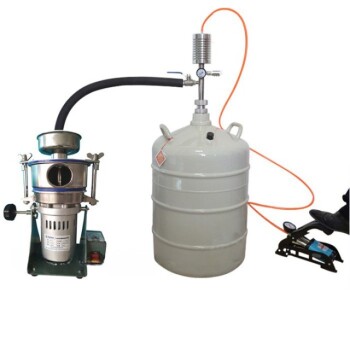
Small Cryogenic Grinder Cryomill Cryogrinder with Liquid Nitrogen for Laboratory Use
Item Number: KT-DC31
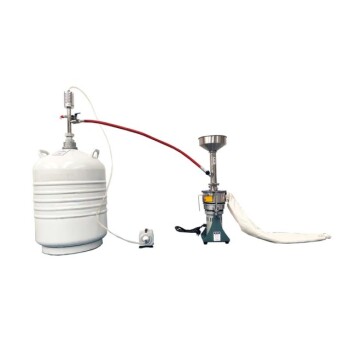
Liquid Nitrogen Cryogenic Grinder Mill Cryomill Airflow Ultrafine Pulverizer
Item Number: KT-CG03
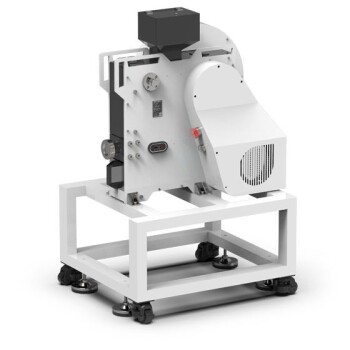
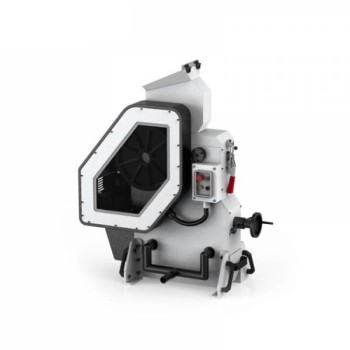
Laboratory Jaw Crusher
Item Number: KT-EP
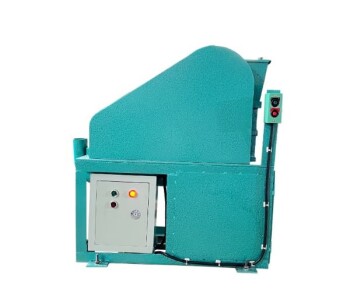
Sealed Jaw Crusher High Efficiency Environmental Protection Safe and Reliable
Item Number: KT-EPB
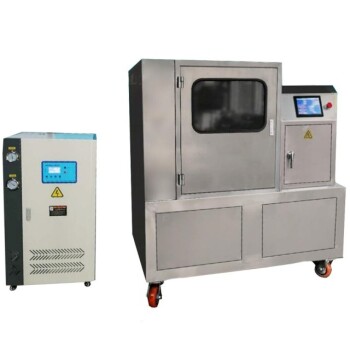
Low-Temperature Water-Cooled Touchscreen Vibratory Ultrafine Pulverizer
Item Number: KT-CG04
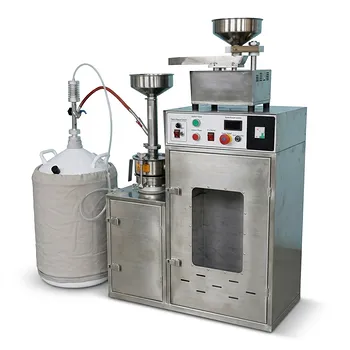
Liquid Nitrogen Cryogenic Grinder Mill Cryomill with Screw Feeder
Item Number: KT-CG02

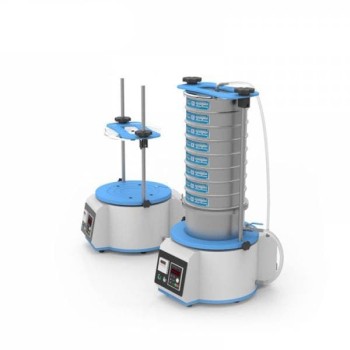
Laboratory Test Sieves and Sieving Machines
Item Number: KT-RCZ

kbr pellet press 2t
Item Number: PCKBR

15T Programmable Lab Hot Press
Item Number: KT-PCV1

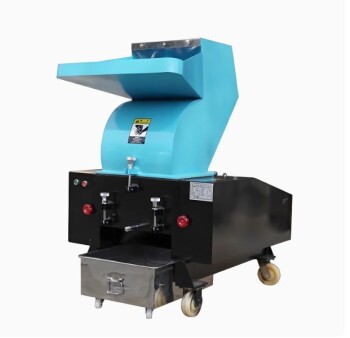
Powerful Plastic Crusher Machine
Item Number: KT-HX
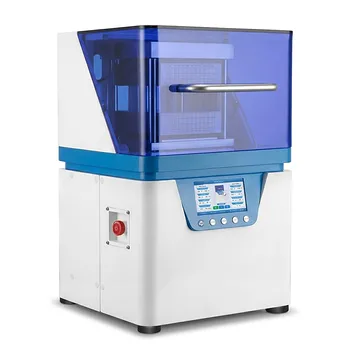

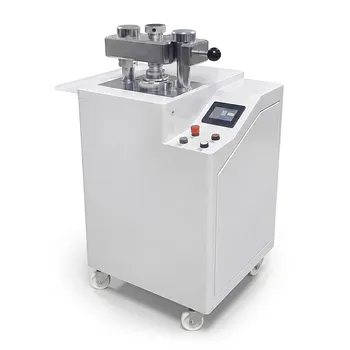
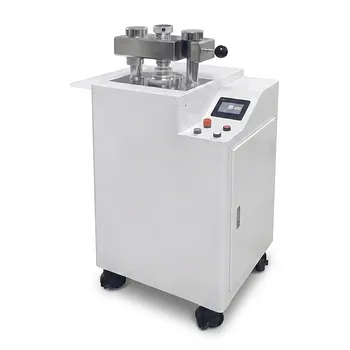
Automatic Fluorescent Pellet Press for XRF Sample Preparation
Item Number: KT-YGB

Touchscreen Automatic Vacuum Heat Press
Item Number: PPZC
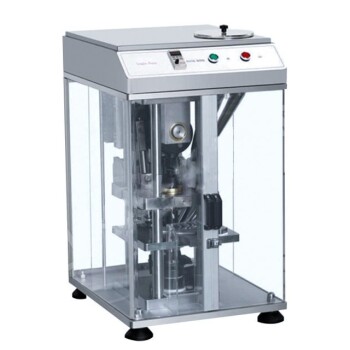
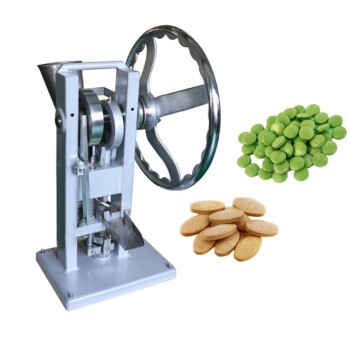
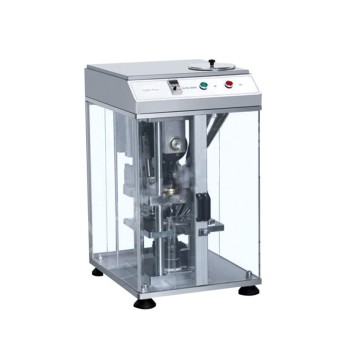
Single Punch Manual Tablet Press Machine TDP Tablet Punching Machine
Item Number: TPM-02

Single Punch Electric Tablet Press Machine TDP Tablet Punching Machine
Item Number: TPM-04

Automatic Laboratory Heat Press Machine
Item Number: PZAH
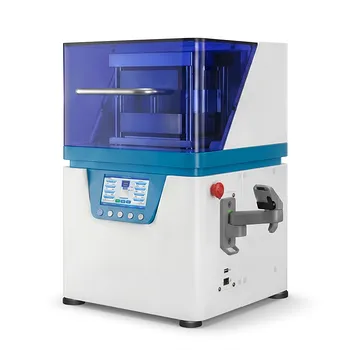
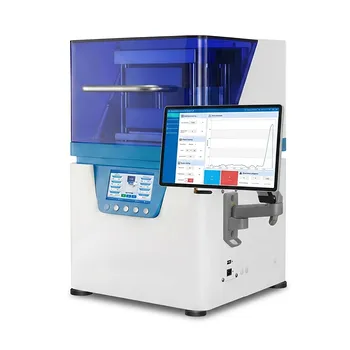
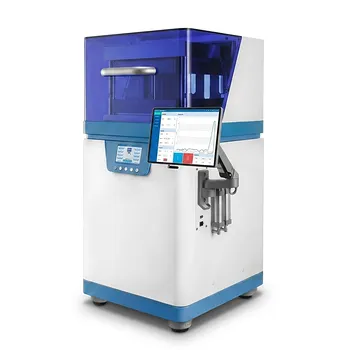

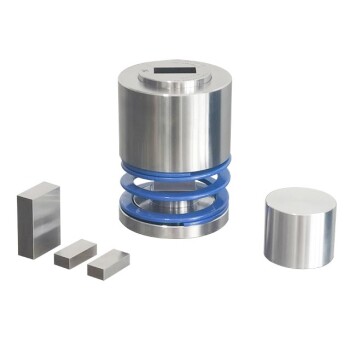
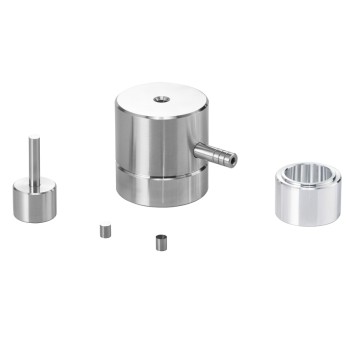
Square Bidirectional Pressure Mold for Lab Use
Item Number: PMS-F

Round Bidirectional Press Mold for Lab
Item Number: PMSY

Laboratory Jar Mill with Agate Grinding Jar and Balls
Item Number: AG-1
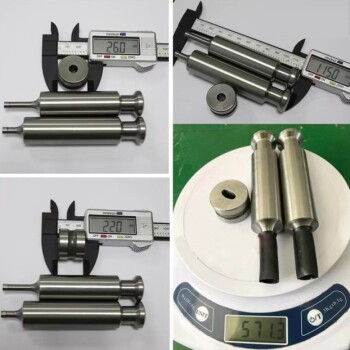
Multi-Punch Rotary Tablet Press Mold Ring for Rotating Oval and Square Molds
Item Number: TPM-06

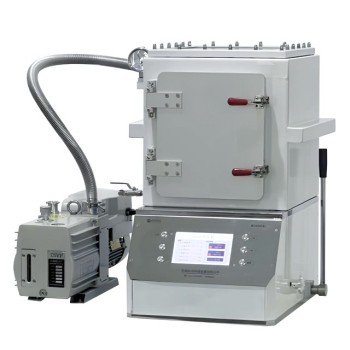
Vacuum Cold Mounting Machine for Sample Preparation
Item Number: KT-CXQ
REQUEST A QUOTE
Our professional team will reply to you within one business day. Please feel free to contact us!
Related Articles

Forging Perfection in a Void: The Physics of Ultra-Dense Materials
Discover how vacuum hot pressing furnaces use heat, pressure, and a pure vacuum to forge ultra-dense, high-purity advanced materials.
More Than a Squeeze: The Physics and Psychology of the Hydraulic Hot Press
An insight into the hydraulic hot press, where Pascal's Law meets thermodynamics to reshape materials. A story of force, heat, and control.
Perfection vs. Purpose: The Engineer's Choice Between Hot and Cold Pressing
Explore the metallurgical choice between hot and cold pressing—a decision between achieving absolute density and engineering intelligent porosity.
Beyond the Furnace: How Pressure Unlocks Ultimate Ceramic Performance
Hot pressing combines heat and pressure to overcome the limits of traditional sintering, creating near-perfectly dense ceramics with superior strength.
Shaping Potential vs. Forging Perfection: A Guide to Isostatic Pressing
Explore the critical difference between Cold Isostatic Pressing (CIP) for forming parts and Hot Isostatic Pressing (HIP) for perfecting them.
Beyond Max Pressure: Why Your Hot Isostatic Pressing (HIP) Results Are Inconsistent—And How to Fix Them
Struggling with inconsistent HIP results? Discover why max pressure isn't the answer and how mastering pressure, temperature, and time is the key to perfect material densification.
The Unseen Dance of Heat and Pressure: Mastering Material Transformation
Explore the physics of hot pressing, where controlled heat and pressure transform materials. Learn how this technology solves key manufacturing challenges.
When a Perfect Environment Becomes a Trap: The Physics of Vacuum Brazing
Vacuum brazing creates ultra-pure joints but can destroy certain alloys. Understand the physics of vapor pressure to avoid catastrophic failures.
Why Your Compression Tests Are Failing (And It’s Not Your Sample’s Fault)
Discover the hidden reason your material compression tests fail and damage equipment. Learn why the press platen, not the sample, is often the culprit.
Beyond the Furnace: How Hot Pressing Unlocks Near-Perfect Material Density
Explore how hot pressing combines heat and pressure to overcome traditional sintering, achieving superior density and strength in advanced materials.
Beyond the Datasheet: Mastering the Physics and Psychology of Hot Pressing
Hot pressing success isn't about universal numbers, but mastering the interplay of material properties, process goals, and precision equipment.
Hot Pressing Polymers: The Deliberate Pursuit of Flawless Material Integrity
Explore the hot pressing process for polymers—a method prioritizing material integrity over speed to eliminate internal defects for critical applications.
Beyond Sintering: The Brutal Elegance of Hot Pressing
Explore how hot pressing forges ultra-dense materials by conquering porosity, creating components with superior strength and wear resistance.
The Purity Paradox: Choosing the Heart of Your Vacuum Hot Press Furnace
The choice between graphite, molybdenum, and induction heating in a vacuum furnace is a critical balance of temperature, purity, and process speed.
The Hydraulic Dilemma: Uniaxial vs. Biaxial Pressure in Advanced Materials Manufacturing
Choosing between uniaxial and biaxial pressure in a vacuum hot press is a critical trade-off between simplicity and ultimate material uniformity.
More Than Heat and Pressure: Why Your Material Bonding Fails and How to Fix It
Struggling with inconsistent results from your hot press? Discover why the root cause isn't your process but a lack of precision, and how to solve it.
The Pressure to Be Perfect: A Guide to Hot Pressing Materials
Hot pressing methods forge dense materials, but choosing between Uniaxial, HIP, and SPS involves critical trade-offs in cost, uniformity, and speed.
Perfection Under Pressure: The Engineer's Choice Between Hot Pressing and Sintering
Hot pressing achieves near-perfect material density at high cost, while cold pressing & sintering offers a scalable, cost-effective alternative.
Taming the Void: The Art and Science of Hot Press Moulding
Explore how hot press moulding uses heat and pressure to eliminate microscopic voids, achieving superior density and strength in advanced materials.
Shaping Form vs. Forging Substance: The Critical Divide Between Hot Pressing and Compression Molding
It's not the tools, but the goal that separates hot pressing from compression molding. Are you shaping a part or perfecting a material's density?