A vacuum furnace is a type of furnace that surrounds the material being processed with a vacuum. This prevents oxidation, heat loss through convection, and contamination. The furnace can heat materials like metals and ceramics to high temperatures up to 3,000 °C with select materials. The vacuum level and maximum furnace temperature depend on the melting points and vapor pressures of the heated materials. Vacuum furnaces are used for processes like annealing, brazing, sintering, and heat treatment. The process can be computer-controlled, ensuring repeatability, and the product is low in contamination and high in purity.
Toggle Categories
Get Instant Support
Choose your preferred way to connect with our team
-
Get Free Quote Fill out form for detailed pricing
-
Send Email Detailed inquiry support
-
WhatsApp Quick mobile chat
Response Time
Within 8 hours on working days, 24 hours on holidays
vacuum furnace

Lab-Scale Vacuum Induction Melting Furnace
Item Number: KT-VI

Vacuum Hot Press Furnace Heated Vacuum Press Machine Tube Furnace
Item Number: KT-VTP

Vacuum Hot Press Furnace Machine for Lamination and Heating
Item Number: KT-VLP

Vacuum Sealed Continuous Working Rotary Tube Furnace Rotating Tube Furnace
Item Number: KT-CRTF

Vacuum Heat Treat and Molybdenum Wire Sintering Furnace for Vacuum Sintering
Item Number: KT-VMW

2200 ℃ Tungsten Vacuum Heat Treat and Sintering Furnace
Item Number: KT-VT


Horizontal High Temperature Graphite Vacuum Graphitization Furnace
Item Number: GF-01

Vacuum Heat Treat and Sintering Furnace with 9MPa Air Pressure
Item Number: KT-APS

Laboratory High Pressure Vacuum Tube Furnace
Item Number: KT-PTF


Laboratory Vacuum Tilt Rotary Tube Furnace Rotating Tube Furnace
Item Number: KT-RTF
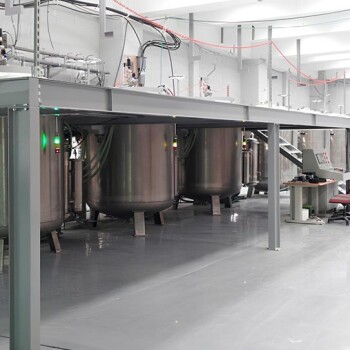
Graphite Vacuum Furnace Negative Material Graphitization Furnace
Item Number: GF-04

Vertical High Temperature Graphite Vacuum Graphitization Furnace
Item Number: GF-05

Graphite Vacuum Continuous Graphitization Furnace
Item Number: GF-07

Graphite Vacuum Furnace IGBT Experimental Graphitization Furnace
Item Number: GF-02

Large Vertical Graphite Vacuum Graphitization Furnace
Item Number: GF-08

Vacuum Heat Treat Furnace with Ceramic Fiber Liner
Item Number: KT-VF

Vacuum Arc Induction Melting Furnace
Item Number: KT-VA

Vacuum Heat Treat Sintering Brazing Furnace
Item Number: KT-BF
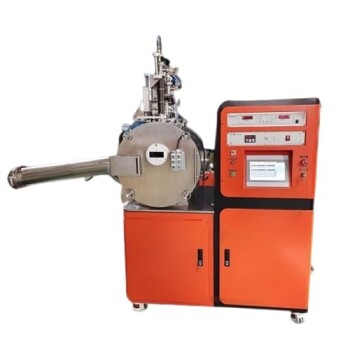
Vacuum Induction Melting Spinning System Arc Melting Furnace
Item Number: KT-VIS

Dental Porcelain Zirconia Sintering Ceramic Vacuum Press Furnace
Item Number: KT-DP10
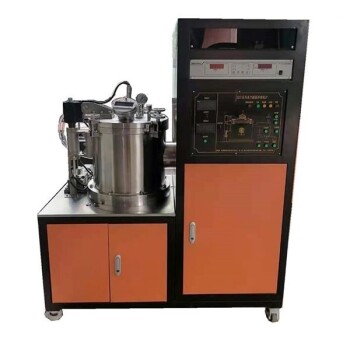
Vacuum Heat Treat Furnace and Levitation Induction Melting Furnace
Item Number: KT-VIL

Vacuum Dental Porcelain Sintering Furnace
Item Number: KT-DV10
We have the best Vacuum Furnace solutions for your unique requirements. Our custom vacuum furnaces are engineered to meet almost any customer requirement. We offer a range of shapes and sizes, multiple hot zone options, and manual or automatic flow controls. Our extensive portfolio virtually guarantees there is an appropriate standard solution that will meet your needs. We build vacuum furnaces operating at pressures as low as 10-11 Torr (mBar) with an operating range from room temperature to a maximum temperature of 3000 °C (5432°F) for our tungsten hot zones and 2200 °C (3992°F) for our graphite hot zones in a rough vacuum level (10-2 Torr/mbar).
Applications of Vacuum Furnace
- Annealing
- Brazing
- Sintering
- Heat treatment
- Hardening
- Tempering
- Aging
- Nitriding
- Carburizing
- Quenching
Advantages of Vacuum Furnace
- Allows heating of metals to high temperatures with minimal contamination problems due to the absence of oxygen.
- Provides uniform high temperatures and precise temperature control for producing high-quality materials with consistent properties.
- Low contamination from carbon, oxygen, and other gases due to the vacuum atmosphere.
- Quick quenching or cooling of the product is possible to shorten process cycle times.
- Computer-controlled to ensure repeatable performance for consistent quality output.
- Can heat materials up to temperatures as high as 3,000 °C (5,432 °F) with select materials.
- Commercially available vacuum pumping systems can reach vacuum levels as low as 1×10⁻¹¹ torrs (1.3×10⁻¹¹ mbar; 1.3×10⁻¹⁴ atm).
- Vacuum pumping systems remove low temperature by-products from the process materials during heating, resulting in a higher purity end product.
- Used for a wide range of industrial processes, such as heat treatment, sintering, brazing, and annealing.
- Typically made of refractory materials, such as graphite or ceramic, that can withstand the extreme temperatures and vacuum environment.
Our Vacuum Furnace is the perfect solution for your unique projects. Our extensive product line provides a standard solution to fit your needs. However, for more unconventional applications, our custom design service comes in handy. Our custom vacuum furnaces are engineered for your specific project, no matter how unconventional it may be. These furnaces are designed for multiple processes, available in vertical or horizontal loading, and come in a range of shapes and sizes. In addition, we offer automatic flow controls and multiple hot zone options. The best part? Our Vacuum Furnace is very advantageous in terms of price and offers a complete customisation service.
FAQ
What Is A Vacuum Furnace Used For?
A vacuum furnace is used for high-temperature processing of materials in a controlled environment without any contamination. It operates by surrounding the product with a vacuum, which prevents oxidation and heat loss from the product through convection. This furnace is commonly used for heat treatment of steel alloys at temperatures below 1200 °C. High-temperature vacuum furnaces can reach temperatures up to 3000°C and are used for industrial processes such as sintering, brazing, annealing, and heat treatment with high consistency and low contamination. The ability to achieve uniform heating across the entire workpiece is a key benefit of using a high-temperature vacuum furnace.
What Is The Process Of A Vacuum Furnace?
The process of a vacuum furnace involves loading the parts into the chamber and creating a vacuum inside it by utilizing a vacuum pump. The next step is to heat the parts using temperature controls, which can reach between 1,500 and 5,400 degrees Fahrenheit. This process eliminates the possibility of oxidation and contamination, resulting in a higher purity end product. After heating, the parts are cooled and finished before being removed from the vacuum furnace. The furnace consists of various components, including the vacuum system, furnace shell, electric heating element, temperature controls, power supply system, and transport apparatus.
What Gas Is Used In A Vacuum Furnace?
Different gases can be used in a vacuum furnace depending on the application. In general, vacuum furnaces can work with gases or mixtures such as Argon, Nitrogen, Hydrogen, Carbon Monoxide, Helium, among others. The use of these gases allows for heat treatment in a defined, mostly non-oxidizing atmosphere, which is required for various applications such as vacuum soldering and brazing, vacuum annealing, and sintering. Additionally, it is possible to work with a defined oxygen concentration that is different from the air composition.
What Is The Heating Element Used In A Vacuum Furnace?
The heating element in a vacuum furnace is critical to its proper functioning, and is dependent on factors such as maximum operating temperature, power load, partial pressure and quench gases, and life expectancy. Vacuum furnaces are heated by electric resistance elements made from a variety of materials, including high-temperature metallic alloys such as stainless steel, nickel-chromium, molybdenum, tungsten, tantalum, or of non-metallic materials such as graphite and silicon carbide. The choice of material for the heating element is important in maximizing its longevity, reliability, efficiency, and ultimately the process results.
REQUEST A QUOTE
Our professional team will reply to you within one business day. Please feel free to contact us!
Related Articles

The Architecture of Heat: Why Vacuum Furnace Temperature is a Design Choice, Not Just a Number
Vacuum furnaces operate from 500°C to over 2200°C. Discover how hot zone materials and process requirements dictate the thermal range you actually need.
Read more
The Anatomy of Control: Engineering a Perfect Thermal Universe in a Tube Furnace
A deep dive into the tube furnace's layered design, exploring how its physical anatomy creates a perfectly controlled environment for high-temperature work.
Read more
The Architecture of Heat: Why Vacuum Furnace Temperature is a Design Choice
Vacuum furnace temperature isn't a single metric—it's a design constraint. From 1315°C annealing to 2400°C sintering, discover how process dictates equipment.
Read more
An Anatomy of Control: The Interconnected Systems of a Vacuum Furnace
A vacuum furnace isn't a box, but an ecosystem. Discover how its interconnected systems create the perfect environment for material transformation.
Read more
The Architecture of Emptiness: Why Vacuum Level is a Decision, Not Just a Number
Vacuum levels define material purity. We explore the engineering trade-offs between rough vacuum and ultra-high vacuum, and how to choose the right system.
Read more
The Geometry of Pressure: Why Your Part's Shape Dictates Its Sintering Method
Explore the critical difference between uniaxial hot pressing and isostatic HIP. Learn how pressure geometry impacts density, performance, and cost.
Read more
The Physics of Free Fall: Simulating Industrial Chaos in the Lab
Industrial reactors are chaotic black boxes. The drop tube furnace is the scientific scalpel that dissects combustion and kinetics, one particle at a time.
Read more
Density Without Destruction: The Quiet Power of Hot Press Sintering
Hot press sintering uses simultaneous heat and pressure to achieve near-perfect material density while inhibiting the grain growth that weakens components.
Read more
The Thermal Ceiling: Why Vacuum Furnace Limits Are Defined by Physics, Not Specs
Maximum vacuum furnace temperature isn't just a number; it's a material limit. Explore how heating elements like Tungsten and Graphite define performance and purity.
Read more
The Quiet Force: Forging Superior Metal Components with Controlled Pressure
Discover how hot press forging uses slow, continuous pressure to refine a metal's grain structure, creating parts with unparalleled strength and reliability.
Read more
The Physics of Limits: Understanding Tube Furnace Temperatures
Tube furnace temperature isn't just a number—it's defined by heating element materials. Discover how to match HRE, SiC, and MoSi2 elements to your research needs.
Read more
The Heart of the Void: Why Your Vacuum Furnace's Heating Element Defines Your Results
A guide to choosing between graphite, molybdenum, and CFC heating elements for vacuum furnaces, balancing purity, cost, and process speed.
Read more
The Invisible Variable: Selecting the Heart of Your Vacuum Furnace
The heating element isn't just a component; it dictates your furnace's chemistry. Explore the engineering trade-offs between Graphite, Molybdenum, and Composites.
Read more
Beyond the Gauge: The Systematic Hunt for Vacuum Furnace Leaks
Master vacuum furnace leak detection by choosing the right method for hot/cold and pressure states. A systematic guide to finding invisible faults.
Read more
The Art of Isolation: Why Drop Tube Furnaces Define Industrial Efficiency
Discover how Drop Tube Furnaces (DTF) bridge the gap between microscopic particle kinetics and massive industrial combustion systems.
Read more
When Failure is Not an Option: The Physics of Hot Press Forging
Hot press forging trades dimensional precision for superior strength, creating complex, failure-resistant metal parts for critical applications.
Read more
The Glass Ceiling: Why the Physics of Quartz Dictates Your Furnace Strategy
The true limit of a tube furnace isn't the heating element—it's the vessel. Discover why 1100°C is the critical threshold for quartz integrity.
Read more
The Red Line: Why the "Maximum Temperature" is a Myth
A furnace's temperature limit isn't just a number—it's a relationship between materials and safety margins. Here is how to engineer longevity into your lab choice.
Read more
Why Your Lab Press Results are Warped, Bubbled, and Inconsistent—And How to Fix It for Good
Stop wasting materials. Learn why inconsistent heat and pressure ruin lab press results and how the right equipment ensures flawless bonding and molding.
Read more
The Art of Nothing: Mastering the Physics of the Vacuum Furnace
In advanced metallurgy, air is the enemy. Discover how vacuum furnaces utilize the "physics of nothingness" to achieve unparalleled material purity and strength.
Read more
Hot Tags
vacuum induction melting furnace
vacuum arc melting furnace
vacuum induction furnace
vacuum furnace
atmosphere furnace
hydraulic heated lab press
vacuum hot press furnace
tube furnace
rotary tube furnace
rotary furnace
cvd furnace
mpcvd machine
graphitization furnace
graphite vacuum furnace
advanced ceramics
battery material
dental furnace