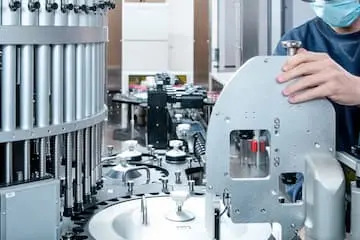
A vacuum furnace is a type of furnace that surrounds the material being processed with a vacuum. This prevents oxidation, heat loss through convection, and contamination. The furnace can heat materials like metals and ceramics to high temperatures up to 3,000 °C with select materials. The vacuum level and maximum furnace temperature depend on the melting points and vapor pressures of the heated materials. Vacuum furnaces are used for processes like annealing, brazing, sintering, and heat treatment. The process can be computer-controlled, ensuring repeatability, and the product is low in contamination and high in purity.
Toggle Categories
Get Instant Support
Choose your preferred way to connect with our team
-
Get Free Quote Fill out form for detailed pricing
-
Send Email Detailed inquiry support
-
WhatsApp Quick mobile chat
Response Time
Within 8 hours on working days, 24 hours on holidays
vacuum furnace

Lab-Scale Vacuum Induction Melting Furnace
Item Number: KT-VI

Vacuum Hot Press Furnace Heated Vacuum Press Machine Tube Furnace
Item Number: KT-VTP

Vacuum Hot Press Furnace Machine for Lamination and Heating
Item Number: KT-VLP

2200 ℃ Tungsten Vacuum Heat Treat and Sintering Furnace
Item Number: KT-VT

Vacuum Heat Treat and Sintering Furnace with 9MPa Air Pressure
Item Number: KT-APS

Vacuum Heat Treat and Molybdenum Wire Sintering Furnace for Vacuum Sintering
Item Number: KT-VMW

Horizontal High Temperature Graphite Vacuum Graphitization Furnace
Item Number: GF-01
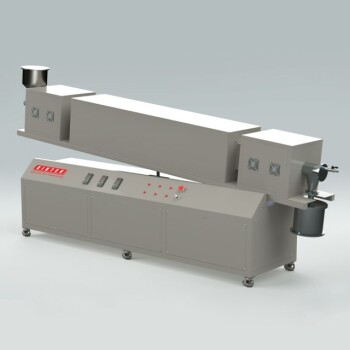
Vacuum Sealed Continuous Working Rotary Tube Furnace Rotating Tube Furnace
Item Number: KT-CRTF
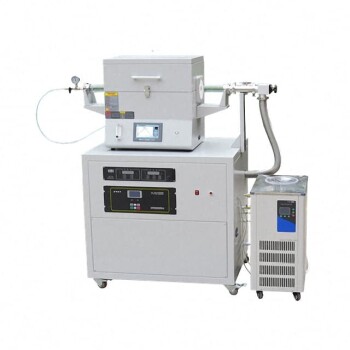

Laboratory High Pressure Vacuum Tube Furnace
Item Number: KT-PTF
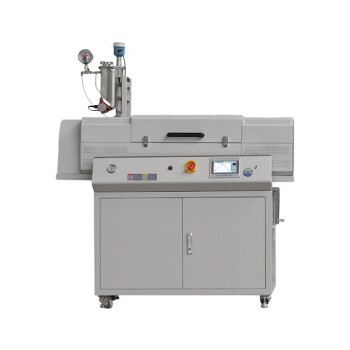
Laboratory Vacuum Tilt Rotary Tube Furnace Rotating Tube Furnace
Item Number: KT-RTF

Graphite Vacuum Furnace IGBT Experimental Graphitization Furnace
Item Number: GF-02
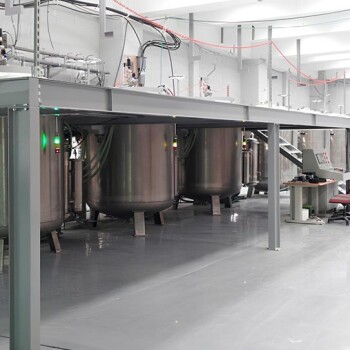
Graphite Vacuum Furnace Negative Material Graphitization Furnace
Item Number: GF-04

Vertical High Temperature Graphite Vacuum Graphitization Furnace
Item Number: GF-05


Graphite Vacuum Continuous Graphitization Furnace
Item Number: GF-07

Large Vertical Graphite Vacuum Graphitization Furnace
Item Number: GF-08

Dental Porcelain Zirconia Sintering Ceramic Vacuum Press Furnace
Item Number: KT-DP10

Vacuum Arc Induction Melting Furnace
Item Number: KT-VA
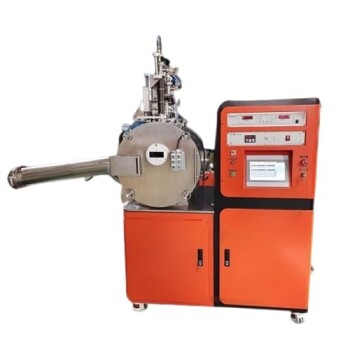
Vacuum Induction Melting Spinning System Arc Melting Furnace
Item Number: KT-VIS
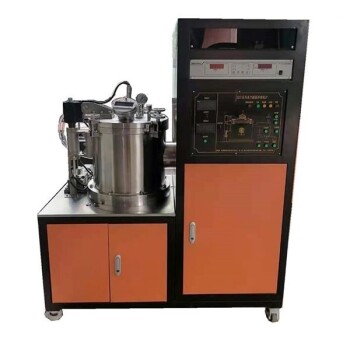
Vacuum Heat Treat Furnace and Levitation Induction Melting Furnace
Item Number: KT-VIL

Vacuum Heat Treat Furnace with Ceramic Fiber Liner
Item Number: KT-VF

Vacuum Heat Treat Sintering Brazing Furnace
Item Number: KT-BF

Vacuum Dental Porcelain Sintering Furnace
Item Number: KT-DV10
We have the best Vacuum Furnace solutions for your unique requirements. Our custom vacuum furnaces are engineered to meet almost any customer requirement. We offer a range of shapes and sizes, multiple hot zone options, and manual or automatic flow controls. Our extensive portfolio virtually guarantees there is an appropriate standard solution that will meet your needs. We build vacuum furnaces operating at pressures as low as 10-11 Torr (mBar) with an operating range from room temperature to a maximum temperature of 3000 °C (5432°F) for our tungsten hot zones and 2200 °C (3992°F) for our graphite hot zones in a rough vacuum level (10-2 Torr/mbar).
Applications of Vacuum Furnace
- Annealing
- Brazing
- Sintering
- Heat treatment
- Hardening
- Tempering
- Aging
- Nitriding
- Carburizing
- Quenching
Advantages of Vacuum Furnace
- Allows heating of metals to high temperatures with minimal contamination problems due to the absence of oxygen.
- Provides uniform high temperatures and precise temperature control for producing high-quality materials with consistent properties.
- Low contamination from carbon, oxygen, and other gases due to the vacuum atmosphere.
- Quick quenching or cooling of the product is possible to shorten process cycle times.
- Computer-controlled to ensure repeatable performance for consistent quality output.
- Can heat materials up to temperatures as high as 3,000 °C (5,432 °F) with select materials.
- Commercially available vacuum pumping systems can reach vacuum levels as low as 1×10⁻¹¹ torrs (1.3×10⁻¹¹ mbar; 1.3×10⁻¹⁴ atm).
- Vacuum pumping systems remove low temperature by-products from the process materials during heating, resulting in a higher purity end product.
- Used for a wide range of industrial processes, such as heat treatment, sintering, brazing, and annealing.
- Typically made of refractory materials, such as graphite or ceramic, that can withstand the extreme temperatures and vacuum environment.
Our Vacuum Furnace is the perfect solution for your unique projects. Our extensive product line provides a standard solution to fit your needs. However, for more unconventional applications, our custom design service comes in handy. Our custom vacuum furnaces are engineered for your specific project, no matter how unconventional it may be. These furnaces are designed for multiple processes, available in vertical or horizontal loading, and come in a range of shapes and sizes. In addition, we offer automatic flow controls and multiple hot zone options. The best part? Our Vacuum Furnace is very advantageous in terms of price and offers a complete customisation service.
FAQ
What Is A Vacuum Furnace Used For?
A vacuum furnace is used for high-temperature processing of materials in a controlled environment without any contamination. It operates by surrounding the product with a vacuum, which prevents oxidation and heat loss from the product through convection. This furnace is commonly used for heat treatment of steel alloys at temperatures below 1200 °C. High-temperature vacuum furnaces can reach temperatures up to 3000°C and are used for industrial processes such as sintering, brazing, annealing, and heat treatment with high consistency and low contamination. The ability to achieve uniform heating across the entire workpiece is a key benefit of using a high-temperature vacuum furnace.
What Is The Process Of A Vacuum Furnace?
The process of a vacuum furnace involves loading the parts into the chamber and creating a vacuum inside it by utilizing a vacuum pump. The next step is to heat the parts using temperature controls, which can reach between 1,500 and 5,400 degrees Fahrenheit. This process eliminates the possibility of oxidation and contamination, resulting in a higher purity end product. After heating, the parts are cooled and finished before being removed from the vacuum furnace. The furnace consists of various components, including the vacuum system, furnace shell, electric heating element, temperature controls, power supply system, and transport apparatus.
What Gas Is Used In A Vacuum Furnace?
Different gases can be used in a vacuum furnace depending on the application. In general, vacuum furnaces can work with gases or mixtures such as Argon, Nitrogen, Hydrogen, Carbon Monoxide, Helium, among others. The use of these gases allows for heat treatment in a defined, mostly non-oxidizing atmosphere, which is required for various applications such as vacuum soldering and brazing, vacuum annealing, and sintering. Additionally, it is possible to work with a defined oxygen concentration that is different from the air composition.
What Is The Heating Element Used In A Vacuum Furnace?
The heating element in a vacuum furnace is critical to its proper functioning, and is dependent on factors such as maximum operating temperature, power load, partial pressure and quench gases, and life expectancy. Vacuum furnaces are heated by electric resistance elements made from a variety of materials, including high-temperature metallic alloys such as stainless steel, nickel-chromium, molybdenum, tungsten, tantalum, or of non-metallic materials such as graphite and silicon carbide. The choice of material for the heating element is important in maximizing its longevity, reliability, efficiency, and ultimately the process results.
REQUEST A QUOTE
Our professional team will reply to you within one business day. Please feel free to contact us!
Related Articles

The Unseen Physics of Perfection: Mastering Heat, Pressure, and Time
A deep dive into how hot press machines work, exploring the critical interplay of heat, pressure, and time that defines quality and prevents failure.
Read more
The Architecture of Heat: Why Control Outweighs Power in Tube Furnaces
In tube furnace selection, maximum temperature is only half the story. Discover why heating zone configuration is the true architect of thermal precision.
Read more
The Architecture of Nothingness: Mastering Atmospheres in Vacuum Tube Furnaces
Discover how vacuum tube furnaces create precise reaction environments. From high vacuum to reactive gases, learn how to control the invisible.
Read more
Beyond Heat: How Pressure Forges Near-Perfect Materials
Hot pressing uses uniaxial pressure with heat to eliminate porosity, achieving near-theoretical material density faster than sintering alone.
Read more
The Thermodynamics of a Perfect Seal: A Component-Level Approach to Sterilization
Learn why autoclaving your entire electrolytic cell destroys the seal. A guide to understanding material properties and protecting your experiments.
Read more
The Art of the Void: Engineering Perfection in a Vacuum
Discover how vacuum furnaces leverage the power of nothingness to achieve oxidation-free purity, thermal uniformity, and absolute process control.
Read more
The Metallurgist's Dilemma: When a Perfect Vacuum Destroys the Perfect Alloy
Choosing a vacuum furnace isn't about maximum power. Too high a vacuum can cause essential elements to boil away from your material. Precision is key.
Read more
The Thermodynamics of Patience: Respecting the Tube Furnace
A tube furnace is a precision instrument, not an oven. Discover why thermal shock is the enemy and how the psychology of patience saves your lab budget.
Read more
The Physics of Permanence: How Hot Presses Forge the Modern World
Hot presses use controlled heat and pressure to create permanent bonds. Discover how this transformative technology enables everything from electronics to advanced materials.
Read more
The Invisible Variable: Why Electrolytic Cell Hygiene Defines Data Integrity
Master the art of electrolytic cell maintenance. Discover how a strict cleaning protocol prevents cross-contamination and secures reproducible electrochemical results.
Read more
Beyond Heat: The Tube Furnace as a Controlled Micro-Environment
Discover how a tube furnace's unique ability to control both temperature and atmosphere makes it indispensable for high-purity material synthesis.
Read more
The Art of the Void: Mastering Vacuum Furnace Leak Detection
Protect your research integrity. Learn the systemic approach to vacuum furnace leak detection—from Rate-of-Rise protocols to Helium spectrometry.
Read more
Heating by Light: The Physics of Precision in a Vacuum Furnace
Vacuum furnaces use thermal radiation, not air, for heat transfer. This line-of-sight process enables unparalleled precision and purity.
Read more
The Ritual of Clarity: A Systemic Approach to Cleaning Furnace Tubes
Cleaning a furnace tube isn't just maintenance; it's calibration. Learn the diagnostic process for quartz and alumina tubes to prevent contamination.
Read more
The Silent Feedback Loop: Why Precision is a System, Not a Switch
Precision in a tube furnace isn't about raw power; it's about the dialogue between the thermocouple and the PID controller. Discover the engineering behind thermal stability.
Read more
More Than Nothing: The Art of Partial Pressure in High-Temperature Furnaces
Discover how partial pressure in vacuum furnaces prevents material damage and ensures uniform heating—a technique where adding gas is more precise than removing it.
Read more
The Art of the Void: Why Absence Creates the Strongest Bonds
Discover how vacuum furnace brazing utilizes the absence of atmosphere to create metallurgically pure, flux-free joints that defy traditional welding limitations.
Read more
The Anatomy of Control: Why Every Component in a Tube Furnace Matters
A tube furnace isn't just a heater; it's a modular system where each component—from tube to flange—is a decision impacting process control.
Read more
The Glass Ceiling: Navigating the True Thermal Limits of Quartz Tube Furnaces
The 1200°C limit on a quartz tube is not a guarantee—it is a variable. Learn how purity, atmosphere, and time dictate the true lifespan of your furnace.
Read more
Creating Perfection in a Void: The Physics and Psychology of the Vacuum Furnace
Discover how vacuum tube furnaces create oxygen-free environments to prevent contamination and enable high-purity materials synthesis.
Read more
Hot Tags
vacuum induction melting furnace
vacuum arc melting furnace
vacuum induction furnace
vacuum furnace
atmosphere furnace
hydraulic heated lab press
vacuum hot press furnace
tube furnace
rotary tube furnace
advanced ceramics
graphitization furnace
graphite vacuum furnace
rotary furnace
cvd furnace
mpcvd machine
battery material
dental furnace