All Questions
How Efficient Is Pyrolysis? A Strategic Guide To Maximizing Output
Pyrolysis efficiency depends on feedstock, technology, and goals. Learn how to optimize for energy, material recovery, or waste reduction.
What Is The Main Difference Between Gasification And Pyrolysis? Choosing The Right Biomass Conversion Process
Gasification uses oxygen to produce syngas for power, while pyrolysis, without oxygen, creates bio-oil, bio-char, and gas. Learn which is right for you.
What Are The Advantages Of Pyrolysis Over Gasification? Maximize Product Value And Energy Storage
Discover the key benefits of pyrolysis vs. gasification, including the production of storable bio-oil and biochar for enhanced energy recovery and versatility.
Why Is Pyrolysis Better Than Gasification? For Versatile, Storable Bio-Products
Compare pyrolysis vs. gasification: pyrolysis yields storable bio-oil & bio-char, while gasification focuses on immediate syngas for power.
What Are The Disadvantages Of A Variable Speed Furnace? Higher Cost Vs. Superior Comfort
Explore the key drawbacks of variable speed furnaces, including higher upfront costs and complex ECM motor repairs, to make an informed HVAC decision.
What Is A Rotary Retort Furnace? Achieve Superior Uniformity In Continuous Heat Treatment
Discover how a rotary retort furnace ensures uniform heating & efficient processing of powders, granules & small parts in a controlled atmosphere.
What Is The End Result Of Pyrolysis? Converting Waste Into Bio-Char, Bio-Oil, And Syngas
Pyrolysis transforms waste into valuable products: solid bio-char, liquid bio-oil, and combustible syngas. Learn how to control the output for your needs.
Why Is Pyrolysis Getting Interesting In Recent Times? Unlock Waste-To-Value Solutions For A Circular Economy
Discover how pyrolysis converts waste plastics & biomass into fuels, chemicals, and biochar, driving circular economy and carbon sequestration goals.
What Is The History Of Pyrolysis Technology? From Wood Distillation To Modern Waste Valorization
Explore the evolution of pyrolysis technology from 1930s fuel production to today's efficient systems for renewable energy and circular economy solutions.
What Are The Advantages Of Spray Pyrolysis? Achieve Cost-Effective, Scalable Thin Film Production
Discover the key benefits of spray pyrolysis: cost-effectiveness, simple setup, and scalability for large-area thin film deposition in electronics and materials science.
What Is Spray Pyrolysis Method? A Guide To Precision Thin Film & Powder Synthesis
Learn how spray pyrolysis creates thin films and powders from liquid precursors. Discover its applications in solar cells, sensors, and advanced materials.
What Are The Disadvantages Of Spray Pyrolysis? Key Challenges For Thin-Film Quality
Explore the main drawbacks of spray pyrolysis, including film non-uniformity, thermal stress, and precursor limitations affecting thin-film deposition.
What Are The Different Types Of Reactors In Plastic Pyrolysis? Choose The Right System For Your Waste
Explore batch, semi-batch, and continuous pyrolysis reactors (rotary kiln, auger, fluidized-bed) to efficiently convert plastic waste into fuel and chemicals.
What Is The Efficiency Of Biomass Pyrolysis? Maximizing Bio-Oil, Bio-Char, And Syngas Yields
Learn how biomass pyrolysis efficiency is measured by energy conversion, mass yield, and economics. Discover the trade-offs between bio-oil, bio-char, and syngas production.
What Are The Benefits Of Biomass Pyrolysis? Transform Waste Into Sustainable Energy & Economic Assets
Discover how biomass pyrolysis converts organic waste into bio-oil, biochar, and syngas, creating economic value and reducing carbon emissions.
What Is The Problem With Pyrolysis Oil? Key Challenges Of Bio-Oil As A Fuel
Explore the main issues with pyrolysis oil, including chemical instability, high production costs, and the need for extensive refining before use.
How Does Biomass Pyrolysis Work? Turn Organic Waste Into Bio-Oil, Bio-Char, And Syngas
Learn how biomass pyrolysis converts organic materials like wood and agricultural waste into valuable bio-oil, bio-char, and syngas in an oxygen-free reactor.
What Is Biomass Pyrolysis Used For? Turn Waste Into Renewable Energy And Valuable Products
Biomass pyrolysis converts organic waste into bio-oil, biochar, and syngas for energy, soil enhancement, and carbon sequestration.
What Is A Biomass Pyrolysis Plant? Turn Waste Into Renewable Energy & Biochar
Learn how biomass pyrolysis plants convert organic waste into biochar, bio-oil & syngas. Explore the process, outputs, and key considerations for implementation.
How Is Biomass Converted Into Biofuels? Unlock The Path From Plant Matter To Renewable Fuel
Explore the two main pathways—biochemical and thermochemical—for converting biomass like crops and wood into biofuels such as ethanol and biodiesel.
What Is Pyrolysis Of Biomass For Biofuels Production? Converting Waste Into Renewable Energy
Learn how pyrolysis thermally decomposes biomass into bio-crude oil, a key intermediate for producing advanced, sustainable biofuels.
What Are The Steps Of Biomass Pyrolysis? Turn Waste Into Biochar, Bio-Oil & Biogas
Learn the key steps of biomass pyrolysis: preparation, thermal decomposition, and product separation to create valuable biochar, bio-oil, and biogas.
What Are The Emissions From Pyrolysis Of Wood? Understanding Voc And Particulate Matter Risks
Learn about the primary emissions from wood pyrolysis, including volatile organic compounds (VOCs) and particulate matter, and how to control them.
What Is The Temperature Range Of Pyrolysis Of Wood? Control Temperature To Target Biochar, Bio-Oil, Or Syngas
Wood pyrolysis ranges from 400°C to 900°C. Learn how temperature dictates product yield: biochar at lower temps, bio-oil & syngas at higher temps.
How Do You Make Biochar Pyrolysis? A Guide To Converting Biomass Into Stable Carbon
Learn how to produce biochar via pyrolysis: heating biomass without oxygen to create a carbon-rich solid for soil enhancement and carbon sequestration.
What Equipment Is Used In Pyrolysis? Choosing The Right Reactor For Your Feedstock And Products
Learn about the core components of a pyrolysis system, including reactors like fluidized-bed and rotary kiln, and how to select the right equipment for your goals.
What Is A Rotary Tube Furnace? Achieve Superior Uniformity For Powders And Granules
Discover how a rotary tube furnace provides dynamic, uniform heating for powders and granules, ensuring consistent results in processes like battery material production.
What Is A Rotary Heat Type Furnace? The Ultimate Guide To Uniform Heating & Mixing
Discover how a rotary furnace's tumbling action ensures uniform heating for powders and granules, delivering superior batch consistency and process efficiency.
What Is The Purpose Of A Rotary Furnace? Achieve Unmatched Heating Uniformity For Powders & Parts
Discover how a rotary furnace uses rotation and tumbling to provide uniform heat for sintering, metal treatment, and chemical synthesis with high consistency.
What Is The Use Of A Rotary Furnace? Achieve Unmatched Process Uniformity For Your Materials
Discover how rotary furnaces use rotation for uniform heating, efficient gas-solid reactions, and continuous high-volume processing of solids.
What Are The Disadvantages Of A Rotary Furnace? Key Limitations In Maintenance And Material Handling
Explore the main drawbacks of rotary furnaces, including high maintenance, material degradation risks, and operational costs compared to static alternatives.
What Is The Capacity Of A Rotary Furnace? Choose Between Batch Or Continuous Processing
Learn how rotary furnace capacity is defined by design: batch models (620-1740 ml) for labs or continuous models for high-throughput production.
How Does A Tilting Furnace Work? A Guide To Hydraulic & Mechanical Pouring Systems
Learn how tilting furnaces use hydraulic or mechanical systems for safe, controlled pouring of molten metal. Compare mechanisms for your application.
What Is The Temperature Of A Rotary Hearth Furnace? Find The Right Heat For Your Process
Learn how rotary furnace temperature varies by type and application, from low-heat drying to high-temperature smelting. Choose the right furnace for your needs.
How Does A Rotary Hearth Furnace Work? Achieve Continuous, High-Volume Thermal Processing
Discover how a rotary hearth furnace operates with a rotating hearth through fixed temperature zones for uniform, continuous heat treatment and high throughput.
How Does A Rotary Furnace Work? A Guide To Continuous Heat Processing & Mixing
Learn how rotary furnaces use rotation and inclination to uniformly heat, mix, and transport bulk materials like powders and minerals in a continuous process.
What Are The Advantages Of A Rotary Furnace? Achieve Superior Mixing, Heating, And Process Control
Discover the key benefits of rotary furnaces: superior thermal uniformity, efficient gas interaction, and consistent product quality for powders and granules.
What Are The Advantages And Disadvantages Of Rotary Furnace? Maximize Uniformity & Efficiency In Thermal Processing
Explore the pros and cons of rotary furnaces, including superior temperature uniformity, efficient heat transfer, and trade-offs like mechanical complexity.
What Is The Temperature Of The Rotary Furnace? It Depends On The Heating Method
Rotary furnace temperatures range from 1000°C to over 1800°C. Learn how heating method determines the maximum temperature for your application.
What Fuel Does A Rotary Furnace Use? Maximize Process Efficiency With Versatile Fuel Options
Explore the fuel flexibility of rotary furnaces, from solid and liquid to gaseous fuels, and how to choose the right one for your material processing needs.
What Are The Advantages Of A Rotary Furnace? Achieve Superior Homogeneity & Efficiency For Powders & Granules
Discover the key benefits of rotary furnaces, including superior temperature uniformity, enhanced gas interaction, and simultaneous heating & mixing for powders and bulk solids.
What Is A Rotary Furnace? Achieve Superior Uniformity For Your Industrial Processes
Discover how a rotary furnace uses a rotating chamber to ensure uniform heating and mixing for granular materials, boosting efficiency and product quality.
How Hot Is An Industrial Kiln? The Critical Temperatures For Cement, Ceramics, And More.
Industrial kilns operate from 900°C to over 1700°C. Learn the specific temperatures for cement, ceramics, bricks, and glass production.
Is Pyrolysis Costly? Unlocking The True Economics Of Waste-To-Energy Technology
Explore the capital vs. operational costs of pyrolysis plants and learn how revenue from oil, char, and gate fees determines long-term profitability.
What Are The Three Stages Of Pyrolysis? Turn Waste Into Biochar, Bio-Oil & Syngas
Learn the 3 stages of pyrolysis: drying, thermal decomposition, and product collection. Understand how to optimize for biochar, bio-oil, or syngas.
What Is The Difference Between Fast Pyrolysis And Slow Pyrolysis? Choose The Right Process For Your Biofuel Goals
Learn the key differences between fast and slow pyrolysis: fast maximizes liquid bio-oil, while slow optimizes solid biochar for carbon sequestration.
What Is Fast Pyrolysis An Overview? A Rapid Process For Converting Biomass To Bio-Oil
Fast pyrolysis rapidly converts biomass into bio-oil, bio-char, and syngas in an oxygen-free environment at 400-550°C. Learn how it works and its advantages.
What Is Biomass Pyrolysis Oil? A Guide To Bio-Oil Production, Uses, And Challenges
Learn about biomass pyrolysis oil (bio-oil): how it's made from organic waste, its properties, potential uses for heat and chemicals, and key challenges.
What Is The Fast Pyrolysis Process? Convert Biomass To Liquid Bio-Oil Efficiently
Fast pyrolysis rapidly heats biomass without oxygen to produce high yields of bio-oil. Learn how this process works and its applications for renewable energy.
What Is A Pyrolysis Reactor? A Guide To Converting Waste Into Valuable Resources
Learn how a pyrolysis reactor thermally decomposes biomass, plastic, or tires without oxygen to produce bio-oil, syngas, and biochar.
What Is The Theory Of Gasification? Mastering The Conversion Of Biomass And Waste To Syngas
Learn how gasification converts biomass, coal, or waste into syngas via partial oxidation. Explore the 4 stages, key reactions, and practical applications.
How Does A Continuous Furnace Work? Unlock High-Volume, Consistent Thermal Processing
Discover how continuous furnaces operate as thermal assembly lines for high-throughput sintering, annealing, and brazing with superior consistency and energy efficiency.
What Are The Advantages Of A Continuous Furnace? Achieve High-Volume, Consistent Thermal Processing
Discover the key benefits of continuous furnaces: superior process consistency, high throughput, and operational efficiency for industrial-scale production.
Related Products
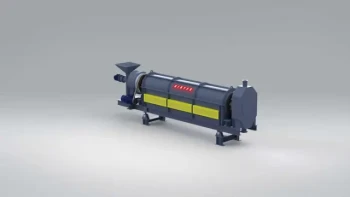
Electric Rotary Kiln Small Rotary Furnace for Activated Carbon Regeneration
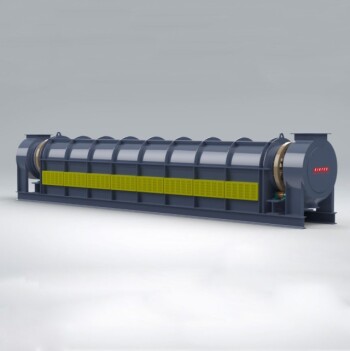
Electric Rotary Kiln Pyrolysis Furnace Plant Machine Calciner Small Rotary Kiln Rotating Furnace

Electric Rotary Kiln Continuous Working Small Rotary Furnace Heating Pyrolysis Plant

Electric Rotary Kiln Small Rotary Furnace Biomass Pyrolysis Plant

Laboratory Vacuum Tilt Rotary Tube Furnace Rotating Tube Furnace
