Toggle Categories
Get Instant Support
Choose your preferred way to connect with our team
-
Get Free Quote Fill out form for detailed pricing
-
Send Email Detailed inquiry support
-
WhatsApp Quick mobile chat
Response Time
Within 8 hours on working days, 24 hours on holidays
Thermal Equipment
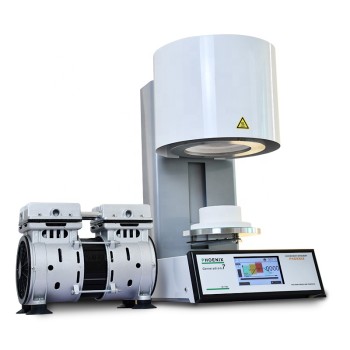
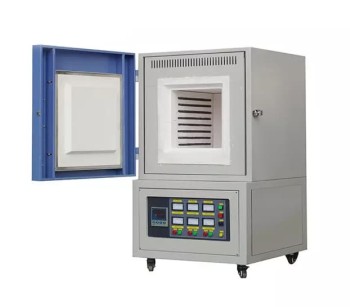
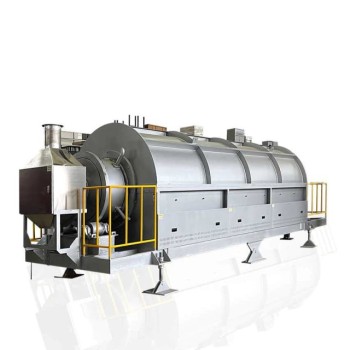
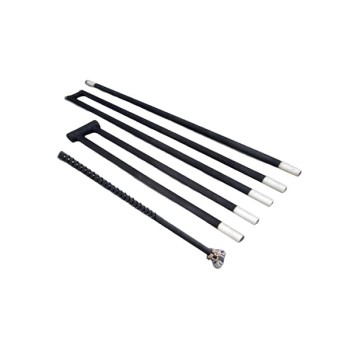
KinTek supplies a broad range of high-temperature furnaces, including lab, pilot production, and industrial production furnaces, with a temperature range of up to 3000 ℃. One of KinTek's advantages is the ability to create custom-made furnaces tailored to specific functions, such as different heating methods and speeds, extra high and dynamic vacuums, controlled atmospheres and gas circuits, automated mechanical structures, and software and hardware development.
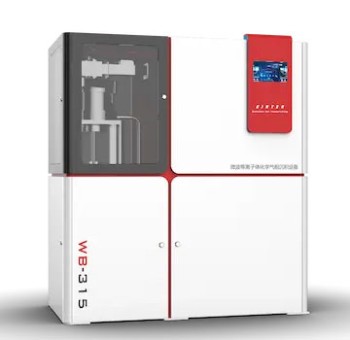
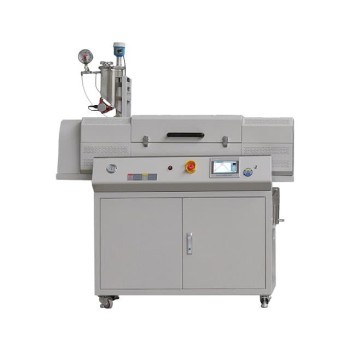
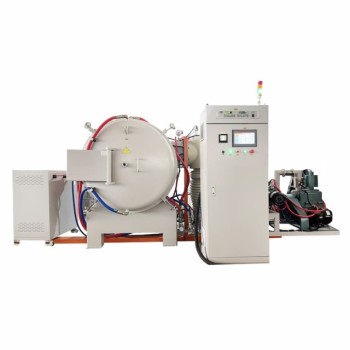
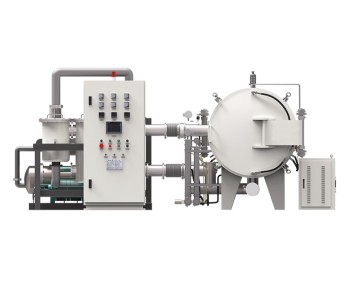
Thermal Equipment

Lab-Scale Vacuum Induction Melting Furnace
Item Number: KT-VI

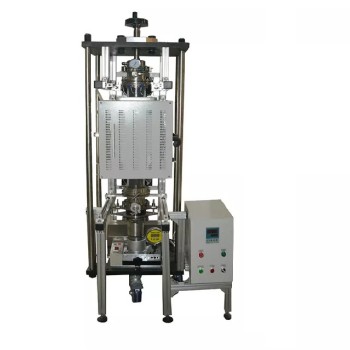
Vacuum Hot Press Furnace Heated Vacuum Press Machine Tube Furnace
Item Number: KT-VTP

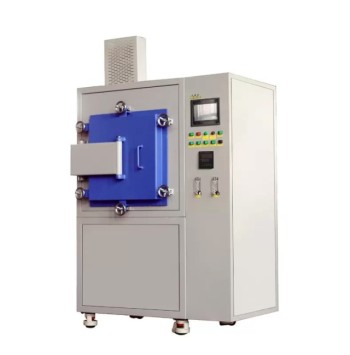
Vacuum Hot Press Furnace Machine Heated Vacuum Press
Item Number: KT-VHP

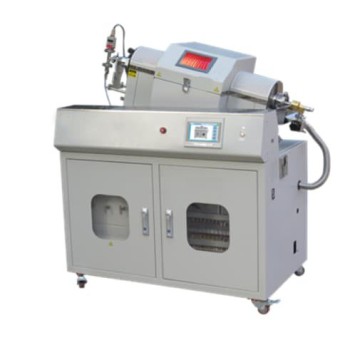
Electric Rotary Kiln Continuous Working Small Rotary Furnace Heating Pyrolysis Plant
Item Number: KT-RFTF

Vacuum Hot Press Furnace Machine for Lamination and Heating
Item Number: KT-VLP


RF PECVD System Radio Frequency Plasma-Enhanced Chemical Vapor Deposition RF PECVD
Item Number: KT-RFPE
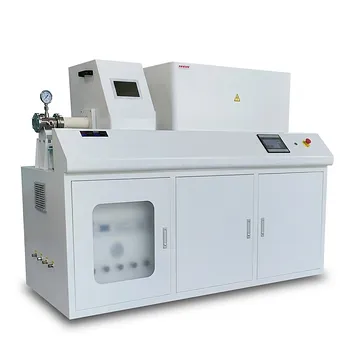


600T Vacuum Induction Hot Press Furnace for Heat Treat and Sintering
Item Number: KT-VH

Vacuum Heat Treat and Molybdenum Wire Sintering Furnace for Vacuum Sintering
Item Number: KT-VMW

Small Vacuum Heat Treat and Tungsten Wire Sintering Furnace
Item Number: KT-VTW

Vacuum Heat Treat and Sintering Furnace with 9MPa Air Pressure
Item Number: KT-APS

Molybdenum Vacuum Heat Treat Furnace
Item Number: KT-VM

2200 ℃ Graphite Vacuum Heat Treat Furnace
Item Number: KT-VG

2200 ℃ Tungsten Vacuum Heat Treat and Sintering Furnace
Item Number: KT-VT

Rotary Tube Furnace Split Multi Heating Zone Rotating Tube Furnace
Item Number: KT-MRTF

Vacuum Sealed Continuous Working Rotary Tube Furnace Rotating Tube Furnace
Item Number: KT-CRTF
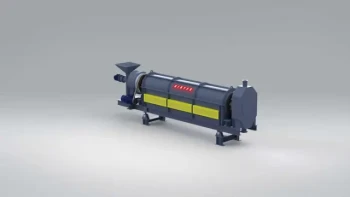
Electric Rotary Kiln Small Rotary Furnace for Activated Carbon Regeneration
Item Number: KT-CRF
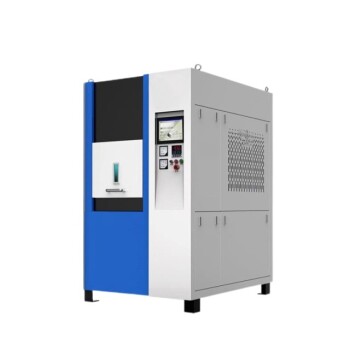
Spark Plasma Sintering Furnace SPS Furnace
Item Number: KTSP

Horizontal High Temperature Graphite Vacuum Graphitization Furnace
Item Number: GF-01
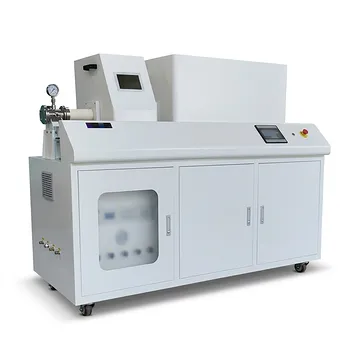
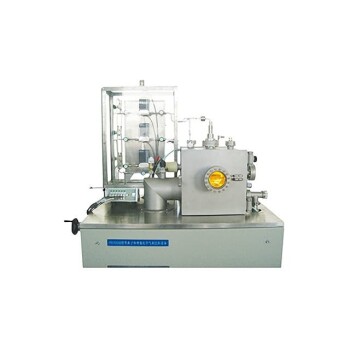
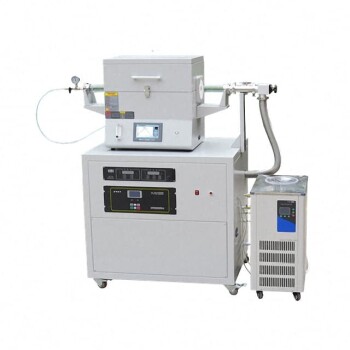


Electric Rotary Kiln Small Rotary Furnace Biomass Pyrolysis Plant
Item Number: RBPF

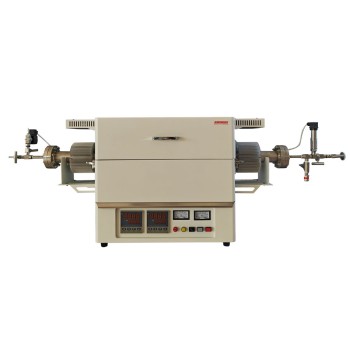
Vertical Laboratory Tube Furnace
Item Number: KT-VTF

1700℃ Laboratory High Temperature Tube Furnace with Alumina Tube
Item Number: KT-TF17

Laboratory Rapid Thermal Processing (RTP) Quartz Tube Furnace
Item Number: KT-RTP

REQUEST A QUOTE
Our professional team will reply to you within one business day. Please feel free to contact us!
Related Articles

The Architecture of Heat: Choosing Between Control and Capacity
Deciding between a tube furnace and a muffle furnace isn't about temperature—it's about atmosphere. Discover the engineering trade-offs between vacuum precision and volume.
The Architecture of Heat: Why Vacuum Furnace Temperature is a Design Choice, Not Just a Number
Vacuum furnaces operate from 500°C to over 2200°C. Discover how hot zone materials and process requirements dictate the thermal range you actually need.
The Anatomy of Control: Engineering a Perfect Thermal Universe in a Tube Furnace
A deep dive into the tube furnace's layered design, exploring how its physical anatomy creates a perfectly controlled environment for high-temperature work.
The Architecture of Heat: Why Vacuum Furnace Temperature is a Design Choice
Vacuum furnace temperature isn't a single metric—it's a design constraint. From 1315°C annealing to 2400°C sintering, discover how process dictates equipment.
An Anatomy of Control: The Interconnected Systems of a Vacuum Furnace
A vacuum furnace isn't a box, but an ecosystem. Discover how its interconnected systems create the perfect environment for material transformation.
The Architecture of Emptiness: Why Vacuum Level is a Decision, Not Just a Number
Vacuum levels define material purity. We explore the engineering trade-offs between rough vacuum and ultra-high vacuum, and how to choose the right system.
The Geometry of Pressure: Why Your Part's Shape Dictates Its Sintering Method
Explore the critical difference between uniaxial hot pressing and isostatic HIP. Learn how pressure geometry impacts density, performance, and cost.
The Physics of Free Fall: Simulating Industrial Chaos in the Lab
Industrial reactors are chaotic black boxes. The drop tube furnace is the scientific scalpel that dissects combustion and kinetics, one particle at a time.
Density Without Destruction: The Quiet Power of Hot Press Sintering
Hot press sintering uses simultaneous heat and pressure to achieve near-perfect material density while inhibiting the grain growth that weakens components.
The Thermal Ceiling: Why Vacuum Furnace Limits Are Defined by Physics, Not Specs
Maximum vacuum furnace temperature isn't just a number; it's a material limit. Explore how heating elements like Tungsten and Graphite define performance and purity.
The Quiet Force: Forging Superior Metal Components with Controlled Pressure
Discover how hot press forging uses slow, continuous pressure to refine a metal's grain structure, creating parts with unparalleled strength and reliability.
The Physics of Limits: Understanding Tube Furnace Temperatures
Tube furnace temperature isn't just a number—it's defined by heating element materials. Discover how to match HRE, SiC, and MoSi2 elements to your research needs.
The Heart of the Void: Why Your Vacuum Furnace's Heating Element Defines Your Results
A guide to choosing between graphite, molybdenum, and CFC heating elements for vacuum furnaces, balancing purity, cost, and process speed.
The Invisible Variable: Selecting the Heart of Your Vacuum Furnace
The heating element isn't just a component; it dictates your furnace's chemistry. Explore the engineering trade-offs between Graphite, Molybdenum, and Composites.
Beyond the Gauge: The Systematic Hunt for Vacuum Furnace Leaks
Master vacuum furnace leak detection by choosing the right method for hot/cold and pressure states. A systematic guide to finding invisible faults.
The Art of Isolation: Why Drop Tube Furnaces Define Industrial Efficiency
Discover how Drop Tube Furnaces (DTF) bridge the gap between microscopic particle kinetics and massive industrial combustion systems.
When Failure is Not an Option: The Physics of Hot Press Forging
Hot press forging trades dimensional precision for superior strength, creating complex, failure-resistant metal parts for critical applications.
The Glass Ceiling: Why the Physics of Quartz Dictates Your Furnace Strategy
The true limit of a tube furnace isn't the heating element—it's the vessel. Discover why 1100°C is the critical threshold for quartz integrity.
The Red Line: Why the "Maximum Temperature" is a Myth
A furnace's temperature limit isn't just a number—it's a relationship between materials and safety margins. Here is how to engineer longevity into your lab choice.
Why Your Lab Press Results are Warped, Bubbled, and Inconsistent—And How to Fix It for Good
Stop wasting materials. Learn why inconsistent heat and pressure ruin lab press results and how the right equipment ensures flawless bonding and molding.