All Questions
Why Does Pecvd Commonly Use Rf Power Input? For Precise Low-Temperature Thin Film Deposition
Learn how RF power in PECVD enables low-temperature processing, controls film density and stress, and allows deposition on heat-sensitive substrates.
What Is The Working Principle Of Pecvd? Achieve Low-Temperature, High-Quality Thin Film Deposition
Learn how Plasma-Enhanced Chemical Vapor Deposition (PECVD) uses plasma energy for low-temperature thin film deposition, ideal for sensitive electronics and solar cells.
Does Pecvd Operate At High Vacuum Or Atmospheric Pressure? Unlocking Low-Temperature Thin Film Deposition
Discover why PECVD operates under vacuum, enabling low-temperature, high-quality thin film deposition on sensitive substrates like plastics and processed wafers.
What Is The Deposition Rate Of Pecvd? A High-Speed, Low-Temperature Process You Control
PECVD deposition rate is highly variable. Learn how plasma energy enables high-speed film deposition at low temperatures (≤350°C) and how to optimize it.
What Are The Advantages Of Pecvd? Enable Low-Temperature, High-Quality Thin-Film Deposition
Discover how PECVD deposits uniform, functional thin films at low temperatures, ideal for coating heat-sensitive electronics, polymers, and glass.
What Is The Principle Of Plasma Enhanced Cvd? Enable Low-Temperature Thin Film Deposition
Learn how Plasma Enhanced CVD (PECVD) uses plasma to deposit high-quality thin films at low temperatures, ideal for sensitive substrates.
What Are The Differences Between Direct And Remote Plasma-Enhanced Cvd? Choosing The Right Pecvd Method For Your Materials
Direct vs. remote PECVD: Compare ion bombardment, deposition rates, and film quality for sensitive substrates or high-throughput applications.
What Are The Advantages Of Plasma Enhanced Cvd? Enable Low-Temperature, High-Quality Thin Film Deposition
Discover the key benefits of PECVD, including low-temperature processing, high-purity films, and compatibility with heat-sensitive materials like polymers and electronics.
What Are The Applications Of Pecvd? Essential For Semiconductors, Mems, And Solar Cells
Discover how PECVD's low-temperature process deposits critical thin films for semiconductors, MEMS, and optoelectronics without damaging delicate substrates.
What Is The Application Of Plasma Enhanced Cvd? Enable Low-Temperature Thin Film Deposition
Discover how Plasma Enhanced CVD (PECVD) enables low-temperature deposition of high-quality thin films for semiconductors, nanomaterials, and protective coatings.
What Is Plasma Enhanced Cvd With Example? Unlock Low-Temperature Thin Film Deposition
Learn how Plasma-Enhanced CVD (PECVD) deposits high-quality thin films on heat-sensitive substrates like electronics and polymers at lower temperatures.
What Materials Can Be Deposited Using Pecvd? Discover Versatile Low-Temperature Thin Films
Explore PECVD's material range: silicon dielectrics, amorphous silicon, diamond-like carbon, and more for low-temperature deposition on sensitive substrates.
How Is Pecvd Different From Cvd? Unlock Low-Temperature Thin Film Deposition
Discover the key differences between PECVD and CVD: PECVD uses plasma for low-temperature processing, ideal for heat-sensitive substrates, while CVD uses high heat for crystalline films.
What Is The Difference Between Cvd And Plasma Cvd? Unlock The Right Thin-Film Deposition Process
Learn the key difference between CVD and PECVD: thermal vs. plasma energy. Choose the right process for heat-sensitive or high-purity film applications.
What Is The Temperature Of Plasma Cvd? Unlock Low-Temp Coating For Sensitive Materials
Plasma CVD operates below 180°C, enabling high-quality coatings on heat-sensitive polymers, plastics, and alloys without thermal damage.
What Are The Disadvantages Of Plasma Enhanced Cvd? Weighing The Trade-Offs Of Low-Temperature Deposition
Explore the key drawbacks of PECVD, including film impurities, plasma-induced damage, high stress, and significant chemical safety hazards.
What Is The Process Of Plasma Deposition? A Low-Temperature Guide To Thin-Film Coating
Learn how plasma-enhanced chemical vapor deposition (PECVD) enables low-temperature, high-quality thin-film coatings on heat-sensitive materials like plastics.
What Is The Principle Of Plasma Enhanced Chemical Vapor Deposition? Achieve Low-Temperature Thin Film Deposition
Learn how PECVD uses plasma instead of heat to deposit high-quality thin films on temperature-sensitive materials at significantly lower temperatures.
What Is A Plasma Deposition Reactor? A Guide To Low-Temperature Thin-Film Coating
Learn how plasma deposition reactors use energized gas for low-temperature thin-film coatings on sensitive materials like plastics and electronics.
What Is Thin Film Deposition By Plasma? A Guide To Low-Temperature, High-Performance Coatings
Learn how plasma deposition creates thin films at low temperatures for electronics, optics, and more. Explore PVD sputtering and PECVD methods.
What Are The Advantages Of Plasma Enhanced Chemical Vapor Deposition? Enable Low-Temperature, High-Quality Film Deposition
Discover the key benefits of PECVD: deposit uniform, conformal films on temperature-sensitive substrates at significantly lower temperatures than traditional CVD.
What Is The Plasma Source? A Guide To Generating And Controlling Ionized Gas For Industrial Applications
Learn how plasma sources create and sustain ionized gas for applications like semiconductor manufacturing, material deposition, and surface treatment.
What Are The Different Types Of Plasma Sources? A Guide To Dc, Rf, And Microwave Technologies
Explore DC, RF (CCP/ICP), and Microwave plasma sources. Learn how energy coupling dictates plasma density, ion energy, and applications like etching and sputtering.
What Is The Plasma Layer Deposition Process? A Guide To High-Performance Coating Technology
Learn how plasma deposition creates ultra-thin, durable films for enhanced hardness, corrosion resistance, and conductivity in demanding applications.
What Is Plasma Chemical Vapor Deposition? A Low-Temperature Thin Film Coating Solution
Discover how Plasma-Enhanced Chemical Vapor Deposition (PECVD) enables high-quality thin film coatings on heat-sensitive materials at lower temperatures.
What Are The Disadvantages Of Plasma Enhanced Chemical Vapor Deposition? Managing The Trade-Offs Of Low-Temperature Deposition
Explore the key drawbacks of PECVD, including ion bombardment, film contamination, and system complexity, to make informed decisions for your lab processes.
What Is The Plasma Generation In Pecvd? The Core Technology For Low-Temperature Thin Films
Learn how plasma is generated in PECVD to enable low-temperature deposition of high-quality thin films on sensitive materials like plastics and electronics.
What Is Thermal Plasma Chemical Vapor Deposition? Achieve Superior Coatings For Demanding Applications
Discover how Thermal Plasma CVD (TP-CVD) uses high-energy plasma to deposit ultra-hard, dense, and high-performance thin films at rapid rates for industrial applications.
What Temperature Is Dlc Applied? Achieve Superior Coatings Without Compromising Substrate Integrity
DLC coatings are applied at ~300°C, enabling the coating of heat-sensitive materials like aluminum and tempered steels without damage.
How Long Does Dlc Coating Last? Unlock Extreme Durability For Your Components
DLC coating lifespan depends on wear type, application, and quality. Learn how it resists abrasion, friction, and corrosion for lasting performance.
How Thick Is Dlc Coating? A Guide To Optimizing Wear Resistance And Friction
DLC coating thickness ranges from 0.25 to 5 microns. Learn how to choose the right thickness for wear resistance, low friction, or precision applications.
How Much Does Dlc Coating Cost? A Detailed Breakdown Of Pricing Factors
Understand DLC coating costs, from $50 to $1,000+, based on part size, preparation, and complexity. Get a clear pricing breakdown.
How Are Pecvd And Cvd Different? A Guide To Choosing The Right Thin-Film Deposition Process
Understand the key differences between PECVD and CVD, including temperature requirements, film properties, and substrate compatibility for your lab.
What Is Plasma Activated Vapour Deposition? A Low-Temperature Coating Solution
Discover how plasma-activated vapor deposition enables high-quality thin films on heat-sensitive materials like plastics and electronics at lower temperatures.
What Is The Pecvd Process? Achieve Low-Temperature, High-Quality Thin Film Deposition
Discover how Plasma-Enhanced Chemical Vapor Deposition (PECVD) enables low-temperature thin film coating for heat-sensitive materials like plastics and electronics.
How Does Pecvd Process Work? Achieve Low-Temperature, High-Quality Thin Films
Learn how Plasma-Enhanced Chemical Vapor Deposition (PECVD) uses plasma energy to create superior thin films at lower temperatures than traditional CVD.
What Is The Process Of Pecvd In Semiconductor? Enabling Low-Temperature Thin Film Deposition
Learn how Plasma-Enhanced Chemical Vapor Deposition (PECVD) deposits thin films on wafers at low temperatures, protecting delicate semiconductor structures.
What Is The Pecvd Technique? Unlock Low-Temperature Thin Film Deposition
Discover Plasma-Enhanced Chemical Vapor Deposition (PECVD), a key process for depositing thin films on sensitive substrates at low temperatures for microelectronics and coatings.
What Is Plasma Enhanced? A Guide To Low-Temperature, High-Precision Manufacturing
Learn how plasma-enhanced processes like PECVD and etching enable advanced manufacturing on temperature-sensitive materials for electronics and optics.
What Is Pecvd In Semiconductor? Enable Low-Temperature Thin Film Deposition For Ics
Learn how Plasma-Enhanced Chemical Vapor Deposition (PECVD) deposits uniform films at low temperatures to protect and insulate semiconductor devices.
What Is The Pecvd Method? Enable Low-Temperature, High-Quality Thin Film Deposition
Discover how Plasma-Enhanced Chemical Vapor Deposition (PECVD) enables low-temperature thin film deposition for semiconductors, solar cells, and sensitive materials.
What Is The Role Of Plasma In Pecvd? Enable Low-Temperature, High-Quality Thin Film Deposition
Learn how plasma in PECVD breaks down gases at low temperatures, enabling thin film deposition on sensitive substrates like polymers and electronics.
What Is The Temperature Of Pecvd? Enable Low-Temp Coating For Sensitive Materials
PECVD operates at 80°C-600°C, using plasma energy for low-temperature deposition on heat-sensitive substrates like polymers and semiconductors.
What Is An Example Of Pecvd? Rf-Pecvd For High-Quality Thin Film Deposition
Explore RF-PECVD and other plasma-enhanced CVD techniques for low-temperature deposition of advanced materials in electronics and MEMS.
What Are The Advantages Of Plasma Deposition? Achieve Superior, Durable Coatings For Complex Parts
Discover the key benefits of plasma deposition, including unmatched versatility, superior hardness, and scratch resistance for high-performance applications.
What Is A Plasma Coating? Transform Material Surfaces With High-Performance Thin Films
Learn how plasma coating uses energized gas to deposit thin films for extreme hardness, chemical resistance, and biocompatibility on various materials.
What Is Plasma Activated Chemical Vapor Deposition? Enable Low-Temperature Thin Film Deposition
Discover how Plasma-Enhanced Chemical Vapor Deposition (PECVD) enables high-quality thin film coating on temperature-sensitive substrates like plastics and electronics.
What Is The Pacvd Method? A Guide To Low-Temperature, High-Performance Coatings
Discover how Plasma-Assisted Chemical Vapor Deposition (PACVD) enables durable, thin-film coatings on heat-sensitive materials like plastics and aluminum.
What Is Pecvd Coating? A Low-Temperature Process For Electronics & Heat-Sensitive Materials
Discover Plasma-Enhanced Chemical Vapor Deposition (PECVD): a low-temperature process for depositing high-purity, conformal coatings on electronics and plastics.
What Is The Process Of Pacvd Coating? A Guide To Low-Temperature, High-Performance Thin Films
Learn how Plasma-Assisted Chemical Vapor Deposition (PACVD) works, its benefits for heat-sensitive materials, and step-by-step process details.
What Is The Difference Between Lpcvd And Pecvd Oxide? Choosing The Right Deposition Method For Your Thermal Budget
LPCVD vs PECVD oxide: Compare thermal vs plasma energy sources, film quality, conformality, and temperature limits for your semiconductor process.
Why Is Pecvd Better Than Cvd? Achieve Superior Low-Temperature Thin Film Deposition
Discover the key advantages of PECVD over CVD, including lower temperature processing, superior film control, and higher deposition rates for advanced manufacturing.
What Is A Pecvd System? A Guide To Low-Temperature Thin Film Deposition
Discover how Plasma-Enhanced Chemical Vapor Deposition (PECVD) systems deposit thin films at low temperatures for electronics, optics, and energy applications.
How Does Pecvd Work? Enable Low-Temperature, High-Quality Thin Film Deposition
Learn how Plasma-Enhanced Chemical Vapor Deposition (PECVD) uses plasma instead of heat to deposit thin films on temperature-sensitive materials.
What Materials Are Deposited In Pecvd? Discover The Versatile Thin-Film Materials For Your Application
Explore the materials deposited by PECVD, including silicon nitrides, oxides, amorphous silicon, and DLC coatings, for microelectronics and protective films.
What Is The Difference Between Thermal Cvd And Pecvd? Choose The Right Thin-Film Deposition Method
Thermal CVD uses high heat for crystalline films; PECVD uses plasma for low-temperature deposition on sensitive substrates. Learn the key differences.
What Is Pecvd Silicon Deposition? Achieve Low-Temperature, High-Quality Thin Films
Learn how Plasma-Enhanced Chemical Vapor Deposition (PECVD) deposits silicon films at low temperatures (200-400°C), ideal for sensitive electronics.
What Is The Hdp Deposition Process? Achieve Void-Free Thin Films For Complex Microstructures
Learn how High-Density Plasma CVD uses simultaneous deposition and etching to fill high-aspect-ratio gaps with uniform, void-free thin films.
What Is High-Density Plasma Chemical Vapor Deposition Process? Achieve Superior Thin Films At Lower Temperatures
Learn how HDP-CVD enables high-quality thin film deposition at low temperatures for sensitive semiconductor manufacturing and advanced materials.
What Materials Are Used In Pecvd? Unlock Low-Temperature Deposition For Sensitive Substrates
Explore key PECVD materials like silicon dioxide, silicon nitride, and DLC coatings for low-temperature, high-quality thin film deposition.
What Is The Difference Between Cvd And Pecvd? Choose The Right Thin-Film Deposition Method
CVD vs. PECVD: Understand the key differences in energy source, temperature, and film properties to select the best process for your substrate.
What Materials Are In Pecvd? Discover The Key Films For Low-Temperature Coating
Explore PECVD materials like Silicon Nitride, DLC, and amorphous Silicon for low-temperature deposition on sensitive substrates.
How Does Plasma Enhanced Cvd Work? Achieve Low-Temperature, High-Quality Thin Film Deposition
Learn how PECVD uses plasma to deposit thin films at low temperatures, protecting sensitive substrates and enabling advanced material coatings.
What Is Plasma In Cvd Process? Lowering Deposition Temperatures For Heat-Sensitive Materials
Learn how plasma in CVD enables low-temperature thin film deposition on heat-sensitive substrates like plastics and electronics, expanding coating possibilities.
Can Plasma Enhanced Cvd Deposit Metals? Why Pecvd Is Rarely Used For Metal Deposition
Learn why PECVD is not ideal for pure metal films and discover better alternatives like PVD and thermal CVD for high-conductivity applications.
What Is The Difference Between Plasma Cvd And Thermal Cvd? Choose The Right Method For Your Substrate
Understand the key differences between plasma and thermal CVD. Learn how to select the right method based on substrate heat tolerance and film quality requirements.
What Is Pecvd Used For? Achieve Low-Temperature, High-Performance Thin Films
Discover PECVD applications in semiconductors, protective coatings, and optics. Learn how low-temperature plasma deposition enhances material performance.
What Is Plasma Enhanced Cvd? Achieve High-Quality Thin Films At Lower Temperatures
Learn how Plasma Enhanced CVD (PECVD) deposits uniform, pure films at low temperatures, ideal for semiconductors and heat-sensitive materials.
What Is Plasma Enhanced Chemical Vapor Deposition? Achieve Low-Temperature, High-Quality Thin Films
Learn how PECVD uses plasma to deposit uniform thin films on heat-sensitive materials like plastics and semiconductors at low temperatures.
What Are Plasma Deposition Processes? Achieve High-Performance Thin Films At Lower Temperatures
Learn how plasma-enhanced PVD and CVD processes create durable coatings for sensitive materials like electronics and plastics, enabling precise film engineering.
What Is The Difference Between Pecvd And Cvd? Unlock The Right Thin-Film Deposition Method
PECVD vs. CVD: Learn the key differences in energy source, temperature, and film properties to choose the best thin-film deposition process for your application.
What Are The Benefits Of Plasma Enhanced Cvd? Achieve High-Quality, Low-Temperature Film Deposition
Discover the key advantages of PECVD: lower temperature processing, high deposition rates, and the ability to coat heat-sensitive materials like polymers.
What Is Plasma Enhanced Chemical Vapour Deposition Process? Unlock Low-Temperature, High-Quality Thin Films
PECVD is a low-temperature thin film deposition method using plasma, ideal for coating heat-sensitive materials like plastics and electronics.
Related Products

Inclined Rotary Plasma Enhanced Chemical Vapor Deposition PECVD Equipment Tube Furnace Machine

Chemical Vapor Deposition CVD Equipment System Chamber Slide PECVD Tube Furnace with Liquid Gasifier PECVD Machine
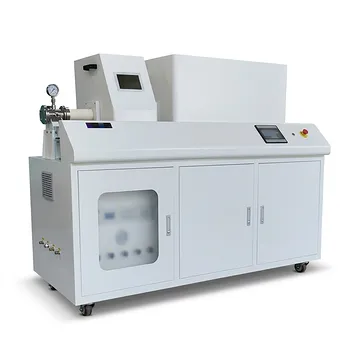
Inclined Rotary Plasma Enhanced Chemical Vapor Deposition PECVD Equipment Tube Furnace Machine
