All Questions
Why Is Pecvd Required For Siny Passivation? Preserve Thermal Budget & Achieve Superior Hydrogen Passivation
Learn why PECVD is essential for SiNy passivation. Discover benefits like low-temp processing, thermal budget preservation, and bulk hydrogenation.
How Does A Pecvd Reactor Function In Sinx Deposition? Optimize Anti-Reflection Coatings With Low-Temp Plasma
Explore how PECVD reactors deposit SiNx anti-reflection coatings at low temperatures, enhancing solar cell efficiency through hydrogen passivation.
Why Are Pecvd Systems Essential For Tandem Solar Cell Fabrication? Unlock High Efficiency With Low-Temp Processing
Learn why PECVD is vital for tandem solar cells. Discover how low-temp deposition and hydrogen passivation enhance efficiency and protect wafers.
What Is The Necessity Of Depositing A Silicon Nitride (Sinx) Thin Film Using Pecvd? Optimize Qsspc Lifetime Measurement
Learn why PECVD SiNx deposition is vital for QSSPC carrier lifetime characterization through effective surface passivation and defect reduction.
Why Is A Pecvd System Required For Vertical Graphene Synthesis? Master Directional Control For 3D Nanostructures
Discover how PECVD enables vertical graphene synthesis via plasma electric fields, offering low-temp growth and high surface area for energy storage.
How Are Film Properties Controlled Using Icpcvd? Master Precise Atomic Bonding & High-Density Plasma Deposition
Learn how ICPCVD controls film properties through plasma composition, enabling high-quality dielectric deposition at temperatures as low as 5°C.
What Are The Improvements And Applications Of Hdpcvd? Solve High-Aspect-Ratio Gap Filling In Semiconductors
Discover how High Density Plasma CVD (HDPCVD) improves film density and enables defect-free gap filling for advanced CMOS and STI applications.
What Are The Features And Applications Of Plasma Chemical Vapour Deposition (Pecvd)? High-Speed Low-Temp Film Coating
Learn how PECVD enables high-purity, dense film deposition at low temperatures (200°C-500°C) for semiconductors, solar cells, and protective layers.
What Are The Process Capabilities Of Icpcvd Systems? Achieve Low-Damage Film Deposition At Ultra-Low Temperatures
Explore ICPCVD capabilities: deposit high-quality SiO2, Si3N4, and SiC films at temperatures as low as 5°C on wafers up to 200mm.
What Is The Main Advantage Of Icpcvd? Achieve High-Quality Film Deposition At Ultra-Low Temperatures
Learn how ICPCVD uses high-density plasma to deposit high-quality, low-damage dielectric films at low temperatures for sensitive substrates.
What Are The Key Features Of High-Capacity Tubular Pecvd Equipment? Maximize Throughput For Silicon Cell Manufacturing
Learn how high-capacity tubular PECVD equipment boosts solar cell production with 110MW+ capacity and superior film uniformity.
How Does Substrate Temperature Affect The Quality Of Films In The Pecvd Process? Master Film Density & Integrity
Learn how substrate temperature influences PECVD film quality, defect density, and electrical performance for superior thin-film deposition.
How Does Air Pressure Affect The Pecvd Process? Balancing Speed And Structural Integrity
Learn how gas pressure influences deposition rates, step coverage, and film quality in PECVD to optimize your laboratory manufacturing process.
How Does Radio Frequency (Rf) Power Affect The Pecvd Process? Master Ionization For Superior Thin Film Quality
Learn how RF power magnitude and frequency control ion bombardment, film density, and deposition rates in the PECVD process to optimize performance.
How Does The Operating Frequency Of The Rf Power Supply Affect The Pecvd Process? Optimize Film Density & Uniformity
Learn how RF frequency impacts ion bombardment, film density, and uniformity in PECVD, while balancing the risk of substrate damage.
How Do Pole Plate Spacing And Reaction Chamber Size Affect Pecvd? Optimize Your Film Uniformity And Throughput
Learn how plate spacing and chamber size impact PECVD deposition uniformity, substrate damage, and overall production efficiency in semiconductor manufacturing.
What Process Factors Influence Pecvd Film Quality? Mastering Energy, Pressure, And Temperature For Superior Growth
Learn how substrate temperature, RF power, and pressure dictate PECVD film density and uniformity to optimize your material research results.
What Is Microwave Electron Cyclotron Resonance Plasma Enhanced Chemical Vapour Deposition (Mwecr-Pecvd)? | Kintek
Learn how MWECR-PECVD uses microwave energy and magnetic fields for high-density plasma deposition at low temperatures for superior thin films.
What Is Dielectric Blocking Discharge Enhanced Chemical Vapour Deposition (Dbd-Pecvd)? High-Pressure Film Uniformity
Learn how DBD-PECVD combines glow discharge uniformity with high-pressure efficiency for superior silicon thin film deposition.
What Is The Advantage Of Vhf-Pecvd Over Rf-Pecvd? Maximize Deposition Rates For Advanced Thin Film Growth
Unlock faster production cycles with VHF-PECVD. Learn how higher electron density and lower plasma temperatures outperform standard RF systems.
How Does Radio Frequency Enhanced Plasma Chemical Vapour Deposition (Rf-Pecvd) Work? Learn The Core Principles
Explore how RF-PECVD uses plasma to deposit high-quality thin films at low temperatures, comparing CCP and ICP methods for lab efficiency.
What Are The Different Types Of Plasma Enhanced Chemical Vapour Deposition (Pecvd)? Compare Rf, Vhf, And Microwave
Learn about RF-PECVD, VHF-PECVD, DBD-PECVD, and MWECR-PECVD. Compare deposition rates, film quality, and reactor designs for your lab applications.
What Is Plasma Enhanced Chemical Vapour Deposition (Pecvd)? High-Quality Film Coating At Low Temperatures
Learn how PECVD uses plasma to deposit high-performance thin films at low temperatures, ideal for heat-sensitive electronics and nanotechnology.
What Is Plasma-Enhanced Cvd (Pecvd)? The Critical Benefits For Cmos Fabrication And Thin Film Quality
Learn how PECVD utilizes plasma energy to enable low-temperature deposition, providing essential thermal management for sensitive CMOS fabrication.
What Issue Can The Presence Of Hydrogen In Plasma Gas Cause During Pecvd? Impact On Film Integrity & Device Stability
Learn how hydrogen in PECVD plasma creates parasitic Si-H bonds, leading to mechanical stress, altered conductivity, and reduced device lifespan.
What Are The Potential Disadvantages Of Pecvd? Manage Plasma Bombardment And Prevent Material Damage
Learn how plasma bombardment in PECVD can cause structural defects and how to balance low-temperature benefits with ion-induced device damage.
What Is The Significance Of Good Conformal Step Coverage Provided By Pecvd? Ensure Device Integrity And Reliability
Learn why PECVD's conformal step coverage is vital for uniform film thickness, preventing mechanical failure in complex microfabrication geometries.
What Are The Advantageous Properties Of Thin Films Deposited By Pecvd? Enhance Your Device Reliability
Discover why PECVD films offer superior dielectric quality, low mechanical stress, and excellent conformal coverage for advanced semiconductor applications.
How Does Pecvd Achieve Film Deposition At Low Temperatures? Master Low-Heat Thin Film Innovation
Learn how PECVD utilizes RF-induced glow discharge and electron impact to enable high-quality film deposition between 100°C and 400°C.
What Are The Primary Advantages Of Pecvd Compared To Other Cvd Processes? Lower Heat, Higher Efficiency
Discover why PECVD is superior for heat-sensitive substrates, offering high deposition rates at lower temperatures and excellent step coverage.
What Precursor Gases Are Used To Form Silicon Dioxide And Silicon Nitride Films Via Pecvd? Expert Precursor Guide
Learn the primary precursor gases for PECVD silicon dioxide and silicon nitride films, including silane, ammonia, and oxygen for high-quality results.
What Types Of Materials Can Be Deposited Using Pecvd? Discover Versatile Thin Film Solutions For Your Lab
Explore materials deposited via PECVD, from Silicon Nitride and Oxide to DLC. Learn how this low-temp process enhances semiconductor fabrication.
How Are Wafers And Electrodes Configured Within A Pecvd System? Mastering Parallel-Plate Architecture
Learn the essentials of PECVD electrode configuration, from parallel-plate design to plasma generation for uniform thin-film deposition.
How Does The Pecvd Process Utilize Plasma To Deposit Thin Films? Achieve High-Quality Coatings At Low Temperatures
Learn how PECVD uses plasma and RF energy to drive chemical reactions for thin-film deposition on temperature-sensitive substrates.
Why Is Plasma A Crucial Component Of The Pecvd Process? Unlocking Low-Temperature Thin Film Deposition
Learn how plasma drives chemical reactions at low temperatures in PECVD, protecting heat-sensitive substrates while ensuring film quality.
What Are The Different Types Of Plasma Used In Pecvd? Choose Between Dc, Rf, And Microwave Plasma Sources
Learn the differences between DC, RF, and Microwave plasma in PECVD. Discover how power sources impact film growth and deposition temperatures.
What Specific Types Of Thin Films Are Commonly Deposited By Pecvd Systems? Key Materials And Applications Explained
Learn about the common thin films deposited by PECVD, including SiO2, Si3N4, and a-Si, and their critical roles in semiconductor fabrication.
What Are The Common Applications Of Pecvd Systems In The Semiconductor Industry? Enhance Your Thin-Film Fabrication
Explore the critical roles of PECVD in semiconductor manufacturing, from IC dielectrics and TFTs to solar cells and wear-resistant coatings.
How Does A Pecvd System Work To Deposit A Thin Film? High-Quality Coatings At Low Temperatures
Learn how PECVD systems use RF plasma to deposit thin films at low temperatures, ensuring superior film quality and substrate protection.
What Are The Primary Components Of A Pecvd System? Key Elements For High-Performance Thin Film Deposition
Learn about the 4 essential components of a PECVD system: vacuum chambers, plasma generators, gas delivery, and control units for lab excellence.
Why Do Pecvd Systems Operate At Low Pressure And Low Temperature? Protect Sensitive Substrates With Plasma Energy
Learn why PECVD uses low pressure and low temperature to ensure film uniformity and protect delicate electronics from thermal damage.
What Are The Typical Operating Pressures And Temperatures For Pecvd Systems? Expert Guide To Optimal Parameters
Learn why PECVD operates at 200°C–500°C and 0.1–10 Torr, enabling high-quality film deposition on temperature-sensitive substrates.
What Is Plasma Enhanced Chemical Vapor Deposition (Pecvd)? High-Quality Film Deposition At Low Temperatures
Learn how PECVD uses plasma to deposit high-quality thin films at low temperatures (100°C–400°C), protecting delicate semiconductor substrates.
What Is The Role Of A Plasma Reactor In Cobalt Ferrite Synthesis? Enhance Magnetic Performance With Plasma Processing
Learn how plasma reactors refine cobalt ferrite (CoFe2O4) through non-equilibrium low-temperature plasma for superior magnetic properties.
What Is The Function Of A Microwave Pecvd System For Diamond Nanospikes? Precision 1-Step Nanostructure Synthesis
Learn how Microwave PECVD systems use high-energy plasma and nitrogen to synthesize sharp diamond nanospikes in a single, high-precision step.
What Function Does A Throttle Valve Perform During The Deposition Of Sioxcyhz Thin Films? Ensure Pressure Stability.
Learn how throttle valves regulate pumping speed and chamber pressure to ensure uniform plasma discharge and high-quality SiOxCyHz film deposition.
How Does A 13.56 Mhz Radio Frequency (Rf) Power Supply Facilitate The Densification Of Organosilicon Films?
Learn how 13.56 MHz RF power supplies drive organosilicon film densification through plasma ionization and molecular cross-linking.
What Is The Role Of A Vacuum Pumping System In Organosilicon Pecvd? Achieve 1.9 Pa For Ultra-Pure Film Deposition
Learn how rotary and turbomolecular pump systems enable high-purity organosilicon PECVD by reaching 1.9 Pa base pressure for HMDSO and Argon mixing.
How Does Rf Frequency In Pecvd Influence Silicon Nitride Microstructure? Optimize Your Film Density & Stress
Learn how adjusting RF power frequency in PECVD controls ion bombardment to engineer silicon nitride film density, stress, and stoichiometry.
How Does Pecvd Equipment Facilitate The Directional Growth Of Carbon Nanotubes? Achieve Precision Vertical Alignment
Learn how PECVD equipment uses electric fields to guide vertical CNT growth at low temperatures, ensuring high-density, aligned nanotube arrays.
How Does Pacvd Equipment Improve Dlc Coatings? Unlock Low Friction And High Heat Resistance
Learn how PACVD equipment enhances DLC coatings through low-temperature plasma energy, silicon doping, and precision vacuum controls.
Why Is It Necessary To Use A Vacuum Pump To Reach Low Pressures Before Pecvd For Mof Modification? Ensure Deep Diffusion
Learn why a vacuum of ≤0.20 mbar is critical for MOF modification via PECVD to ensure deep pore diffusion, plasma purity, and uniform coating.
Why Must A Rotating Reaction Vessel Be Utilized For Mof Powders In Pecvd? Achieve Uniform Material Modification
Discover why rotating vessels are essential for PECVD treatment of MOF powders to ensure uniform plasma contact and consistent batch performance.
Why Is A Matching Network Indispensable In Rf-Pecvd For Siloxane Films? Ensure Stable Plasma And Uniform Deposition
Learn why the matching network is vital for RF-PECVD: it regulates impedance, minimizes reflected power, and ensures stable siloxane film quality.
What Role Does A Stainless Steel Bubbler Play In Rf-Pecvd? Enhance Precursor Delivery For Siloxane Coatings
Learn how stainless steel bubblers regulate HMDSO delivery in RF-PECVD systems to ensure stable, uniform, and high-quality siloxane coatings.
What Is The Function Of Mw Pecvd In Boron-Doped Diamond Synthesis? Master Molecular Tuning & Conductivity
Learn how MW PECVD systems utilize microwave plasma to synthesize high-purity boron-doped diamond films with tunable electrical conductivity.
Why Is A High Vacuum System Essential For Pecvd Dlc Coatings? Ensure Film Purity And Structural Density
Learn how high vacuum systems using molecular and mechanical pumps eliminate contamination and optimize plasma for high-quality DLC film deposition.
Why Is An Rf Plasma Reactor Used For Reactive Oxygen Plasma Etching Tests? Evaluating Film Oxidation Resistance
Understand why RF plasma reactors are essential for testing organosilicon film durability through accelerated oxidative simulation and etching analysis.
How Do Vacuum Pumps And Pressure Control Systems Ensure The Consistency Of Thin Films In Pecvd? Master Film Uniformity
Learn how vacuum systems and pressure control stabilize PECVD processes, ensuring pinhole-free thin films and uniform chemical composition.
How Does A High-Voltage Dc Power Supply System Ensure The Quality Of Plasma Nitriding? Achieve Precision Surface Hardness
Learn how high-voltage DC power stability ensures consistent plasma discharge, uniform heating, and the formation of high-hardness Fe3N phases.
What Are The Advantages Of Using A 316 Stainless Steel Cathodic Cage? Enhance Precision In Plasma Nitriding
Learn how 316 stainless steel cathodic cages eliminate edge effects and overheating for superior uniformity in complex plasma nitriding projects.
What Is The Role Of A High-Precision Mass Flow Controller (Mfc)? Ensure Superior Hardening In Plasma Nitriding
Learn how high-precision MFCs regulate gas ratios in plasma nitriding to control hardening depth, compound layers, and corrosion resistance.
What Is The Function Of A Plasma Reactor System? Discover Cnp-Driven Green Synthesis Of Silver Nanoparticles
Learn how plasma reactor systems use contact non-thermal plasma (CNP) to synthesize silver nanoparticles without toxic chemical reducing agents.
Why Does A Pecvd Vacuum System Require Both A Rotary Vane And Turbo Pump? Ensure High-Purity Coatings
Learn why a dual-pump system is critical for PECVD, from roughing vacuum to removing trace contaminants for superior film stability.
What Role Does In-Situ Argon (Ar) Plasma Pretreatment Play In Pecvd? Achieve Superior Adhesion For Aluminum Alloys
Learn how in-situ Ar plasma pretreatment removes oxide layers and activates aluminum surfaces to maximize PECVD coating adhesion and durability.
How Does A Rotating Sample Stage Improve Pecvd Coatings? Achieve Uniformity For Porous Membranes
Learn how a rotating stage eliminates dead zones and ensures uniform 440nm hydrophobic coatings on porous substrates during the PECVD process.
Why Use A Pecvd System For Si-Dlc Coatings? Enhance Substrate Performance With Low-Temperature Precision
Discover why PECVD is essential for Si-DLC coatings: learn how it enables low-temperature deposition, superior uniformity, and hydrophobicity.
How Does Pecvd Equipment Facilitate Sic Deposition On Sensitive Substrates? Unlock Low-Temp Thin Film Solutions
Learn how PECVD replaces heat with plasma to deposit Silicon Carbide (SiC) thin films on polymers and delicate materials at lower temperatures.
How Does The Pecvd Function Enhance Thin-Film Properties? Achieve Superior Chemical Stability & Durability
Learn how PECVD enhances thin-film systems via polymer barrier deposition, improving chemical stability and environmental erosion resistance.
What Role Does A Gas Mass Flow Control System Play In Dlc Deposition? Mastering Chemical Uniformity And Silver Doping
Learn how gas mass flow control regulates CH4, C6H14, and Ar to ensure chemical uniformity and functional properties in DLC and DLC-Ag films.
What Are The Advantages Of Using A Pecvd System For Dlc Films? Achieve Low-Temp Precision For Sensitive Substrates
Learn how PECVD systems deposit high-quality DLC films at low temperatures (<200°C), preserving substrate integrity while optimizing film hardness.
What Is The Role Of Rf-Pecvd In Vfg Preparation? Mastering Vertical Growth And Surface Functionality
Learn how RF-PECVD equipment uses plasma sheath electric fields to guide vertical graphene growth and achieve superhydrophobic surface properties.
How Do Pecvd Systems Improve Dlc Coatings On Implants? Superior Durability And Biocompatibility Explained
Learn how PECVD enhances DLC coatings for implants by optimizing sp3 bonds and low-temperature deposition for maximum wear resistance.
What Are The Process Advantages Of Utilizing Pecvd To Produce Graphene Nanowalls From Natural Essential Oils?
Learn how PECVD synthesizes graphene nanowalls from essential oils at low temperatures without catalysts, preserving minerals and edge sharpness.
What Are The Advantages Of Using Argon As A Carrier Gas In Pecvd? Optimize Plasma Stability And Film Quality
Learn how argon enhances PECVD by stabilizing glow discharge, increasing precursor fragmentation, and enabling precise control over film density.
What Are The Advantages Of Using Pecvd For Cnt Synthesis? Unlock High-Performance Photoelectrode Preparation
Discover how PECVD enables low-temperature, vertically aligned CNT growth for superior conductive paths and surface area in photoelectrodes.
What Are The Advantages Of A Load Lock Chamber In Mw-Pecvd? Maximize Purity And Efficiency In Thin-Film Deposition
Discover how load lock chambers optimize MW-PECVD by reducing vacuum cycle times, preventing contamination, and ensuring superior film consistency.
What Is The Role Of The Plasma Power Supply In Pecvd? Enable High-Quality Thin Films At Low Temperatures
Learn how plasma power supplies drive the PECVD process by replacing thermal energy with electrical energy for low-temperature film deposition.
What Are The Primary Purposes Of Utilizing Alumina Or Quartz Dielectric Layers In Dbd Reactors? Ensure Plasma Stability
Learn how alumina and quartz dielectric layers stabilize DBD reactors by suppressing thermal arcs and protecting heat-sensitive substrates.
What Are The Technical Advantages Of Using Pecvd For Nitrogen-Doped Cobalt Catalysts? Enhance Oer Reaction Kinetics
Learn how PECVD enables low-temperature nitrogen doping to optimize cobalt catalyst electronic structures and boost OER performance.
What Are The Advantages Of Using Pecvd For Neural Probes? Superior Insulation At Low Temperatures
Discover why PECVD is essential for neural probe fabrication, offering low-temperature deposition, dense insulation, and metal microstructure safety.
Why Is A 3 X 10^-3 Pa Vacuum Level Necessary For Pecvd? Ensure Film Purity And Perfect Lattice Structure
Learn why reaching a 3 x 10^-3 Pa vacuum in PECVD is critical for eliminating impurities and achieving perfect lattice fringes in composite films.
What Are The Technical Advantages Of Pecvd Vs. Cvd For Cf2 Films? Master Precision Nano-Engineering
Learn how PECVD decouples thermal energy from reactions to enable low-temperature, catalyst-free doping of graphene and carbon nitride films.
How Does Post-Treatment In An Annealing Furnace Improve Pecvd A-Sic Thin Films? Achieve Superior Material Stability
Learn how post-treatment annealing enhances a-SiC thin films by optimizing stress, increasing hardness, and improving structural stability.
How Does Pecvd Facilitate Ru-C Nanocomposite Films? Precision Low-Temperature Thin Film Synthesis
Learn how PECVD enables low-temperature Ru-C film deposition with precise control over nanoparticle density and electrical conductivity.
What Is The Core Value Of Pecvd Compared To Cvd? Discover The Low-Temperature Advantage For Thin-Film Coating
Learn how PECVD enables high-quality thin-film deposition at low temperatures (room temp to 350°C), protecting heat-sensitive lab materials.
What Are The Core Advantages Of Pe-Cvd In Oled Encapsulation? Protect Sensitive Layers With Low-Temp Film Deposition
Learn how PE-CVD equipment enables high-quality OLED encapsulation at low temperatures, ensuring superior moisture barriers and device longevity.
What Are The Drawbacks Of Pecvd? Understanding The Trade-Offs Of Low-Temperature Deposition
Explore the key limitations of PECVD, including chemical impurity risks and ion bombardment, to make informed decisions for your lab's thin-film processes.
What Is The Principle Of Pecvd? Harness Low-Temperature Plasma For Superior Thin Film Deposition
Learn how Plasma-Enhanced Chemical Vapor Deposition (PECVD) uses plasma energy to deposit high-quality thin films at low temperatures on sensitive substrates.
What Are The Components Of Pecvd? A Guide To Low-Temperature Thin Film Deposition Systems
Explore the key components of a PECVD system, including the vacuum chamber, RF power supply, and gas delivery system for low-temperature thin film deposition.
What Is Low Pressure Plasma Enhanced Chemical Vapor Deposition? A Guide To Low-Temperature Thin Film Coating
Discover LP-PECVD: a low-temperature process for depositing high-quality thin films on sensitive substrates like electronics and plastics.
What Temperature Is Pecvd Plasma? Unlock Low-Temperature, High-Quality Thin Film Deposition
Discover how PECVD plasma enables thin film deposition at 80-400°C, allowing for coating on heat-sensitive materials like polymers and electronics.
What Is Plasma Enhanced Chemical Vapor Deposition Pecvd Equipment? A Guide To Low-Temperature Thin Film Deposition
Learn how PECVD equipment uses plasma for low-temperature thin film deposition on sensitive substrates. Compare it to CVD and find the right technology for your application.
What Are The Main Machine Parameters That You Can Use To Optimize A Pecvd Process? Master Gas, Plasma, Pressure & Temperature
Learn how to optimize PECVD thin films by controlling gas flow, plasma power, chamber pressure, and substrate temperature for superior deposition results.
What Is Typical Process Pressure For Pecvd? Optimize Your Thin-Film Deposition Process
Discover the critical role of pressure (0.1-10 Torr) in PECVD for controlling plasma stability, film quality, and deposition rate.
What Is The Frequency Of Pecvd? Mastering Plasma Control For Superior Thin Films
Discover the critical role of PECVD frequency (13.56 MHz to 150 MHz+) in controlling deposition rate, film stress, and material properties.
What Is Pecvd In A Solar Cell? The Key To High-Efficiency Solar Manufacturing
Learn how Plasma-Enhanced Chemical Vapor Deposition (PECVD) creates anti-reflective and passivation layers to boost solar cell efficiency and enable modern cell designs.
Which Is Better Lpcvd Or Pecvd? Choosing The Right Deposition Method For Your Process
Learn the key differences between LPCVD and PECVD: LPCVD offers superior film quality, while PECVD enables low-temperature processing and high speed.
What Is The Temperature Of Pecvd Oxide? Achieve Low-Temperature Deposition For Sensitive Materials
Learn about PECVD oxide deposition temperatures (100-400°C), enabling film growth on temperature-sensitive substrates without damage.
What Temperature Is Pecvd Silicon Nitride? A Guide To Low-Temp Deposition For Sensitive Devices
Learn why PECVD silicon nitride is deposited below 450°C, making it essential for semiconductor manufacturing where high temperatures would cause damage.
Related Products

Inclined Rotary Plasma Enhanced Chemical Vapor Deposition PECVD Equipment Tube Furnace Machine

Chemical Vapor Deposition CVD Equipment System Chamber Slide PECVD Tube Furnace with Liquid Gasifier PECVD Machine
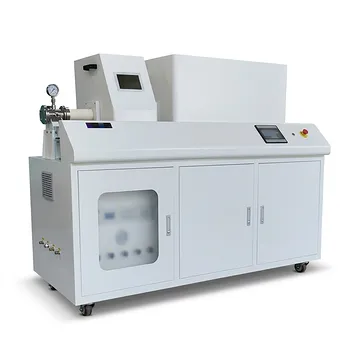
Inclined Rotary Plasma Enhanced Chemical Vapor Deposition PECVD Equipment Tube Furnace Machine
