All Questions
What Are The Performance Characteristics Of A Platinum Mesh Electrode? Maximize Electrochemical Efficiency
Discover the key performance traits of platinum mesh electrodes: high surface area, chemical inertness, catalytic activity, and conductivity for demanding lab applications.
What Are The Specifications Of The Platinum Mesh Electrode? Optimize Your Electrochemical Experiments
Learn the key specs of platinum mesh electrodes: 60 mesh size, 99.99% purity, and standard dimensions. Maximize reaction rates in corrosive environments.
What Is The Purity Of The Platinum Used In The Platinum Mesh Electrode? Ensuring 99.99% Purity For Reliable Results
Learn why 99.99% pure platinum mesh electrodes are essential for chemical inertness, data accuracy, and catalytic performance in electrochemistry.
What Are The Key Aspects Of Maintaining And Caring For A Gold Plate Electrode? Preserve Performance And Extend Lifespan
Learn essential protocols for handling, cleaning, and storing gold plate electrodes to prevent damage and ensure accurate, reproducible measurements.
In What Scenarios Should A Gold Plate Electrode Be Dedicated To A Single User Or Purpose? Ensure Patient Safety And Data Integrity
Learn when to dedicate a gold plate electrode to prevent cross-contamination in biomedical, clinical, and high-sensitivity research applications.
How Should Contamination Of A Gold Plate Electrode Be Prevented And Managed? Essential Care For Reliable Data
Learn to prevent and manage gold plate electrode contamination with proactive protocols and step-by-step cleaning for accurate electrochemical results.
What Precautions Should Be Taken To Prevent Mechanical Damage To A Gold Plate Electrode? Protect Your Data Integrity
Learn essential handling, usage, and storage protocols to prevent scratches, bending, and deformation of fragile gold electrodes for reliable measurements.
What Post-Treatment Procedures Should Be Followed After Using A Gold Plate Electrode? Ensure Long-Term Accuracy & Performance
Learn the essential 4-step protocol for cleaning, drying, and storing gold electrodes to maintain sensitivity and extend lifespan after experiments.
How Should A Gold Plate Electrode Be Handled During An Experiment? Ensure Accurate And Reproducible Results
Learn the critical steps for handling a gold plate electrode, from secure installation to environmental control, to protect your equipment and data integrity.
What Pre-Treatment Steps Should Be Taken Before Using A Gold Plate Electrode? Ensure Accurate Electrochemical Data
Learn the essential pre-treatment protocol for gold plate electrodes, including inspection, polishing, and cleaning, to achieve reliable and reproducible results.
What Is The Critical Rule For Using A Gold Plate Electrode? Ensure Only The Gold Surface Contacts The Electrolyte
Learn the non-negotiable rule for gold plate electrode use: only the gold surface must contact the electrolyte to ensure valid, reproducible electrochemical data.
What Is A Common Application For A Gold Plate Electrode In Electrochemistry? The Key To Reliable And Accurate Measurements
Discover why a gold plate electrode is the preferred choice as a counter electrode for superior conductivity and chemical stability in electrochemical experiments.
What Is The Expected Lifespan Of A Gold Plate Electrode? Maximize Its Service Life With Proper Care
Learn how application, environment, and maintenance determine the lifespan of a gold plate electrode and how to maximize its longevity.
What Are The Performance Characteristics Of A Gold Plate Electrode? Unmatched Stability For Reliable Data
Explore the key traits of gold plate electrodes: stable conductivity, superior corrosion resistance, and high purity for accurate electrochemical measurements.
What Are The Available Specifications For The Gold Plate Electrode? Optimize Your Electrochemical Analysis
Explore the key specifications for gold plate electrodes, including 99.99% purity, various shapes, and surface finishes for precise electrochemical applications.
What Is The Purity Of The Gold Plate Electrode? Ensure Unmatched Accuracy In Your Experiments
Standard gold plate electrodes boast 99.99% purity, guaranteeing chemical inertness, stable conductivity, and reliable data for electrochemical research.
What Are The General Precautions For Using A Reference Electrode? Ensure Stable Potentials For Accurate Data
Learn essential precautions for reference electrodes to maintain stable potential, avoid drift, and ensure reliable electrochemical measurements.
What Is The Recommended Maintenance For The Filling Solution Of A Reference Electrode? A Guide To Stable & Accurate Readings
Learn the essential bi-weekly protocol for reference electrode filling solution maintenance to prevent measurement drift and ensure data integrity.
What Is The Function Of A Salt Bridge In Electrochemical Experiments? Maintain Cell Neutrality For Continuous Reactions
Learn how a salt bridge completes the electrical circuit and maintains charge balance in electrochemical cells, enabling sustained reactions and accurate measurements.
What Are The Characteristics Of An Industrial Copper Sulfate Reference Electrode? A Guide To Durable, Stable Field Measurement
Explore the key features of industrial copper sulfate reference electrodes, including stable potential, durable design, and best practices for reliable cathodic protection monitoring.
What Are The Characteristics Of A Non-Aqueous Silver Ion Electrode? A Guide To Stable Potentials In Organic Solvents
Learn how a user-filled silver ion electrode provides stable, contaminant-free reference potentials for electrochemical measurements in organic systems.
What Are The Characteristics Of A Mercuric Oxide Electrode For Alkaline Solutions? Achieve Stable Measurements In High Ph Environments
Learn the key features of Hg/HgO electrodes: stable potential in alkaline media, KOH electrolyte, and essential safety handling for accurate electrochemistry.
What Are The Characteristics Of A Mercurous Sulfate Electrode For Acidic Solutions? A Chloride-Free Reference For Accurate Measurements
Learn about the mercurous sulfate electrode (MSE): its chloride-free K₂SO₄ electrolyte, stable potential, and use in chloride-sensitive acidic solutions.
What Are The Characteristics Of A Silver/Silver Chloride Electrode For Neutral Solutions? Achieve Stable & Accurate Measurements
Learn the key features of Ag/AgCl electrodes for neutral solutions, including stable potential, saturated KCl filling, and how to prevent sample contamination.
What Are The Characteristics Of A Saturated Calomel Electrode For Neutral Solutions? Understanding Its Stability And Limitations.
Explore the Saturated Calomel Electrode (SCE) for neutral solutions: its stable potential, temperature sensitivity, and comparison to modern alternatives.
How Should A Sample Holder Be Handled To Ensure Its Longevity? Protect Your Lab Investment And Data Integrity
Learn the 3 critical rules for handling sample holders to prevent costly damage, ensure data accuracy, and extend the life of your lab equipment.
What Are The Specific Storage Requirements For A Sample Holder? Protect Your Lab's Critical Assets
Learn the essential storage rules for sample holders: dry, ventilated environments, avoiding corrosion and impact to ensure measurement accuracy and longevity.
What Are The Specific Cleaning Procedures For Maintaining A Sample Holder? Ensure Data Integrity With A Proven Protocol
Learn the two-stage cleaning protocol for sample holders to prevent contamination, ensure accurate measurements, and maintain instrument integrity.
What Does Regular Inspection Of A Sample Holder Involve For Maintenance? A Guide To Protecting Your Data And Equipment
Learn the essential two-part process for sample holder maintenance: physical inspection and meticulous cleaning to ensure data accuracy and prevent instrument damage.
What Electrostatic Protection Measures Should Be Taken When Using A Sample Holder? Safeguard Your Sensitive Samples
Learn essential ESD protection methods for sample holders to prevent damage to sensitive electronics and ensure experimental integrity.
How Can Corrosion Of The Sample Holder Be Prevented When Using Corrosive Chemicals? Protect Your Lab's Integrity
Learn how to prevent sample holder corrosion and ensure experimental purity with strategic material selection and disciplined cleaning protocols.
Why Is It Important Not To Use Different Types Of Sample Holders Interchangeably? Avoid Costly Errors And Protect Your Data
Learn why using the wrong sample holder can compromise data integrity, damage expensive equipment, and invalidate your scientific results.
What Is The Cleaning And Storage Procedure For A Sample Holder After Use? A Guide To Preventing Contamination & Damage
Learn the essential steps for cleaning and storing sample holders to prevent cross-contamination, ensure measurement accuracy, and extend equipment lifespan.
What Are The General Operating Procedures For Using A Sample Holder During Experiments? Ensure Sample Integrity And Accurate Results
Learn the core principles for using a sample holder: careful handling, environmental limits, and specific protocols to protect your samples and equipment.
How Should A Sample Be Installed Onto The Sample Holder? Ensure Mechanical Stability & Electrical Integrity
Learn the critical steps for proper sample mounting to achieve mechanical stability, ensure electrical conductivity, and define an accurate active area for reliable data.
What Is The Typical Function Of The Sample Holder In An Electrochemical Experiment? It's The Active Working Electrode
Discover why the sample holder in electrochemistry acts as the working electrode, providing mechanical support and electrical connection for accurate measurements.
What Is A Critical Consideration Regarding Electrode Polarity? Avoid Catastrophic System Failure
Learn why reversing anode and cathode connections is critical. Prevent irreversible damage, incorrect function, and safety hazards in electrochemical systems.
What Is The Standard Reaction Area Of The Working Electrode? Ensure Accurate Electrochemical Measurements
Learn why the standard 1 cm² reaction area is critical for calculating current density and ensuring reproducible electrochemical data.
How Is The Working Electrode Sample Made Conductive? Using Copper Tape For Reliable Electrochemical Analysis
Learn how copper tape creates a conductive path for a working electrode sample, ensuring accurate and reproducible electrochemical measurements.
What Precautions Should Be Taken To Prevent Deformation Of The Stand During Storage? Avoid Costly Equipment Damage
Learn how to prevent stand deformation with key storage tips: avoid external pressure, ensure flat surfaces, and prevent material creep for long-term integrity.
What Is The Ideal Storage Environment For The Ptfe Electrode Stand? Protect Your Lab's Precision
Learn the best practices for storing a PTFE electrode stand to ensure chemical inertness, physical stability, and long-term reliability in your lab.
What Is The Adaptability Principle Regarding The Load Capacity Of The Ptfe Electrode Stand? Ensure Stability And Safety In Your Lab
Learn how the adaptability principle for PTFE electrode stands prevents tipping by ensuring load capacity exceeds the total weight of your cell and electrolyte.
What Are The Recommended And Prohibited Cleaning Methods For The Ptfe Electrode Stand? Protect Your Lab Equipment
Learn the correct cleaning protocols for PTFE electrode stands to prevent damage and contamination. Essential guide for lab technicians and researchers.
How Can Mechanical Damage To The Ptfe Electrode Stand And Its Components Be Prevented? Ensure Long-Term Lab Reliability
Learn best practices to prevent mechanical damage to PTFE electrode stands, including handling, cleaning, and storage tips for fragile glass cells and platinum electrodes.
What Electrical Safety Precautions Should Be Taken When Using The Electrode Stand? A Dual-Layer Safety Strategy
Learn essential electrical safety for electrode stands: insulate metal parts, wear PPE, and perform pre-use checks to prevent shock and ensure accuracy.
What Are The Storage Requirements For The Ptfe Electrode Stand After Cleaning? Preserve Purity And Equipment Longevity
Learn the essential storage requirements for PTFE electrode stands to prevent contamination, avoid material degradation, and ensure experimental accuracy.
How Should The Ptfe Electrode Stand And Its Components Be Cleaned After Use? A Step-By-Step Guide To Prevent Contamination
Learn the correct procedure for cleaning PTFE electrode stands, metal fixtures, and sensitive electrodes to ensure experimental accuracy and equipment longevity.
How Can Auxiliary Equipment Be Installed On The Ptfe Electrode Stand? Ensure Stable & Interference-Free Setup
Learn the proper steps to install stirrers, sensors & more on a PTFE electrode stand without compromising your electrochemical experiments.
What Cleaning Procedure Is Required For The Ptfe Electrode Stand Before An Experiment? Ensure Accurate Electrochemical Results
Learn the essential protocol for cleaning a PTFE electrode stand to prevent contamination and ensure reliable, reproducible electrochemical measurements.
How Should The Ptfe Electrode Stand Be Adjusted To Fit The Electrolytic Cell? Ensure Maximum Stability For Your Experiments
Learn the correct way to adjust a PTFE electrode stand for your electrolytic cell to achieve a stable, vibration-resistant setup for accurate electrochemical measurements.
What Inspections Should Be Performed On The Ptfe Electrode Stand Before Use? Ensure Safe & Accurate Electrochemical Measurements
Learn the essential pre-use checks for your PTFE electrode stand to guarantee experimental integrity, prevent costly errors, and ensure operator safety.
What Are The Materials Used For The Components Of The Ptfe Electrode Stand? A Guide To Chemical Resistance & Stability
Learn about the materials in a PTFE electrode stand, including PTFE, borosilicate glass, and stainless steel, for reliable electrochemical experiments.
Under What Conditions Should A Carbon Fiber Brush Be Replaced? Identify Critical Failure To Ensure Performance
Learn when to replace a carbon fiber brush due to massive fiber breakage or severe core corrosion. Ensure optimal conductivity and longevity.
What Does The Regular Maintenance Inspection Of A Carbon Fiber Brush Entail? Ensure Peak Performance And Longevity
Learn the essential steps for inspecting a carbon fiber brush, from checking fiber integrity to monitoring electrical output, to maintain optimal performance.
What Types Of Chemical Substances Should A Carbon Fiber Brush Avoid Contact With? Protect Your Precision Tool From Damage
Learn which chemicals—strong acids, alkalis, and oxidizers—can degrade carbon fiber brushes and how to maintain their performance and longevity.
Why Is It Important To Prevent Mechanical Damage To A Carbon Fiber Brush? Ensure Peak Performance & Longevity
Learn how mechanical damage to carbon fiber brushes degrades electrical conductivity and surface area, impacting system efficiency and reliability.
What Environmental Conditions Should Be Avoided When Operating Or Storing A Carbon Fiber Brush? Protect Your Investment From Damage
Learn how to protect carbon fiber brushes from dust, humidity, corrosive gases, and high temperatures to ensure longevity and reliable performance.
How Should A Carbon Fiber Brush Be Stored After Cleaning? Preserve Performance And Longevity
Learn the correct way to store a carbon fiber brush after cleaning to prevent fiber degradation, metal corrosion, and bristle deformation.
What Is The Recommended Cleaning Procedure For A Carbon Fiber Brush After Use? Extend Brush Life And Maintain Performance
Learn the essential 3-step cleaning & storage protocol for carbon fiber brushes to remove contaminants, prevent damage, and ensure consistent results.
What Parameters Require Monitoring During An Experiment Involving A Carbon Fiber Brush? Ensure Reliable Results
Learn the essential electrical and physical parameters to monitor for a carbon fiber brush experiment, including current, voltage, and fiber integrity.
How Should A Pre-Treated Carbon Fiber Brush Be Installed? Ensure Reliable Electrochemical Performance
Step-by-step guide to installing a carbon fiber brush electrode for optimal electrical contact, mass transport, and mechanical stability in your reactor setup.
How Should A Carbon Fiber Brush Be Pre-Treated To Enhance Microbial Attachment? Optimize Your Bioelectrochemical System
Learn the critical heat treatment protocol (400°C for 2 hours) to remove sizing agents from carbon fiber brushes, boosting microbial biofilm formation and electron transfer.
What Checks Should Be Performed On A Carbon Fiber Brush Before Use? Ensure Reliability In Your Lab Processes
Learn the essential pre-use inspection steps for carbon fiber brushes to prevent performance issues, contamination, and ensure reliable lab results.
What Are The Primary Applications Of Carbon Fiber Brushes In Experiments? Serve As Superior Anodes In Bioelectrochemical Tests
Discover how carbon fiber brushes function as high-performance anodes for microbial fuel cells, enabling efficient electron harvesting and biofilm growth.
What Materials Are Used To Manufacture Carbon Fiber Brushes For Electrochemical Experiments? Maximize Your Bioelectrochemical Performance
Learn why high-purity titanium wire and carbon fiber filaments are the ideal materials for reliable, high-surface-area electrochemical brush electrodes.
How Should Metal Electrode Holders Be Stored To Ensure Their Longevity? Prevent Rust And Ensure Peak Performance
Learn the best practices for storing metal electrode holders to prevent oxidation, maintain conductivity, and extend their service life.
When Should An Electrode Holder Be Replaced? Critical Signs For Safety And Weld Quality
Learn when to replace an electrode holder: cracked insulation, poor grip, overheating. Ensure operator safety and high-quality welds.
What Maintenance Check Is Required For The Electrical Connections Of An Electrode Holder? Ensure Reliable Data And Lab Safety
Learn the essential maintenance checks for electrode holder electrical connections to prevent data errors, contamination, and ensure lab safety and accuracy.
How Should An Electrode Holder Be Cleaned As Part Of Regular Maintenance? Ensure Reliable Electrochemical Measurements
Learn the proper steps to clean and maintain your electrode holder, from routine rinsing to avoiding critical operational mistakes for long-lasting performance.
What Materials Are Unsuitable For A Platinum Electrode Holder? Avoid Damaging Your Lab Equipment
Learn which materials like lithium are incompatible with platinum electrode holders to prevent alloying, contamination, and permanent damage to your equipment.
What Regular Checks Should Be Performed On An Electrode Holder? A 3-Step Guide To Reliable Measurements
Learn the essential mechanical, electrical, and cleanliness checks for your electrode holder to ensure accurate data and prevent experimental errors.
What Is The Recommended Maintenance For Electrodes Used With An All-Ptfe Electrolytic Cell? Ensure Longevity And Data Accuracy
Learn the essential maintenance steps for all-PTFE electrolytic cell electrodes, including cleaning, inspection, and storage, to ensure reliable electrochemical performance.
Why Is The Maintenance And Care Of Electrodes Important, And What Does It Involve? Ensure Data Integrity And Maximize Roi
Learn the critical 3-phase process for electrode maintenance: cleaning, polishing, and calibration. Prevent data drift and extend equipment lifespan.
What Is The General Procedure And What Precautions Should Be Taken During The Polishing Process? Achieve A Flawless Electrode Finish
Learn the step-by-step procedure for polishing electrodes to a mirror-like finish, including key precautions to avoid contamination and ensure data integrity.
Which Polishing Cloths Should Be Used With Specific Sizes Of Alumina Powder? Match Cloth To Powder For A Perfect Finish
Learn how to pair alumina powder sizes (1.0 µm, 0.3 µm, 0.05 µm) with the right polishing cloths (Nylon, Silk Velvet, Suede) for optimal surface preparation.
How Should Alumina Powder Be Selected For Polishing A Disc Electrode, And What Is The Procedure For Removing Scratches? Achieve A Perfect Mirror Finish
Learn the step-by-step protocol for polishing disc electrodes with alumina powder, from grit selection to scratch removal for reliable electrochemical data.
How Should An Electrode Be Positioned For Modification Via Drop-Coating? Master The Upside-Down Technique
Learn why inverting the electrode is key to a uniform, stable film via drop-coating, ensuring reproducible electrochemical results.
What Is The Cleaning Procedure For An Electrode After It Has Been Tested And Deemed Acceptable? A Guide To Preserving Performance
Learn the standard two-step ultrasonic cleaning protocol for validated electrodes to ensure reliable, repeatable electrochemical measurements.
How Is A Polished Electrode Tested For Quality? Validate Performance With Cyclic Voltammetry
Learn how to test electrode quality using cyclic voltammetry and potassium ferricyanide to ensure fast electron transfer and reliable data.
What Is The Correct Technique For Polishing An Electrode? Master The Steps For Reliable Electrochemical Data
Learn the step-by-step electrode polishing protocol to ensure a clean, reproducible surface for accurate electrochemical measurements and reliable data.
How Do You Prepare The Polishing Setup For An Electrode? Achieve A Flawless Mirror Finish For Reliable Electrochemistry
Step-by-step guide to electrode polishing setup and technique. Learn sequential polishing with alumina grits, proper motion, and cleaning to ensure accurate electrochemical data.
How Should Electrodes Be Prepared Before Starting An Experiment? A Step-By-Step Guide To Reliable Results
Learn the two-step process for electrode preparation: physical cleaning and electrochemical activation. Ensure reproducibility and accuracy in your electrochemical experiments.
How Should A Partially Peeled Coating On A Titanium Electrode Be Handled? A Guide To Critical Failure Management
Learn how to assess and handle a partially peeled titanium electrode coating, including the 5% damage rule, risks of continued use, and replacement protocols.
How Should A Titanium Electrode Be Regularly Maintained And Cleaned? Protect Your Investment And Maximize Performance
Learn the essential steps for titanium electrode maintenance, including acid washing and coating protection, to ensure longevity and consistent electrochemical performance.
What Are The Key Precautions To Take When Using Titanium Electrodes? Avoid Costly Damage And Maximize Performance
Learn essential precautions for titanium electrodes to prevent coating damage from dry burning, reverse polarity, and improper handling. Ensure long-lasting performance.
What Are The Proper Procedures For Handling A Titanium Electrode After Use? Ensure Longevity And Peak Performance
Learn the critical 4-step protocol for post-use titanium electrode care to prevent coating damage, extend lifespan, and maintain process consistency.
What Operational Procedures Should Be Followed For A Titanium Electrode During An Experiment? Ensure Coating Integrity And Repeatable Results
Learn the essential steps for operating titanium electrodes, from cleaning and activation to monitoring parameters, to prevent coating damage and ensure reliable data.
What Operations Should Be Performed On A Titanium Electrode Before Use? Ensure Safety And Maximize Performance
Learn the 3 essential pre-use steps for titanium electrodes: inspection, cleaning, and positioning. Protect your electrode coating and ensure efficient, safe operation.
What Are The Application Areas For The Lead Dioxide-Titanium Oxygen Evolution Electrode? A Guide To Advanced Oxidation
Discover the applications of PbO₂-Ti electrodes for wastewater treatment, electrosynthesis, and electrometallurgy. Learn about their high oxidation potential and key uses.
What Are The Features Of The Lead Dioxide-Titanium Oxygen Evolution Electrode? High Oxidizing Power & Durability
Explore the PbO₂-Ti electrode's high oxidizing power, robust titanium construction, and applications in wastewater treatment and chemical synthesis.
What Are The Specifications Of The Lead Dioxide-Titanium Oxygen Evolution Electrode? Unlock High-Power Oxidation
Explore the key specs of PbO₂-Ti anodes: titanium mesh substrate, PbO₂ coating, high OEP, and operating limits for demanding electrochemical processes.
What Are The Application Areas For The Platinum-Titanium Functional Electrode? A Guide To High-Performance Electrochemical Solutions
Explore the uses of Pt-Ti electrodes in electroplating, water treatment, hydrogen production, and more. Learn how their unique properties drive efficiency.
What Are The Features Of The Platinum-Titanium Functional Electrode? Unlock Superior Electrochemical Performance
Explore the key features of Platinum-Titanium electrodes: exceptional corrosion resistance, high catalytic activity, and versatility as both anode and cathode.
What Are The Specifications Of The Platinum-Titanium Functional Electrode? Maximize Electrochemical Performance
Learn the key specs of Pt-Ti electrodes: platinum coating (0.3-10μm), >15g/m² precious metal, <20,000A/m² current density for optimal performance.
What Are The Application Areas For The Iridium-Tantalum-Titanium Oxygen Evolution Electrode? High-Performance Anodes For Demanding Processes
Discover the key applications of IrO₂-Ta₂O₅ coated titanium anodes, including electrometallurgy, wastewater treatment, and electrosynthesis for superior efficiency and durability.
What Are The Features Of The Iridium-Tantalum-Titanium Oxygen Evolution Electrode? Maximize Efficiency & Lifespan
Discover the key features of Ir-Ta-Ti OER anodes: high catalytic activity, superior corrosion resistance, and long service life for industrial electrolysis.
What Are The Specifications Of The Iridium-Tantalum-Titanium Oxygen Evolution Electrode? A Guide To High-Performance Anodes
Explore the key specs of Ir-Ta-Ti OER electrodes: precious metal loading, current density, oxygen potential, and their impact on efficiency and durability.
What Are The Application Areas For The Ruthenium-Iridium-Titanium Chlorine Evolution Electrode? Essential For Efficient Chlorine Production
Discover the key applications of Ru-Ir-Ti electrodes in chlor-alkali processing, water treatment, electrometallurgy, and specialized electrolysis.
What Are The Features Of The Ruthenium-Iridium-Titanium Chlorine Evolution Electrode? Unlock High-Efficiency, Pure Chlorine Production
Discover the key features of Ru-Ir-Ti electrodes: low power consumption, dimensional stability, long lifespan, and pure product output for chlorine evolution.
What Are The Specifications Of The Ruthenium-Iridium-Titanium Chlorine Evolution Electrode? Optimize Your Chlorine Production
Learn the key specs of Ru-Ir-Ti anodes: chlorine evolution potential, current density, and coating details for efficient, durable electrolysis.
Related Products
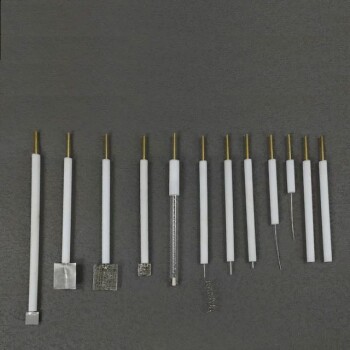
Platinum Auxiliary Electrode for Laboratory Use
$25.90
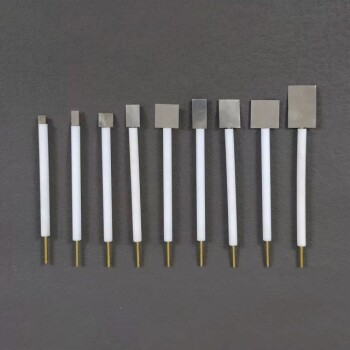
Platinum Sheet Electrode for Laboratory and Industrial Applications
$21.90
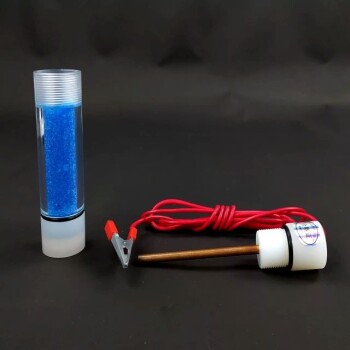
Copper Sulfate Reference Electrode for Laboratory Use
$65.00

Reference Electrode Calomel Silver Chloride Mercury Sulfate for Laboratory Use
$19.90

Laboratory Hydraulic Pellet Press for XRF KBR FTIR Lab Applications
