All Questions
What Is The Driving Force For Sintering A Ceramic? Harnessing Energy Reduction For Stronger Materials
Learn how the reduction of surface energy drives ceramic sintering, transforming powders into dense, strong solids through heat and atomic diffusion.
What Is Pressureless Sintered Silicon Carbide? A Guide To High-Performance Ceramics
Learn about pressureless sintered silicon carbide (SSiC), its manufacturing process, key properties, and ideal applications for demanding environments.
What Are The Classification Of Ceramic Powder? A Guide To Selecting The Right Material For Your Application
Learn how ceramic powders are classified by chemical composition (oxide, carbide, nitride) and application (structural, electronic, bioceramic) for optimal material selection.
What Are Ceramic Materials? Understanding Their Core Properties And Industrial Applications
Explore the defining properties of ceramic materials, including extreme hardness, high-temperature stability, and chemical resistance, and their critical industrial uses.
What Is Another Name For Ceramic Coating? Understanding Nano, Glass, And Quartz Coatings
Discover the true names for ceramic coatings: nano-coating, glass coating, and quartz coating. Learn the chemistry behind the marketing terms.
What Is Another Name For Ceramic? A Guide To Pottery, Porcelain, And Technical Materials
Discover the different names for ceramics, from traditional pottery to advanced materials like alumina, and learn which term to use based on your needs.
What Is Ceramic Powder Made Of? A Guide To Advanced Ceramic Materials And Their Uses
Learn about the composition of ceramic powders, including oxides, carbides, and nitrides, and how to select the right material for your application.
Where Are Ceramics Used In The Body? Key Applications In Orthopedics, Dentistry & Bone Repair
Discover how biocompatible ceramics are used in hip/knee replacements, dental implants, and bone grafts for superior strength and integration.
How Are Ceramics Used In Medicine? Unlocking Biocompatible Implants For Long-Term Health
Discover how medical ceramics like alumina and zirconia provide durable, biocompatible solutions for joint replacements, dental restorations, and bone growth.
What Temperature Does Clay Sinter? Mastering The Range For Perfect Ceramic Results
Learn the sintering temperature range for clay (900°C to 1300°C) and how factors like composition and desired outcome determine the ideal firing point.
What Is Sintering Of Clay? The Process Of Transforming Powder Into Durable Ceramics
Learn how sintering turns fragile clay powder into strong, dense ceramics using heat below the melting point. Understand the key stages and variables.
What Is The Process Of Sintering In Ceramic Materials? A Guide To Transforming Powder Into High-Strength Parts
Learn how ceramic sintering works: a thermal process that fuses powder particles into dense, strong solids via atomic diffusion below the melting point.
Why Is Ceramic Sintering Used? To Transform Fragile Powder Into A Strong, Dense Solid.
Learn how ceramic sintering fuses particles to create durable, strong, and impermeable materials for industrial and technical applications.
What Is Sintering With Ceramic Materials? The Key To High-Performance Ceramics
Discover how ceramic sintering transforms powder into a solid, dense material, unlocking extreme hardness, strength, and chemical resistance.
What Is The Process Of Sintering Ceramics? A Step-By-Step Guide To Dense, High-Strength Parts
Learn the 4 key stages of ceramic sintering: powder prep, green body forming, binder burnout, and high-temperature densification for strong, durable parts.
What Is The Effect Of Heating Rate On Sintering Mechanism Of Alumina Nanoparticles? Control Density And Strength
Learn how heating rate affects alumina sintering, including density gradients, trapped porosity, and microstructural control for optimal results.
What Is The Effect Of Heating Rate On Sintering? Achieve Uniform Density And Avoid Defects
Learn how heating rate controls sintering uniformity, density, and internal stress. Avoid trapped porosity and achieve optimal material properties.
What Are The Characteristics Of Sintering In Ceramics? Unlock Superior Strength And Durability
Learn how sintering transforms ceramic powder into a dense, strong, and impermeable material with enhanced mechanical and thermal properties.
What Is The Relationship Between Sintering Temperature And Melting Temperature? Key Differences For Material Engineers
Sintering occurs below a material's melting point for solid-state bonding, while melting liquefies the material. Learn the critical distinctions.
Why Does Sintering Increase Density? Unlock The Secrets To Superior Material Performance
Learn how sintering uses heat to eliminate pores and bond particles, increasing material density and strength for superior performance.
Does Sintering Increase Hardness? Master The Process For Superior Material Strength
Learn how sintering boosts hardness by bonding powder particles, eliminating pores, and achieving densification through precise thermal control.
How Does Sintering Temperature Affect Porosity? Master The Thermal Balance For Optimal Material Density
Learn how sintering temperature drives densification and reduces porosity. Understand the trade-offs with grain growth to optimize your material's properties.
What Are The Effects Of Sintering Temperature? Mastering The Balance Between Density And Microstructure
Learn how sintering temperature controls density, strength, and grain growth in metal and ceramic parts. Avoid defects like warping for optimal results.
What Are The Factors Influencing Shrinkage During Sintering? Master Dimensional Control For Your Parts
Learn the key factors—powder properties, process parameters, and part environment—that control shrinkage during sintering for precise results.
Does Sintering Increase Grain Size? Mastering The Trade-Off For Material Properties
Learn why sintering increases grain size and how to control this trade-off to achieve optimal material density, hardness, and strength.
How Does Sintering Affect Density? Achieve Precise Control Over Material Properties
Learn how sintering increases material density by eliminating pores through thermal bonding, enhancing strength and durability for industrial applications.
What Is The Effect Of Sintering Temperature On Density And Hardness? Optimize Your Material's Properties
Learn how sintering temperature controls density and hardness. Find the optimal temperature to avoid grain growth and maximize performance.
What Are The Factors Affecting Porosity Of Ceramic Ware? Master Firing & Composition For Perfect Results
Learn how firing temperature, time, and clay body composition control ceramic porosity. Balance strength and thermal shock for your projects.
Does Sintering Increase Ductility? Master The Trade-Offs For Optimal Material Performance
Learn how sintering transforms brittle powder into ductile components by bonding particles and reducing porosity. Understand the critical balance between ductility, strength, and density.
What Is The Purpose Of Sintering In Ceramics? Transforming Powder Into Durable, High-Performance Parts
Learn how sintering transforms fragile ceramic powder into strong, dense solids. Discover the process, methods, and benefits for your lab or production needs.
What Is The Strength Of Sintered Ceramics? Achieve Maximum Density And Durability
Learn how sintering transforms ceramic powder into a strong, dense material by reducing porosity. Discover the key factors that define final strength.
What Are The Seven Classifications Of Ceramic Materials? A Guide To Selecting The Right Material
Explore the 7 major ceramic classifications, from traditional clay to advanced bioceramics, and their unique properties for industrial and lab applications.
What Is Sintered Ceramics? Transforming Powder Into High-Performance Materials
Learn how the sintering process creates strong, durable ceramic components with superior mechanical strength and thermal stability for demanding applications.
What Physical Changes Occur During Sintering Of Ceramic Powders? Master The Transformation To Dense, Strong Parts
Learn the key sintering stages: neck formation, densification, pore elimination, and grain growth. Understand how to optimize for strength and density.
What Are Some Of The Important Characteristics Of Sintered Ceramics? Achieve High-Performance Material Properties
Discover the key characteristics of sintered ceramics, including engineered density, uniform microstructure, exceptional hardness, and high chemical stability.
What Are The Advantages Of Ceramic Sintering? Achieve Dense, High-Performance Ceramic Parts
Discover how ceramic sintering transforms powder into strong, dense parts, improving mechanical strength, conductivity, and enabling complex geometries for mass production.
What Are The Characteristics Of Ceramic Sintering? Achieve Precise Control For Your Ceramic Properties
Learn how ceramic sintering transforms powder into dense, strong materials. Understand key mechanisms, process control, and how to optimize for your application.
What Is The Temperature For Ceramic Parts Sintering? A Guide To Material-Specific Sintering Cycles
Learn why ceramic sintering temperature isn't a fixed number but a calculated parameter based on material properties and process requirements.
How Is Sintering Done To Ceramics? Master The Process For High-Performance Materials
Learn the science of ceramic sintering: from powder to solid. Explore solid-state vs. liquid-phase methods, key variables, and achieving optimal density.
What Are The Different Types Of Ceramic Sintering Process? A Guide To Solid-State, Liquid-Phase & Viscous Sintering
Learn the key differences between solid-state, liquid-phase, and viscous ceramic sintering processes and how to choose the right one for your material.
What Is The Sintering Process Of Advanced Ceramics? Transform Powder Into High-Performance Components
Learn how sintering transforms ceramic powder into dense, strong parts. Discover the stages, mechanisms, and methods for achieving optimal material properties.
What Is The Purpose Of Firing Or Sintering? To Transform Weak Powder Into Strong, Dense Ceramics
Learn how sintering fuses ceramic particles to create dense, strong products. Understand the process from green body to final part.
What Ceramics Are Sintered? The Essential Process For Creating Strong, Durable Ceramics
Discover how sintering transforms ceramic powders into strong, dense materials for everything from tiles to advanced industrial components.
How Does Sintering Affect Ceramics? Mastering The Transformation For Superior Performance
Learn how sintering transforms ceramic powders into dense, strong components by reducing porosity and enhancing mechanical properties for various applications.
Is Silicon Carbide Corrosion-Resistant? Unlock Its Power In Extreme Chemical & Thermal Environments
Discover why silicon carbide's corrosion resistance, combined with high-temperature stability and thermal shock resistance, makes it ideal for demanding applications.
What Is The Resistivity Of Silicon Carbide? It's A Tunable Property From <0.1 Ohm-Cm To Highly Resistive.
Silicon carbide resistivity isn't fixed. Learn how doping, manufacturing, and application define it, from conductive heaters (<0.1 ohm-cm) to insulating kiln furniture.
What Are The Thermal Properties Of Silicon Carbide? Master Extreme Heat Management
Explore silicon carbide's thermal properties: high conductivity, shock resistance, and stability over 2000°C for furnaces and semiconductors.
Does Silicon Carbide Have High Thermal Conductivity? Unlock Superior Heat Management For Demanding Applications
Discover why silicon carbide's thermal conductivity (up to 490 W/m·K) surpasses many metals and ceramics, making it ideal for high-performance thermal management.
What Are The Properties And Applications Of Silicon Carbide Ceramics? Solve Extreme Engineering Challenges
Explore silicon carbide's key properties like extreme hardness, thermal stability, and tunable conductivity for demanding applications.
What Are The Advantages Of Sic Technology? Achieve Higher Efficiency And Power Density
Discover how SiC technology enables smaller, lighter, and more efficient power systems for EVs, renewable energy, and industrial applications.
What Are The Synthesis Methods Of Sic? From Industrial Abrasives To High-Performance Electronics
Explore the key SiC synthesis methods: Acheson process for bulk powder, PVT for single crystals, and CVD for thin films. Learn which method fits your application.
Why Is Silicon Carbide So Important? Unlock Superior Performance In Extreme Conditions
Discover why silicon carbide's unique hardness, thermal stability, and semiconductor properties make it vital for industries from abrasives to EVs.
What Is The Purpose Of Silicon Carbide? A Material For Extreme Heat, Wear & Electronics
Silicon carbide (SiC) is a durable ceramic & semiconductor used for extreme heat resistance, mechanical hardness, and advanced electronics.
What Is The Use Of Sic Semiconductor? Unlock Higher Efficiency For Evs And Power Systems
Discover how SiC semiconductors enable more efficient, compact, and robust power electronics for electric vehicles, renewable energy, and industrial applications.
What Are The Properties Of Sic? Unlock High-Temperature, High-Frequency Performance
Explore the key properties of Silicon Carbide (SiC), including its wide bandgap, high thermal conductivity, and extreme hardness for demanding applications.
What Kind Of Solid Is Sic? Unlocking The Secrets Of Its Covalent Network Structure
Discover why Silicon Carbide (SiC) is a covalent network solid and how its atomic structure gives it extreme hardness, thermal stability, and unique semiconductor properties.
What Is The Application Of Sic For Energy? Revolutionizing Power Electronics For Maximum Efficiency
Explore how Silicon Carbide (SiC) enables highly efficient power electronics for EVs, renewable energy, and grid stability, reducing energy loss.
What Are The Characteristics Of Sic? Unlock High-Temp, Hard, And Chemically Inert Performance
Explore the key properties of silicon carbide (SiC), including extreme thermal resilience, superior hardness, chemical inertness, and tunable electrical behavior.
What Is The Thermal Expansion Of Sic? Master Its Low Cte For Superior High-Temp Performance
Discover the thermal expansion coefficient of SiC (~4.0x10⁻⁶/°C) and how its low CTE enables exceptional thermal shock resistance and stability.
What Is The Thermal Resistance Of Sic? Understanding Its High Thermal Conductivity For Superior Performance
Learn why SiC's thermal conductivity (120-490 W/m·K) makes it ideal for high-power and high-temperature applications, not a single thermal resistance value.
What Are The Advantages Of Sic? Unlock Higher Yields And Lower Costs
Discover how Silicon Carbide (SiC) boosts efficiency with superior thermal stability, plasma resistance, and a lower total cost of ownership.
What Is The Thermal Stability Of Sic? Withstand Extreme Heat Up To 2700°C
Explore SiC's thermal stability: decomposes at 2700°C in inert atmospheres, operates up to 1600°C in air via a protective SiO₂ layer.
Why Is Silicon Carbide More Efficient? Unlock Higher Power Density With Sic's Superior Material Properties
Discover how silicon carbide's wide bandgap enables higher efficiency, faster switching, and better thermal management than silicon in power electronics.
What Are The Thermal Properties Of Silicon Carbide Nanoparticles? Unlock Superior Heat Management
Explore SiC nanoparticle thermal properties: high conductivity, low expansion, and how interfacial design dictates performance in composites and nanofluids.
What Is The Temperature Resistance Of Silicon Carbide? Withstands Extreme Heat Up To 1500°C
Silicon carbide offers exceptional temperature resistance up to 1500°C, with superior thermal stability, low expansion, and chemical inertness for demanding applications.
Is Silicon Carbide Heat Resistant? Unlock Superior Performance In Extreme Temperatures
Discover why silicon carbide (SiC) excels in extreme heat, with a melting point above 2000°C, high thermal conductivity, and superior thermal shock resistance.
What Are The Advantages Of Silicon Carbide? A Super-Material For Extreme Environments
Discover the key advantages of silicon carbide (SiC), including extreme hardness, high-temperature stability, and excellent thermal conductivity for demanding applications.
What Are The Applications Of Silicon Carbide? From Abrasives To High-Tech Semiconductors
Explore silicon carbide (SiC) applications: industrial heating, wear-resistant parts, semiconductor components, and LED substrates. Discover its unique properties.
Is Silicon Carbide Used In High Temperature Applications? Master Extreme Heat With Sic
Learn why silicon carbide is a premier material for high-temp uses up to 1600°C, offering thermal shock resistance, strength, and stability.
What Is The Sintering Temperature Of Ceramic? Master The Thermal Journey For Durable Results
Learn why ceramic sintering temperature is a range, not a single number, and how to achieve maximum density and strength for your materials.
What Does Sintering Do To A Ceramic? Transform Powder Into A Dense, High-Strength Material
Sintering fuses ceramic powder particles with heat, eliminating pores to create a solid, dense body with superior strength, durability, and performance.
What Are The Benefits Of Sintering Ceramics? Unlock Superior Strength And Performance
Discover how sintering transforms ceramic powders into strong, dense materials, enhancing mechanical strength, thermal stability, and electrical properties.
Is There Anything Better Than A Ceramic Coating? Yes, For Ultimate Paint Protection, Combine Ppf & Ceramic Coatings.
Discover the best paint protection strategy: PPF for physical armor, ceramic coatings for chemical resistance. Learn which is right for your vehicle.
Why Are Ceramics More Resistant To Corrosion? Unlock The Secret To Unmatched Chemical Stability
Discover why ceramics like alumina and zirconia resist corrosion due to their strong ionic bonds and stable, fully oxidized chemical structure.
What Does Ceramics Also Have Chemical Inertness Mean? Unlock The Power Of Non-Reactive Materials
Discover why ceramics are chemically inert, their resistance to corrosion and leaching, and how this property benefits medical, industrial, and food applications.
Is Ceramic Chemically Inert? Unlock The Power Of Ultimate Chemical Resistance
Discover why ceramic is chemically inert. Learn about its atomic structure, material types, and how to choose the right ceramic for your application.
Why Is Porcelain Heat Resistant? The Science Of High-Temperature Resilience Explained
Discover how porcelain's vitrified structure and strong atomic bonds provide exceptional heat resistance, while understanding its vulnerability to thermal shock.
How Much Temperature Can Porcelain Withstand? Unlock Its True Heat Resistance & Avoid Thermal Shock
Discover porcelain's high-temperature limits (up to 2550°F/1400°C) and the critical role of thermal shock in its performance and durability.
Is Ceramic A Metal Or Plastic? Uncover The Unique Properties Of Ceramic Materials
Ceramic is neither metal nor plastic. Learn about its atomic structure, extreme heat resistance, hardness, and ideal applications in engineering.
Is Ceramic A Good Material? A Guide To Its Extreme Strengths And Trade-Offs
Explore the pros and cons of ceramic materials, from extreme hardness and thermal stability to inherent brittleness, for engineering applications.
What Is Special About Ceramic? Unmatched Durability Against Heat, Wear, And Chemicals
Discover why ceramic's unique atomic structure gives it exceptional resistance to extreme heat, abrasion, and corrosion, making it ideal for demanding applications.
How Does Sintering Increase Strength? Achieve Dense, High-Strength Materials
Learn how sintering fuses powder particles into strong solids through atomic diffusion, neck formation, and pore elimination for superior mechanical performance.
What Are The Roles Of Sintering Additives? Master The Process For Superior Material Performance
Learn how sintering additives lower temperatures, control microstructure, and enhance density to create high-performance materials.
What Is The Strongest Zirconia Phase? Tetragonal Zirconia Offers Unmatched Toughness
Discover why tetragonal zirconia (TZP) is the strongest phase, thanks to transformation toughening that resists crack propagation for high-stress applications.
Why Is Sintering Important In Ceramic Processing? Achieve Dense, High-Performance Ceramic Parts
Learn how sintering transforms fragile ceramic powder into strong, dense components by eliminating porosity and enhancing mechanical and thermal properties.
What Is The Purpose Of Sintering Ceramics? Transform Powder Into Durable, High-Performance Parts
Sintering ceramics fuses powder particles below melting point to create dense, strong parts. Learn how it controls strength, hardness, and properties.
How Is Microwave Different From Conventional Sintering? Unlock Faster, More Efficient Material Processing
Discover the key differences between microwave and conventional sintering: internal volumetric heating vs. external conduction for speed and uniformity.
What Is Microwave Sintering Process? Achieve Faster, More Uniform Material Densification
Learn how microwave sintering uses volumetric heating for rapid, energy-efficient densification of powders, ideal for ceramics and advanced materials.
What Is Microwave Sintering? Unlock Faster, More Efficient Material Processing
Discover how microwave sintering uses internal volumetric heating for faster, more uniform densification of ceramics and powders, saving time and energy.
What Are The Advantages Of Microwave Sintering? Faster, More Efficient, And Superior Material Properties
Discover the key benefits of microwave sintering: rapid volumetric heating, energy savings, and enhanced material properties like superior strength and uniformity.
What Is Microwave Sintering Of Ceramic Materials? A Guide To Faster, More Efficient Processing
Discover how microwave sintering uses internal heating for rapid, uniform ceramic densification, offering significant speed and energy advantages.
What Is The Process Of Zirconium Production? From Ore To High-Performance Metal & Ceramic
Explore the Kroll process for zirconium metal and the sintering route for zirconia ceramic. Learn how production defines material properties for nuclear, industrial & medical uses.
What Is The Pressureless Sintering Method? A Guide To Cost-Effective Material Densification
Learn how pressureless sintering uses heat alone to densify powders into solid components, its advantages, limitations, and key applications.
Why Is Sintering Used To Process Ceramic Materials? Unlock High Strength And Density
Learn how sintering transforms fragile ceramic powder into strong, dense parts by fusing particles with heat, enhancing strength and durability.
What Are The Different Types Of Sintering Process In Ceramics? Choose The Right Method For Your Application
Learn about solid-state, liquid-phase, and viscous sintering, plus pressurized vs. unpressurized methods, to optimize ceramic density and performance.
What Is The Major Limitation Of Zirconia? Navigating The Paradox Of Strength And Aesthetics
Discover zirconia's key limitation: the trade-off between strength and aesthetics, and the critical role of precise sintering for reliable dental restorations.
What Is The Most Drawbacks Of Zirconia Based Material? The Hidden Risks Of Its Extreme Hardness
Zirconia's main drawback is its abrasiveness to opposing teeth. Learn about bonding challenges, strength vs. aesthetics trade-offs, and clinical risks.
What Is Zirconia In Biomedical Applications? A High-Strength, Biocompatible Ceramic For Implants
Explore zirconia's role in biomedical implants: high fracture toughness, biocompatibility, and aesthetic advantages for dental & orthopedic applications.
What Are The Applications Of Cubic Zirconia? From Jewelry To High-Tech Components
Explore the diverse uses of cubic zirconia, from affordable diamond simulants to durable industrial components in optics, medicine, and engineering.
What Are The Applications Of Zirconia Ceramics? Unlock High-Performance Solutions For Extreme Environments
Explore zirconia ceramic applications in biomedical, aerospace, and industrial fields. Learn about its toughness, wear resistance, and high-temperature stability.
Related Products
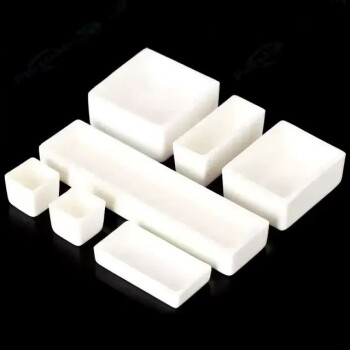
Engineering Advanced Fine Alumina Al2O3 Ceramic Crucible for Laboratory Muffle Furnace
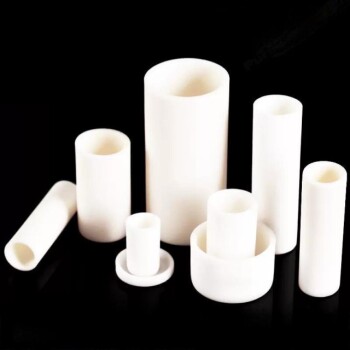
Engineering Advanced Fine Ceramics Alumina Al2O3 Crucible With Lid Cylindrical Laboratory Crucible
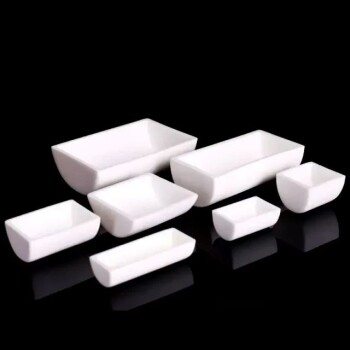
Alumina Al2O3 Ceramic Crucible Semicircle Boat with Lid for Engineering Advanced Fine Ceramics

Engineering Advanced Fine Ceramics Alumina Crucibles (Al2O3) for Thermal Analysis TGA DTA
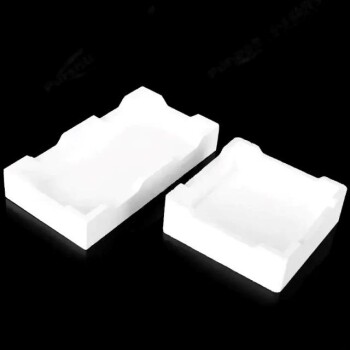
Advanced Engineering Fine Ceramics Alumina Ceramic Saggar for Fine Corundum
