All Questions
What Is The History Of Chemical Vapor Deposition? From Light Bulbs To Modern Electronics
Explore the evolution of Chemical Vapor Deposition (CVD) from 19th-century filaments to today's semiconductor and advanced materials manufacturing.
What Is The Chemical Vapor Deposition Method Of Carbon? Build Advanced Materials From The Atoms Up
Learn how carbon CVD works to create graphene, diamond films & nanotubes. A guide to the process, parameters, and applications of this key manufacturing technique.
What Is The Mechanism Of Carbon Nanotube Growth By Cvd? Unlock Controlled Synthesis For Advanced Materials
Learn the catalyst-assisted CVD mechanism for carbon nanotube growth: precursor decomposition, carbon dissolution, and nanotube precipitation for precise control.
What Are The Methods Of Nanotube Growth? A Guide To Arc Discharge, Laser Ablation, And Cvd
Explore the three main nanotube growth methods: Arc Discharge, Laser Ablation, and Chemical Vapor Deposition (CVD). Learn their trade-offs for research vs. industrial use.
What Are The Different Types Of Cvd In Nanotechnology? Choose The Right Method For Your Materials
Explore CVD types like PECVD, MOCVD & ALD for nanotechnology. Learn how to select the best method for your substrate and material quality needs.
What Is Cvd Method For Synthesis Of Nanomaterials? A Guide To Atomic-Level Material Fabrication
Learn how Chemical Vapor Deposition (CVD) synthesizes high-purity nanomaterials like graphene and carbon nanotubes with precise atomic control.
What Is Floating Catalyst Cvd? Continuous Gas-Phase Synthesis Of Nanomaterials
Learn how floating catalyst CVD enables continuous, scalable production of carbon nanotubes and other nanomaterials in the gas phase, independent of substrate limitations.
What Is The Floating Catalyst Method? A Guide To High-Yield Cnt Production
Learn how the floating catalyst method enables continuous, industrial-scale production of carbon nanotubes (CNTs) for composites and bulk materials.
What Is Chemical Vapor Deposition For Cnt? The Leading Method For Scalable Carbon Nanotube Synthesis
Learn how Chemical Vapor Deposition (CVD) grows high-purity carbon nanotubes for advanced electronics and materials. Explore thermal, plasma-enhanced, and water-assisted methods.
What Is Cvd And How To Prepare Carbon Nanotubes Using Cvd? A Step-By-Step Guide To Controlled Synthesis
Learn how Chemical Vapor Deposition (CVD) works to synthesize carbon nanotubes, from catalyst preparation to growth control and purity optimization.
What Is The Floating Catalyst Chemical Vapor Deposition Method? A Guide To Continuous Nanomaterial Synthesis
Learn how floating catalyst CVD enables continuous, large-scale production of carbon nanotubes and other nanomaterials directly in the gas phase.
How Does Chemical Vapor Deposition Work Carbon Nanotubes? Scalable, Controlled Synthesis Explained
Learn how CVD produces carbon nanotubes using catalytic particles and heat. Discover the process steps, key parameters, and why it dominates industrial production.
What Is Floating Catalyst Chemical Vapor Deposition Method? Unlock Scalable Nanomaterial Production
Learn how floating catalyst CVD enables continuous, large-scale synthesis of materials like carbon nanotubes directly in the gas phase for industrial applications.
What Is Chemical Vapor Deposition Process For Thin Film? The Ultimate Guide To High-Performance Coatings
Learn how Chemical Vapor Deposition (CVD) creates high-purity, uniform thin films for semiconductors, optics, and advanced coatings through controlled chemical reactions.
What Is The Chemical Method For Thin Film Deposition? Build Films From The Molecular Level Up
Explore chemical thin film deposition methods like CVD, ALD, and sol-gel for high-purity, conformal coatings in semiconductors and advanced materials.
What Are The Applications Of Chemical Thin Films? Unlock New Properties For Your Materials
Explore how chemical thin films add corrosion resistance, conductivity, and optical control to surfaces in aerospace, electronics, and more.
What Is Chemical Vapour Deposition For Thin Films? A Guide To High-Performance Surface Engineering
Learn how Chemical Vapor Deposition (CVD) creates ultra-thin, high-performance films for electronics, energy, and durable coatings.
What Is The Chemical Vapour Deposition Method For Thin Films? Build High-Purity, Conformal Coatings
Learn how Chemical Vapor Deposition (CVD) creates high-purity thin films via chemical reactions for superior uniformity and complex surface coverage.
What Is Thermal Chemical Vapor Deposition? A Guide To High-Temperature Thin Film Coating
Learn how Thermal CVD uses heat to deposit uniform thin films on substrates. Compare it to PECVD and PVD for material science applications.
What Is The Difference Between Pecvd And Hdpcvd? Choose The Right Cvd Process For Your Application
Learn the key differences between PECVD and HDPCVD, including plasma density, gap-fill capability, and film quality for semiconductor manufacturing.
What Is The Cvd Process? A Guide To Building High-Purity Materials From The Atom Up
Learn how Chemical Vapor Deposition (CVD) works to create advanced thin films, semiconductors, and synthetic diamonds with atomic-level precision.
What Is The Process Of Hdp Cvd? Mastering Void-Free Gap-Fill For Semiconductor Manufacturing
Learn how High-Density Plasma CVD uses simultaneous deposition and sputtering to achieve void-free filling of high-aspect-ratio semiconductor structures.
What Is The Method Of Cvd? A Step-By-Step Guide To Thin Film Deposition
Learn the Chemical Vapor Deposition (CVD) process: from precursor gases to substrate coating. Understand thermal vs. plasma-enhanced CVD methods.
What Does The Deposition Rate Indicate? Mastering The Speed Vs. Quality Balance In Thin Film Deposition
Learn how deposition rate controls thin film quality, thickness, and microstructure. Understand the critical trade-offs between speed and material performance.
What Is Reduced Pressure Chemical Vapor Deposition? Achieve Superior Film Purity And Uniformity
Learn how RPCVD (Reduced Pressure Chemical Vapor Deposition) creates high-purity, uniform thin films for semiconductors and advanced coatings.
What Is The Effect Of Substrate Temperature? Master Thin Film Quality & Adhesion
Learn how substrate temperature controls thin film microstructure, adhesion, density, and stress in CVD and other deposition processes for optimal coating performance.
What Are The Units For Deposition Rate? Mastering Thickness And Mass Metrics For Your Process
Learn the key units for deposition rate (Å/s, nm/s, g/min) and how to choose the right metric for thin-film properties or industrial throughput.
What Is The Difference Between Lpcvd And Pecvd Nitride? Choosing The Right Deposition Method For Your Application
Compare LPCVD vs. PECVD silicon nitride: high-temperature purity vs. low-temperature stress control. Understand film properties and applications.
What Are The Advantages Of Lpcvd? Achieve Superior Film Uniformity & High-Throughput Production
Discover the key benefits of LPCVD: exceptional film uniformity, high-purity coatings, and cost-effective batch processing for semiconductor and solar manufacturing.
What Are The Techniques Of Chemical Vapor Deposition? A Guide To Thermal, Plasma, And Lpcvd Methods
Learn about CVD techniques like Thermal CVD, PECVD, and LPCVD. Compare energy sources, pressure, and applications for thin-film deposition.
What Is Atomic Layer Deposition For Nanotechnology? Achieve Atomic-Scale Precision For Your Nanoscale Devices
Learn how Atomic Layer Deposition (ALD) enables atomic-scale control of thin films for superior conformality in microelectronics and biomedical devices.
What Is The Basic Atomic Layer Deposition? A Guide To Ultra-Thin Film Precision
Learn how Atomic Layer Deposition (ALD) works with self-limiting reactions to create uniform, conformal thin films with atomic-level control.
What Are The Advantages Of Ald? Achieve Atomic-Level Precision For Superior Thin Films
Discover the key benefits of Atomic Layer Deposition (ALD): perfect conformality, atomic-level thickness control, and gentle low-temperature processing for sensitive materials.
What Are The Uses Of Atomic Layer Deposition? Achieve Perfect Thin Films For Microelectronics & More
Explore atomic layer deposition (ALD) uses in semiconductors, OLED displays, and solar cells for ultra-thin, uniform, and pinhole-free coatings.
What Are The Advantages Of Apcvd? High-Speed, Low-Cost Thin Film Deposition
Discover the key benefits of APCVD: high deposition rates, simple operation, and cost-effectiveness for industrial-scale thin film coating applications.
What Is The Process Of Low Pressure Chemical Vapor Deposition? Achieve Superior Thin Film Uniformity And Purity
Learn the step-by-step LPCVD process for depositing highly uniform, pure thin films on complex substrates, essential for semiconductor manufacturing.
What Is Low Pressure Chemical Vapor Deposition Lpcvd? Achieving Superior Uniform Thin Films
Discover LPCVD: a low-pressure, high-temperature process for depositing highly uniform, pure thin films on complex substrates, essential for microelectronics and MEMS.
What Is Low Pressure Chemical Vapour Deposition Lpcvd? The Key To Superior Thin Film Uniformity
Learn how LPCVD's low-pressure environment creates exceptionally pure, uniform, and conformal thin films for semiconductor and microelectronics manufacturing.
What Are The Applications Of Lpcvd? Key Uses In Semiconductor & Mems Manufacturing
Explore LPCVD applications for depositing high-purity polysilicon, silicon nitride, and conformal oxides in semiconductor and MEMS device fabrication.
What Is The Difference Between Lpcvd And Pecvd? Heat Vs. Plasma For Thin-Film Deposition
LPCVD uses high heat for superior film quality, while PECVD uses plasma for low-temperature deposition. Learn which method is right for your substrate and application.
What Is The Temperature Range For Lpcvd? A Guide To Process Parameters By Material
LPCVD temperature is not fixed; it's determined by the material. Learn the specific ranges for polysilicon, silicon nitride, silicon dioxide, and tungsten.
What Temperature Is Chemical Vapor Deposition? Unlock The Right Process For Your Application
CVD temperature ranges from room temp to 2000°C. Learn how technique, precursors, and substrate dictate the optimal process for your thin film.
What Are The Different Types Of Cvd Deposition? Choose The Right Method For Your Thin Film Needs
Explore APCVD, LPCVD, PECVD, MOCVD, and ALD. Understand the trade-offs in temperature, speed, and cost to select the optimal CVD process for your application.
What Is The Thickness Of Cvd Coating? Optimize Wear Resistance With Ultra-Thin Films
Learn about CVD coating thickness (0.25-5 µm), its benefits of superior adhesion and uniform coverage, and ideal applications for durable thin films.
Can Cvd Deposit Metal? A Guide To High-Purity, Conformal Metal Films
Yes, CVD can deposit metals like tungsten and copper. Learn how it enables uniform coating of complex 3D structures for microelectronics.
What Is The Thickness Of A Metal Layer? It Depends On Your Application, From Nanometers To Meters
Metal layer thickness varies by application: nanometers for electronics, micrometers for coatings, and millimeters for structures. Learn how to choose the right thickness.
What Are Common Techniques For Metal Deposition? A Guide To Pvd, Cvd, And Plating Methods
Explore common metal deposition techniques like PVD, CVD, ALD, and plating. Learn how to choose the right method for your application's needs.
What Are The Methods Of Vapor Phase Deposition? Pvd Vs. Cvd For Thin Film Coating
Learn the key differences between Physical Vapor Deposition (PVD) and Chemical Vapor Deposition (CVD) methods for thin film applications.
What Are The Advantages Of Vapor Deposition? Achieve Unmatched Thin-Film Precision & Performance
Discover the key advantages of vapor deposition, including atomic-level precision, superior uniformity on complex shapes, and high-purity coatings for diverse industries.
What Is The Difference Between Chemical Vapor Deposition And Atomic Layer Deposition? Master Atomic-Level Control
Learn the key differences between CVD and ALD: CVD offers speed for thicker films, while ALD provides atomic-level precision and perfect conformality.
What Is Vapour Deposition Techniques? A Guide To Pvd And Cvd Coating Methods
Learn the differences between Physical Vapor Deposition (PVD) and Chemical Vapor Deposition (CVD) for high-performance thin film coatings.
What Is A Physical Vapor Deposition Process? A Guide To High-Performance Thin Film Coatings
Learn how Physical Vapor Deposition (PVD) applies thin, functional coatings using vacuum and physical vaporization methods for superior material performance.
What Is The Purpose Of Physical Vapor Deposition? Enhance Durability & Performance With Thin-Film Coatings
Discover how PVD coating creates durable, wear-resistant surfaces for tools, medical devices, and decorative finishes. Learn the process and benefits.
What Is Physical Vapor Deposition Of Thin Films? A Guide To Pvd Coating Technology
Learn how Physical Vapor Deposition (PVD) creates high-performance thin films for electronics, optics, and protective coatings in a vacuum process.
What Is Physical Vapour Deposition Techniques? A Guide To Sputtering, Evaporation & More
Explore PVD techniques like sputtering and thermal evaporation for depositing high-performance thin films in a vacuum. Learn the differences and applications.
What Are The Advantages Of Physical Vapour Deposition? Superior, Durable Coatings For Your Components
Discover the key advantages of PVD coatings: extreme hardness, low-temperature processing, high purity, and environmental friendliness for superior component performance.
What Happens At Deposition Of Atoms On Surfaces At Higher Temperature? Control Film Growth With Thermal Energy
Discover how high-temperature deposition promotes atomic diffusion, enabling crystalline thin films and nanostructures while managing trade-offs like interdiffusion.
What Are The Methods For Carbon Nanotubes Synthesis? A Guide To Arc-Discharge, Laser Ablation, And Cvd
Compare arc-discharge, laser ablation, and CVD methods for carbon nanotube synthesis. Learn the trade-offs between purity, scalability, and cost for your application.
How Are Carbon Nanotubes Synthesized? A Guide To Arc Discharge, Laser Ablation, And Cvd Methods
Explore the three main carbon nanotube synthesis methods: arc discharge, laser ablation, and chemical vapor deposition (CVD). Learn their trade-offs for purity, scalability, and cost.
What Is The Manner For Depositing Extremely Controlled Thin Films? Achieve Atomic-Level Precision With Ald
Discover how Atomic Layer Deposition (ALD) provides unparalleled control for thin film thickness, uniformity, and conformality in advanced manufacturing.
What Are The Advantages And Disadvantages Of Ald? Precision Vs. Speed In Thin Film Deposition
Explore the pros and cons of Atomic Layer Deposition (ALD), including atomic-scale control, perfect conformality, and the trade-off of slow deposition rates.
What Is The Effect Of Deposition Temperature? Master Film Structure And Properties With Thermal Control
Learn how deposition temperature controls thin film properties like crystallinity, density, and stress by governing atomic surface mobility in processes like sputtering and CVD.
What Are The Factors Affecting The Growth Of Thin Films? Control Substrate, Material, And Energy For Superior Films
Master thin film growth by controlling substrate temperature, deposition rate, and energy. Learn how these factors determine film structure and properties.
What Is The Difference Between Chemical Vapour Deposition? A Guide To Cvd Process Variations
Learn the key differences between CVD processes like Thermal CVD, PECVD, and MOCVD. Understand their strengths, temperature requirements, and ideal applications.
What Is Chemical Vapor Deposition Growth Process? A Guide To Building High-Performance Thin Films
Learn how the Chemical Vapor Deposition (CVD) process builds high-purity, thin films atom-by-atom for semiconductors, coatings, and more.
How Nanomaterials Are Synthesized By Chemical Vapor Deposition? A Step-By-Step Guide To Bottom-Up Fabrication
Learn how Chemical Vapor Deposition (CVD) builds nanomaterials atom-by-atom. Explore the process, from precursor gases to catalytic growth of carbon nanotubes and thin films.
What Is The Thermal Chemical Vapor Deposition Method For Carbon Nanotubes? The Key To Scalable Nanotube Production
Learn how thermal CVD synthesizes carbon nanotubes using heat, a carbon gas, and a catalyst. Discover its advantages, process steps, and key applications.
Which Synthesis Method Is Used For Preparation Of Nanotubes? Master Scalable Production With Cvd
Discover the dominant nanotube synthesis methods: from arc discharge for research to Chemical Vapor Deposition (CVD) for scalable industrial production.
What Are The Methods To Synthesize Carbon Nanotubes? A Guide To Arc Discharge, Laser Ablation & Cvd
Compare carbon nanotube synthesis methods: arc discharge, laser ablation, and chemical vapor deposition (CVD). Learn key parameters for quality, yield, and scalability.
What Is The Chemical Method To Synthesis Carbon Nanotubes? Master Cvd For High-Quality, Scalable Production
Learn how Chemical Vapor Deposition (CVD) enables scalable, controlled synthesis of carbon nanotubes with precise quality and structural properties.
What Are The Catalysts For Carbon Nanotube Growth? Key Metals For Controlled Synthesis
Discover the primary catalysts (Fe, Co, Ni) for carbon nanotube growth, their role in CVD synthesis, and how to choose the right one for your application.
Why Is It Preferred To Use Carbon Nanotubes As Catalysts In Chemical Industries? Maximize Catalytic Performance & Efficiency
Discover how carbon nanotubes (CNTs) enhance catalyst performance with superior surface area, stability, and electronic tuning for industrial applications.
What Are The Challenges Of Carbon Nanotubes? Overcoming Production And Integration Hurdles
Explore the key challenges of carbon nanotubes, including manufacturing cost, quality control, and integration issues for real-world applications.
How Does Chemical Vapor Deposition Work For Carbon Nanotubes? A Guide To Controlled Synthesis
Learn how chemical vapor deposition (CVD) synthesizes carbon nanotubes using catalyst seeds, carbon gas, and high heat for precise structural control.
What Is Chemical Vapor Deposition For Nanoparticle Synthesis? Build High-Purity Nanomaterials From The Ground Up
Discover how Chemical Vapor Deposition (CVD) synthesizes pure nanomaterials like graphene and nanotubes via gas-phase reactions for high-performance applications.
What Is The Synthesis Process Of Carbon Nanotubes? A Guide To Methods And Optimization
Explore the primary methods for synthesizing carbon nanotubes: Arc-Discharge, Laser Ablation, and Chemical Vapor Deposition (CVD). Learn about key parameters and trade-offs.
How Does Chemical Vapour Deposition Work? A Guide To High-Performance Thin Film Growth
Learn how Chemical Vapor Deposition (CVD) creates ultra-thin, high-purity films for electronics, optics, and complex coatings through gas-phase reactions.
Which Method Is Used Mostly To Synthesize Single Wall Carbon Nanotubes? Chemical Vapor Deposition (Cvd) Is The Industry Standard
Discover why Chemical Vapor Deposition (CVD) is the dominant method for synthesizing high-quality, scalable single-wall carbon nanotubes for commercial use.
What Are The Methods Of Carbon Nanotube Purification? Achieve High-Purity Cnts For Your Application
Explore chemical and physical carbon nanotube purification methods, including acid treatment and chromatography, to remove metal catalysts and amorphous carbon.
Which One Of The Following Method Is Used To Synthesize Cnts? A Guide To Arc Discharge, Laser Ablation, And Cvd
Compare the three main methods for synthesizing Carbon Nanotubes (CNTs): Arc Discharge, Laser Ablation, and Chemical Vapor Deposition (CVD).
What Is Effect Of Carbon Nanotubes In Plant Growth? A Double-Edged Sword For Agriculture
Explore the dual effects of carbon nanotubes on plants: boosting growth at low doses or causing toxicity at high concentrations. Learn the key factors.
What Is The Growth Mechanism Of Carbon Nanotubes? Mastering Cvd For Controlled Synthesis
Learn how carbon nanotubes grow via Chemical Vapor Deposition (CVD), from catalyst-driven precipitation to controlling diameter and structure.
What Is Chemical Vapor Deposition Of Carbon Nanotubes? The Scalable Method For Industrial Production
Learn how chemical vapor deposition (CVD) enables scalable, controllable synthesis of carbon nanotubes for industrial and research applications.
What Are The Potential Applications Of Cnt? Unlock High-Performance In Batteries And Materials
Explore the key applications of Carbon Nanotubes (CNTs) in lithium-ion batteries, advanced composites, and next-gen electronics. Learn how their unique properties drive innovation.
What Are The Advantages Of Chemical Vapour Deposition Method For Thin Film Deposition? Achieve Superior, Conformal Coatings
Discover the key advantages of Chemical Vapor Deposition (CVD), including superior conformality on complex shapes, high film purity, and versatile material properties.
What Is The Precursor For Cnt Preparation? Choosing The Right Carbon Source For Quality & Yield
Learn how carbon precursors like methane, ethylene, and ethanol impact CNT quality, growth rate, and purity in Chemical Vapor Deposition (CVD) synthesis.
What Explains Why Carbon Nanotubes Make Good Catalysts? Unlock Their Unique Catalytic Power
Discover how carbon nanotubes serve as superior catalysts or supports due to high surface area, tunable electronics, and strong metal interactions.
What Is Chemical Vapour Deposition Method For Synthesis Of Cnt? A Guide To High-Quality Nanotube Growth
Learn how Chemical Vapor Deposition (CVD) synthesizes high-purity Carbon Nanotubes (CNTs) using controlled gas reactions and catalyst substrates.
What Are The Catalysts For Cnt Synthesis? The Key To Controlling Carbon Nanotube Growth
Discover the role of iron, cobalt, and nickel catalysts in CNT synthesis. Learn how catalyst choice dictates nanotube diameter, structure, and quality.
What Is Vapour Deposition Method? A Guide To Pvd & Cvd Coating Technologies
Learn about vapour deposition methods like PVD and CVD, used for creating high-performance thin films on microchips, tools, and more.
What Are The Methods Of Cnt Preparation? A Guide To Arc Discharge, Laser Ablation, And Cvd
Compare Carbon Nanotube (CNT) synthesis methods: Arc Discharge, Laser Ablation, and Chemical Vapor Deposition (CVD). Learn which is best for purity, scalability, and cost.
What Is The Growth Rate Of Chemical Vapour Deposition? It's A Choice Between Speed And Quality
CVD growth rate is not fixed; it's a controllable parameter balancing film quality against deposition speed. Learn how to optimize it for your application.
What Are The Physical Methods Of Thin Film Deposition? A Guide To Pvd, Sputtering, Evaporation & More
Explore physical vapor deposition (PVD) methods like sputtering, evaporation, PLD, and MBE. Learn their principles, trade-offs, and how to choose the right technique.
What Are The Parameters Of Cvd Process? Master Film Quality, Rate, And Conformality
Learn the key CVD parameters: substrate temperature, pressure, gas flow, and time. Control film quality, growth rate, and conformal coating for your lab.
What Are The Steps In Chemical Vapor Deposition? A Guide To Controlled Thin-Film Synthesis
Learn the 4 key phases of Chemical Vapor Deposition (CVD), from precursor transport to byproduct removal, for high-performance thin films.
What Are External Chemical Vapor Deposition Processes? Understanding Cvd Process Design And Control
Learn how external CVD processes separate energy sources or gas activation from the deposition zone for superior film quality and substrate protection.
What Is The Hot Filament Chemical Vapor Deposition Method? A Guide To High-Quality Thin Film Deposition
Learn how Hot Filament CVD (HFCVD) works to create high-purity diamond, carbon nanotube, and durable coatings for complex 3D parts.
What Is Deposition Of A Thin Solid Film On A Substrate From Vapor Precursors? A Guide To Pvd Vs. Cvd
Learn the differences between Physical Vapor Deposition (PVD) and Chemical Vapor Deposition (CVD) for thin-film applications in materials science.
What Is Chemical Vapor Deposition Substrate Material? The Foundation For High-Quality Thin Films
Learn about CVD substrate materials like silicon wafers, sapphire, and glass. Understand their critical role in thin film quality, performance, and process stability.
What Is The Role Of Chemical Vapour Deposition? Creating High-Performance, Ultra-Thin Films
Discover how Chemical Vapor Deposition (CVD) builds ultra-pure, conformal coatings atom by atom for superior performance in electronics and manufacturing.
Related Products

Multi Heating Zones CVD Tube Furnace Machine Chemical Vapor Deposition Chamber System Equipment

Split Chamber CVD Tube Furnace with Vacuum Station Chemical Vapor Deposition System Equipment Machine

Customer Made Versatile CVD Tube Furnace Chemical Vapor Deposition Chamber System Equipment

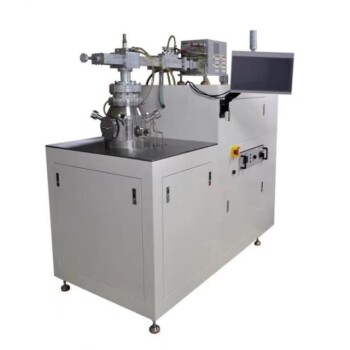
HFCVD Machine System Equipment for Drawing Die Nano-Diamond Coating
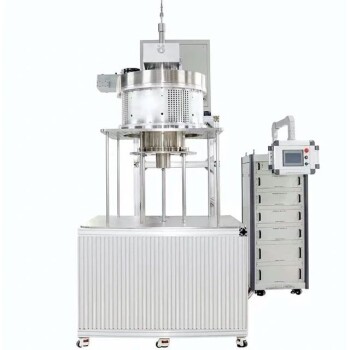
915MHz MPCVD Diamond Machine Microwave Plasma Chemical Vapor Deposition System Reactor