All Questions
What Is Sic Elements? The Ultimate High-Temperature Heating Solution
Learn about Silicon Carbide (SiC) heating elements: their properties, benefits, and ideal applications for temperatures up to 1600°C.
What Is The Maximum Temperature For A Sic Heating Element? Unlock The Key To Longevity And Performance
Discover the practical limits of SiC heating elements, the difference between element and process temperature, and how to maximize lifespan and efficiency.
What Are Silicon Carbide Heating Elements Used For? Reliable High-Temp Heating For Industrial Processes
Discover how silicon carbide heating elements enable reliable, high-temperature heating up to 1625°C for ceramics, glass, and metal processing.
What Is The Temperature Range Of A Mosi2 Heating Element? Unlock 1900°C Performance For Your Lab
Learn the operating range of MoSi₂ heating elements (1600°C-1900°C), their unique self-healing properties, and critical usage guidelines for labs.
What Is The Temperature Range Of Molybdenum Disilicide Heating Elements? Choose The Right Grade For Your High-Temp Needs
MoSi₂ heating elements operate from 500°C up to 1800°C. Learn how grade and atmosphere affect the max temperature for your furnace.
Is Molybdenum Disulfide A Heating Element? Discover The Best Material For High-Temperature Applications.
Learn why molybdenum disilicide (MoSi2) is the premier heating element material for extreme temperatures up to 1850°C, not molybdenum disulfide.
What Is Molybdenum Disilicide Used For? Powering High-Temperature Furnaces Up To 1800°C
Learn how molybdenum disilicide (MoSi2) heating elements provide extreme heat, oxidation resistance & long life for industrial & lab furnaces.
What Is A Graphite Heater? Achieve Superior Temperature Uniformity And Stability
Discover the benefits of graphite heaters: high-temperature stability, uniform heating, and long service life for demanding industrial processes.
How Does A Graphite Heater Work? Achieve Extreme Temperatures With Unmatched Precision
Learn how graphite heaters use resistive heating in inert atmospheres to achieve stable temperatures up to 3600°C for demanding industrial processes.
Is Graphite Used As A Refractory Material? Discover Its Unmatched High-Temperature Performance
Explore why graphite is a superior refractory material for extreme heat, offering high thermal shock resistance and durability in demanding industrial applications.
What Uses Resistive Heating? From Toasters To Furnaces, Harnessing Simple, Direct Heat
Explore the applications of resistive heating, including home systems and appliances. Learn how it works, its efficiency, and its cost-effectiveness.
How Hot Can Resistance Heating Get? Unlock Temperatures From 1,200°C To Over 3,000°C
Discover the maximum temperatures of resistance heating elements like Nichrome and Tungsten, and how environment affects their limits in air or inert gas.
What Are The Applications Of Resistance Heating? From Toasters To Industrial Furnaces
Explore the key applications of resistance heating, including direct and indirect methods used in everything from household appliances to industrial processes.
What Are The Advantages Of Resistance Heating? Achieve Unmatched Temperature Control & Efficiency
Discover the key benefits of resistance heating: near-100% energy efficiency, precise temperature control, and high-temperature capability up to 3000°C.
What Is The Life Expectancy Of A Quartz Heater Element? Maximize Your Heater's Lifespan
Learn how to extend the life of your quartz heater element beyond the 5,000-hour benchmark by managing thermal cycling and physical stress.
Why Does The Heating Element In A Circuit Get Hot? Discover The Science Of Joule Heating
Learn how electrical resistance in materials like Nichrome converts energy into heat through atomic collisions, powering heaters and toasters.
How Does A Heating Element Heat Up? The Science Of Joule Heating Explained
Learn how heating elements work by converting electrical energy into heat through the principle of Joule heating and high electrical resistance.
What Kind Of Metal Is Used In Heating Elements? A Guide To Materials For Every Temperature & Atmosphere
Discover the metals & materials used in heating elements, from Nichrome in appliances to Molybdenum & Silicon Carbide for high-temp industrial furnaces.
Which Element Is Best For Heating? Match The Right Material To Your Application For Optimal Performance
Discover the best heating element for your needs: ceramic for safety, quartz for instant heat, or Nichrome for cost-effectiveness. Learn the key trade-offs.
What Should Heating Element Be Made Of? A Guide To High-Temp, Durable Materials
Learn how to choose the right heating element material—from Nichrome alloys to silicon carbide—based on your temperature and application needs.
What Are The High Resistance Heating Elements? Choose The Right Element For Your Temperature & Atmosphere
Explore high-resistance heating elements like Nichrome, SiC, and MoSi2. Learn how to select the best material for temperature, longevity, and environment.
Why Does Heater Wire Have High Resistance? To Efficiently Convert Electricity Into Heat
Learn why high resistance is essential for heater wire performance, based on Joule's law of heating, and how it enables efficient energy conversion.
Should Heating Element Have High Or Low Resistance? Unlock The Key To Efficient Heat Generation
Discover why high resistance is essential for heating elements to convert electricity into heat efficiently, based on Joule's law and material science.
Why Is The Resistance Of A Heating Element High? To Efficiently Convert Electricity Into Heat
Learn why high resistance is essential for heating elements to generate heat safely and efficiently using the Joule heating effect (P=I²R).
Why Do Heating Elements Break? Understand The Root Causes And Extend Their Lifespan.
Learn why heating elements fail from thermal cycling, oxidation, and hot spots. Discover how to prevent premature failure and choose the right replacement.
How Long Should A Heating Element Last? Maximize Your Oven's Lifespan With These Key Insights.
Learn how to extend your oven heating element's life from 5 to 15 years. Key factors include usage frequency, cleaning habits, and avoiding self-cleaning cycles.
Why Does My Heating Element Keep Going Out? Stop The Cycle Of Failure With These Expert Solutions.
Learn the root causes of heating element failure like dry firing and scale buildup, and discover how to choose the right replacement for longer life.
Do Heating Elements Lose Power Over Time? The Science Behind Inevitable Performance Decline
Learn why heating elements naturally lose power due to oxidation and physical strain, affecting heating times and temperature accuracy.
What Is The Life Expectancy Of A Heating Element? Maximize Lifespan With Proper Care
Learn how usage, appliance type, and maintenance affect heating element lifespan. Get tips to extend its life from 5 to 15 years.
What Makes A Heating Element Go Bad? Understanding The Inevitable Failure From Heat And Stress
Learn why heating elements fail from oxidation and thermal cycling, and discover the factors that accelerate their breakdown in appliances.
How Do I Know If My Furnace Heating Element Is Bad? Spot The Signs And Test For Failure
Learn to diagnose a bad furnace heating element with key symptoms like cool air, tripped breakers, and how to safely test with a multimeter.
What Is The Most Accurate Temperature Sensor? Why Rtds Lead In Precision And Stability
Discover why RTDs are the most accurate temperature sensors for industrial and scientific use, offering ±0.1°C accuracy, superior linearity, and long-term stability.
What Is The Most Common Type Of Temperature Sensor? The Unmatched Versatility Of Thermocouples
Discover why thermocouples are the most common temperature sensor, offering a wide range, durability, and self-powered operation for industrial and lab use.
What Are The 5 Different Kinds Of Temperature Sensing Devices? Find The Right Tool For Your Application
Compare thermocouples, RTDs, thermistors, IC sensors, and infrared sensors. Choose based on temperature range, accuracy, cost, and application needs.
How Do You Know If The Heating Element Has Gone? Diagnose Common Heating Issues Quickly
Learn to identify a faulty heating element with a simple visual glow test. Spot signs of failure like no glow, patchy heating, or visible damage.
How Can You Tell If A Heating Element Is Bad? Diagnose With A Multimeter In 4 Steps
Learn the definitive test for a bad heating element using a multimeter. Step-by-step guide to check resistance and identify faults like breaks or shorts.
What Causes A Heating Element To Burn Out? Prevent Costly Failures And Extend Equipment Life.
Learn the primary causes of heating element burnout, including overheating, corrosion, and voltage spikes, and how to prevent premature failure in your lab equipment.
How Often Do Heating Elements Need To Be Replaced? Maximize Lifespan By Understanding Failure Causes
Heating element replacement is based on failure, not a schedule. Learn key factors like mineral buildup and usage intensity that determine lifespan.
How Long Does A Heating Element Last? Extend The Life Of Your Appliance With These Key Insights.
Learn the factors that determine heating element lifespan, from thermal cycling to environmental threats, and how to prevent premature failure in your appliances.
How Long Does A Heating Element Last On The Furnace? Understand Lifespan & Safety For Your System
Learn the key differences between electric furnace heating elements and gas furnace heat exchangers, their lifespans, and when to repair or replace.
How Do You Check The Temperature Of A Heating Element? Choose The Right Tool For Accurate Results
Learn the two primary methods for checking heating element temperature: non-contact IR pyrometers and contact thermocouples. Understand their applications and limitations.
How Do You Control The Temperature Of A Heating Element? Master On/Off, Proportional, And Pid Methods
Learn how to control heating element temperature with on/off, proportional, and PID methods. Achieve precision from simple thermostats to advanced PID loops.
What Factors Affect The Resistance Of A Heating Element? Master The 4 Key Variables For Precise Thermal Design
Learn how material, length, cross-sectional area, and temperature determine heating element resistance and power output for your application.
Why Does The Temperature Of The Heating Element Increase? To Drive Efficient Heat Transfer
Learn how electrical resistance and temperature gradients cause heating elements to get hot, enabling effective heat transfer to your target.
Can A Heating Element Overheat? The Critical Causes And Safety Risks Explained
Learn why heating elements overheat, the primary causes like thermostat failure, and key safety mechanisms to prevent appliance damage and fire hazards.
Which Material Is Suitable For Use In The Heating Element? Match The Right Material To Your Application
Compare heating element materials like Nichrome, graphite, and silicon carbide. Choose based on temperature, atmosphere, and performance needs for your lab equipment.
What Is The Best Heating Element For A Furnace? A Guide To Selecting The Right Material For Your Temperature Needs
Discover the best furnace heating elements for your temperature range. Compare resistance wires, SiC, and MoSi₂ rods to optimize performance and lifespan.
Why Do Heating Elements Have High Resistance? To Efficiently Convert Electricity Into Heat
Learn how high resistance in heating elements enables efficient heat generation via Joule heating, focusing heat where it's needed for safety and performance.
What Causes Heating Element Failure? Prevent Downtime By Understanding The Degradation Process
Learn the primary causes of heating element failure: oxidation, hot spots, embrittlement, and corrosion. Proactive strategies to maximize lifespan.
What Is Used As A Heating Element In High Temperature Furnaces? Select The Right Element For Your Process
Learn about high-temperature furnace heating elements: molybdenum, graphite, silicon carbide & more. Choose based on temperature and atmosphere.
Which High Temperature Furnace Elements To Be Used In Oxidizing Atmosphere? Mosi2 Or Sic For Superior Performance
Discover the best heating elements for oxidizing atmospheres: MoSi2 for up to 1900°C and SiC for up to 1600°C. Learn key selection criteria.
How Efficient Are Heating Elements? Uncover The Truth About Energy Conversion
Electric heating elements are nearly 100% efficient at converting electricity to heat, but true effectiveness depends on cost and application.
Can Heating Elements Overheat? Prevent Burnout And Ensure Safe Operation
Learn why heating elements overheat, the common causes like contamination and dry firing, and how to prevent failure for safety and longevity.
Do Heating Elements Use A Lot Of Electricity? Understanding High Energy Consumption And Efficient Alternatives
Learn why resistive heating elements are power-hungry and how heat pumps offer 300%+ efficiency by moving heat instead of creating it.
What Is The Best Electric Heating Element? Match The Right Material To Your Application's Needs
Discover how to select the ideal electric heating element based on temperature, atmosphere, and cost. Compare FeCrAl, NiCr, SiC, and MoSi2 materials.
What Is The Material Used In High Temperature Furnace Element? Choose The Right Element For Your Application
Learn about high-temperature furnace element materials like MoSi₂, SiC, and FeCrAl alloys, and how to select the best one for your temperature and atmosphere needs.
What Is The Maximum Temperature For Silicon Carbide Heating Element? The Real Limit For Your High-Temp Furnace
Discover the true max operating temperature for SiC heating elements (1400-1600°C) and how furnace atmosphere impacts lifespan and performance.
What Is The Advantage Of A Quartz Heater? Get Instant, Targeted Warmth For Maximum Efficiency
Discover the key benefits of quartz heaters, including instant on-demand heat, silent operation, and high energy efficiency for targeted personal heating.
What Is The Difference Between Induction And Resistance Heating? A Guide To Choosing The Right Heat Source
Compare induction vs. resistance heating: speed, precision, efficiency, and applications. Learn which method is best for your lab or industrial process.
How Effective Is Electrical Resistance Heating? It's 100% Efficient At The Point Of Use.
Electrical resistance heating is 100% efficient at converting electricity to heat, but its overall system efficiency is much lower. Learn the trade-offs.
Which Is A Disadvantage Of Electric Resistance Heating Systems? High Operating Costs Explained
Discover the key disadvantage of electric resistance heating: high operating costs due to low energy efficiency compared to heat pumps.
How Does Resistance Heating Work? Master The Two Core Methods For Efficient Heat
Learn how resistance heating converts electricity to heat via Joule's Law. Compare direct vs. indirect methods for industrial and lab applications.
How Are Heating Elements Made? The Science Of Self-Regulating Ptc Ceramic Heaters
Learn how heating elements are made from resistive materials like PTC ceramics, which self-regulate temperature for enhanced safety and efficiency.
Are Heating Elements Safe? Ensuring Reliable And Secure Thermal Processing
Learn how modern heating elements are engineered for safety with precise temperature control, material science, and proper system design to prevent risks.
What Is An Industrial Heating Element? Your Guide To Precision, Durability & High-Performance Heating
Discover how industrial heating elements work, their key types, and how to select the right one for your manufacturing process.
How Are Tubular Heating Elements Made? A Guide To Durable & Efficient Heating
Learn how tubular heating elements are manufactured with nichrome wire and compacted MgO powder for superior thermal conductivity and electrical insulation.
What Is The Function Of The Heating Element In A Furnace? The Engine Of Your Thermal Process
Learn how a furnace's heating element converts electricity to heat and why the furnace atmosphere is critical for successful thermal processing.
How Does The Heating Element Work? Mastering Heat Transfer For Your Lab Equipment
Discover how heating elements work, from Joule heating to material selection, for precise temperature control in lab furnaces and ovens.
Are Quartz Heating Elements Better? Discover The Key To Fast, Targeted Infrared Heat
Learn when quartz heating elements excel with rapid, high-intensity infrared radiation for industrial and targeted heating applications.
Which Is Better Quartz Or Ceramic Heaters? The Ultimate Guide To Spot Vs. Space Heating.
Discover the key differences between quartz and ceramic heaters to choose the right one for spot heating or whole-room warmth.
What Material Is Used For Furnace Heating? Select The Right Element For Your Process
Discover the best furnace heating materials—MoSi₂, graphite, CFC, and alloys—for your temperature and atmosphere needs. Make an informed choice.
What Are The Key Properties Of Metallic Heating Elements In Heat Treatment Furnaces?
Discover the essential properties of metallic heating elements, including high-temperature resistance, thermal conductivity, and oxidation resistance, for optimal furnace performance.
What Are The Heating Elements In A Furnace? A Guide To High-Temp Materials & Selection
Discover the key heating element materials for furnaces, including graphite, molybdenum, SiC, and MoSi2, and how to choose the right one for your temperature and atmosphere needs.
What Are The Different Types Of Heating Elements? A Guide To Metal & Ceramic Solutions
Explore metal and ceramic heating elements, including Nichrome wires, sheathed tubes, and PTC ceramics, to select the right type for your application.
What Is Used For High Temperature Heating? A Guide To Choosing The Right Heating Elements
Explore electric resistance, induction, and arc heating methods for high-temperature applications. Learn about NiCr, SiC, MoSi₂, and graphite elements.
What Determines The Size Of A Heating Element? Key Factors For Optimal Performance & Lifespan
Learn how power, voltage, material resistivity, and physical constraints determine heating element size for efficiency, longevity, and safety.
What Are The Common Materials Used As Heating Elements? Find The Right Material For Your Temperature Needs
Explore common heating element materials like Nichrome, SiC, Molybdenum & Graphite. Learn how to select the best material for your temperature and environment.
What Are The Properties Of A Heating Element? A Guide To Performance, Lifespan & Cost
Learn the key properties of heating elements: electrical resistivity, max temperature, durability & trade-offs to select the right one for your application.
What Temperature Can Graphite Handle? Unlocking Its Extreme Heat Resistance In Inert Environments
Graphite can withstand 3600°C in inert atmospheres but oxidizes in air above 450°C. Learn how to maximize its high-temperature performance.
Is Graphite Good Heating Element? Discover Its Superior Performance In High-Temperature Vacuum Furnaces
Learn why graphite heating elements excel in high-temperature, non-oxidizing environments with superior strength, efficiency, and cost-effectiveness.
Does Molybdenum Conduct Heat? Unlocking Its Role In High-Temperature Applications
Discover why molybdenum is a key thermal conductor for high-temperature processes, with a conductivity of 138 W/m·K and stability up to 1700°C.
What Is The Maximum Operating Temperature Of Molybdenum? It Depends On Your Atmosphere
Molybdenum's max temperature isn't a single value. Learn how air, vacuum, or inert gas changes its limit from 600°C to over 1900°C.
Which Material Is Suitable For Use In Heating Elements? Match The Right Material To Your Temperature And Atmosphere
Discover the best heating element materials for your application, from NiCr alloys to graphite and MoSi2. Learn how temperature and atmosphere dictate the ideal choice.
Can Tungsten Be Used As A Heating Element? Unlocking Extreme Heat For High-Temperature Applications
Explore tungsten's role as a heating element, its unmatched high-temperature capability up to 2500°C, and the critical need for a controlled atmosphere.
Is Tungsten Used In Heating Elements? Unlocking Extreme Heat For Demanding Applications
Discover why tungsten is the premier choice for high-temperature heating elements above 2000°C, its critical operational requirements, and ideal applications.
What Industry Uses Tungsten? Leveraging Extreme Heat And Hardness For Industrial Applications
Discover how tungsten's unmatched heat resistance and hardness drive its use in construction, mining, metalworking, and high-temperature manufacturing.
Which Metal Works Best As A Heating Element? Choose The Right Alloy For Your Temperature & Environment
Compare Nichrome, Kanthal, platinum & more. Find the best heating element alloy for your temperature, environment, and budget requirements.
Which Material Can Be Used As A Heating Element? Select The Right Element For Your Application
Compare nickel-chromium, graphite, silicon carbide, and more. Learn how to choose heating element materials based on resistivity, melting point, and environment.
What Happens When Tungsten Is Heated? Harnessing Extreme Heat For Demanding Applications
Discover how tungsten's extreme melting point, incandescence, and high-temperature strength make it indispensable for high-performance applications.
What Is The Disadvantage Of Using Tungsten? The High Cost And Difficulty Of Fabrication
Explore the key disadvantages of pure tungsten, including extreme brittleness at room temperature, high fabrication costs, and difficult machining.
What Are The Safety Concerns Of Tungsten? Managing Brittleness, Dust, And Machining Hazards
Learn the key safety risks of tungsten, from its brittleness and machining dangers to dust inhalation. Essential for engineers and fabricators.
What Is Special About Tungsten? The Ultimate Metal For Extreme Heat & Wear Resistance
Discover why tungsten is special: the highest melting point metal, exceptional density, and hardness. Essential for aerospace, medical, and industrial applications.
Do Heating Elements Degrade Over Time? Understanding The Inevitable Decay For Better Performance
Learn why heating elements degrade over time due to oxidation and thermal cycling, leading to reduced heat output and eventual failure.
Is Tungsten Brittle At High Temperature? Unlocking Its Extreme Heat Performance
Discover why tungsten is ductile and strong at high temperatures, its ductile-to-brittle transition, and its applications in extreme heat environments.
Does Heat Affect Tungsten? Harnessing The Power Of The Metal With The Highest Melting Point
Discover how tungsten's extreme heat resistance and critical oxidation weakness dictate its use in high-temperature applications like furnaces and welding.
What Temperature Can Tungsten Withstand? Unlocking Its Extreme Heat Resistance & Limits
Tungsten withstands up to 3,422°C but has practical limits. Learn how atmosphere, oxidation, and brittleness affect its real-world performance.
What Is The Melting Point Of Tungsten Compared To Other Metals? Discover The Ultimate Heat-Resistant Metal
Learn why tungsten has the highest melting point of all metals at 3422°C and how it compares to other metals for extreme heat applications.
Why Tungsten Is Not Used As Heating Element? Discover The Critical Role Of Oxidation Resistance.
Learn why tungsten's high melting point isn't enough for common heating elements and how oxidation resistance determines material selection.
Is Tungsten The Most Heat Resistant Material? It Depends On Your Application's Environment.
Explore why tungsten's high melting point isn't the full story. Compare heat resistance factors like oxidation, strength, and material trade-offs for your lab needs.
What Are The Disadvantages Of Tungsten Filament? Key Limitations In Lighting Technology
Explore the main drawbacks of tungsten filaments, including brittleness and sagging, and why they led to bulb failure despite high efficiency.
Related Products
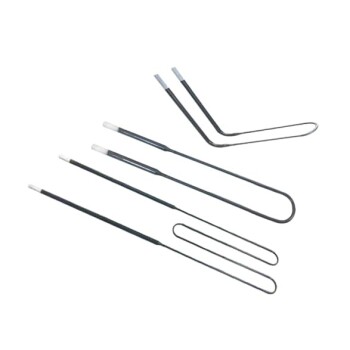
Molybdenum Disilicide (MoSi2) Thermal Elements Electric Furnace Heating Element
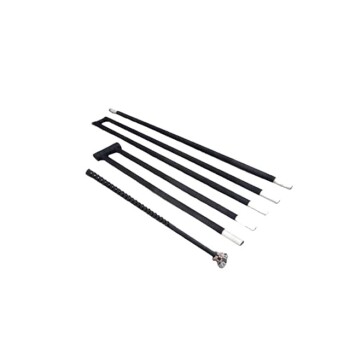
Silicon Carbide SiC Thermal Heating Elements for Electric Furnace

Infrared Thermal Imaging Temperature Measurement Double-Sided Coated Germanium Ge Lens

Laboratory Rapid Thermal Processing (RTP) Quartz Tube Furnace
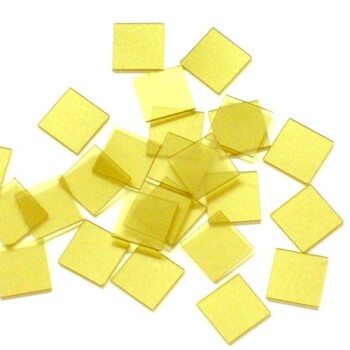
CVD Diamond for Thermal Management Applications
